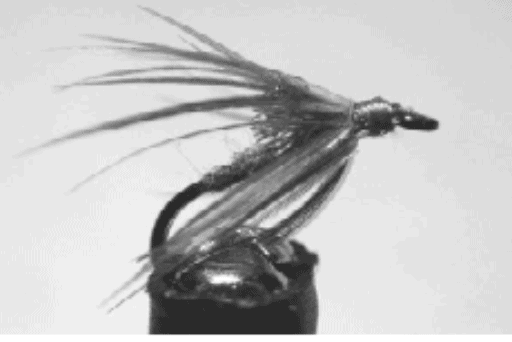
In mid-December, I wrote a post about Choosing a Fly Box. I still need to fill a fly box with BWO flies, so it’s timely for me to highlight a few important flies I plan to place in the fly box. I’ll provide some of my favorites to help you create your own BWO fly box?
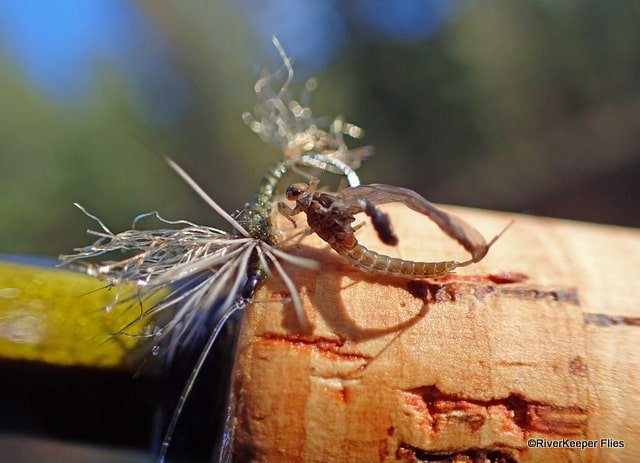
Blue Wing Olives (BWO) are just about the only mayflies consistently available to trout in the winter months. Plus, they can be seen in many waters in other months as well. (You can learn more about BWOs and other mayflies in these posts – Confusing Mayfly Names and Winter and Blue Wing Olives.)

While my fly box will be only dry flies, I’ll start with a few nymphs for you to consider.
Nymphs are available to trout every month of the year. It can be a VERY effective method of fly fishing and I highly recommend you master it.
There are SO MANY fly patterns to choose from, but here are some proven fish-catchers:
The first fly is a new-to-me fly pattern I haven’t used yet, but I think it will catch fish. It’s from the fly box of Bill Seitz (OK, I tied it, but it’s his fly pattern). Bill has three criteria for his flies: simple to tie, mostly tied with man-made materials for more durability, and they catch fish. The Krystal Flash Mayfly Nymph fits the bill. Or the original Krystal Flash Nymph I used to tie years ago. Sizes 16 and 18 will work for you with all the following nymphs.
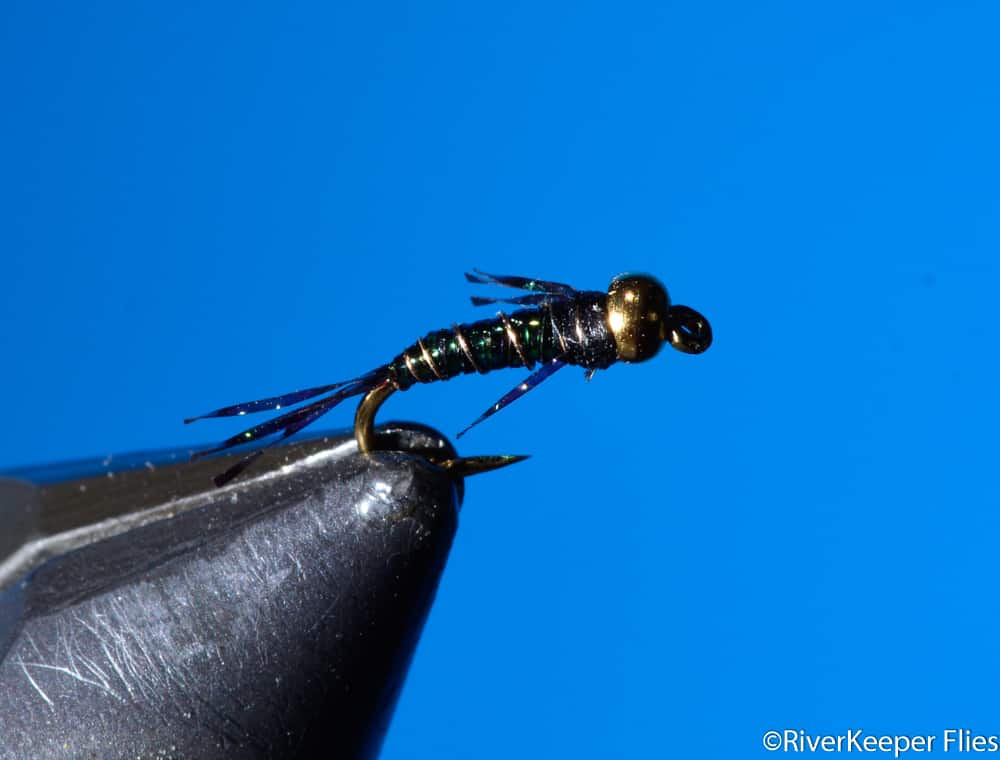
One of my favorite flies to use is a $3 Dip. It’s simple to tie, but is very effective as well.

You can’t go wrong fishing a Pheasant Tail Nymph.
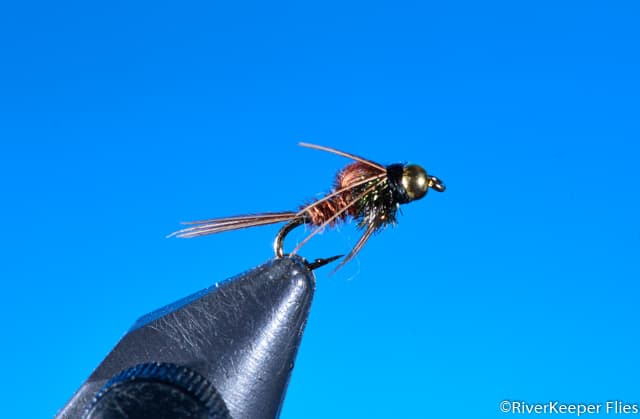
I might consider throwing in a couple perdigon nymphs as well:
Pheasant Tail Perdigon – size 14
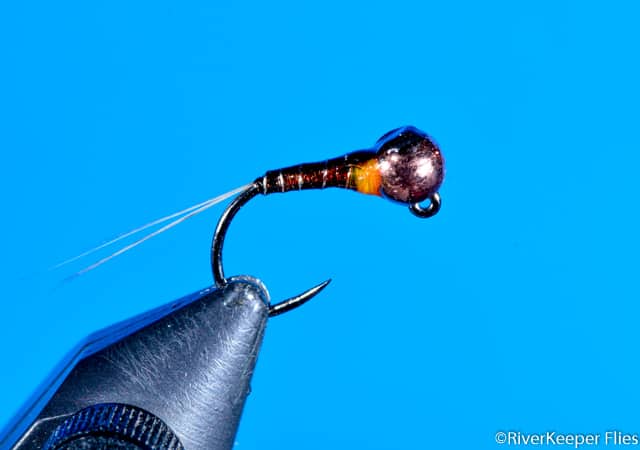
Olive Perdigon – size 14
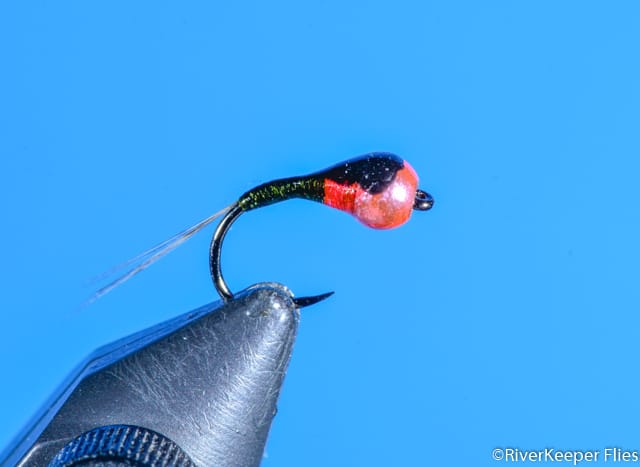
Be sure to check out other standard nymph fly patterns on my Mayfly Fly Patterns page.
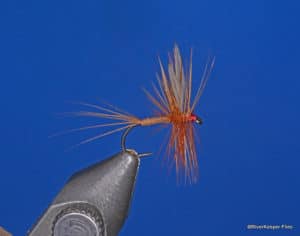
Here is an old fly pattern to swing just under the surface or dust with Frog’s Fanny floatant to create a dry fly.
Starling and Purple – size 16 and 18

If you added 3 of each of the flies above, you’d end up with a dozen and a half flies. That would get you started real well for a BWO nymph box.
Now on to some dry flies, my favorite!
My experience has shown fish really are attracted to emerger and cripple fly patterns fished on the surface like a normal dry fly.
Here are two flies I wouldn’t be without and you’ll find attached to my tippet most days.
RiverKeeper Soft Hackle Cripple – sizes 16 to 20

Improved Sparkle Dun – sizes 16 to 20
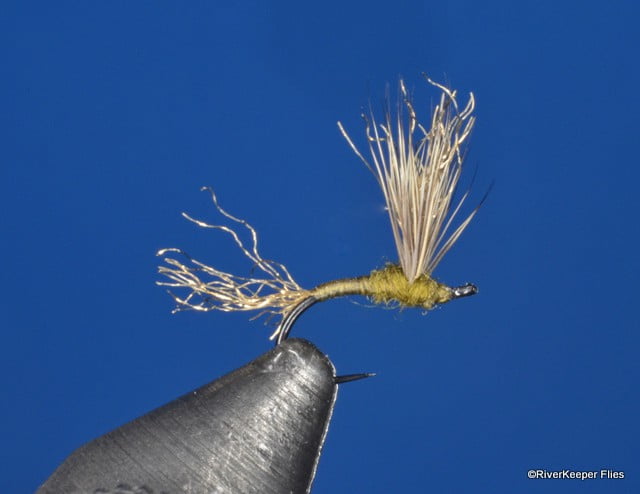
If those don’t work, fussy trout can be fooled by these:
CDC & Biot – sizes 16 to 20

IOBO Humpy – sizes 16 to 20
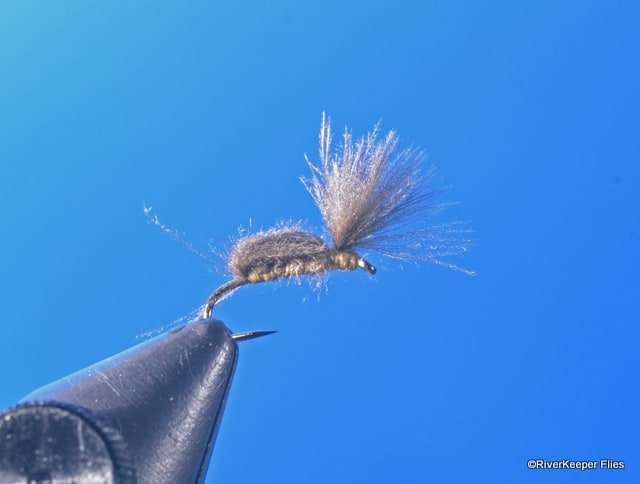
If you are looking for flies that offer a little more “floatability”, here are some to consider:
BWO Parachute – sizes 16 and 18
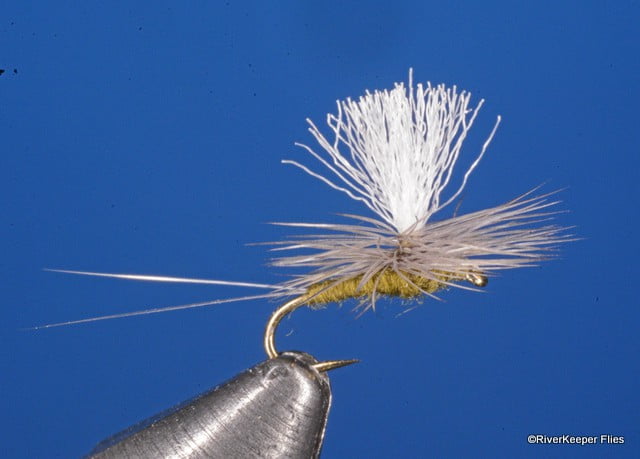
BWO Mayfly Cripple – sizes 16 to 20
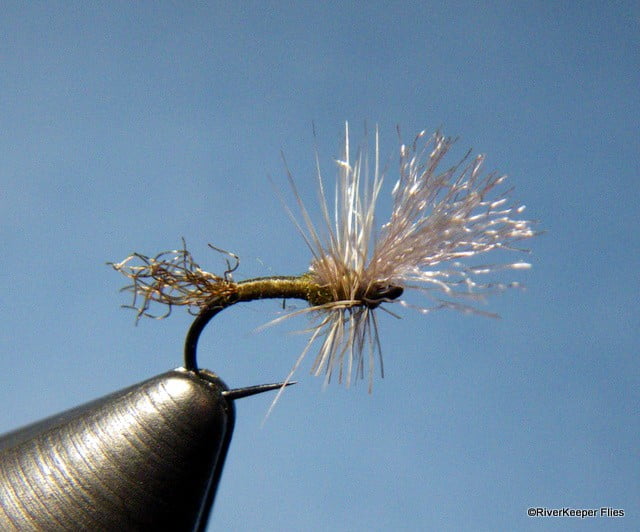
Quigley Film Critic – sizes 16 to 20
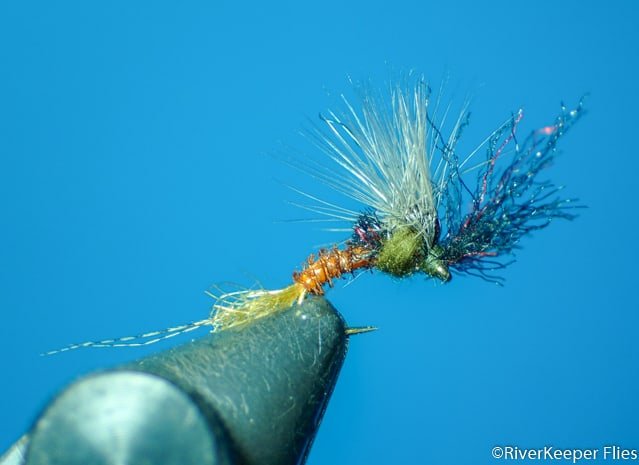
Stalcup CDC Loop Wing Emerger – sizes 16 and 18
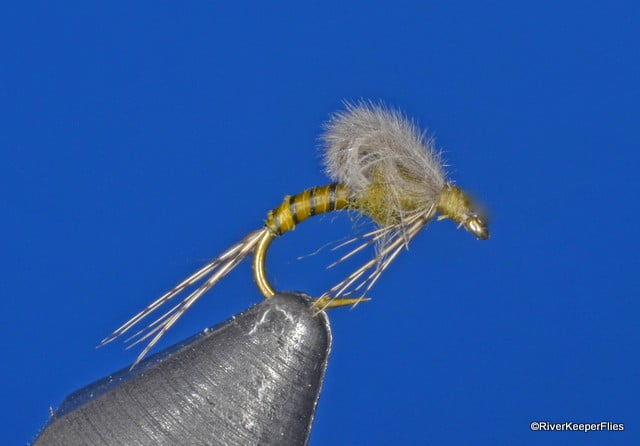
I recommend selecting 3 each of the RiverKeeper Soft Hackle Cripple and Improved Sparkle Dun in 16 and 18, for a an even dozen. Then add another dozen of the flies you have confidence in.
My recommendations will end up with three and a half dozen flies and a very good selection of BWO flies.
I could go on and on and suggest other flies, but I wanted to provide you with some flies I consider basics.
Hope this helps! I finally have an idea what flies I’ll add to my BWO fly box.
Enjoy…go fish!



John, do you have a short list of favorites for East Lake in July? Thanks
John
Thanks for leaving a Comment on my RiverKeeper Flies website. The short answer is Callibaetis, chironomids, and Beetle Bailey…email sent.
John