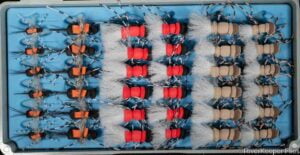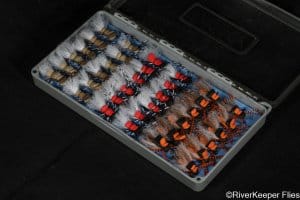
I’ve been sitting at my fly tying vise this week working on flies for our upcoming trip to Patagonia. All the flies are Fat Alberts in a couple of sizes and colors. My mind wanders a lot when tying and I started to think why are attractor fly patterns effective?

I featured this fly last year as a Throw Back Thursday Fly. I found it was initially used to imitate Cantaria beetle in Chile. But why would it be effective in a lot of other waters?
Sure, I can understand how a large black fly might trick a trout into thinking it was eating a beetle, but why eat a brown/tan version? I know what you are thinking…grasshopper, right?
Here is a link to my RiverKeeper Flies YouTube channel where I demonstrate tying the fly.
Or if you like to be entertained, here is a video of me “speed tying”. I have a 30 minute limit on my camera when creating videos and decided to see how many I could tie. It’s just over 5 minutes long.
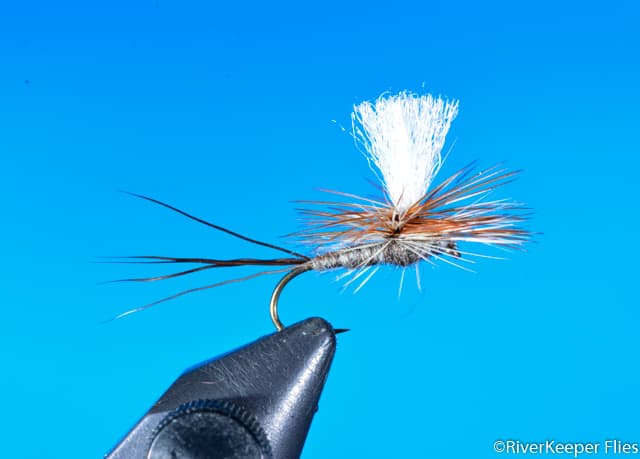
When I think about attractor fly patterns, the one that comes to mind is a Parachute Adams. I don’t use it much, but I know other fly fishers do with great success.
How about a Purple Haze?
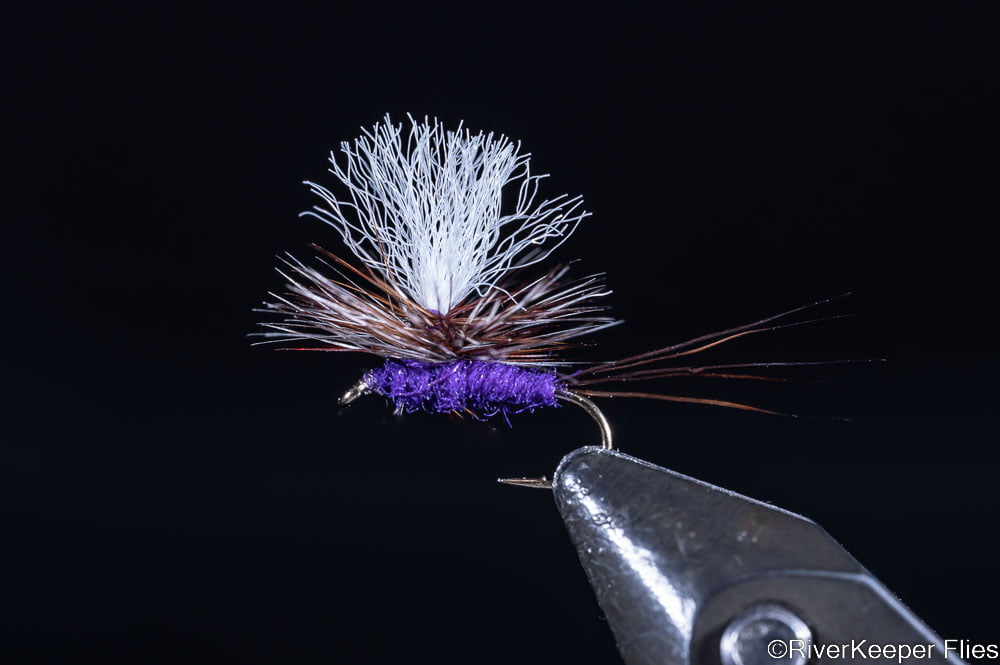
Or this Royal Wulff?

Or a Chubby Chernobyl in purple?
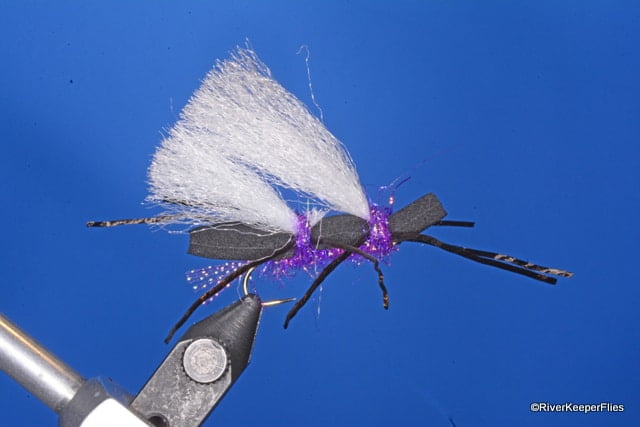
Why are they successful? I’m not sure.
When matching the hatch, I generally use the theory of size, profile, and color as the basic characteristics to consider when selecting flies. I believe the order is important.
I don’t have a lot of answers, only questions.
Back to the vise so random thoughts can bounce around in my head! I have a few more size 8 Fat Alberts to tie in black.
Enjoy…go fish!