I received a Comment from one of my readers asking if I could provide information about using effective material substitutes for natural materials when tying flies. It was a general question and something I’ve been thinking about lately. Instead of developing an all-encompassing post, I thought I’d provide information on effective fly tying substitutes for deer hair wings.

I’ve used deer hair for years on many of my favorite flies, particularly the Sparkle Dun and X Caddis. I’m finding it increasingly difficult finding quality deer hair for my fly tying needs. I plan to test the alternatives I’ll share today during my fishing trips this year.
I tied over 340 Sparkle Duns last year, from size 20 BWO’s to size 8 Green Drakes. They were all tied with deer hair wings.
Many tiers have difficulties tying proportional wings with deer and elk hair. Having other wing options might simplify their tying and not worry about finding the proper deer hair. I wrote a post a year ago about Selecting the Proper Deer Hair to Tie Sparkle Dun and X Caddis Flies. In addition, I discuss how to use deer hair techniques in my YouTube videos.
Here is an example of substituting a variety of materials for the deer hair wing in a Sparkle Dun fly.
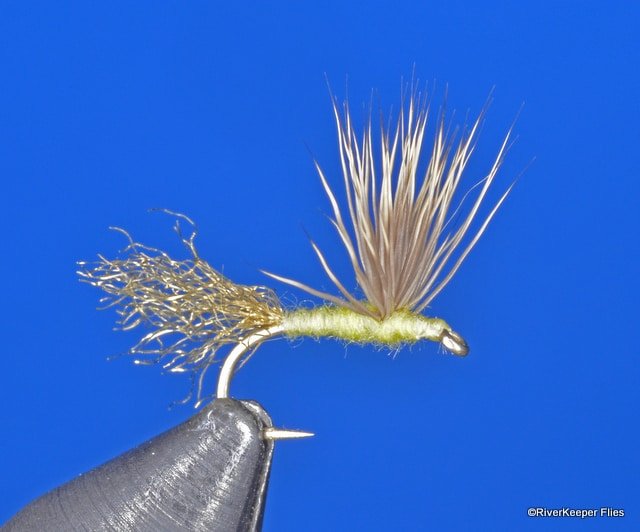 Sparkle Dun PMD – Deer Hair Wing
 Sparkle Dun PMD – CDC Wing
 Sparkle Dun PMD – Poly Wing
 Sparkle Dun PMD – EP Fiber Wing
- CDC Wing – Utilized 2 CDC feathers for the wing. Notice how slim the body is. The CDC fibers compress well.
- Poly Wing – Utilized Phentex Slipper & Craft Yarn (color – pewter) for the wing. Notice the difference of the body diameter. It’s thicker because the fibers don’t compress as well as deer hair or CDC. (I use the same material in white for my parachute flies).
- EP Fiber Wing – Utilized EP Trigger Point Fibers (color – Blue Wing Olive) for the wing. Like the poly wing, notice the thickness of the body. It’s because the fibers don’t compress as well as deer hair or CDC.
Here is another example of mayfly cripple fly patterns.
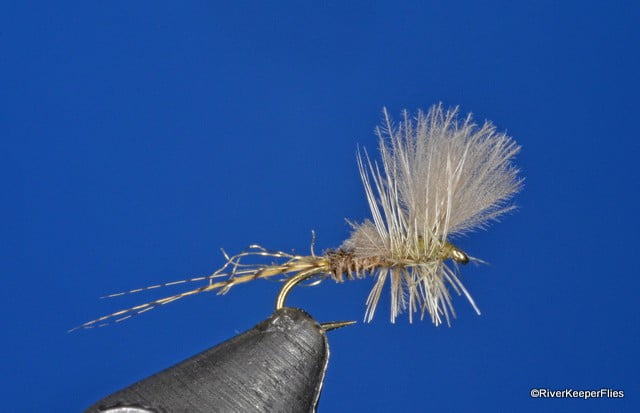
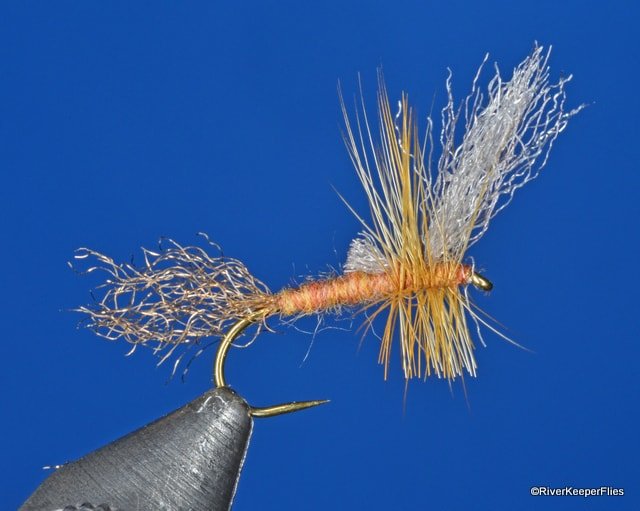

These three flies have the same profile. Each tail is slightly different. The wings from left to right are CDC, EP Trigger Point Fiber, and deer hair. I would exchange any of them to and fish with confidence. Fly tyers are famous for substituting one or more materials and renaming the fly.
Lastly, feel free to use the options I’ve presented for other down-wing fly patterns like the standby Elk Hair Caddis.
What other materials do you use in place of deer hair? Let me know in the Comments below.
Enjoy…go fish, stay safe!


Good stuff, John, as always.
Getting the right deer hair for the job is an elusive task – especially for those of us who tie a lot of flies.
For those of us who live in areas where deer are hunted, getting our hands on the right kind of hair is a little easier than for those who buy it by the little patch in a ziplock bag at a fly shop, or worse yet, off the pegs of a “big barn” superstore, or mail order. If you’re mail ordering, try Craig Mathews’ Blue Ribbon Flies in West Yellowstone.
The best hair for comparaduns and similar flies comes from the neck and front chest hair of the deer – preferably whitetail, and sometimes (depending on the hide, age & sex of the deer) Pacific Coast blacktail. I don’t see it marketed much these days, but in the past I’ve had Texas whitetail hides where the whole hide produces good comparadun hair.
The right hair has short tips, is fine in texture, and flares well under compression.
Our better commercial sources including Hareline, Wapsi, and Spirit River package and label comparadun or short and fine deer hair.
If I find a piece that is “just right” for a particular size and type of fly, I label it with a fine Sharpie, e.g. #16 CDUN (Comparadun,) or #14 CV (Caddis Variant) and don’t use it for anything else! Even a small chunk can tie dozens of flies at the small amounts used, and yet, replacing that “just so” hair exactly can be a challenge.
For the tyer who happens to be in the right place at the right time, roadkill and a jack knife – local law permitting – is a good source of neck and shoulder hair; a square foot of odd patches or strips will last a long time.
Thanks for the Comment Chuck. You reinforced the good tips about selecting quality deer hair I’ve professed in the past.
Sadly, Blue Ribbon Flies is no longer a source for me. I stopped the last 2 years and found empty bins and when I asked, they didn’t think they’d be having any in the future. It’s changed since Craig sold the shop.
John
Nice article. Deer and elk hair have a learning curve, but do the best job on Sparkle Duns and Elk Hair Caddis. I like CDC for the cripples. The poly yarns add visibility and are a good addition for difficult lighting situations or for very small patterns.
I learned something new today proving the adage that it is never too late to teach an old dog new tricks. I like that you showed how using the other materials affected the profile of the fly. Besides profile is there any benefit with one material over the other in how long they will float before having to be dried out or changed to dry?
Always enjoy your blog.
Thanks for the Comment John. I haven’t tried these variations. As I wrote, I’ll be trying them this year.
John