A few weeks ago, I was asked by a customer to tie an order of sea run cutthroat flies. What quickly caught my attention was his reference to Wayne Doughton. If you’ve read my About Me page, you know Wayne was the first person to teach me to tie a fly. He owned Doughton’s Hardware in Salem, OR and there was a substantial area set aside in his hardware store for fishing, fly fishing, and fly tying materials.

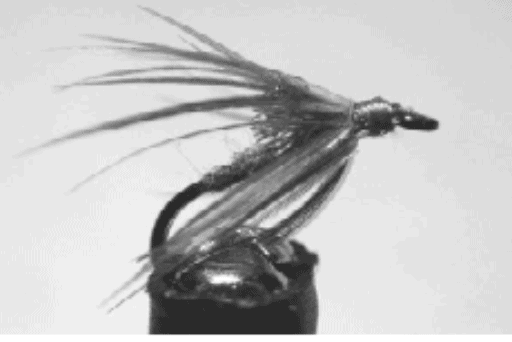
I used to fish for sea run cutthroats on the Alsea and Siletz rivers in a Don Hill pram, but that was many, many years ago. The fly I remember tying and fishing was the Borden Special, shown above.
My customer was interested in three fly patterns – Female Coachman, Pete’s Special, and Siletz Special.
I knew about the Female Coachman, but the other two flies were ones I’d have to research. A quick Internet search found my friend Jay Nicholas had written about these flies. Jay is an expert in his own right, having written several books, including Sea-Run Cutthroat: Flies and Flyfishing.
What to do? Well, I wrote Jay a quick email. To my surprise, I received a call less than an hour later and we discussed these fly patterns. Turns out, Jay tied sea run cutthroat flies for Doughton’s shop in the 1970’s. We probably crossed paths without knowing it as I occasionally entered Doughton’s Hardware in Salem, OR.
Jay specializes now in fishing the rivers around Pacific City, primarily the Nestucca. I’ve seen him fly fishing for salmon while we bait fished with a friend. Here is my salmon from 2015.
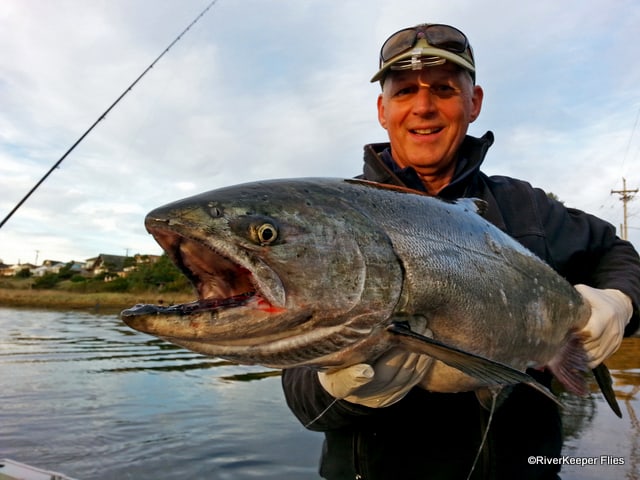
(OK, full disclosure. I didn’t catch this salmon with flies. We were with a friend and he bait fishes. When in Rome…)
You may recognize Jay from the fly tying videos he completed for the Caddis Fly Shop in Eugene, OR. In addition, he has his own blog entitled appropriately – Fishing with Jay where he periodically discusses mainly steelhead and salmon fishing gear and flies.
I was able to get the basic fly patterns from Jay. A short time later, I received another email from my potential customer with pictures and fly patterns from his reference book Sea-Run Cutthroat: Flies and Flyfishing by Jay Nicholas. Turns out the flies he asked me to tie were Doughton variation.
While we talked about fly tying in the old days, Jay relayed to me a little history about obtaining fly tying materials in the late 1960’s and 1970’s. Wayne had an arrangement with someone back east to obtain whitetail hides and bucktails. Sounds like a good plan doesn’t it? The only problem was, Jay said the materials “were putrid, rotting, with the bones still in the tails”. Jay took the tails home to bone, wash and dry. Oh, and the maggots were another story!
But back to those sea run cutthroat flies…
The information I obtained from Jay was helpful so I could do justice to these Doughton sea run cutthroat flies. The longer I tie flies, I appreciate using the proper materials to obtain the desired effects. That meant finding deer body hair long enough to allow the wings to move.
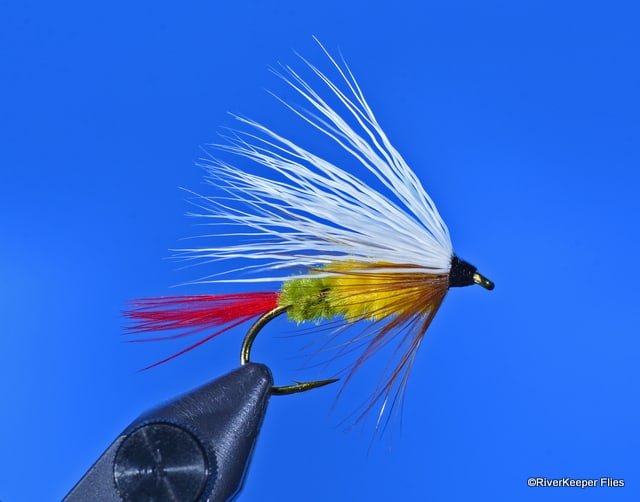
Here are the final products I tied in sizes 6 and 8.

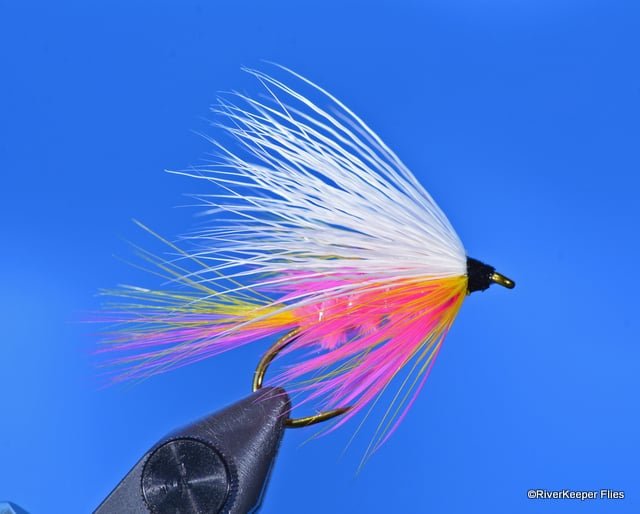
I finished my order and mailed them to a new client. Needless to say, he was very pleased and anxious to use the flies in the near future.
Sometimes, it’s just a small world. Thanks for the insights Jay!
Enjoy…go fish!
(John Kreft is a participant in the Amazon Services LLC Associates Program, an affiliate advertising program designed to provide a means for sites to earn advertising fees by advertising and linking to amazon.com.)




Dumb question of the day. I notice that the flies use a deer body hair wing, does this give the fly neutral buoyancy or just slow down the sink rate ? Any other reason for using deer instead of elk or other buoyant body hair? First time reader of the blog and I rather enjoy it.
Donald
Thanks for your comment. I used a heavy nymph hook which should allow the fly to sink. I’m guessing the calf body hair isn’t as hollow and will allow movement as the fly works.
Thanks for finding RiverKeeper Flies.
John