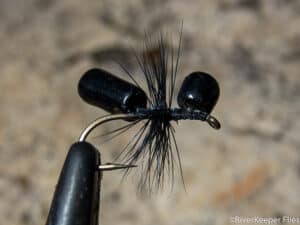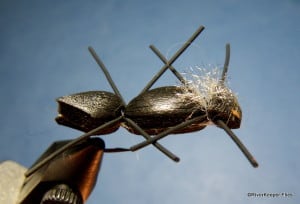
There is something about goose and turkey biot flies that look so realistic. I was reminded of this as I completed a recent fly order with a few BWO – CDC & Biot flies.
As you can see in the picture, goose and turkey biots come in a variety of dyed colors.

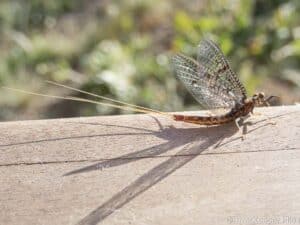
Here is a couple of pictures to reinforce my point. The first picture is of a Rusty Spinner floating by me in the water and the second picture is the Rusty Spinner Biot Body fly I tie to imitate the real insect.
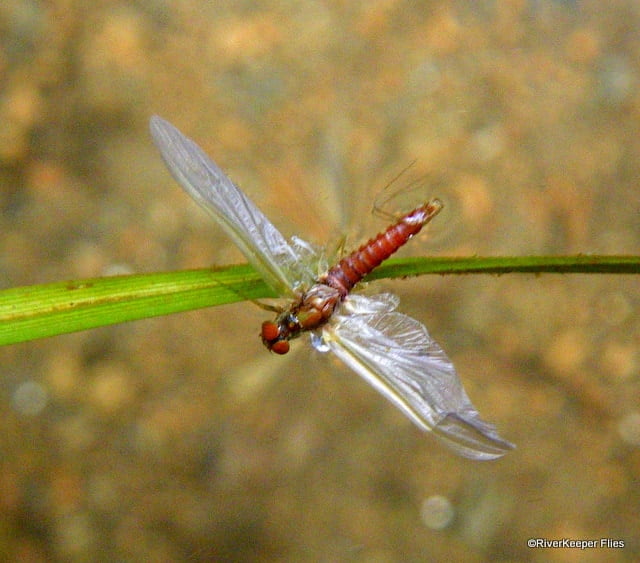
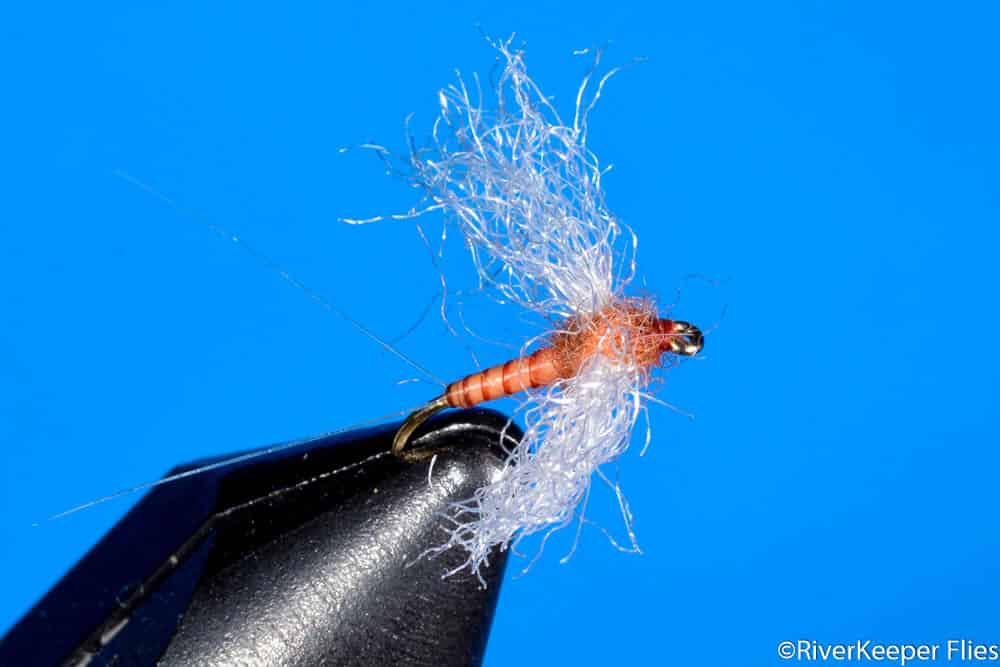
These two pictures really show how the biot body imitates the smooth, segmented body of the real bug.
If you don’t tie flies, how can you get these flies that closely resemble the real insect? You might be surprised how many fly patterns your local fly shop carries utilizing goose and turkey biots for bodies. After reading this post, you’ll have a better idea of what to look for.
If you can’t find what you’re looking for at your local fly shop, leave a comment below for some RiverKeeper Flies.
Biots are used in fly bodies to imitate segmentation and/or the gills of a nymph or an emerger fly attempting to hatch.
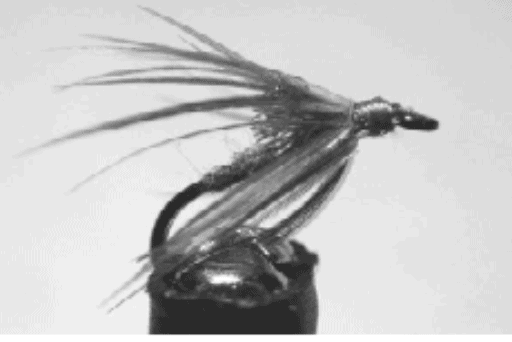
Here is a Last Chance Cripple Baetis in size 18, imitating a different mayfly phase.
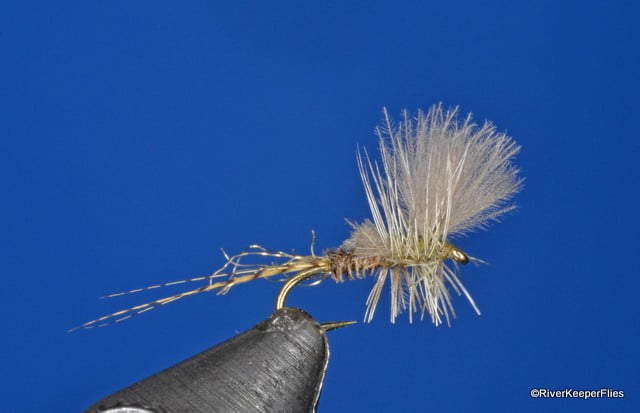
The fly imitates a mayfly stuck in it’s nymphal shuck, kind of half in/ half out of the nymph. These can be very effective and trout sometimes key on these flies.
Here are what I consider key properties when tying with goose and turkey biots:
- Provides segmentation
- Creates a very smooth body
- Or imitates gills, depending on which way the biot is tied
- Can be used to tie a very slim body profile
- Helps create a very light-weight body
When I find a very selective trout rising to naturals, but rises to my fly and turns at the very last second (my wife calls that a “drive by”), I’ll change flies and use one tied with a biot body.
Here are a few of my favorite flies made with biot bodies.
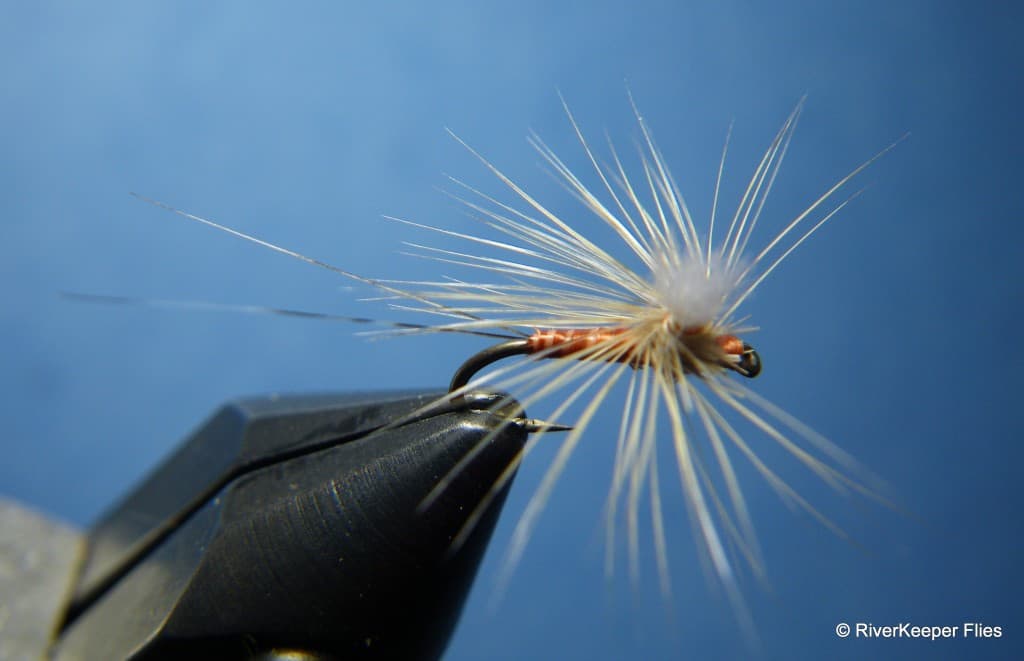

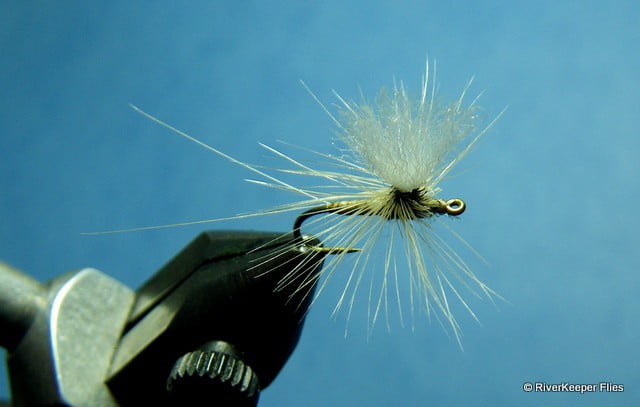
Harrop’s Callibaetis Paraspinner
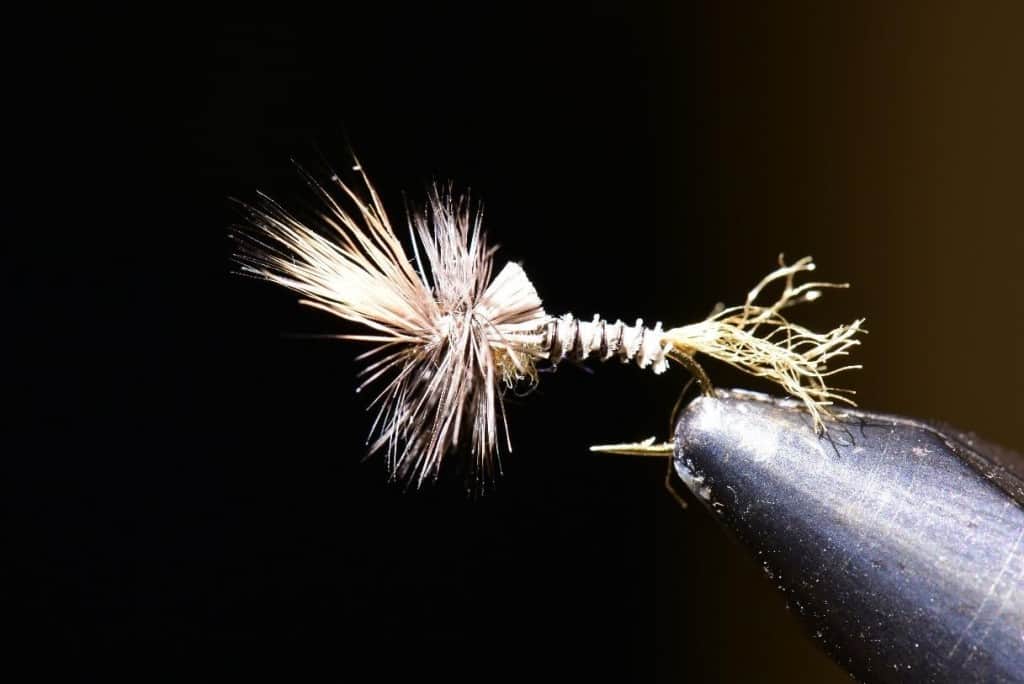
Callibaetis Cripple (tied by my friend Phil Fischer)
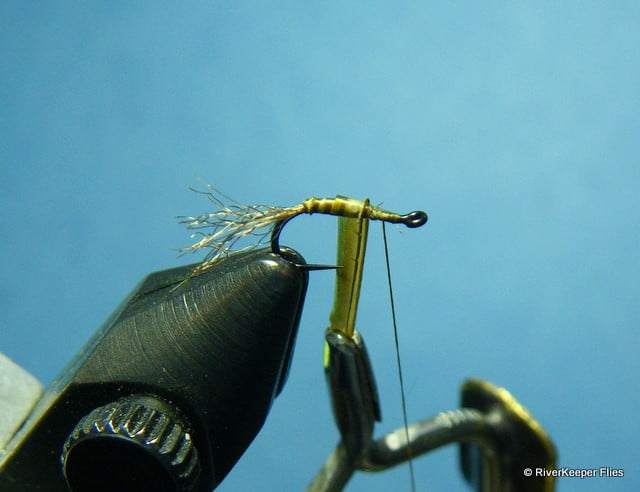
And I’ve been known to tie a few “variants” when the fish are very selective. Here is a secret fly I use at times for Green Drakes.

Any midge, mayfly, or caddis body can be changed from traditional dubbing to a biot body. One of my favorite resources is Rene Harrop’s Book Learning From the Water. He presents many fly patterns for midges, mayflies, and caddis.
So if you are a tyer, feel free to experiment with biots for your mayfly patterns.
For the fly tyer, learning to tie with goose and turkey biots will give you the ability to tie standard biot body flies or create your own variants to fly patterns that have worked for you.
Here is more information about goose and turkey biots and how to use them.
What’s the difference between turkey biot and goose biot? Turkey biots are longer and narrower, whereas goose biots that are shorter and wider. Here are two Blue Wing Olive biots. The longer and lighter colored biot is turkey.

When working with goose or turkey biots, the way the biot is tied on will determine whether the body is smooth or has a furled rib. Here’s how.
Furled body – tie in the biot with the concave toward the hook. If you pull the biot off the stem rather than cutting it, there is a remaining notch pointing toward you.

This is what the final body looks like.

Smooth body – reverse how the biot is tied in. The convex side or natural curve will face up and the notch will face away from you. Not only will the body be smooth, there is a natural light/dark ribbing.
What’s the bottom line? There isn’t a right or wrong way. It just depends how you’d like the body to turn out.
You might already have a few goose and turkey biot flies. If not, pick up a few and try them out.
Enjoy…go fish!