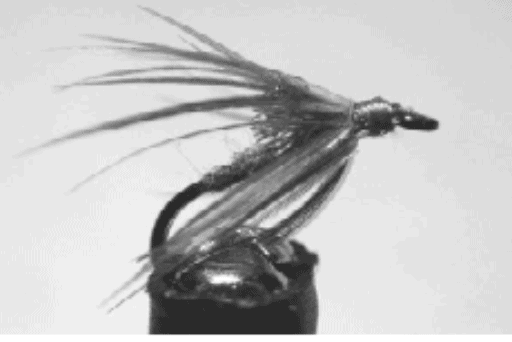
This week’s Throw Back Thursday post is about dye materials at Blue Ribbon Flies.
My wife and I stopped at Blue Ribbon Flies back in July during our first trip this year to the Madison River. I almost always stop in at Blue Ribbon Flies to pick up a couple items. This year, it was piece of X Caddis deer hair and two pair of Mallard wings. I have to say, their Mallard wings are the best I’ve ever seen. I use them for my RiverKeeper Soft Hackle Cripple.
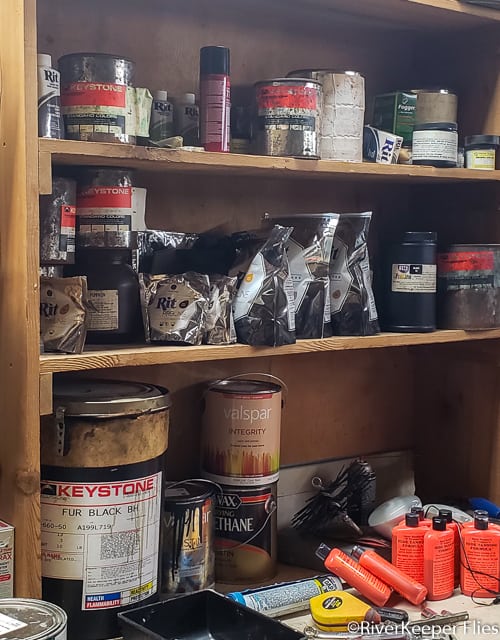
But I digress. Bucky took us to the back room where all the dying of bird skins, hackle of all sorts, Pheasant tails, deer and elk hair, and of course, Zelon happens.
I don’t know how old some of this dye is and Bucky wouldn’t hazard a guess, but you can tell by some of the containers it looks like it’s been there awhile.
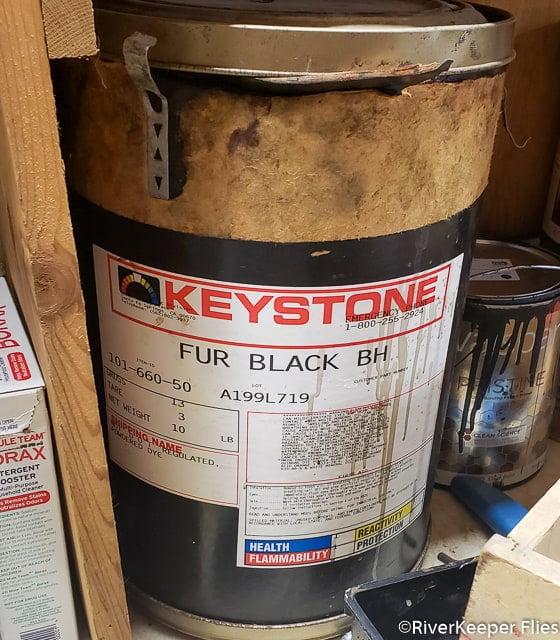
Here is a closeup of the container of black dye.
And this is where all the magic happens. The stove is used to heat water and dye. Do you recognize this image? I highlighted the ironing board a few weeks ago. It’s the one where all the Crinkled Zelon is straightened.

I don’t know how old this stove is either. But it is nasty looking!
My wife constantly reminds me not to lick my fingers when applying dubbing and other materials on flies I tie.
After making a trip to the back room, perhaps I should pay more attention!
Enjoy…go fish!


Though I claim no great expertise with dyes, I would suggest caution with “acid dyes” that are most typically used with fly tying materials (proteinaceous as well as synthetic.) Depending on the dye type they can vary greatly from food grade to serious carcinogens. Know what you are using when you dye your materials and take proper precautions. Though I suspect residual dye pigments that rub onto your fingers would not be of great concern, I prefer the “safe over sorry” approach and wash my hands after handling dyed materials prior to eating.
Wayne
Thanks for the Comment. Just another reason to not lick my fingers!
John