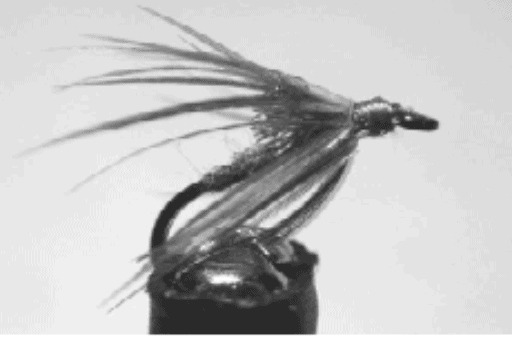
One inch long and green. What?
Yup, if there’s any question about what lake flies to use, a friend of mine always says “Try something one inch long and green.”

I like simple flies for a variety of reasons, but even that recommendation is a little too simple for me. It’s like saying – just fish with an Adams.
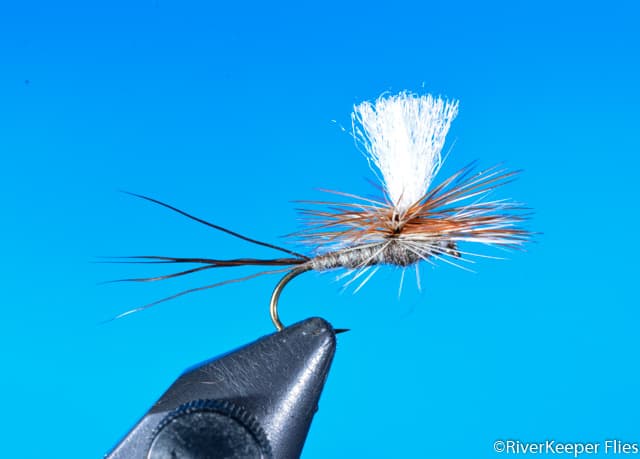
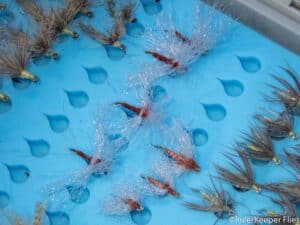
Here’s my go to fly if I don’t see any hatches popping – Denny’s Stillwater Nymph. The original pattern (above) calls for olive marabou tail and wing case. And I fish that. For some reason, I find the hot orange works better.

I must admit I like fishing rivers better than lakes. I grew up fishing rivers. When faced with fishing lakes, I didn’t know how to “read” the water. I’m still learning. But I’m getting better. And I catch my share of fish.
Years ago, my wife and I took a lake fly fishing class from Denny Rickards of Crystal Creek Anglers (Klamath Falls). I learned the importance of zones and how using the right fly line helps tremendously with keeping your fly in that zone. Denny has developed quite a few of his own patterns and I found them to be VERY effective. I ended up purchasing one of his books entitled Fly-Fishing Stillwaters for Trophy Trout as a class refresher and because of the fly pattern recipes. Besides his Stillwater Nymph, I like and fish Denny’s Callibaetis Nymph and his AP Emerger. It’s a GREAT book!
OK, this wasn’t supposed to turn into a sales pitch for Denny Rickards, but I think the flies I listed are VERY effective! They fit my theory of simple, but effective flies.
Back to the “one inch long and green”.
The statement tells me damsel fly nymphs, leeches, and dragon fly nymphs are important food sources for trout. That’s what I think a “one inch long and green” fly could imitate. And the fish always see these food sources.
In my experience, mayflies, damsel flies, leeches, and chironomids are the most important lake flies (not necessarily in that order). That doesn’t mean you shouldn’t be ready for caddis and terrestrial imitations. I just think they aren’t what trout see the most.
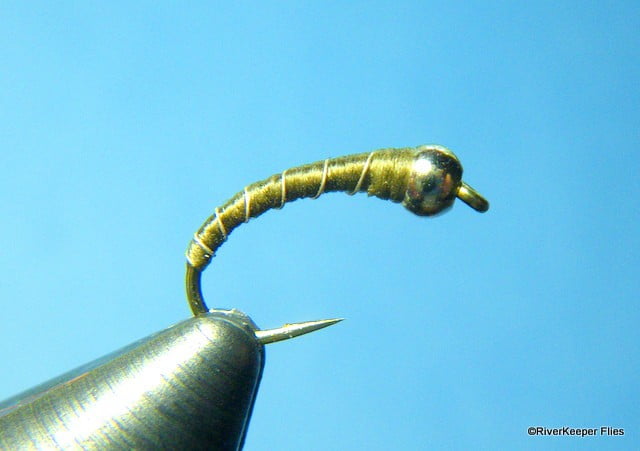
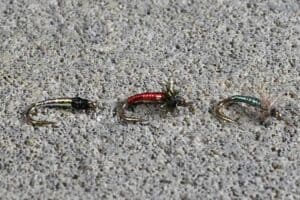
I’ve talked about Callibaetis mayfly patterns and Damsel flies in recent blog posts. Be sure to check out those posts if you haven’t already. The other major flies to learn and fish are midges or chironomids. I can’t do justice to them in this post, so you’ll have to wait. In the meantime, here are a couple of pictures of Zebra Midge flies in black and olive for those new to the sport:

And bugger patterns are important to use when no hatches are obvious. Sometimes you have to go deep in the zone. Here are a few examples:

And besides the buggers in the fly box, there are a few dragon fly nymphs as well.

I hope this gives you an idea of the variety of lake flies to use. Ask around and find out what other fishermen are using. Most of them will help you out.
What are your favorite lake patterns?
(Be sure to SUBSCRIBE to my RiverKeeper Blog email list so you won’t miss the next one! It’s located at the top right of this page.)




I like the stillwater nymph (hot orange)–always my first ‘go to’ fly in lakes. HOWEVER, lately it hasn’t been there for me. The fish at East and Crane don’t seem to like it. Any ideas?