I’ve talked recently about how impressive the Callibaetis hatch and fishing has been at East Lake this year. I decided to re-post information about the Callibaetis mayfly life cycle and fly imitations I use to help you lake fly fishers.
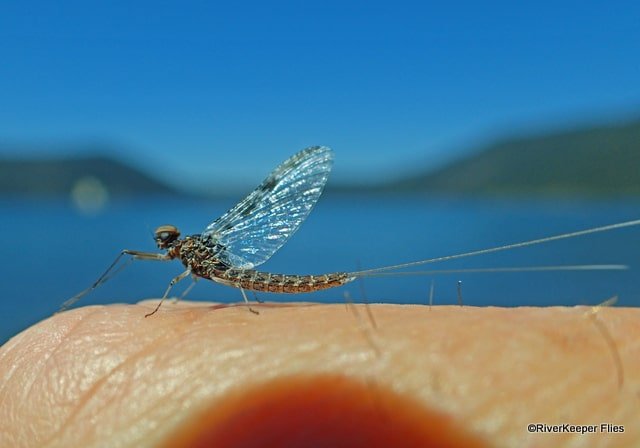
Callibaetis mayflies are known as the speckled duns because of their mottled wings.
Two wonderful sources for more information about these mayflies are the books Western Mayfly Hatches by Rick Haefle and Dave Hughes along with Arlen Thomason’s BugWater. But here’s my short version from what I’ve read.
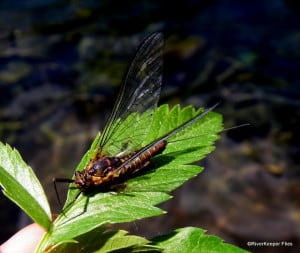
Callibaetis mayflies begin as nymphs, swimming around in the lake. The nymphs are fairly good swimmers. Trout see them a lot and become a major part of their diet. Their body color varies between light gray and brown. When it’s time for them to hatch, they swim to the surface and quickly pop out of their nymphal shuck. That’s when the adult (or dun) hatches and flies off the water. This can be a prolific and consistent hatch for several days. Sometimes they get stuck, which is a good time to try cripples. After they hatch, they fly away to the vegetation and wait to become sexually mature. A few hours later, the dun molts a final time and out comes a spinner. This is the phase where the females line up a male to complete the process. The male’s spinner wings are clear, whereas the female spinner wings will have dark blotches on the leading edge.
When do the trout eat them? Well, they eat them during all phases:
- Nymphs – swimming around as they grow and finally when the nymph swims to the surface to hatch. Find the right zone where the nymphs are and you will have some great fishing.
- Emergers – sometimes the dun takes it’s time hatching and is vulnerable. You’ll see fish swimming around and rising with a gulp, gulp, gulp. Be careful not to pull the fly out of their mouth! Not that I haven’t…
- Cripples – are stuck getting out of their nymphal shuck. They struggle to free themselves, but are unable to do so. Cripples are an easy meal for trout.
- Duns – a newly hatched insect will spend a short time on the water, but not too long. I think this is the least chance of catching fish, but that doesn’t mean I don’t tie on a dun and fish it.
- Spinners – This can be both exciting and frustrating. There may be hundreds of spinners on the water and ask yourself “why would they eat my bug?” But they do! Just find a fish eating, figure out which direction it’s swimming and put a spinner pattern in front of them and keep your fingers crossed!
OK, enough about the real bugs.
Here are the flies I use to match the various Callibaetis phases:
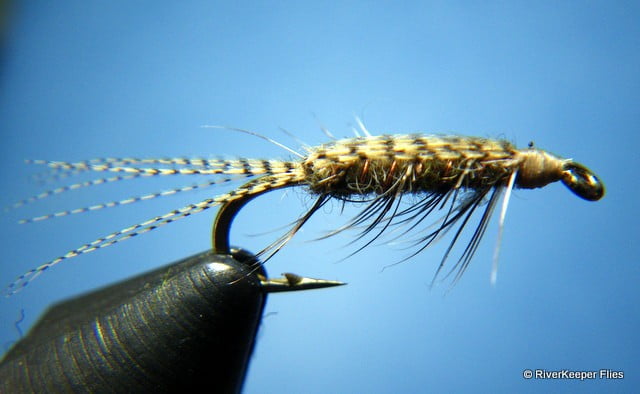
Fred’s Callibaetis Nymph – Variant
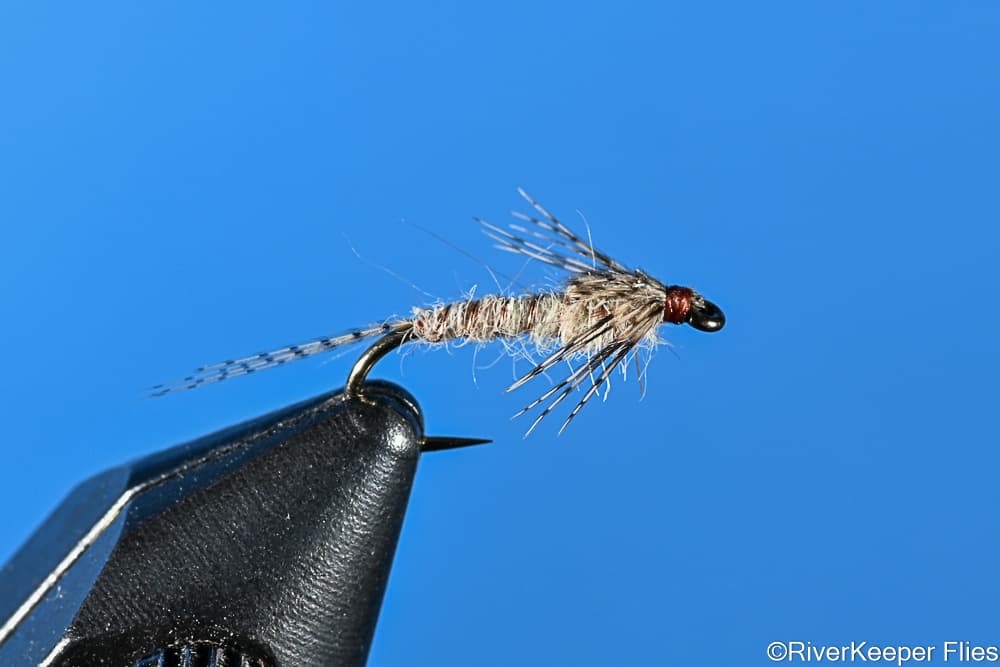
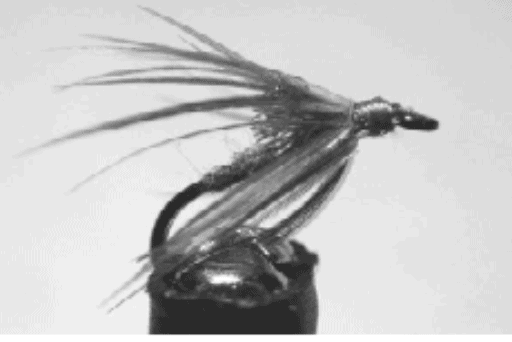
RiverKeeper Callibaetis Emerger
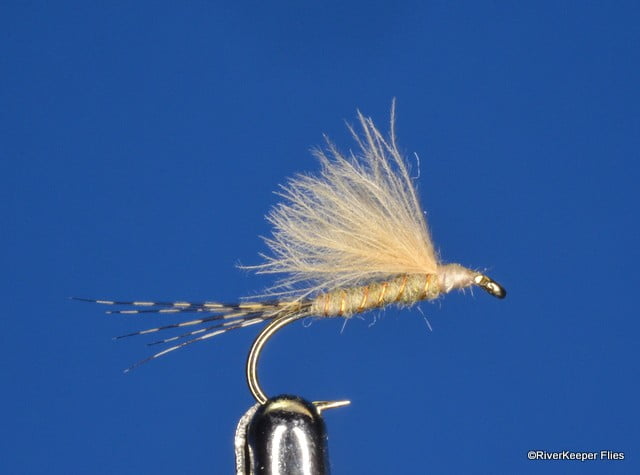
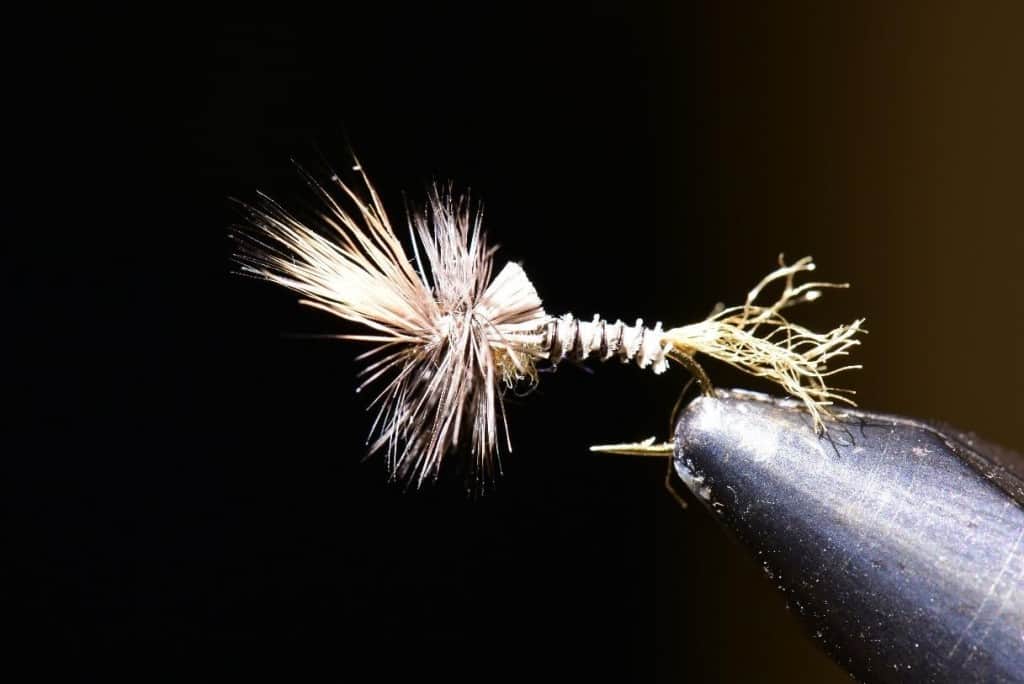
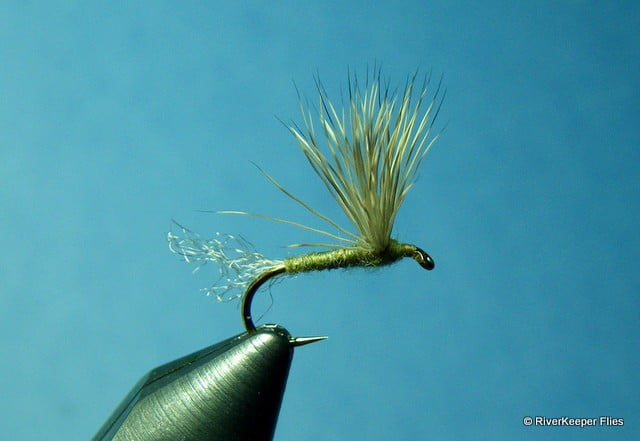
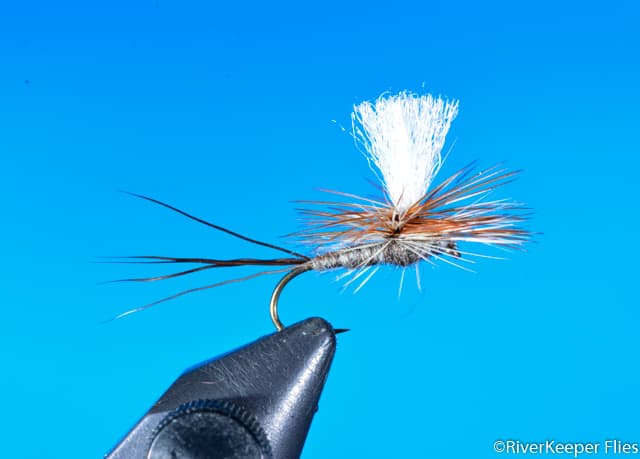
Harrop’s Callibaetis Paraspinner
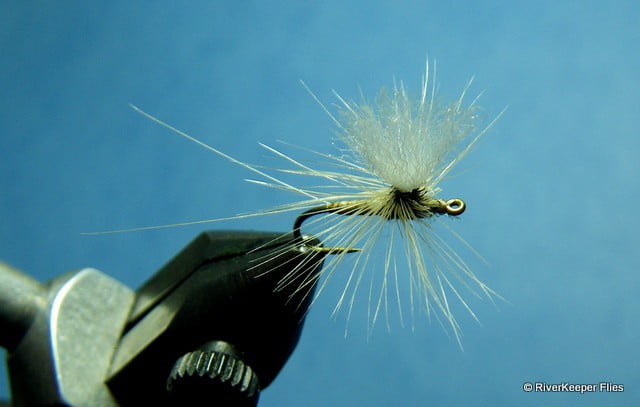

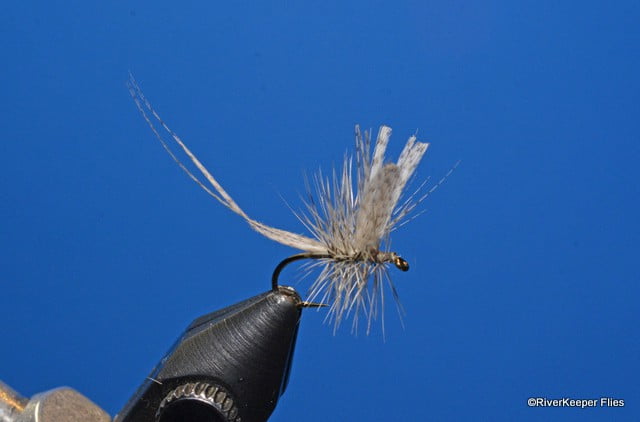
Pick your favorite flies and make sure you have them in a couple different sizes. Callibaetis will hatch 2 or three times per year. Each successive hatch is a little bit smaller. In the waters I fish, they’ll start as size 12 and the next flies hatching will be size 14. The third mayflies hatching will probably be size 16. (Depending upon where you fish, the first hatch may be size 14).
Hope you get out soon and check out the Callibaetis mayflies in the lakes you fish!
Enjoy…go fish!