I’m fortunate to be able to fish over 100 days per year. Why did I begin this week’s post with that statement? Well, spending that much time on the water has changed the way I fish in the last 10 years. I observe the water more. The result is I’m able to see fish rising to hatching bugs. So I’ve turned into a dry fly fisherman. And when they don’t rise to my flies, I ask what are the fish eating?
For some reason, I’m asking that question more and more these days and it leads me to tie more flies to try on these hard to catch fish. Here is my most recent fly.

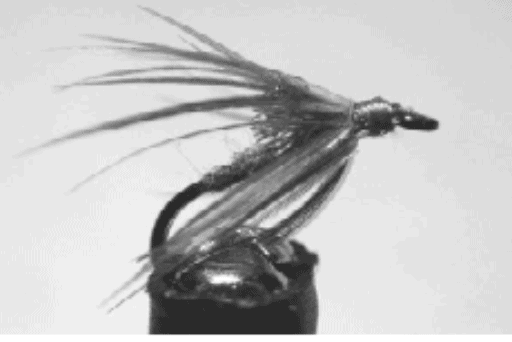
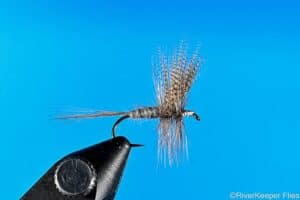
It’s a simple #22 Parachute Midge Emerger, otherwise known as a “beta” fly, meaning I’m testing the fly to see if I should add it to the RiverKeeper Flies Fly Patterns.
But I digress, so let me get back to my story.
I used to only fish weekends and vacations, which meant time on the water was spent casting and fishing regardless if I saw rising fish or not. Said another way, I fished with nymphs a lot. Now I can fish anytime I like and that usually means my fishing partner and I time our arrival at the river when we expect hatches, which in turn results in rising fish…hopefully.
Did I mention I REALLY like to watch a fish rise to my fly?
I think I tie a pretty good fly and those flies have fooled their share of really nice fish. And I’ve gotten better in the last 10 years because I tie so many flies. I sell some (see my Custom Flies tab above) and donate quite a few to my fly club and other events for their money-making efforts. My flies are some of the top raffle items at the monthly fly club meetings.
Basically, I’m into zen fly fishing these days. And while I can fool some of the fish, there are many fish in Frustration Flats (appropriately named) that don’t take my flies.
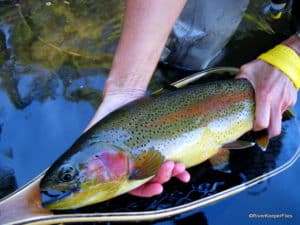
Oh, I get them once in awhile using Sparkle Duns, my RiverKeeper Soft Hackle Cripple, and Rusty Spinners to name a few successful flies. Here is a beautiful rainbow trout from last week.

But I’ve been leaving rising fish lately because I’ve thrown every fly in my fly box at them and the fish ignore them.
I’ve even talked with other fly fishers and asked “what are the fish eating?” Yes, I’ve sampled the water as well, trying to find bugs floating in the surface. And yes, they may be taking emergers or midges…I’ve tried those too! My mind keeps spinning about other flies to try and/or tie, which is what lead to the #22 Parachute Midge Emerger shown above.
But last week, I gave up. The fish were still rising. I call it “consistently sporadic” rises. I told them they won and I decided to try my luck trying to catch a Bull trout. After swinging a fly through water known to hold Bull trout, I was successful with this 24 1/2″ fish.

After a couple of quick pictures, he decided to take a break and rest before swimming away.


Here is the fly the Bull trout ate. It’s a bass fly I tied for Davis Lake, but I didn’t make it up there this year.
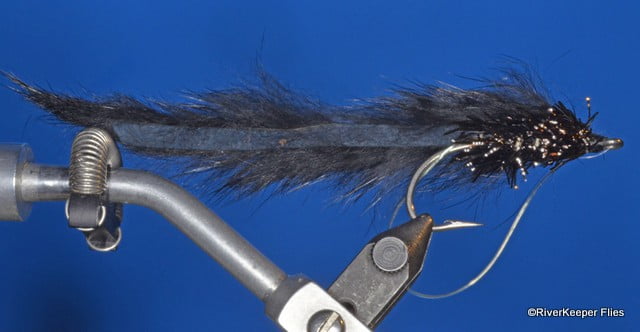
The fly is tied on a size 4 hook with a weed guard, my first attempt with the weed guard. I should have had a few more thread wraps down the bend of the hook to secure the weed guard and tightened up the monofilament at the hook eye. Oh well, he ate it anyway!
At times, I’ve had good luck with and Iris Caddis – Amber, so I decided to tie a few in black on size 18 and 20 hooks. Here is a picture of the #20 fly.
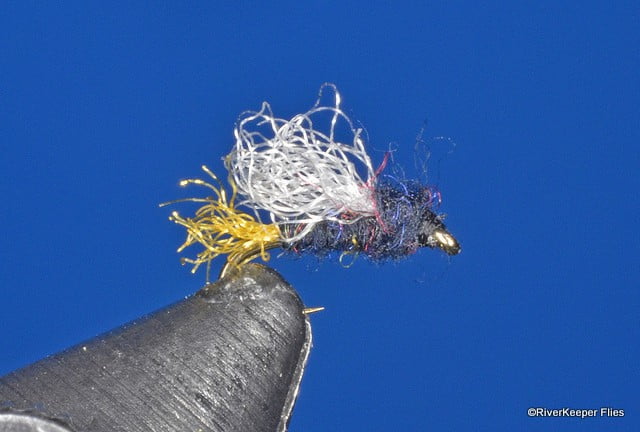
The fish didn’t seem to like them that day, so I came home and tied some an #18 in tan.
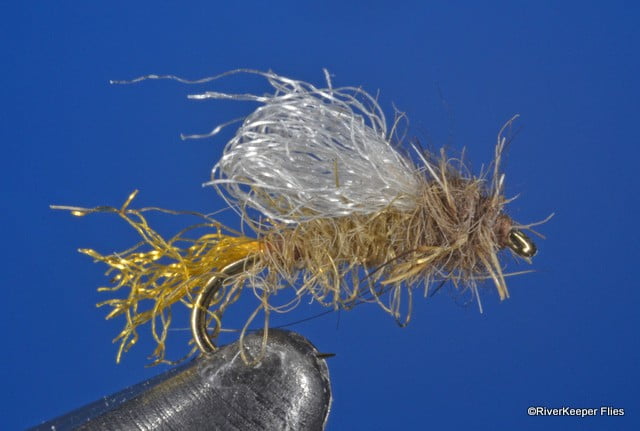
I think I’ll head to the river and give them a try.
I hope I won’t be asking the same question…what are the fish eating?
Enjoy…go fish!



Hi John enjoyed your article! I can certainly relate. You have your work cut out for you in creating a dry fly for bull trout.?
Yesterday your soft hackle worked great fooling several nice rainbow and even Browns. Thank you john for fly creation and Karen for demonstrating this fly works!
Last couple of days many of the C flies were very gray. I tied a few using gambles quail feathers. Fish loved it for at least 2 days max
Max
Thanks for your comment. Always pleased to hear when one of my flies catches fish!
John
Hi John,
Loved your article! It brought a story to mind I thought I’d share. One day in mid-September a number of years ago, Gretchen & I was guiding a couple from New Jersey on Slough Creek in Yellowstone National Park. The fish seemed to be rising to hoppers and a small mayfly I couldn’t quite make out. We tried every hopper & small dry in our boxes and all the fish did was slowly rise up to look our offering over then slowly sink back into their holding position. These fish had seen every dry known to man and probably even knew which shop sold it. Finally in frustration, I put a #4 Black Zonker on and nailed a nice cutthroat on the first cast. The rest of the day was some of the best “client fishing” we had enjoyed that year. That story has repeated itself many times over the years. The point being, show them something they have not seen before like the black streamer you show above OR MAYBE your new emerger (which we like a lot by the way).
We sure enjoy your blog and read it every time it shows up in our inbox. Good job! Take care & …
Tight Lines – (Gretchen &) Al Beatty
Boise, ID
Al
Thanks for your comment and story. I have to agree with you on the non-logic of fly selection that happens to work. Doesn’t make any sense to me, but I acknowledge it is very effective!
John