RS2

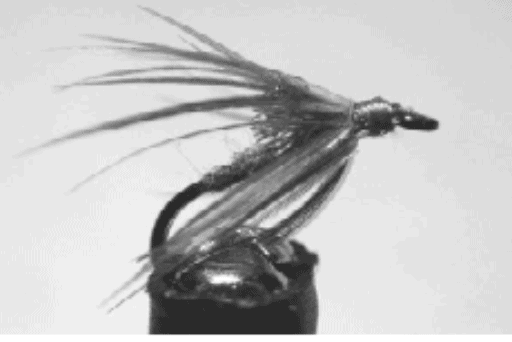
This week’s Throw Back Thursday fly is the RS2, developed by Rim Chung.

RS2 - Original | www.johnkreft.com

This is a recent tie, following the original pattern sheet. I’ve used natural beaver dubbing and webbing from a dun colored hackle for the wing. The first time I tied this fly was in the 1990’s and for some reason thought it was a lake fly. Wrong! It’s an imitation of a mayfly emerger. Like any great pattern, just change the size and color to imitate the real bug.

As I was developing my Crooked River Flies page, I was reintroduced to the RS2 and I thought it was a candidate for a Throw Back Thursday Flies post. So here it is!

I like to develop a little historical piece to accompany the post when I can. But Bill Seitz, our resident expert on the Crooked River here in Central Oregon, did it for me:

“The RS-2 is a mayfly emerger that was developed in the 1970s by Rim Chung (the RS-2 comes from Rim’s Sembalance, second version). It is a “go-to” fly for many anglers that fish on the heavily-fished tailwaters of the Front Range of Colorado. It is a versatile mayfly emerger pattern with application on all Central Oregon streams. Dave Hughes, in his book Nymphs for Streams and Stillwaters, recommends fishing this fly in the upper water column (12 inches to 2 feet) in combination with a slightly larger fly about 12 inches from the RS-2 using an indicator or a dropper.” 

Here is one of Bill’s variants to the RS2 to allow more fish caught per fly…black UV Ice Dub and Zelon.

RS2 - Black Ice Dub |www.johnkreft.com

Have you ever fished this fly? 

Similar Posts

  • Bergman’s Hawthorne

    This week’s Throw Back Thursday Fly is Ray Bergman’s Hawthorne. Bergman’s Hawthorne is a wet fly listed in his book entitled Trout (1940 – fourth printing) on page 64, Plate No. 4. As I’ve mentioned many times, I enjoy highlighting a Bergman wet fly because it forces me to sit down and tie these elegant flies. Bergman’s…

  • Fishing Changes in November

    I’ve said for the last couple of years the fish gods flip a switch and the fishing changes in November. But this year, the weather forecast is such that I might get another week of good fishing. Each day is different and the hatches are getting shorter, just like daylight hours. What this means is…

  • Kent’s Pumpkin Head

    This week’s Throw Back Thursday Fly is John Kent’s Pumpkin Head. The Pumpkin Head was created by John Kent originally for fishing in Tunkwa Lake in BC, a highly productive but frequently low visibility lake. Kent originally developed the fly as a damsel imitation, but I’ve used it as an attractor pattern when no hatch…

  • Just in Time Fly Tyer

    Earlier this month, I wrote a post entitled Where to Fish where I tried to describe the difficulty of all the fly fishing choices available to me. Today I’m headed to the Lower Deschutes to see if the Golden Stoneflies are still around in numbers to have a few fish looking up. And that means…

  • Bi-Visible

    This week’s Throw Back Thursday Fly is the Bi-Visible. Ever use one? I have…many years ago. But I haven’t had one in my fly box for some time. The Bi-Visible was created in the early 1920’s by Edward Ringwood Hewitt. In his book Telling on the Trout (1926) Hewitt stated: “Dark colors are more visible to the trout…

2 Comments

  1. RS2 in 18 is long standing go to fly for the San Juan River in New Mexico.
    Fished there in choc brown and gray. Tied with thread body and white foam instead of Bill’s Zelon. No tail.
    Thanks John

Leave a Reply

Your email address will not be published. Required fields are marked *