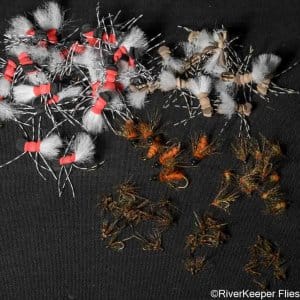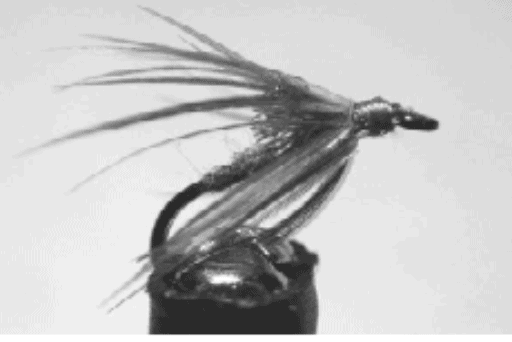
A few weeks ago, I highlighted a new page on Crooked River Flies. Well, I’ve had time to add a few fly pattern sheets and thought I’d share them with you.
The best way to show my progress is with a picture of my “work in progress” fly box.
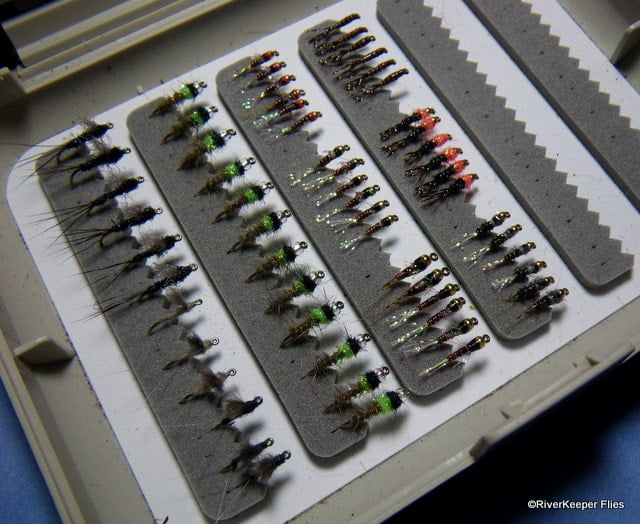
Here’s what’s in it so far…60 flies…
- Row 1 (Top)
- Good and Plenty #18
- Frenchie #18
- Peacock Nymph #18
- Row 2
- WK Thread Body Mayfly Nymph with hot spot #18
- WK Thread Body Mayfly Nymph #18
- WK Thread Body Mayfly Nymph #16
- Row 3
- Row 4 (Bottom)
These are the fly patterns Bill Seitz uses…and he should know if they work!
I’ve learned several things reviewing his articles in our local Central Oregon Flyfishers newsletter. Here are a few interesting facts.
An issue to consider is biomass.
What is that you ask? It’s all those bugs floating down the current right by the fish. Bill might call it seasonal drift. Each season has different insects hatching. Your goal is to mimic the real insects and encourage the fish to eat your bug.
Bill would tell you the Crooked River is a MIDGE river meaning you need to use SMALL flies. By small, I mean sizes 18 – 24. Yes, those are small. And if you are afraid of small flies, you need to develop a plan to use them if you want to be successful at catching fish (hmmm…perhaps a future post). Sure, you might pick up a fish or two if you are lucky, but nothing like the numbers of fish Bill catches. Think SMALL.
Besides midges, you’ll see Blue Wing Olives (BWOs) this time of year. And they are SMALL too.
Other months the fish will see Pale Moring Duns (PMDs) float by and they aren’t much bigger…maybe size 16.
Lastly, look for the Mother’s Day Caddis hatch around… oh yeah… Mother’s Day.
If you study Bill’s flies, you’ll see he creates what I would call “variants”. Those are small changes to existing fly patterns. Most of the time, he is switching a natural material for man-made…pheasant tail to Krystal Flash or embroidery thread. His “variant” will last longer and catch more fish. I know what you are thinking…”if I only had that problem!”
Next is profile. Bill looks at many fly boxes and tells the fly fisher their flies are too big. The fly patterns need to be smaller and thinner…just like the real bug. Look at a few of the fly pattern sheets I created and the picture of the flies. I’ve tried to do just that.
Segmentation. Many of his flies use wire ribbing to imitate the segments and contrasting colors of the real insect. Coating them with UV Resin really highlights the ribbing.
Here is a good example – the Good and Plenty.

Hot spots and flash. He really believes in them. Flash might be florescent orange, pink, or chartreuse thread or UV Ice Dub, but it’s certainly in many of the fly patterns he fishes. And many also utilize Mirage Opal or holographic tinsel for the wing pad. Or a wing using Krystal Flash or Angel Hair…you guessed it…the UV type. Flash helps attract the fish for some reason – ESPECIALLY for the Crooked River.
And an example of hot spots – a Frenchie.
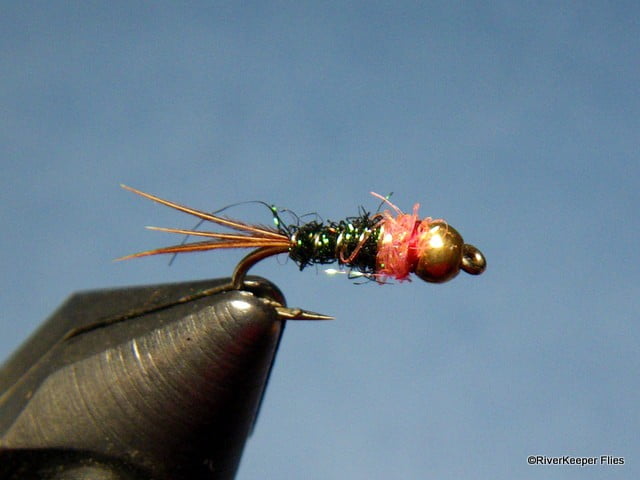
Which brings me to the last variation…
UV dubbing or body materials. I don’t profess to be an expert on UV. Far from it. I’m still learning about UV and the effects on catching fish. But if Bill says he catches more fish with UV materials, I pay attention! You should too. Again, check out the fly pattern sheets and see the types he uses.
I’ll finish up the other flies soon. Be sure to check out my Crooked River Flies page in the Fly Patterns tab.
- If you’d like to receive an email when a new Blog is Posted, be sure to sign up in the SUBSCRIBE area on the sidebar of this page.
- Be sure to check out the Fly Patterns page on the website as I continue to add patterns I fish. Don’t tie? That’s OK. Many of these patterns can be found in your local fly shop.
- Feel free to share with your friends by copying the link to my website (www.johnkreft.com), or using the buttons below to SHARE on your Facebook page or pin pictures to Pinterest.
- If you’d like to follow me on Facebook, click Follow RiverKeeper Flies on the sidebar where I add a few pictures and thoughts.