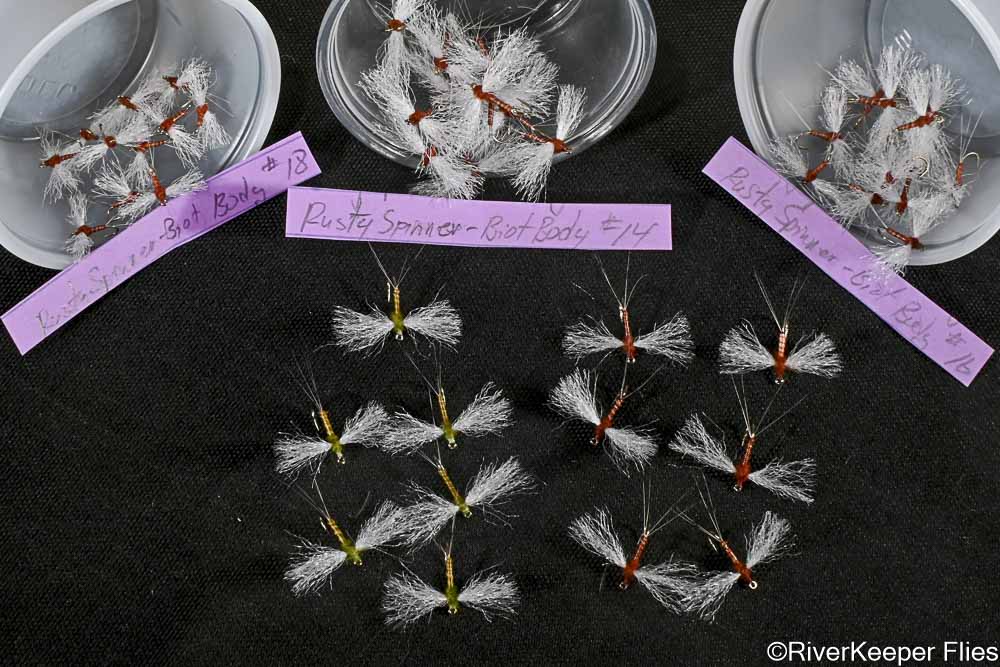
I’ve been working on a very large fly order of over 300 flies, which included 3 dozen Rusty Spinner Biot Body flies in sizes 14, 16, and 18. I thought it would be a great time to write again about the importance of imitating mayfly spinners.
Here is a refresher or if you are new to fly fishing, you’ll soon find out why imitating spinners is important.
When fly fishers tell me about a hatch they experienced early in the morning where trout were rising, I always pay attention. More than likely, they are describing a “spinner fall” and not flies hatching.
Mayfly spinners are the final phase of a mayfly’s lifecycle and I believe it is a tremendously under-realized stage for the fly fisher to imitate. Every mayfly has a spinner phase.
The main characteristic to identify the spinner phase of a mayfly are the clear, opaque wings which lay outstretched and flat on the surface film. These are called hyaline wings and provide an extremely reflective surface which I think attracts fish. Here are a few mayfly spinners from the rivers and lakes I fish. You can see the similarity of wings in all the photos.

- Spinner


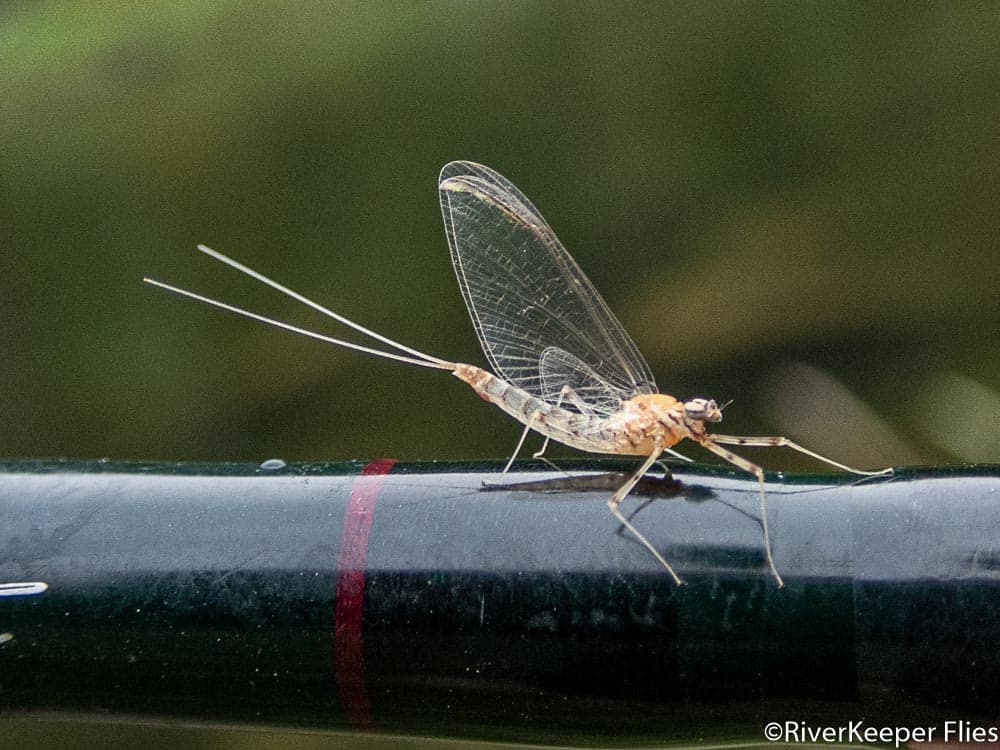

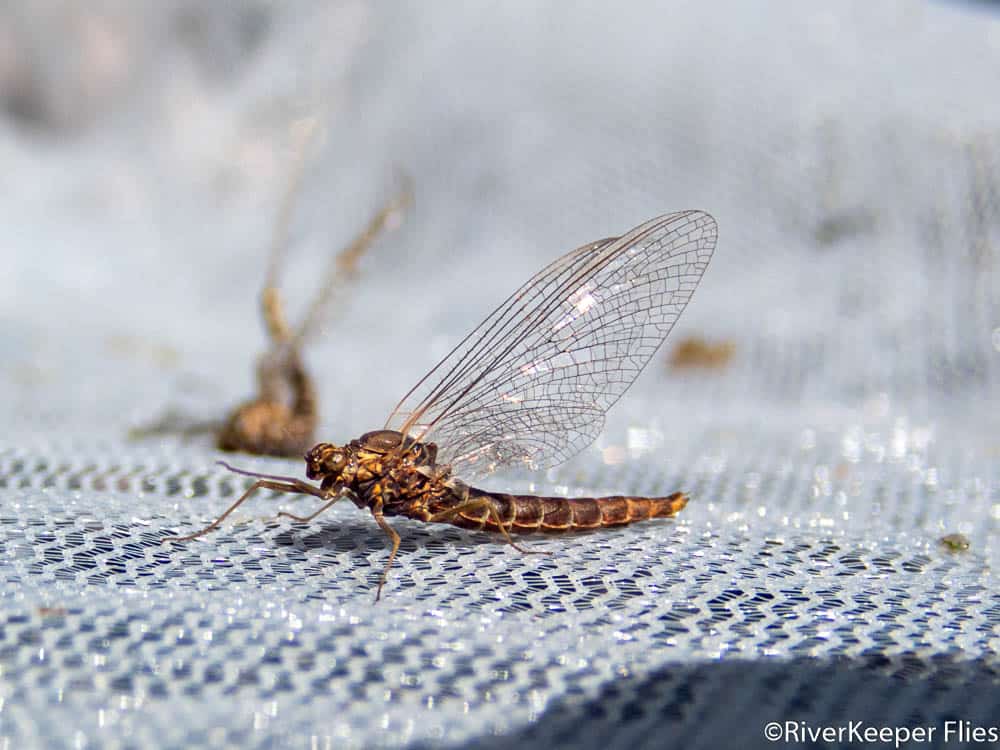

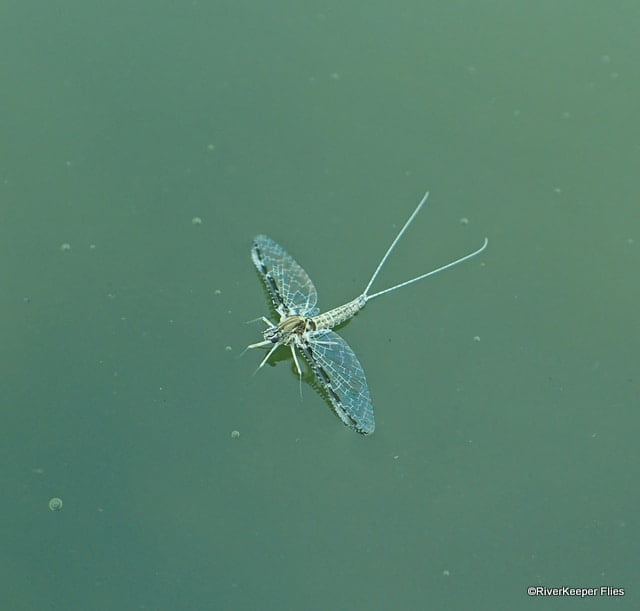
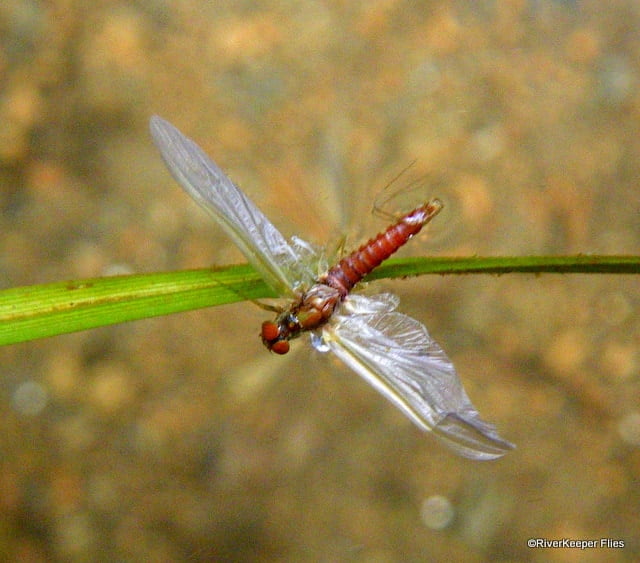

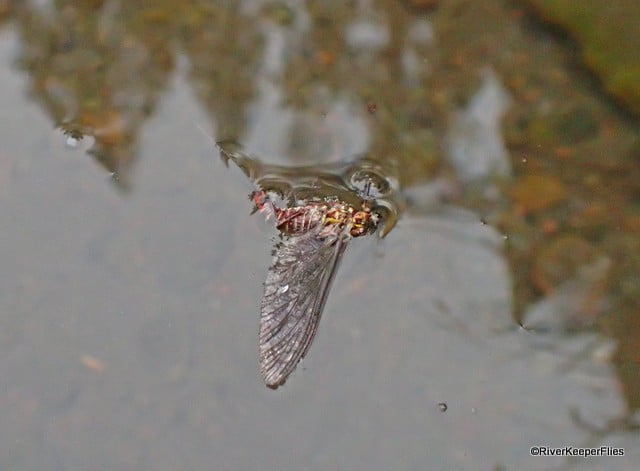
Many of the spinners I see are floating downriver with wings splayed flat on the water’s surface. But some just tip over with both wings together. Look closely at the last image above.
Look closely on the streamside vegetation and you might see this:


These insects are probably waiting until the right time to mate.
Mayflies begin their life as an egg which develops into a nymph. How long they are in the nymph stage depends on the species and season. Some wait a year. Others, like Callibaetis might have several broods a year.
Many nymphs swim to the surface where the nymphal shuck breaks open and a dun, or winged adult, pops out. This is the “emerger phase” and one I enjoy imitating. Some adults get stuck in their nymphal shuck and die, floating downriver as an easy meal for a trout. It’s called a “cripple”.
After flying around as a dun, nature tells them it’s finally time to mate. The back of the dun splits open and another insect, a spinner, crawls out.
Here is an example of a Trico, which is a mayfly found on lakes and slower-moving rivers.
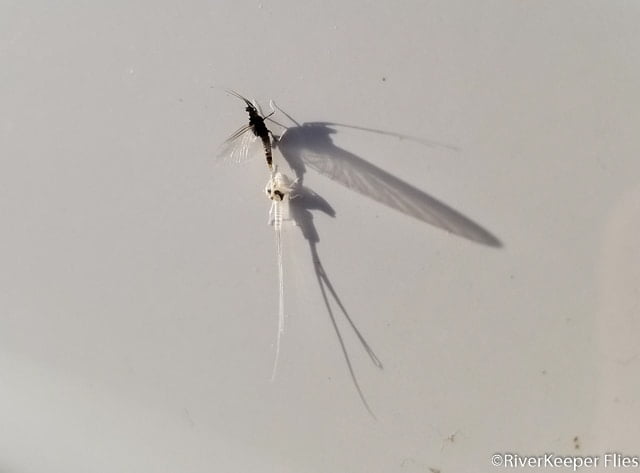
And a video from my RiverKeeper Flies YouTube channel I took on Ennis Lake of a Trico Dun turning into a Trico Spinner.
You’ll see spinners flying over the water in mating swarms. Sometimes the spinners will suddenly drop several inches or a foot before they begin flying again. When a female is nearby, she will be quickly sought out by numerous males wanting to mate with her.
After the eggs are fertilized, she drops them on the surface film, usually touching the water with her abdomen. She’ll fall to the water when finished and is an easy meal for a waiting trout.
If you see dimples on the water from a trout, it has probably sipped a spinner.
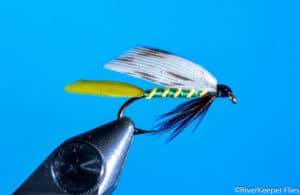
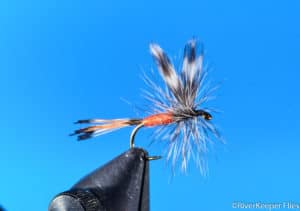
How about a few flies to imitate this stage? The silhouette of the transparent wing is a key characteristic to imitate mayfly spinners. These are called hyaline wings and provide an extremely reflective surface which I think attracts fish.
Here are my favorites:

The fly on the right is a Rusty Spinner. After I tied 3 dozen flies shown at the top, I decided to tie a few for the provider box and added a few in olive to imitate some of the real bugs we see on the water.
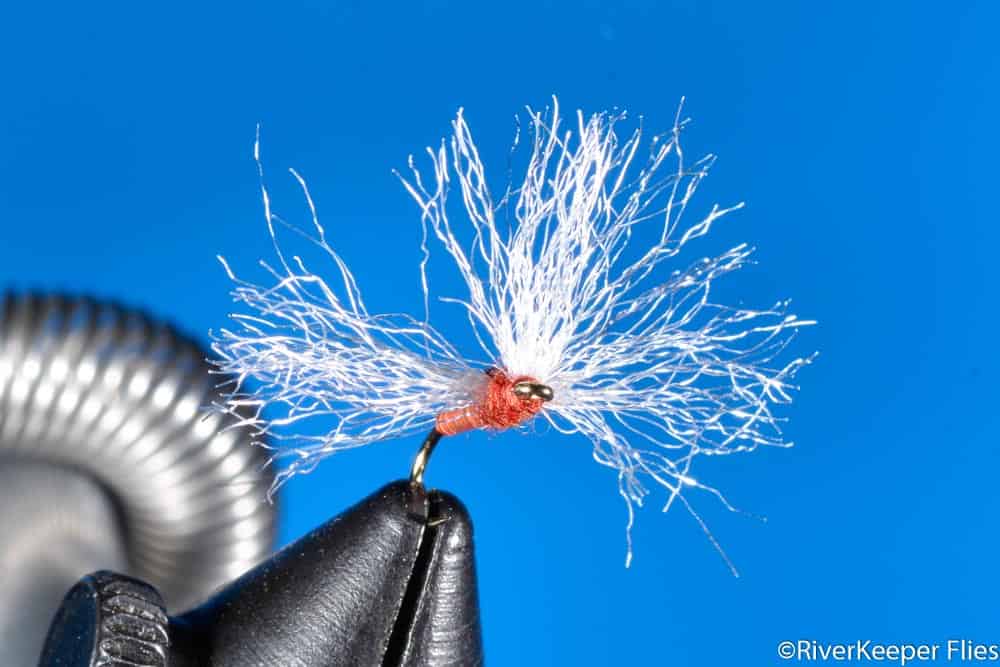
I began tying this fly a few years ago after watching one of Kelly Galloup’s YouTube videos. It really works in broken water because the upright wing is easier to locate.
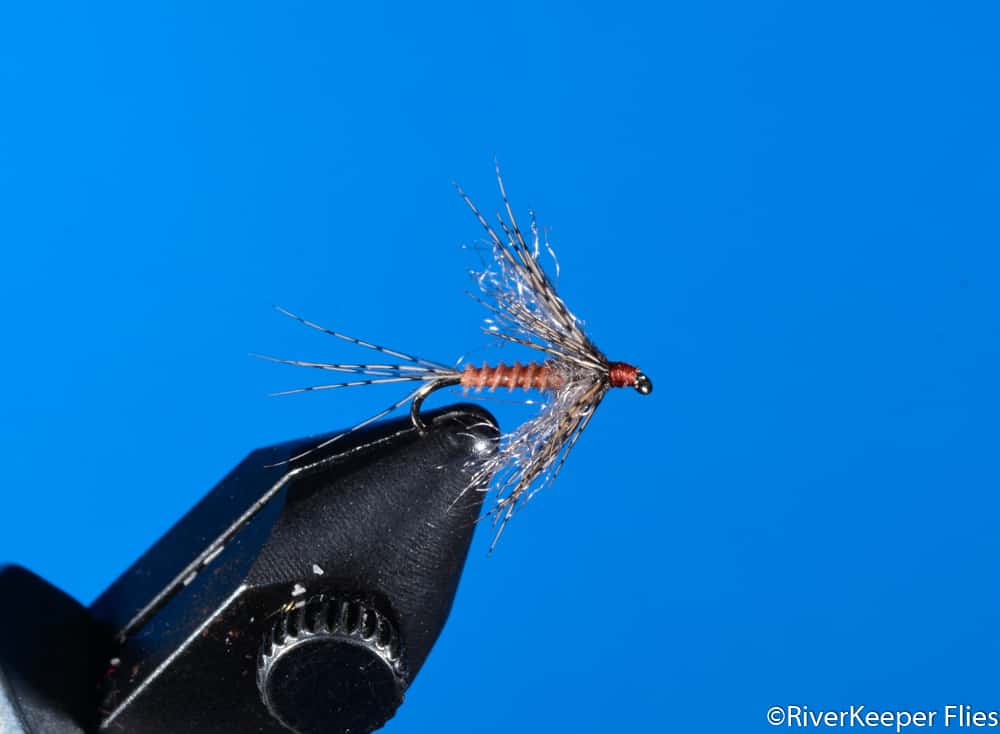
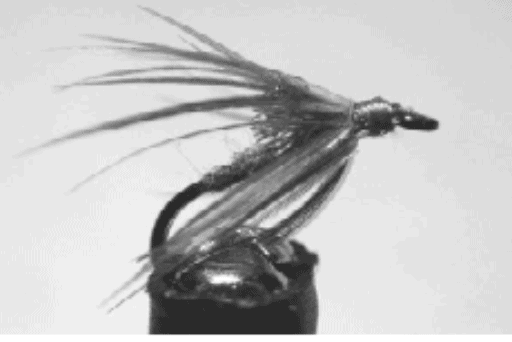
I found this fly in 2020. Kelly designed the fly to sink as many fish eat spinners as they eventually drop in the water column. Because I enjoy watching fish rise to my fly, I created a variant to float, substituting the Hungarian Partridge feather for a dun dry fly hackle.
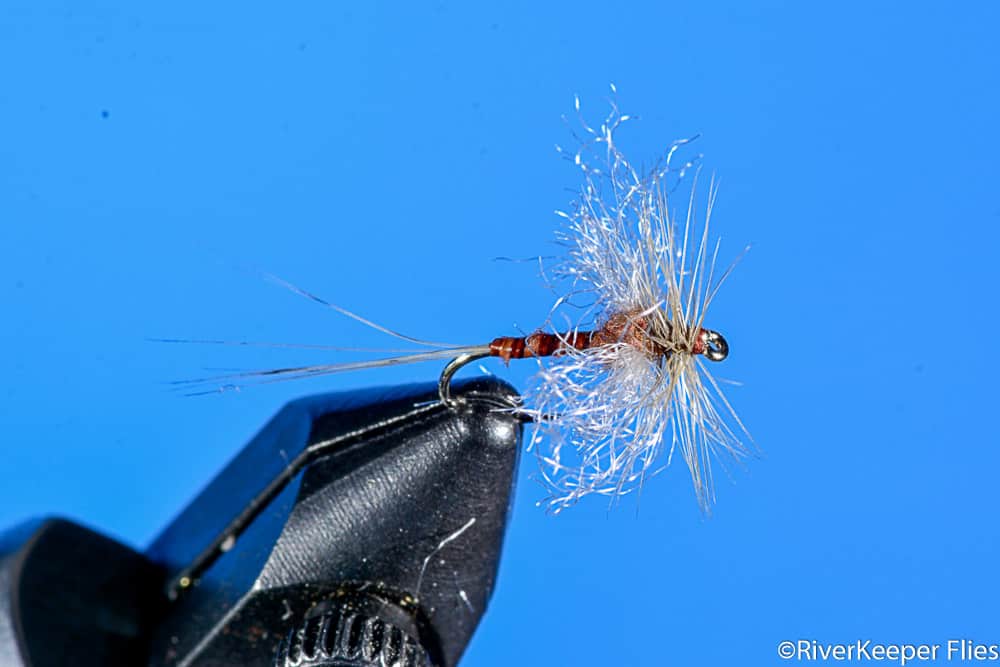

Lastly, a size 24 Trico Spinner

As you can see, all the imitations share the same profile and wing color. The body is changed to represent the different species.
Make sure you have a few mayfly spinner patterns in your fly box.
Enjoy…go fish, stay safe!