Harrop’s CDC Rusty Paraspinner

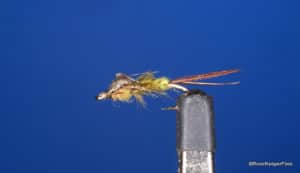
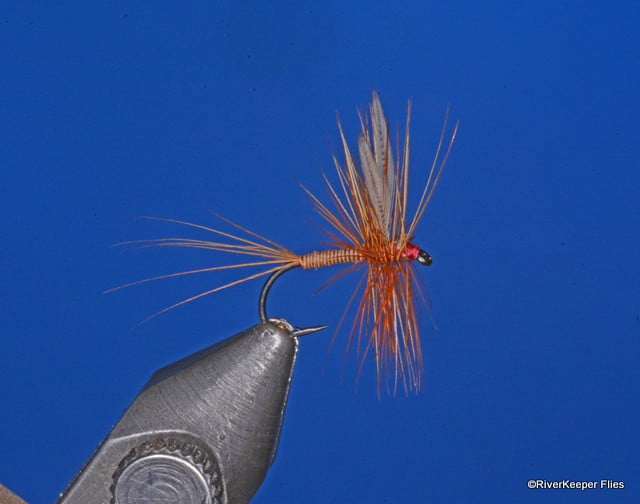
This week’s Throw Back Thursday Fly is Harrop’s CDC Rusty Paraspinner.

Harrop's CDC Rusty Paraspinner | www.johnkreft.com

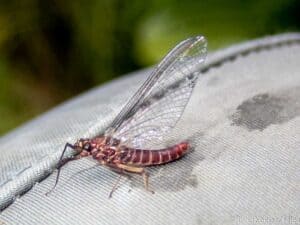
I hope you were able to read a recent post, Importance of Imitating Mayfly Spinners. Since I’ve been thinking about spinners for a few days, I thought I’d find one to feature in a TBT post.

Harrop’s CDC Rusty Paraspinner was created by Bonnie Harrop of the House of Harrop and René Harrop’s wife. The goal was to enhance the visibility of the traditional rusty spent-wing pattern. A grizzly hackle is used to create the illusion of the flat spinner wing by trimming a “V” in the forward parachute hackle fibers, while allowing a flat profile with segmented biot body.

Harrop's CDC Rusty Paraspinner - Top View | www.johnkreft.com

You may have heard of René Harrop and Trouthunter Fly Shop on the banks of the Henry’s Fork of the Snake River in Last Chance, ID. The Harrop family are known for their fly tying prowess and fly patterns utilizing CDC feathers. It’s where I purchase my CDC feathers.

In a January 2014 Fly Fisherman magazine article, René cites Lunn’s Particular as “the original” Rusty Spinner fly pattern.

I featured Lunn’s Particular in a TBT post back in October 2017.
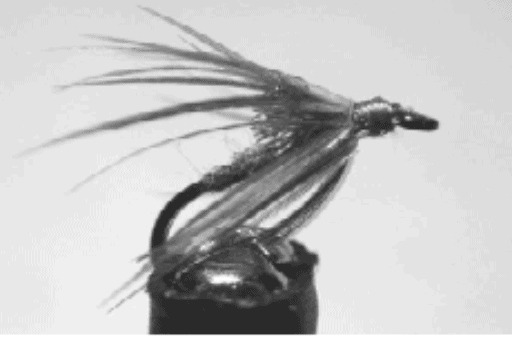
Lunn's Particular | www.johnkreft.com

“William J. Lunn was the river keeper for the Houghton Club’s fifteen mile stretch of the river Test in England from 1887 through 1931, a total of 45 years. 

Lunn is credited with the first representation of the Rusty Spinner. The fly design incorporates a key component of the real fly – a slender, segmented body.

Lunn’s Particular was developed in the spring of 1917, which makes this fly 100 years old!”

To see more creative fly patterns or just hone your fly fishing skills, pick up Harrop’s terrific book Learning from the Water (2010).

Enjoy…go fish, stay safe!
Similar Posts

  • Green Drake Spinner Fall

    I’m in Maui where I found warmer weather than home…between 30 – 40 degrees warmer! I brought a vise, tools, and a few materials with me and am tying the wings and tail for a Green Drake Sparkle Dun. That’s right, I almost always take my fly tying materials and tools if I plan to…

  • Chubby Chernobyl Fly Patterns

    Chubby Chernobyl flies are a newer iteration of the old Chernobyl Ant pattern used by many fishermen several years ago. This odd looking fly is a go to fly when the Salmonflies and Golden Stones begin their annual hatch, which is mid-May into June. This is one of the best hatches of the year. Check…

  • Crooked River Flies – Done

    If you’ve been following my posts lately, you know I’ve been working on a project to complete a box of flies for the Crooked River. Well, it’s finished. Here are the Crooked River Flies – done! These flies are variations of established fly patterns created by Bill Seitz, who I call “Crooked River Bill.” He…

  • Lee Clark’s Twisted Body Stone

    This week’s Throw Back Thursday Fly is Lee Clark’s Twisted Body Stone. The Twisted Body Stone is a different technique of using 100% polypropylene to create a body to imitate larger flies. Lee is better known for his original Clark’s Golden Stone shown below using the same material to imitate a body with it combed…

  • Sparkle Duns Galore

    I’ve been tying flies lately…lots of flies. Sparkle Duns galore. They’ve been flying off the vise. Between a large order that includes 9 dozen Sparkle Duns I’m tying for a good customer and another dozen for my provider box, I’ve tied 10 dozen Sparkle Duns in the last 2 weeks, from size 8 down to size…

  • Poxyback Baetis

    This week’s Throw Back Thursday Fly is the Poxyback Baetis. This is an older fly pattern I found in Randall Kaufmann’s book Tying Nymphs (1994). Kaufmann’s book, along with his Tying Dry Flies, was one of the first color fly tying books I purchased. Tying Nymphs taught me new techniques, materials, and flies to tie. The Poxyback…

Leave a Reply

Your email address will not be published. Required fields are marked *