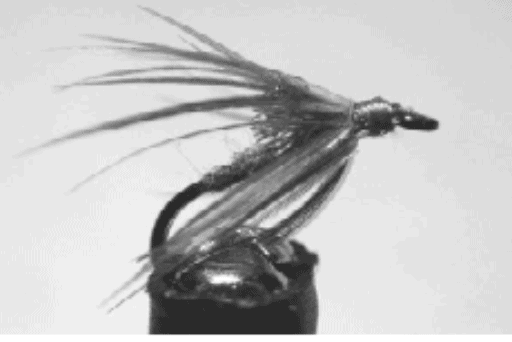
I got your attention, didn’t I? No, I’m not suggesting I tie perfect flies. I wanted to express how difficult it is to tie perfect flies. To me, the perfect fly is aesthetically pleasing to the eye, tied with proper proportions, and entices a fish to eat it. It might imitate a real insect or be a beautiful attractor pattern.
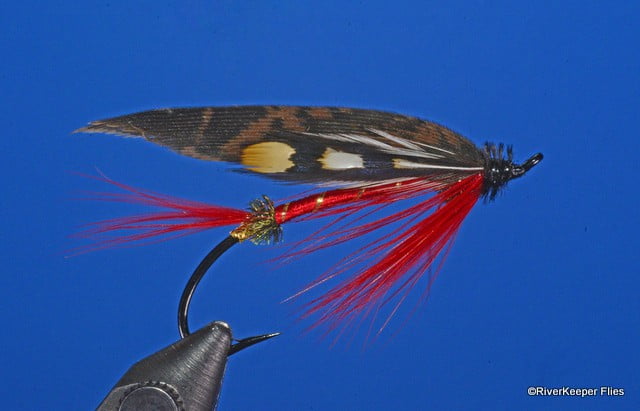
I’m working on a custom fly project to tie a handful of streamers I’ve never tied before. I felt confident they would turn out OK. Why? Creating a good fly requires skill and being able to consistently repeat the proper proportions.
How do you achieve that? Practice, practice, and more practice.
My fly tying has improved 1000% the last few years. I attribute it to tying lots of flies, paying attention to the details, and utilizing proper technique.
Repetition helps to reinforce proper technique and create muscle memory. In addition, you get a “feel” for working with material and how much tension to apply before breaking thread. Seldom do I sit down and tie a new fly I’m happy with the first time.
But I believe in myself and my ability to create a work of art. Back in the old days of English fly tying, they referred to themselves as “fly dressers”. I hope to someday be in their league.
Lastly, I can’t tell you how important selecting the proper materials will help to create a nice looking fly. It’s a lesson I’ve learned over the years.
Here is an example of a spey fly project I was proud of. It started with Taylor’s Golden Spey.
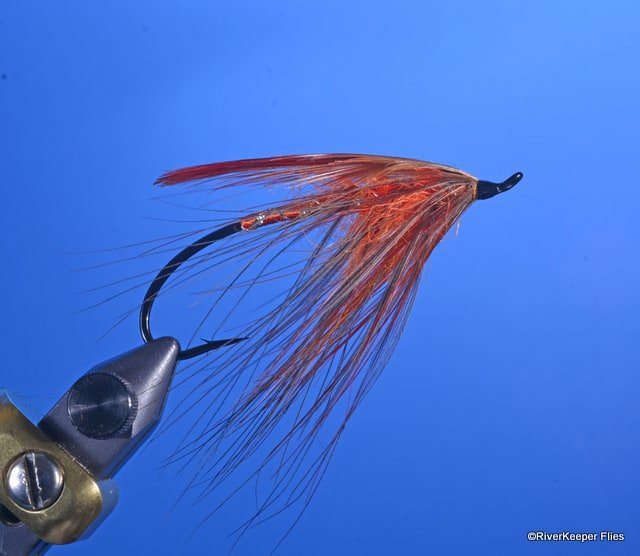
I created a couple of variations, one I called the Ruby Spey. Here is a close-up image of the body detail.

The other spey fly I think looks elegant and I worked on a couple of years ago was the Lady Caroline.
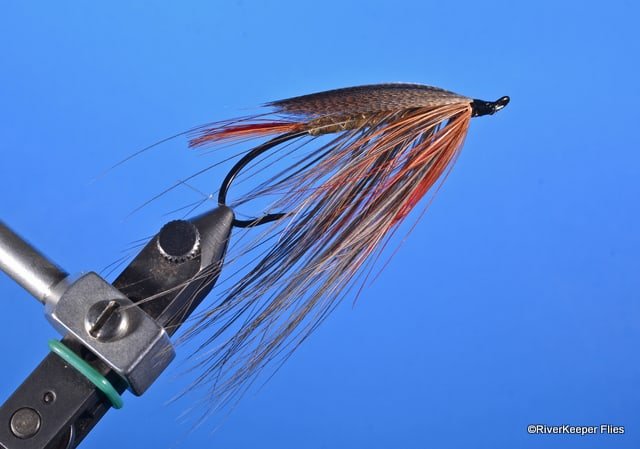
I’m happy with this one, but I can’t tell you how many flies I attempted before I was satisfied.
How about a trout fly example?
Quigley’s Film Critic is another example of a customer request. The fly isn’t terribly complex to tie, but it does require patience fitting all those materials onto a small hook.
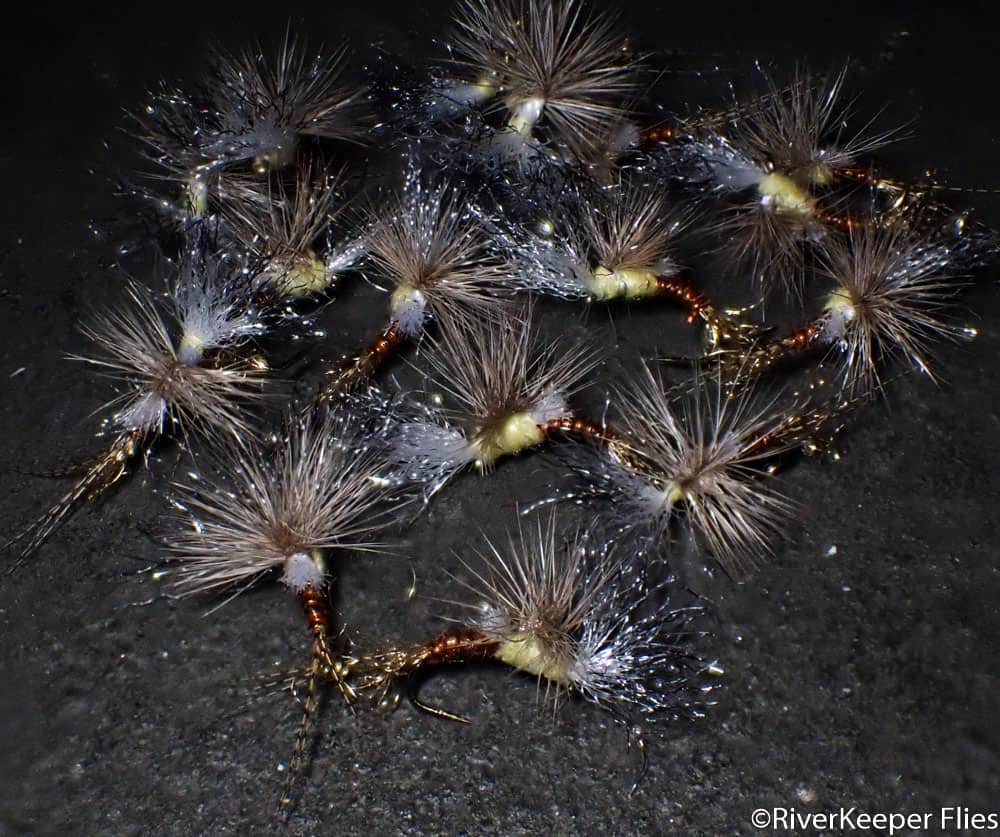
Those are size 16 PMD imitations above and here is a size 20 BWO fly.
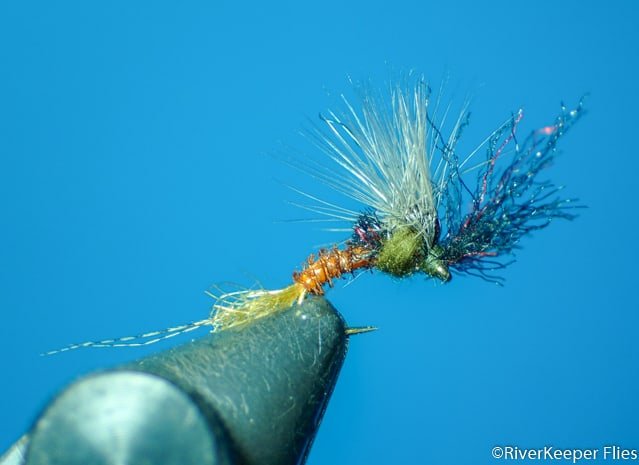
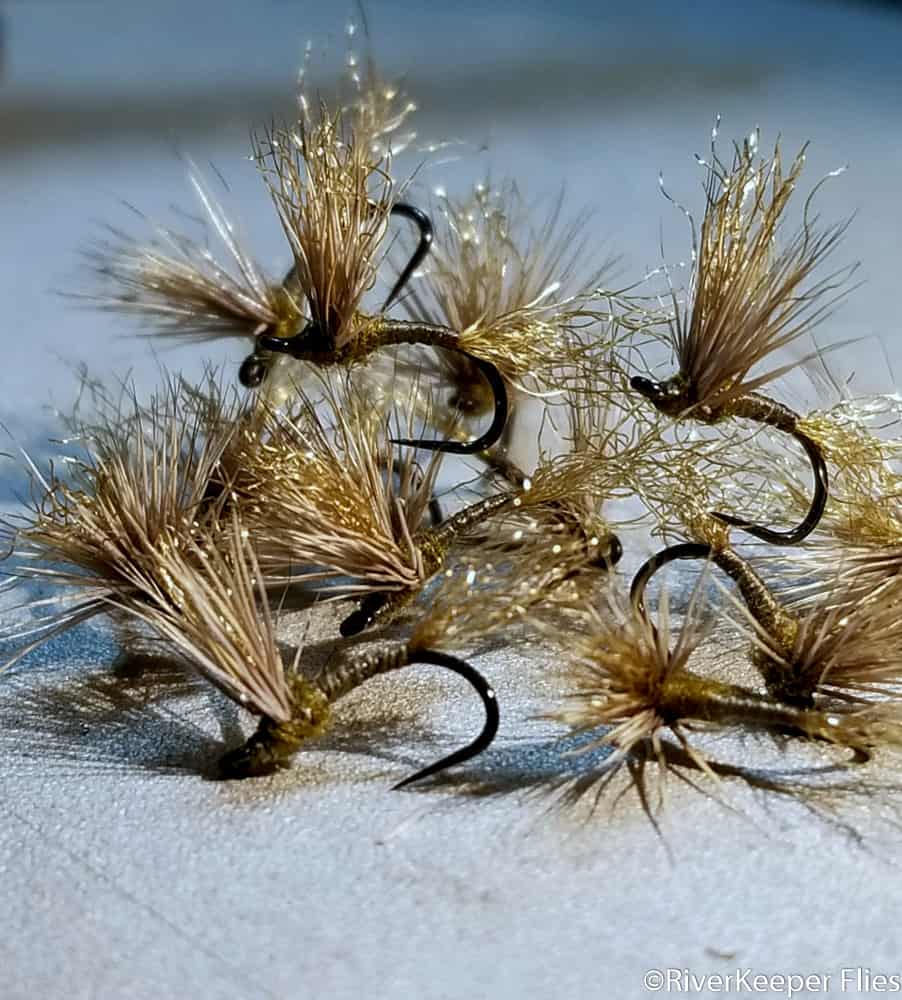
But a fly I tie and fish a lot is a simple Sparkle Dun. It takes practice to make them look nice.
If I run into trouble tying a fly and need to review or learn the proper technique, here are a few resources I use:
- Steelhead Flies by John Shewey (2006) – It’s a wonderful book full of information for the steelhead fly tyer, including chapters on materials, basic fly tying techniques, hairwing flies, featherwing flies, and you guessed it…spey flies. John provides step-by-step instructions of the basic techniques, which is exactly what I needed to begin. Many of the techniques can be used on non-steelhead flies as well.
- The Fly Tyer’s Benchside Reference by Ted Leeson and Jim Schollmeyer (1998) – This is an older book that has been a tremendous resource for me over the years. It it THE resource for the fly tyer.
- The Benchside Introduction to Fly Tying by Ted Leeson and Jim Schollmeyer (2006) – This is a little newer and provides a unique method of teaching proper techniques while tying
Lastly, YouTube is a tremendous source of information. Some videos are good, others so, so. Two of my current favorite channels are Davie McPhail and Kelly Galloup (Slide Inn).
Well, back to my fly tying table. I have a practice session scheduled.
Enjoy…go fish!


John great post.
You left out your most important tool. Your passion for the art.
Very informative, beautiful ties