Tying and Fishing Galloup’s Compara Spinners

I create a new post each week and many times I know exactly the subject I plan to write about. Other times, like this week, I need some inspiration. If I go to the river, it often speaks to me, and provides a subject. Today is different. We haven’t fished in two weeks after returning from our fly fishing road trip. Much of it is due to hot weather, but a few home projects have delayed my fishing. Occasionally, I go back to previous years to see what subjects I covered. I did that today. Know what I found? The Importance of Imitating Mayfly Spinners. Guess what flies I’ve been tying lately – Compara Spinners. Tying and fishing Galloup’s Compara Spinners is the subject of today’s post.

Galloup's Compara Spinners | www.riverkeeperflies.com

The image above shows four dozen size 16 Galloup’s Compara Spinners destined for the provider box.

I don’t have any fly orders at the moment and decided to work on filling the provider box. I needed a few Rusty Spinner flies and pulled out a dozen hooks. I finished those and pulled out twelve more…and twelve more. No, I don’t lose that many flies. But it’s much quicker to tie that quantity of flies when the materials are at hand and muscle memory kicks in.

Who knows, perhaps you need a few and will contact me to purchase flies.

I really like how Kelly Galloup designed this fly. The traditional Rusty Spinner only has a flat wing shown below (left). Kelly’s Compara Spinner is tied with a Comparadun-style wing. Tying the wing in this manner allows the fly fisher to SEE the fly.
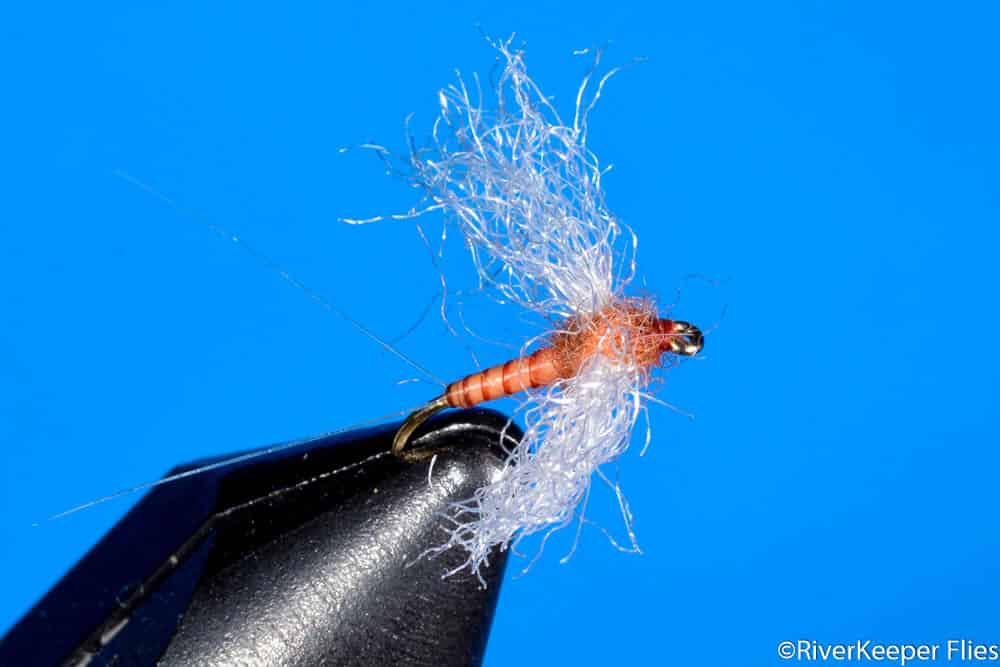
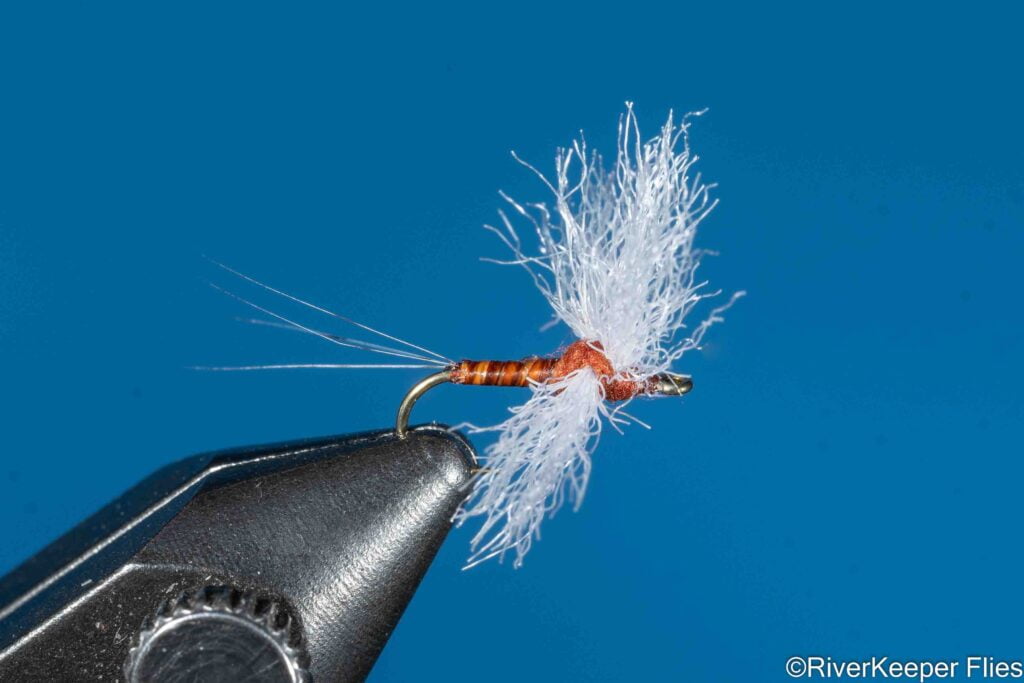
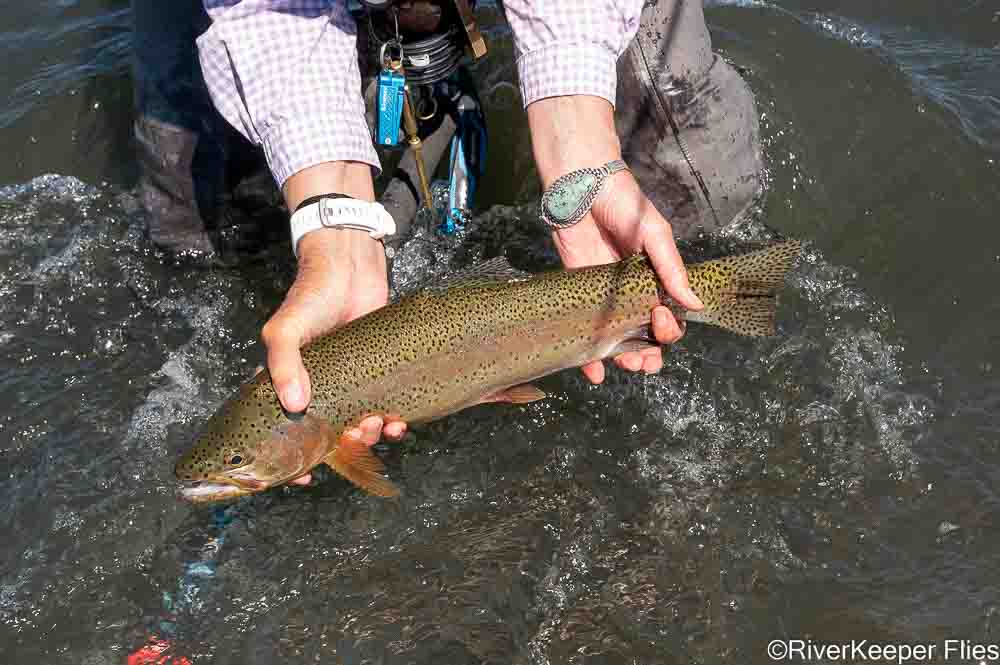
Let me comment on the body a moment. The flies above are tied with a turkey biot to create segmentation. The images below are a couple beautiful Rainbow Trout from our time on Fly Fishing the Henry’s Fork of the Snake River. They were taken on a size 14 Galloup’s Compara Spinner – Rusty, tied with a dubbed body.

Does a biot or dubbed body make a difference? I don’t think so. Perhaps it catches more fly fishers than fish! Here are the two variations side-by-side.

And a view from the bottom looking up, just like a fish would view the fly.

Galloup's Compara Spinner - Bottom View | www.riverkeeperflies.com

The benefit of this style of fly is I’m able to see them!

Maybe I’ll pull out a dozen more hooks and add them to the provider box. Then I’ll move on to a different fly pattern.

Enjoy…go fish!

Similar Posts

  • Royal Charlie

    This week’s Throw Back Thursday Fly is the Royal Charlie. The Royal Charlie is another old fly pattern listed in The North Country Fly – Yorkshire’s Soft Hackle Tradition (2015) by Robert L. Smith. Many of these older soft hackle fly patterns come from the Yorkshire Dales in northern England. Wharfedale is a small area of…

  • Perfect Flies

    I got your attention, didn’t I? No, I’m not suggesting I tie perfect flies. I wanted to express how difficult it is to tie perfect flies. To me, the perfect fly is aesthetically pleasing to the eye, tied with proper proportions, and entices a fish to eat it. It might imitate a real insect or…

  • Baigent’s Brown

    This week’s Throw Back Thursday Fly is Dr. William Baigent’s Brown. I found Baigent’s Brown recently and pulled out the materials to tie one. Robert Smith, author of The North Country Fly: Yorkshire’s Soft Hackle Tradition (2015), writes his own blog entitled The Sliding Stream. I encourage you to check it out. Here is a…

  • Flies from the Vise

    I’m back to fly tying and thought I’d share some of the flies from the vise. I’ve been spending more time at the fly tying vise, completing orders and getting ready to teach a couple of flies at this week’s Central Oregon Fly Tyer’s Guild on Thursday night. Be sure to check below for links…

  • Electric Caddis TBT

    This week’s Throw Back Thursday Fly is the Electric Caddis TBT. I pulled out Greg Thomas’ book Best Flies for Idaho (2000) from my bookshelf and thumbed through it and found the Electric Caddis who attributed the fly to Mike Lawson. It got me to thinking…I wonder if the fly is listed in Lawson’s Spring…

  • Max Canyon

    This week’s Throw Back Thursday Fly is the Max Canyon steelhead fly. It was developed by Doug Stewart in the early 1970’s. Our fly club has an outing in Max Canyon on the Deschutes River next week to fish for steelhead and I thought it timely to highlight this fly. You may have seen it spelled differently…Macks…

Leave a Reply

Your email address will not be published. Required fields are marked *