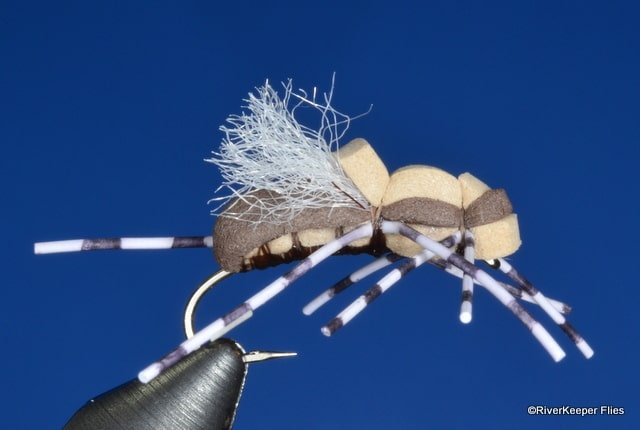
Taylor’s Fat Albert

This week’s Throw Back Thursday fly is Taylor’s Fat Albert.
Fat Albert | www.johnkreft.com

The fly was created by Brent Taylor in 2001. Brent guides in the Dillon, MT area and Chile, which is where the fly was initially used to imitate Cantaria beetle.

I recall being introduced to a black/red version on a trip to Chile in 2005. Yes, the fish really liked them!

Use the fly to imitate Morman Crickets or hoppers by changing size and color.

The Big Sky Journal has a brief story about Brent HERE.

Here is a link to my RiverKeeper Flies YouTube channel where I demonstrate how I tie the fly.

Enjoy…go fish!
Similar Posts

  • The Rose

    This week’s Throw Back Thursday Fly is The Rose. The Rose is a fly from the collection of Mary Orvis Marbury. I’ll call it a “variant” as I didn’t have the original materials to tie the fly. I used a Golden Pheasant body feather for the hackle and added black ostrich herl at the head…

  • Winter Fly Tying Classes

    Well, I just finished 13 consecutive weeks of managing and coordinating our local fly club’s Winter Fly Tying Classes. While the club was doing this for several years before I joined, I’ve taken over the reigns for the last four years. The rules are pretty simple…be a club member, know the basics of fly tying…

  • Old Fly Fishing and Fly Tying Books

    Have you ever wondered about the history of fly fishing? It’s an interesting topic to me, which explains why I’ve been reading old fly fishing and fly tying books lately. Why? First, they are a source for my Throw Back Thursday Flies. Secondly, I wonder how previous generations fished and what some of their streamside conversations…

  • Hatchmaster

    This week’s Throw Back Thursday Fly is the Hatchmaster, a fly pattern developed in the 1930s. Originally known as the Two-Feather Fly, it was created by Harry Darbee for a fisherman named Terrell Moore to solve a problem of getting large mayflies to land on the water softly and eliminate the bulk and weight. Some…

  • Midges

    Midges. Do you know what a midge is? And how important midges are in the trout’s diet? Very! You’ll find midges in rivers and lakes. Most of the time, midge pupae are the fly patterns experienced fly fishers concentrate on fishing. More on what that means shortly.  I just finished these flies as I complete my…

Leave a Reply

Your email address will not be published. Required fields are marked *