I’ve been at the vise, filling customer fly orders and our Patagonia fly boxes. I thought I’d share the diversity of flies I’ve tied in the last couple of weeks.

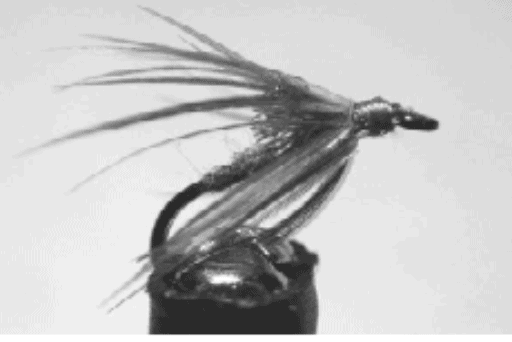
Believe it or not, these are called Despair Nymphs and were created in the 1930’s. I tied a dozen for one of my customers, four each in sizes 10, 12, and 14. The Hungarian partridge wing helps to imitate a stonefly nymph, but is also used to imitate dragon fly larva and sedge pupas.


I shared the Peacock Despair (below) tied with red floss for the rib as a Throw Back Thursday Fly back in May 2023.

How about a few really small flies?
I have a customer that challenges me with some very small flies. The first one is a Mighty Midget Emerger, size 20.

And In the Film CDC Emerger – Baetis, size 22.

Trust me when I say I don’t see this level of detail when I’m tying the flies. My Nikon 105 macro lens does a terrific job for the close-up flies.
I’ve been making progress on our her & his Patagonia fly boxes for our January trip to South America.

There are more slots to fill and I plan to tie Card’s Cicadas and Swisher’s PMX Royal flies to complete these boxes.
I just finished a dozen each Fat Albert tan flies in sizes 8 and 10.

I use my own fly pattern sheets whenever I begin tying flies I haven’t tied in a while. This one is no exception. In fact, I watch my own videos from the RiverKeeper Flies YouTube channel. It really helps with tips and techniques.
For those of you who don’t tie flies, you might enjoy this one I titled “speed tying”. The camera used to video had a 29 minute limit and would stop after that. I tied as many as I could within the time limit and sped it up for a final product a little over 5 minutes in length. I hope you enjoy it!
For the tyers in the crowd, here is the real instructional video.
I have a few more flies to complete my customer order and quite a few holes remaining in other Patagonia fly boxes. I hope to make substantial progress in the next couple of weeks.
I haven’t missed much fishing because I don’t think the fish are rising with temperatures in the teens when I get up each morning!
Enjoy…go fish!