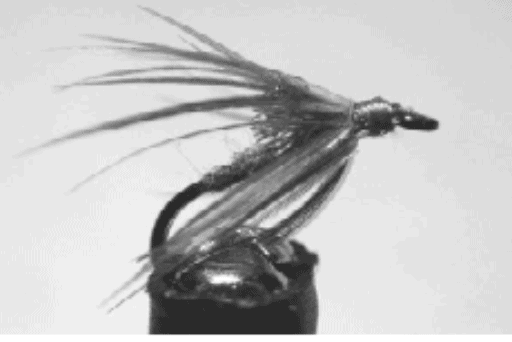
I was on the river last week and happened to witness a tremendous PMD hatch. I’ve been waiting for the Green Drake mayflies to begin hatching, but it was great to see PMDs hatching again.
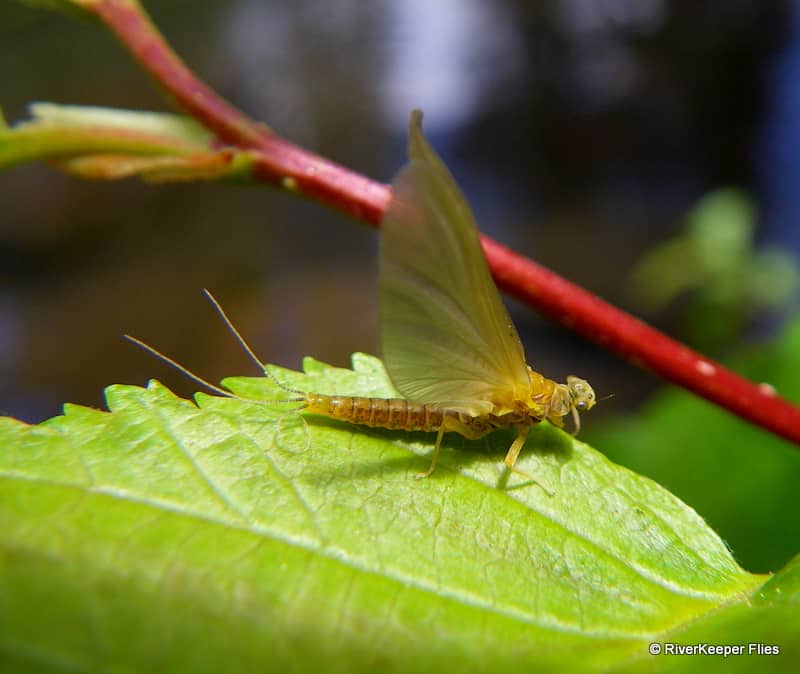
PMDs, otherwise known as Pale Morning Duns, are an important hatch for fish and fly fishers. Generally, you’ll find these flies in sizes 16 -18. The hatch begins in late May and will continue through September.
PMDs have a pale yellow body and smokey gray (or dun color) wing. But their body colors vary and include shades of pale green, yellowish-tan, or a light reddish-brown. Look at the bug carefully. The underside of the insect is what the fish sees and the color is usually lighter than on top.
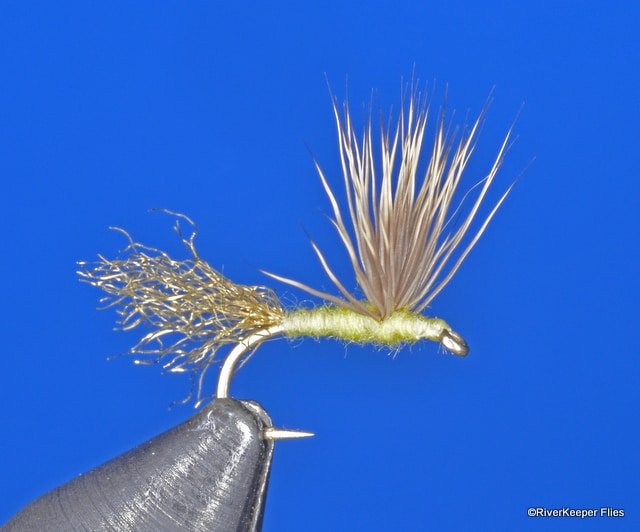
I normally use a Sparkle Dun to imitate the natural. I like the trailing shuck, as many insects get caught in their nymphal shuck. The fish seem to notice this effect and don’t have to hurry and eat them because they can’t fly away until shedding the shuck completely.
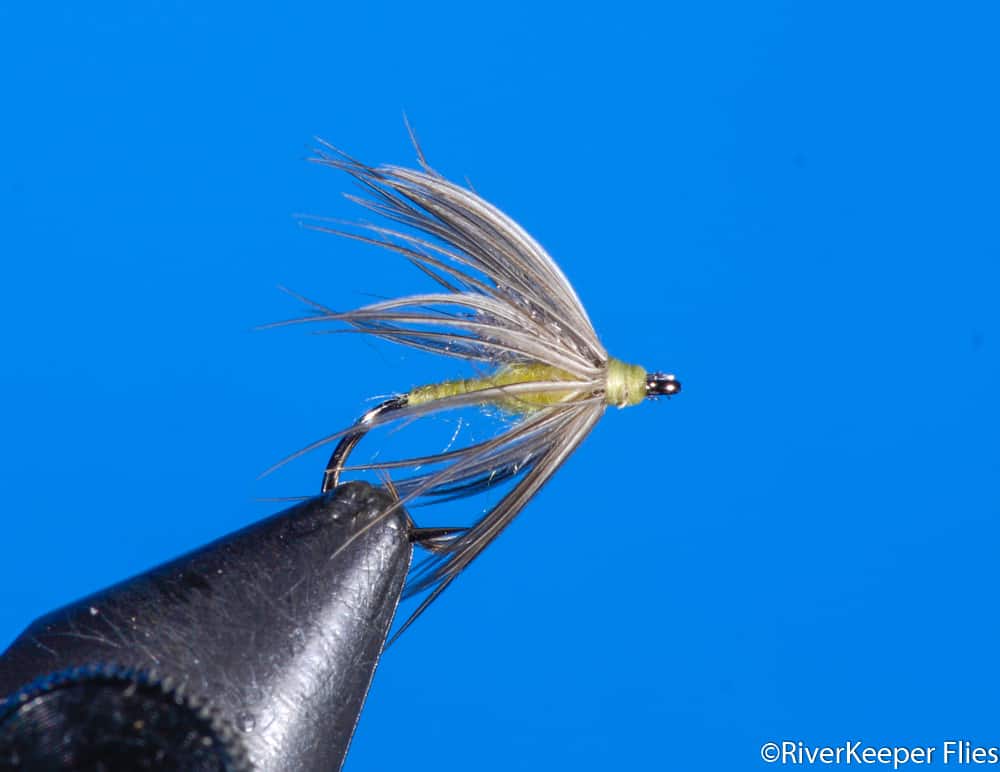
The other phase I like to imitate is when the wings of the PMD are stuck on the surface. I think that profile is why the RiverKeeper Soft Hackle Cripple works so well.

RIVERKEEPER SOFT HACKLE CRIPPLE
Mayflies in general spend much of their life as a nymph, rummaging around the rocky stream bed. When it’s time to hatch, the nymphal shuck breaks open and an adult mayfly crawls out and becomes a dun. Hatching may occur underwater or in the surface film. The PMD breaks through the surface film and waits for both wings to dry as the fly floats downstream in the current. Now the mayfly flutters its wings and takes flight. Sometimes it lands on the water again, floats some more then flies away to nearby vegetation and wait to become sexually mature.
Here is a PMD found in a back-eddy that was stuck in its nymphal shuck.
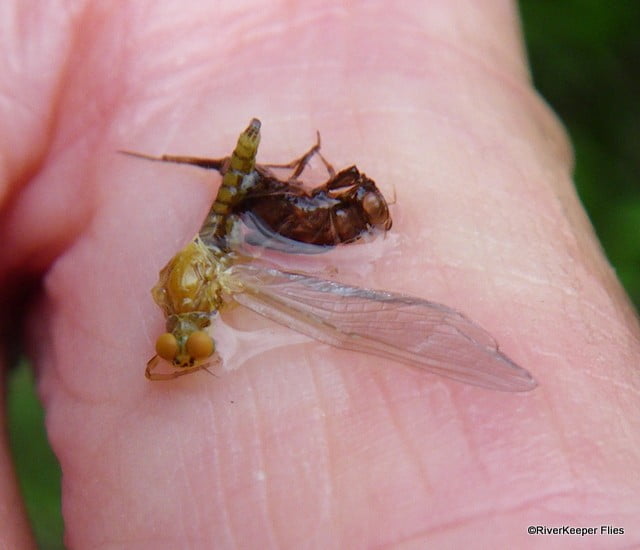
Note the color of the shuck? The classic fly to imitate it is a Pheasant Tail Nymph.
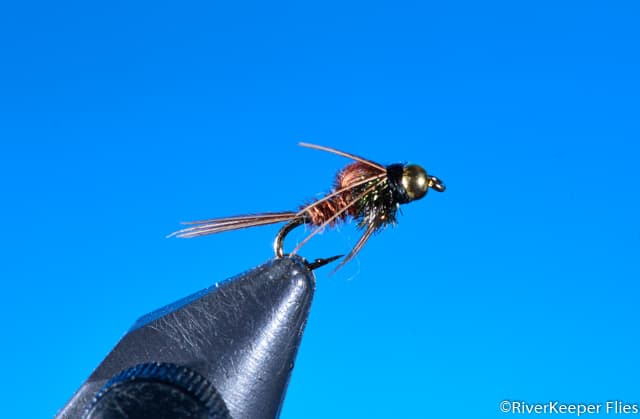
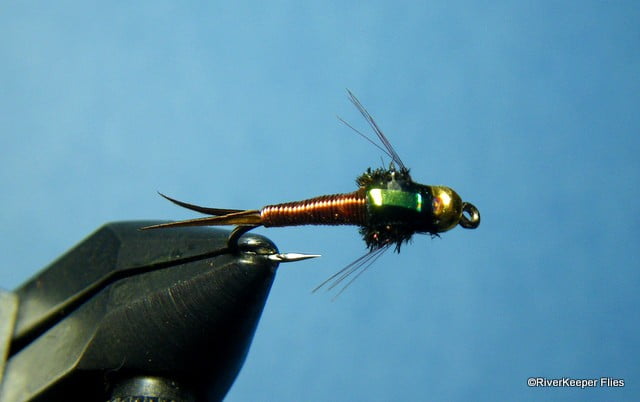
Or perhaps a Copper John.
Similar to breaking out of the nymphal shuck, the dun too sheds the skin as the thorax splits open and out crawls another insect with clear wings which is called a spinner. The body color of the Pale Morning Dun spinners range from tan to rust, hence the name “Rusty Spinner”.
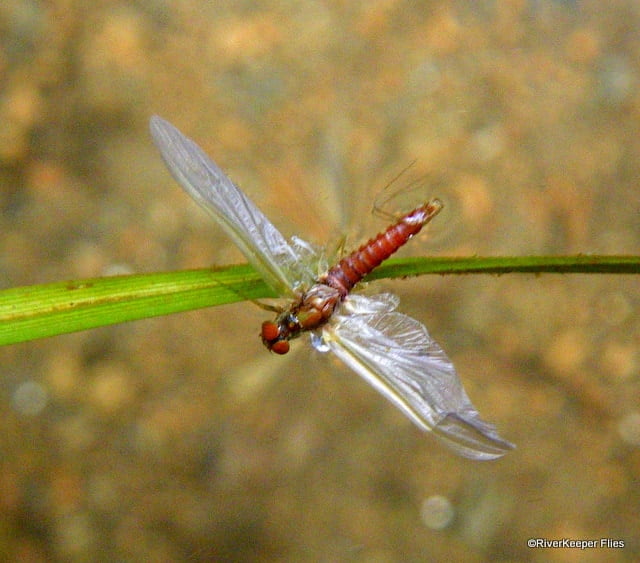
Females fly into swarms of males to mate. Watch for birds flying above the river. That’s a tell-tale sign spinner activity is about to begin. After mating, the males drop into the water and are available to fish. You probably won’t see them, only the occasional sip of a trout and you’ll ask “I wonder what it took”? That’s the time to pull out a Rusty Spinner.
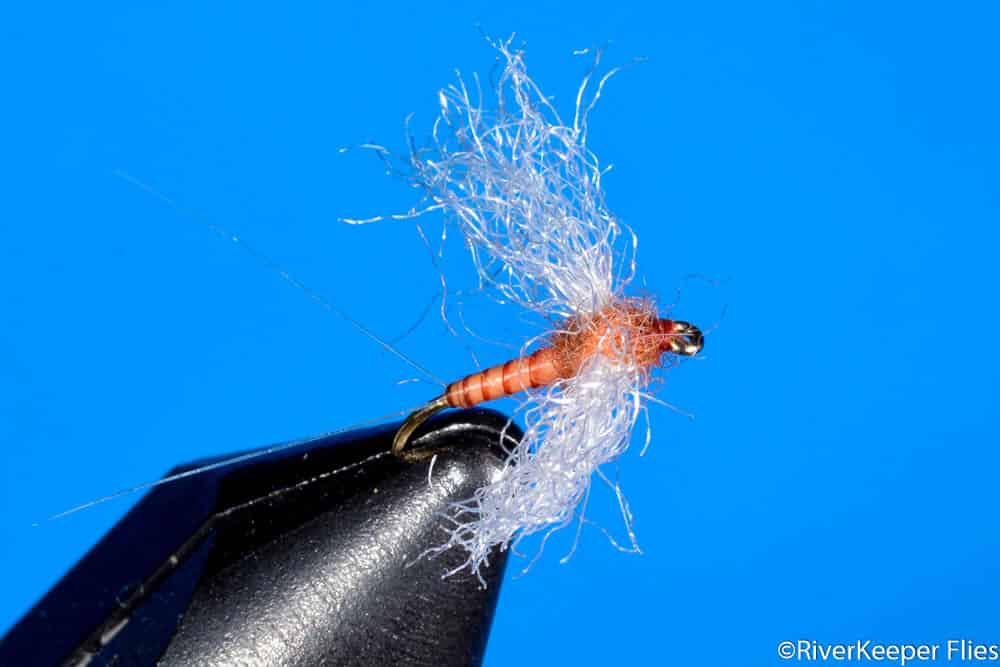
I’ll be tying a few more of these flies this week. The PMDs are hatching again and I need to be ready!
Enjoy…go fish!
PS – To read more about the PMDs and other flies to imitate them, check out these posts:



Nice post, thanks for the pictures as well. With your soft hackle cripple, do you swing or dead drift in softer water. I love to swing soft hackles but I generally swing thru faster choppier water, I haven’t tried softer water as the water I learned this technique on was more riffles and imitating a surfacing caddis.
Mark
Thanks for your comment.
Many people swing soft hackles and that’s the traditional method to fish them. However, the RiverKeeper Soft Hackle Cripple is designed as a DRY fly. Check out more info on how we fish it in the RiverKeeper Soft Hackle Cripple page: http://www.johnkreft.com/mayfly-fly-patterns/riverkeeper-soft-hackle-cripple/
John