Pale Morning Duns, otherwise known as PMDs, are an important hatch for fly fishers. These flies are a size 16 -18. The hatch begins in late May and will continue through September. Generally, they will hatch in the afternoon.
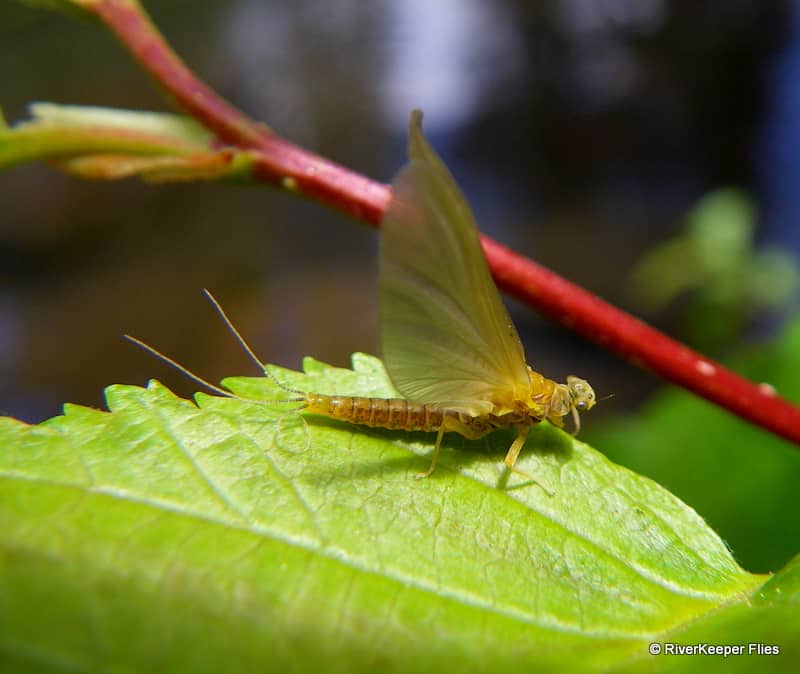
Mayflies in general spend much of their life as a nymph, rummaging around the rocky stream bed. When it’s time to hatch, the nymphal shuck breaks open and an adult mayfly crawls out, otherwise known as a dun. Hatching may occur underwater or in the surface film. The PMD breaks through the surface film and waits for both wings to dry as the fly floats downstream in the current. Now the mayfly flutters its wings and takes flight. Sometimes it lands on the water again, floats some more then flies away to nearby vegetation and wait to become sexually mature.
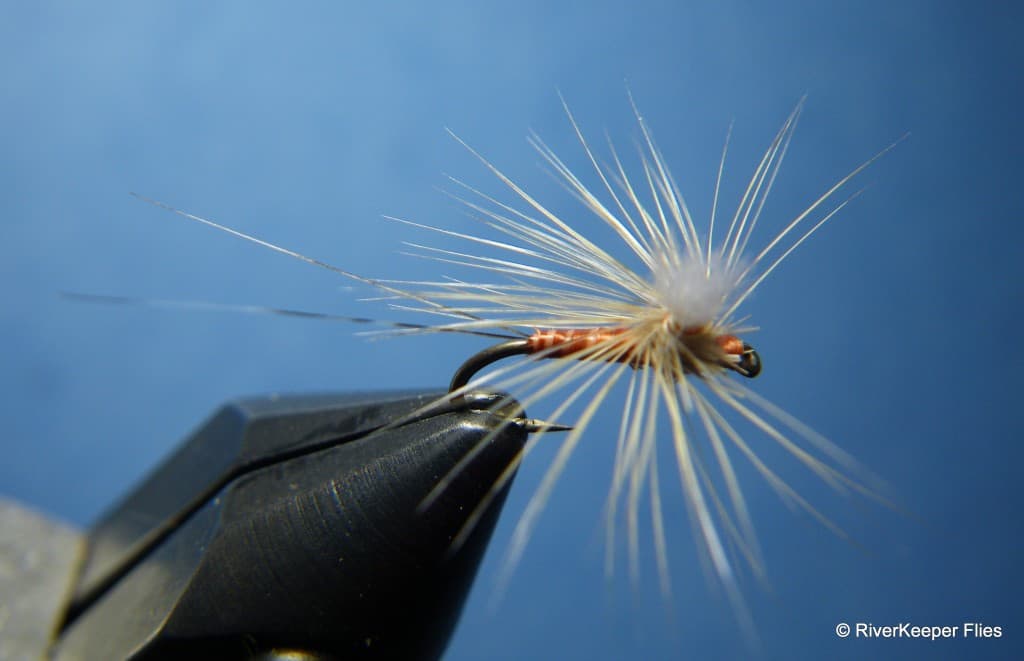
Similar to breaking out of the nymphal shuck, the dun too sheds the skin as the thorax splits open and out crawls another insect with clear wings which is called a spinner. The body color of the Pale Morning Dun spinners range from tan to rust, hence the name “Rusty Spinner”. Females fly into swarms of males to mate. Watch for birds flying above the river. That’s a tell-tale sign spinner activity is about to begin. After mating, the males drop into the water and are available to fish. You probably won’t see them, only the occasional sip of a trout and you’ll ask “I wonder what it took”? That’s the time to pull out a Rusty Spinner.
But check out the eyes. The males have large, bright orange eyes whereas females are pale. Find a back eddy during a PMD hatch like I did and pick up a few real bugs. You’ll be amazed. At times, I think the fish key on them. Such a small detail…
PMD – Male

PMD – Female
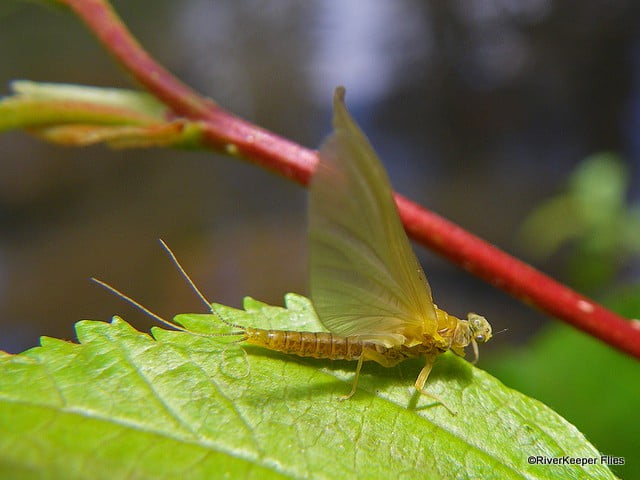
Let’s briefly discuss PMD colors. Normally when we think about a PMD, pale yellow body and smokey gray (or dun color) wing comes to mind. But how about pale green, yellowish-tan, or a light reddish-brown color body? In fact, look back to the PMD – Male photo to see the different colors. And if you are observant, newly hatched PMDs may be different in color than those found on stream side vegetation. Lastly, look at the bug carefully. The underside of the insect or what the fish sees is different color than top.
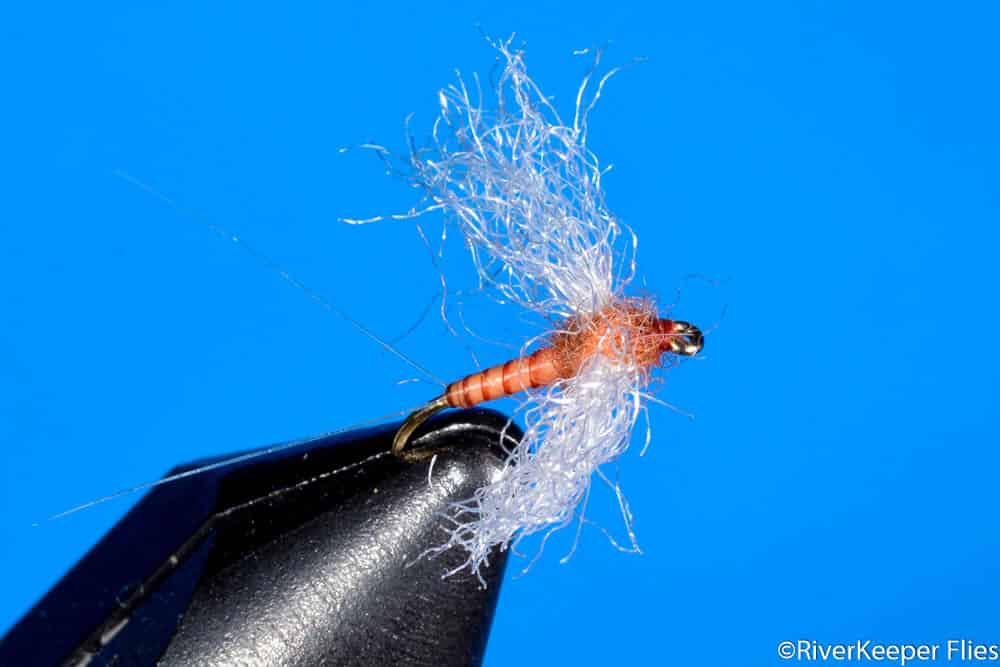
How about an emerger, the stage where the dun is breaking out of the nymphal shuck and is very susceptible to fish. Many fish key on this stage because it is an easy prey. Many fly patterns emulate this activity by including a trailing root beer color shuck for the tail.
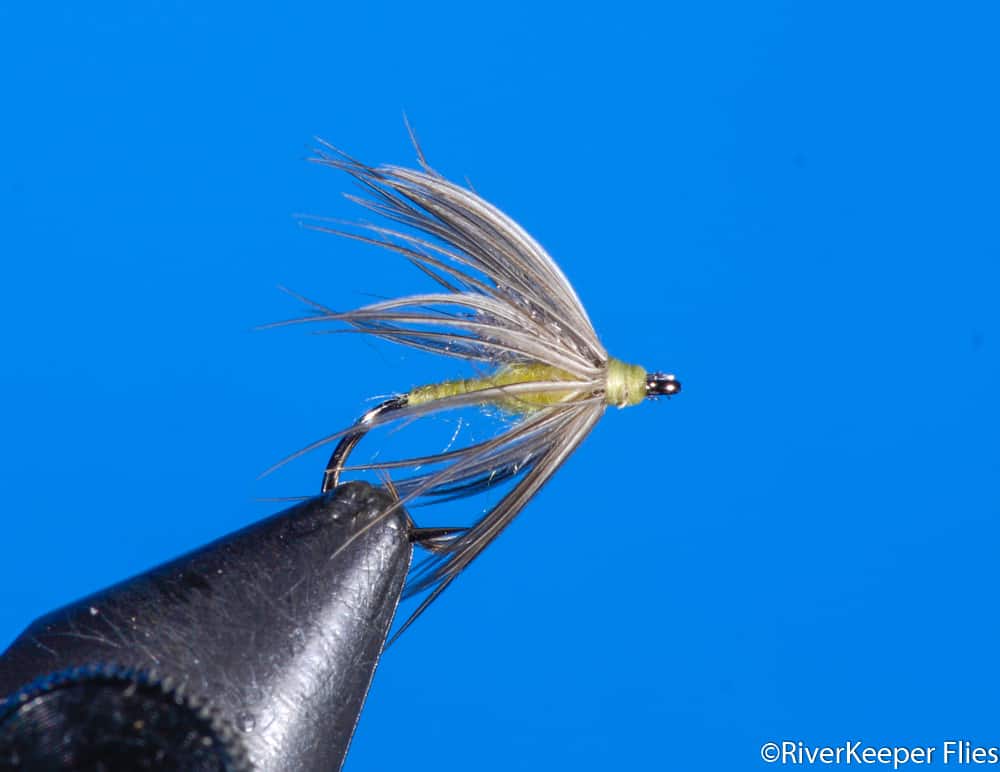
That’s good news for anglers. PMDs have trouble breaking out of their nymphal shuck and when they do, flies get caught in the surface film. Or the mayfly is stuck half way out of the nymphal shuck. This creates an opportunity for the fisherman to fish cripple patterns. Ever seen flies floating down the river with one or both wings laying on the water? That’s a cripple and an easy meal for Mr. or Mrs. Trout. I love this stage. I fish my RiverKeeper Soft Hackle Cripple as a dry fly to imitate this stage.
My experience has been that fish take emergers or cripples much more readily than duns (adults) in the spring creek I fish. So carry several cripple patterns you have faith in. Here are mine:
RiverKeeper Soft Hackle Cripple
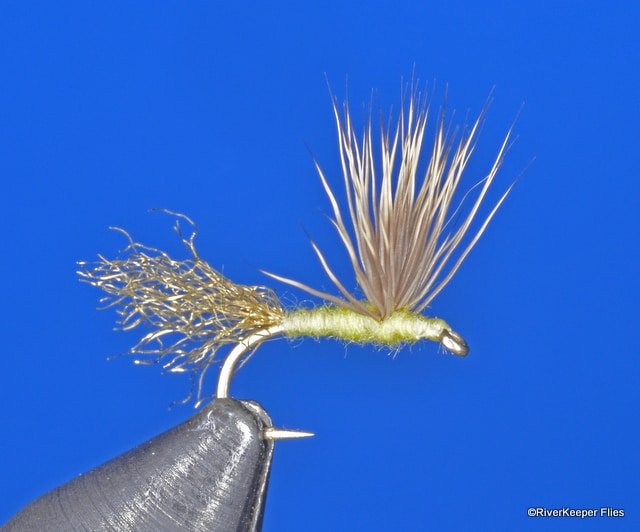
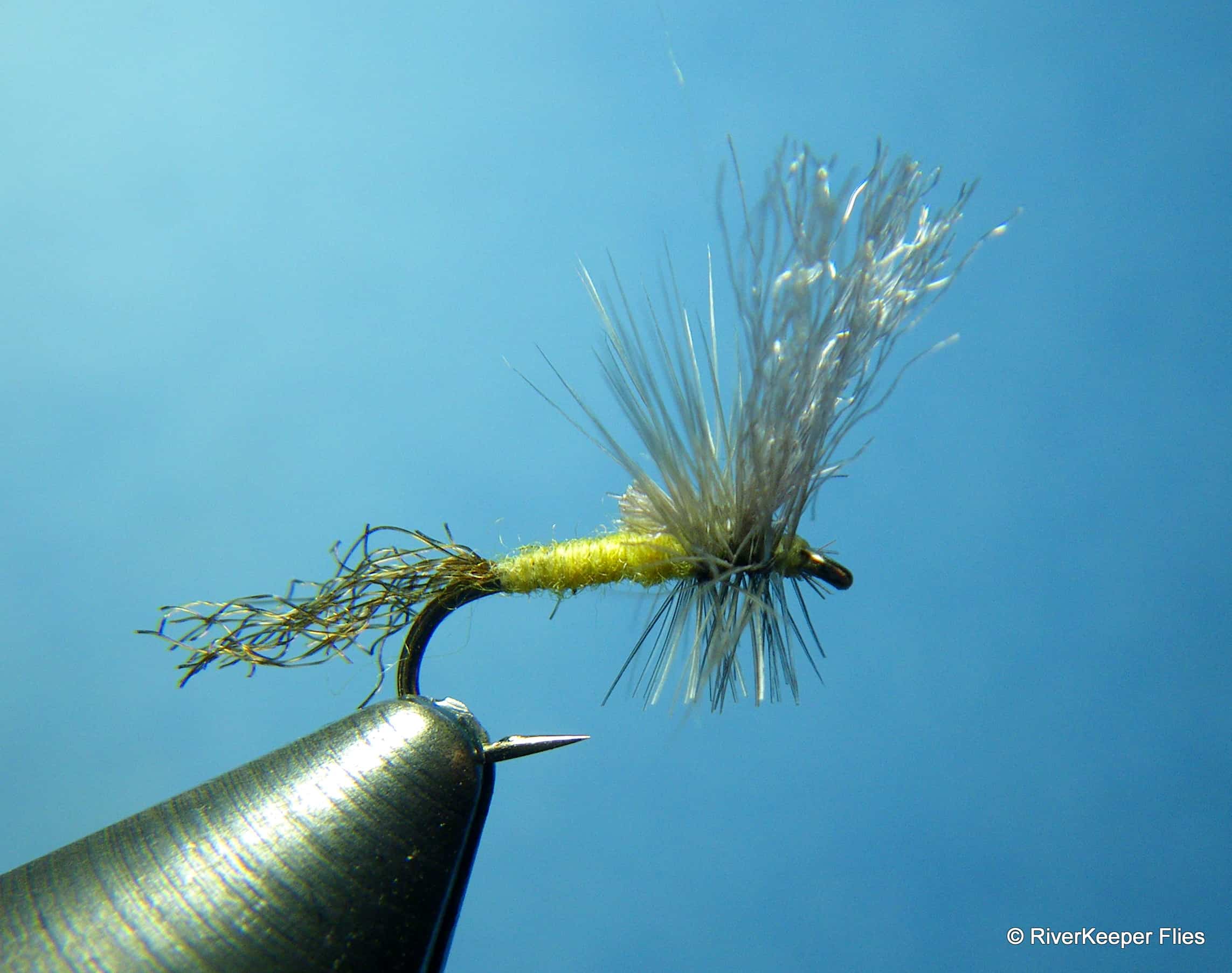
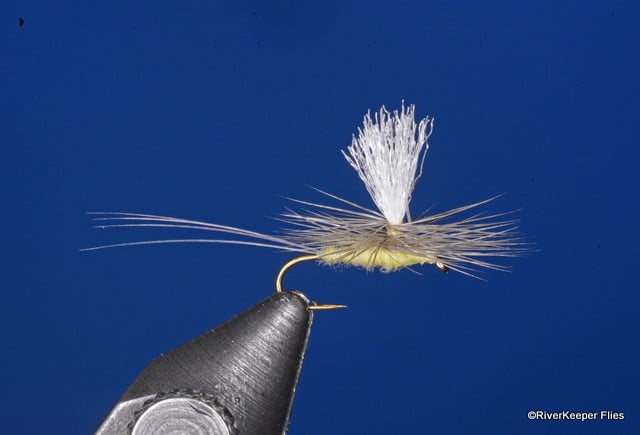
The dun phase of a PMD can be imitated by lots of different patterns. My favorite is a simple parachute pattern.
Pale Morning Dun (PMD) Parachute
As I mentioned above, PMD Spinners are an important phase of the insect. These spinner falls generally happen in the evening or morning. Be sure to have a spinner pattern or two in your box. Just look for slurping trout leaving tiny rings in the surface. More than likely, you won’t see the spinner floating by, but you better try one!
If you’ve made it all the way through today’s post, here’s a tip for you:
I’ve written about the importance of color, but on some rivers, matching size and shape is all you need to fool a trout. On slower spring creeks, color MAY play an important part because trout have longer to look at your fly.
Remember…size and shape – then color.
Enjoy…go fish!