I happened to see my first Salmonfly of the season recently on my home waters. This isn’t a huge hatch like other waters in Central Oregon or the rivers you fish. But the Metolius is known for a Golden Stone hatch in the upper river starting around the 4th of July. We have a trip planned for the Lower Deschutes River next week and thought I should start getting ready for Salmonflies and Golden Stones.

These images are the Salmonfly I saw on the Metolius River…the ONLY one I found.

Salmonflies (Pteronarcys californica) and Golden Stones (Hesperoperla pacifica and Calineuria californica) are the two most important stoneflies available to the trout in my area.
These are the biggest bugs the fish will see all year, so the fish usually go crazy when they’re around. Salmonflies range from size 6, with some stretching out to size 2! Golden Stones range from sizes 10 to 6.
Stoneflies begin their life cycle as an egg that drops from the female’s abdomen and sinks to the gravel at the bottom of the stream bed. I wonder how many eggs this female is carrying?

Shortly after the eggs reach the stream bottom, nymphs hatch and these little creatures walk along the bottom eating algae. The nymph continues to grow by eating not only algae, but are carnivorous as well, eating other larvae and nymphs of mayflies, caddis, and midges.
As the nynph grows, it will add length and girth. Depending on the river and species, two or three years will pass before a stonefly crawls to the edge of a river and hatches.
Here are Salmonflies ready to hatch into adults.

The back of their nymphal shuck splits open and an adult crawls out.


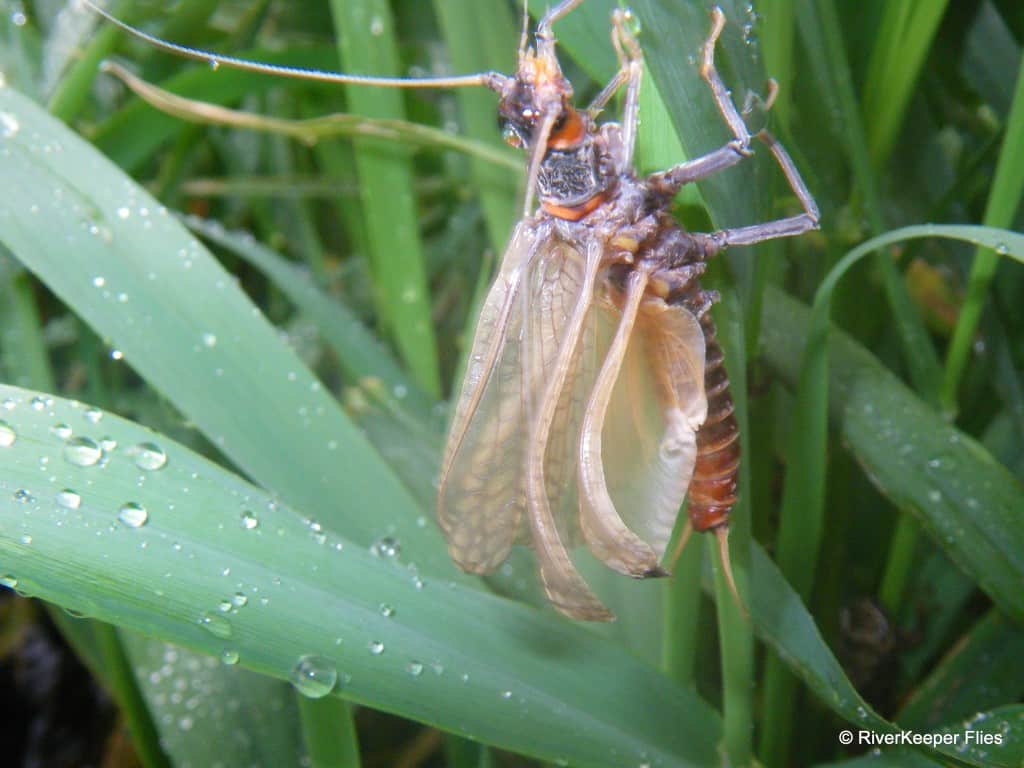
And with wings fully dry and extended.

We don’t fish the Deschutes River much, but usually join our friend Eric on an annual float. Here are links to posts from the last few years where we fished the hatch.
My fly box had a few empty slots and I filled it up from my provider box.

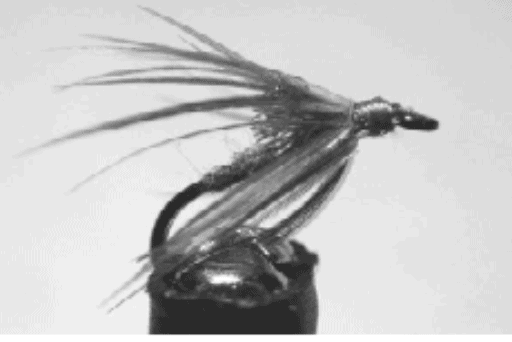
Here are a few of my favorite Salmonfly imitations:
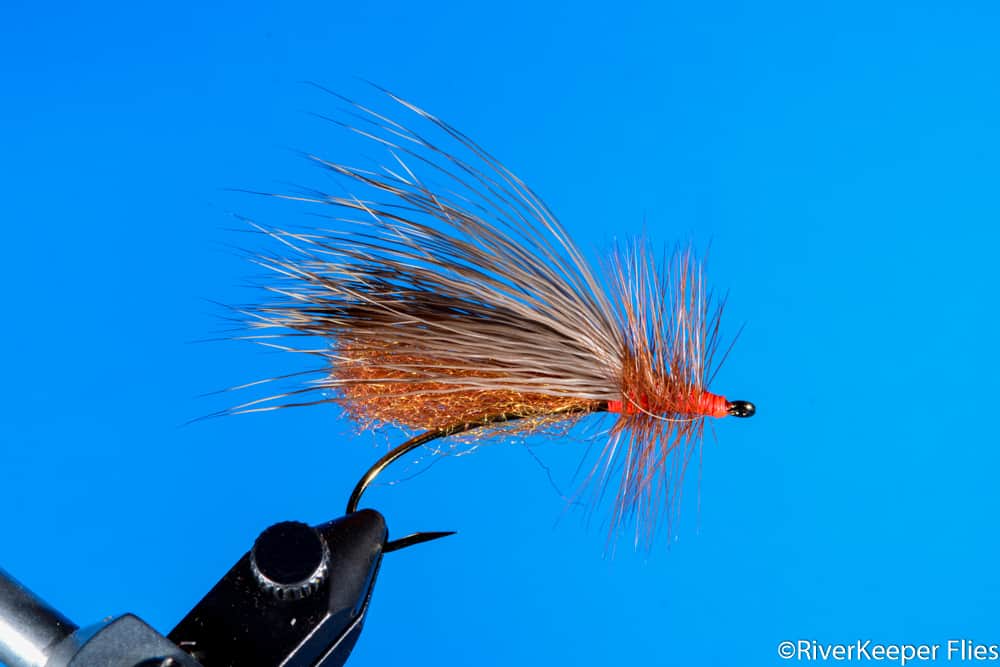
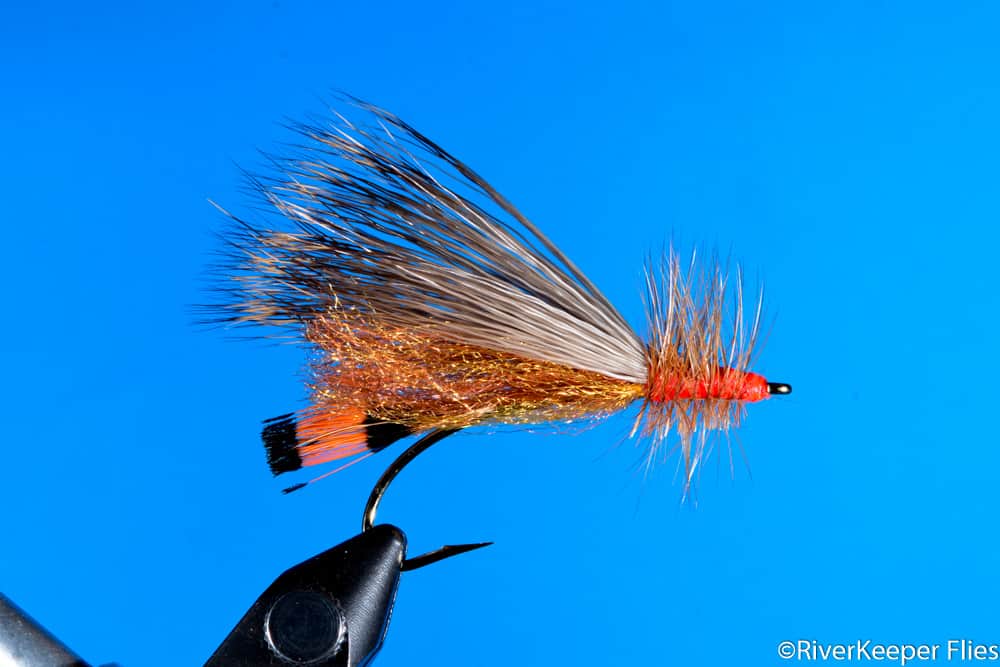
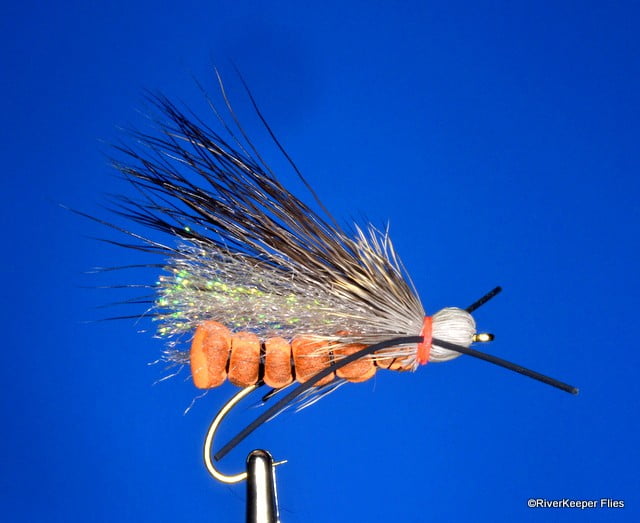

I’ve had more luck fishing the Golden Stone hatch, which usually begins a couple weeks after Salmonflies. Both will be available to the trout, but I find fish prefer the Golden Stones after a few weeks.

This is an immature Golden Stone nymph, estimated to be a year old.
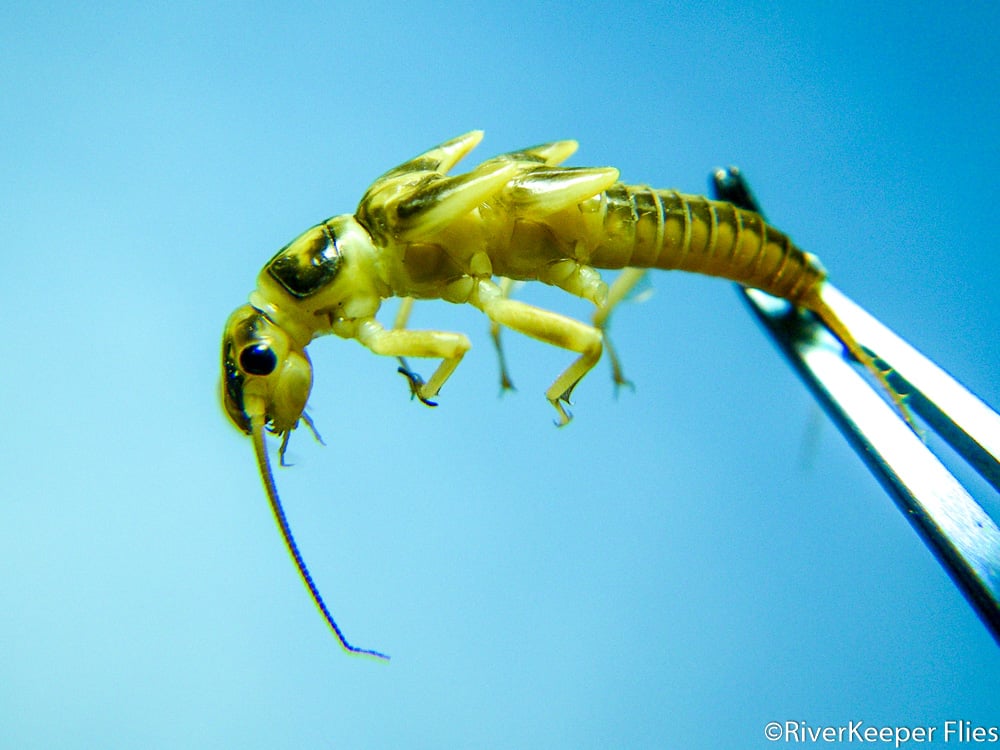
Here are a few of my favorite Golden Stone imitations:
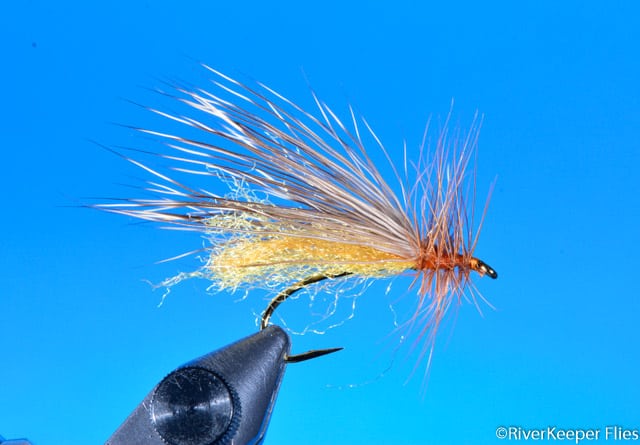
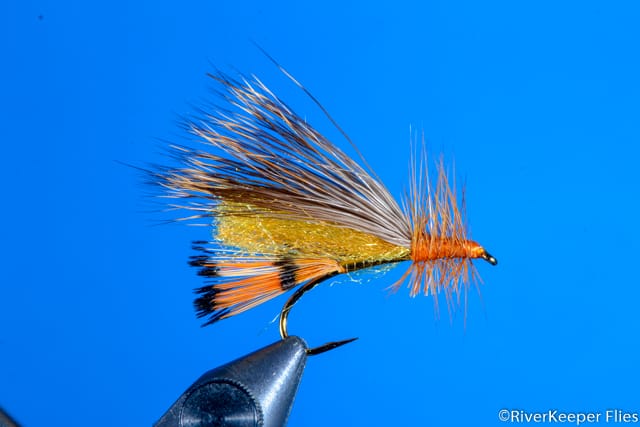

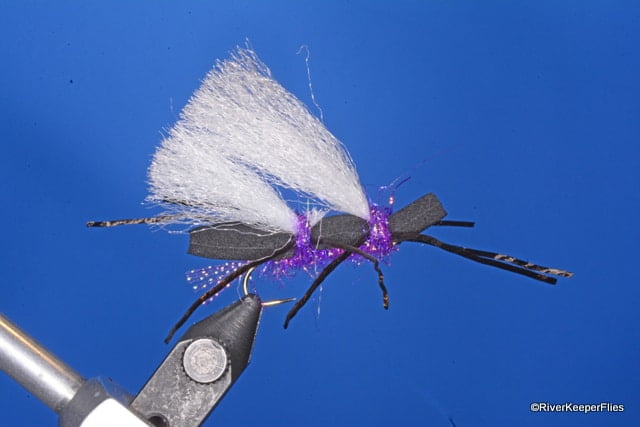
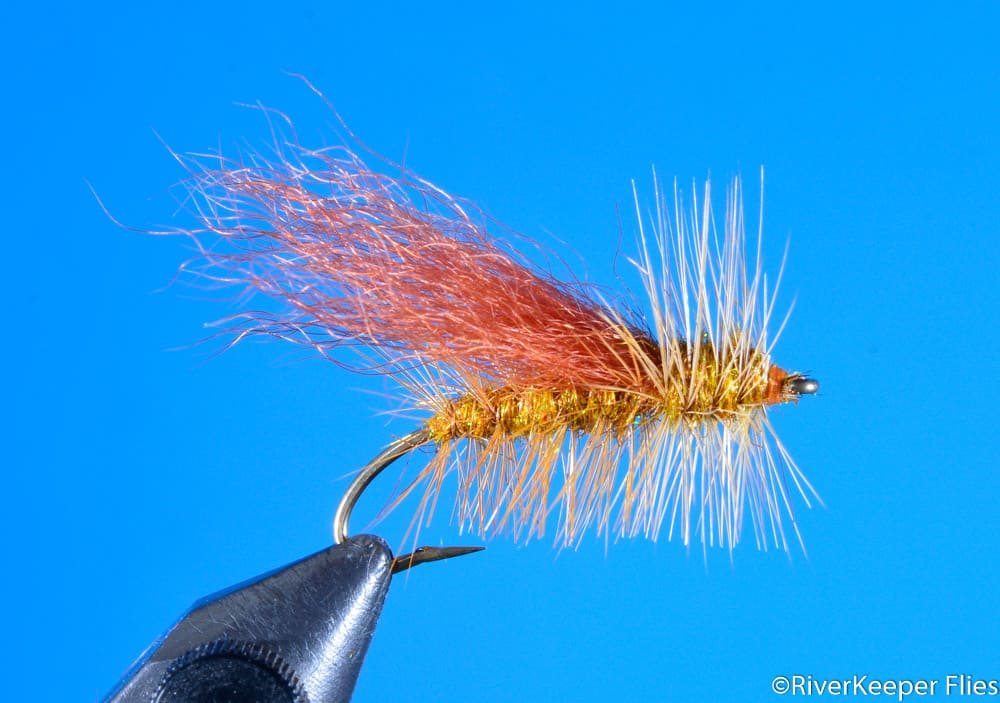

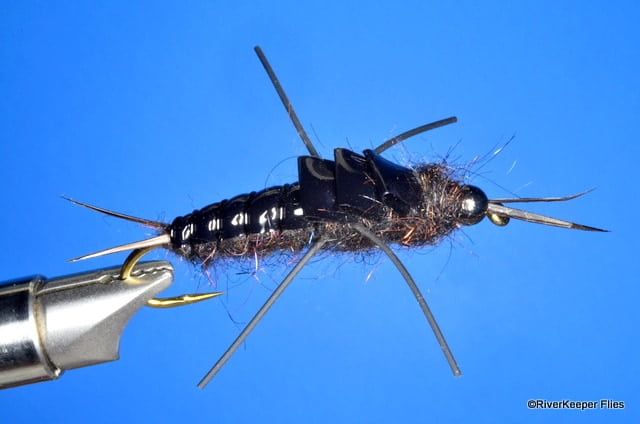
I would be remiss if I didn’t share the two nymphs I use occasionally. But remember, I mostly fish with dry flies these days because it’s the type of fishing I enjoy the most. And it works for me.

I hope you are able to fly fish your favorite river for this exciting hatch!
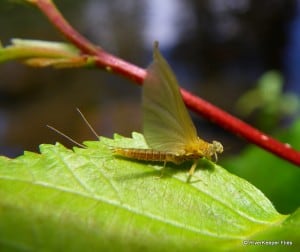
Lastly, Dancingtrout found this Mayfly on the river recently. I’d guess it’s a Caudatella. Look carefully and you can see the egg sac, not a common occurrence.

Enjoy…go fish!