I’ve been on the Big Island of Hawaii and will head home this week. It has been a while since I fly fished and decided to look at pictures I took of insects over the past three years to prepare myself for what hatches to expect when I return.
What I found were lots of Mayflies, but a few Caddis and a small Stonefly were in the mix as well.


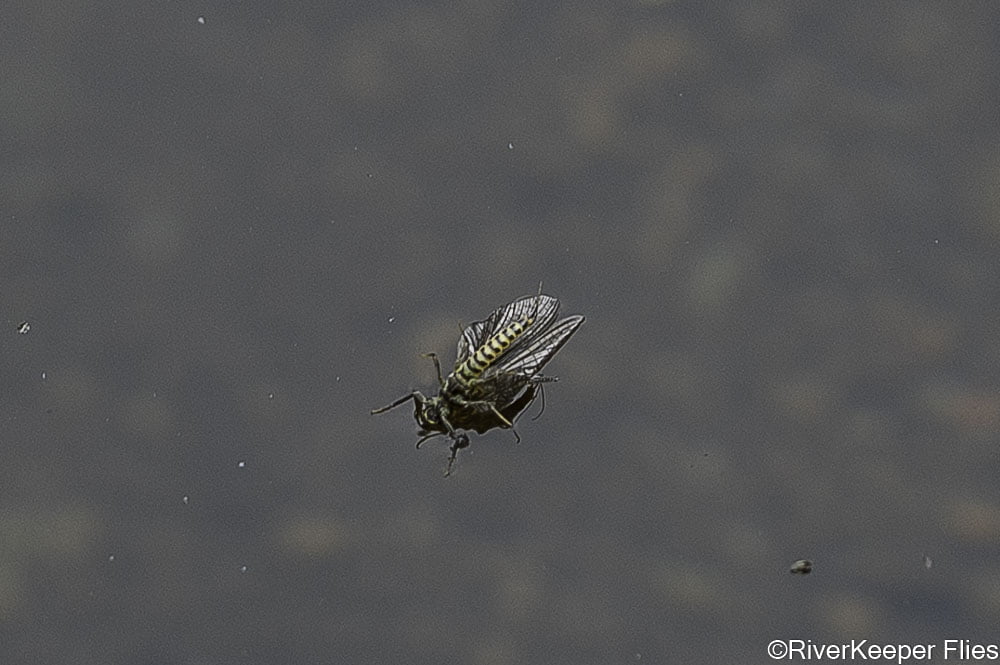
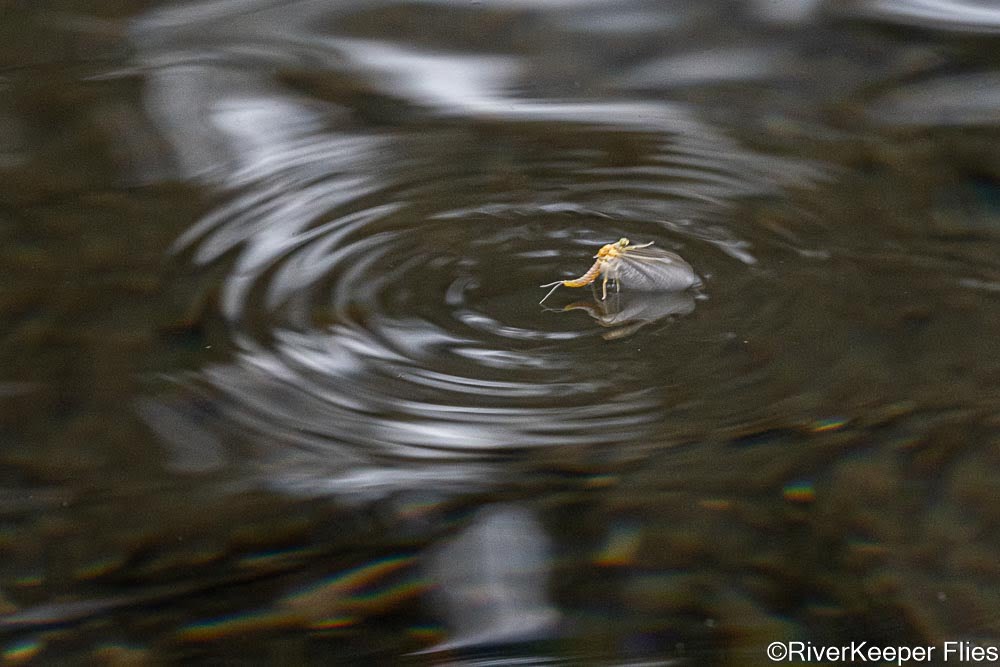
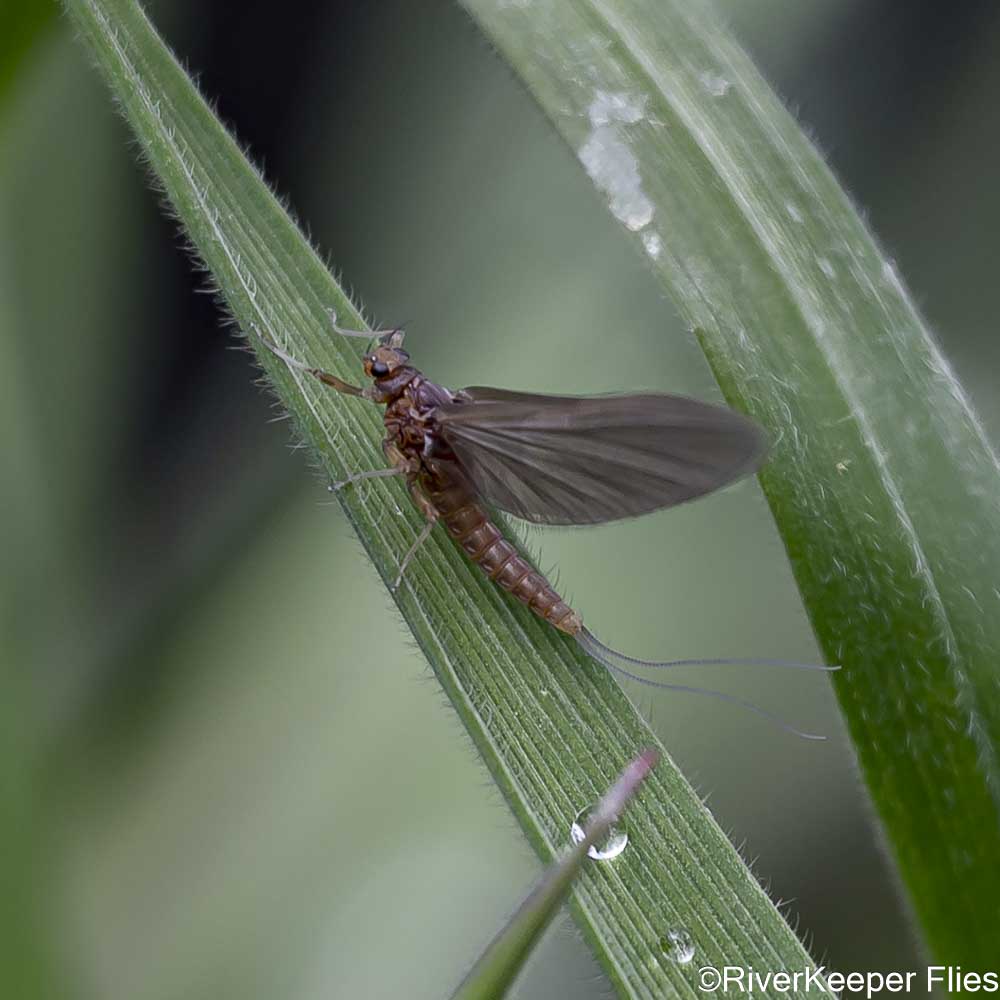
Below are a male and female Baetis. Notice the bright eyes of the male.

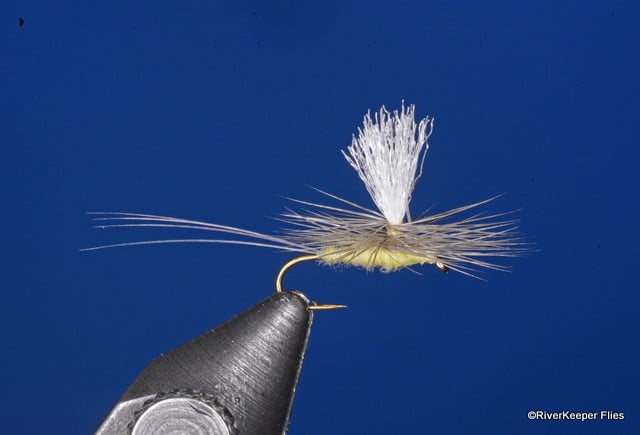
My favorite dry fly pattern is a Sparkle Dun. I tie it in a variety of sizes and colors, including a olive biot body to imitate the upside down fly shown above. Yes, it’s simple but so effective.
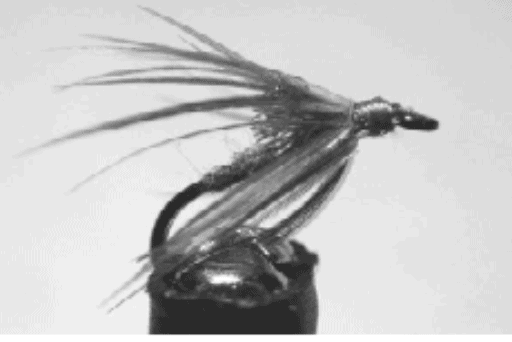
 Sparkle Dun Caudatella
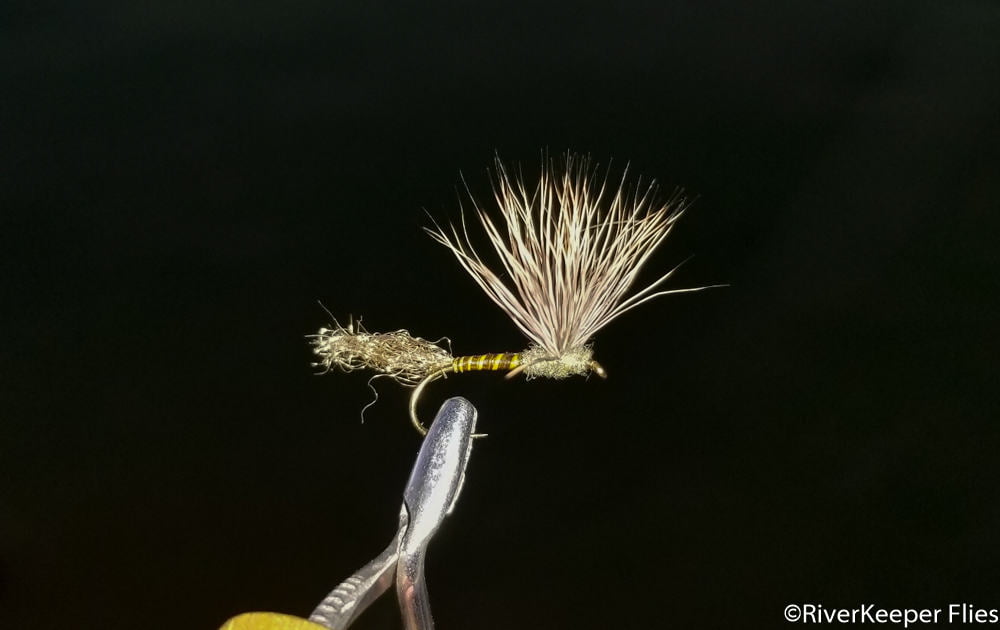
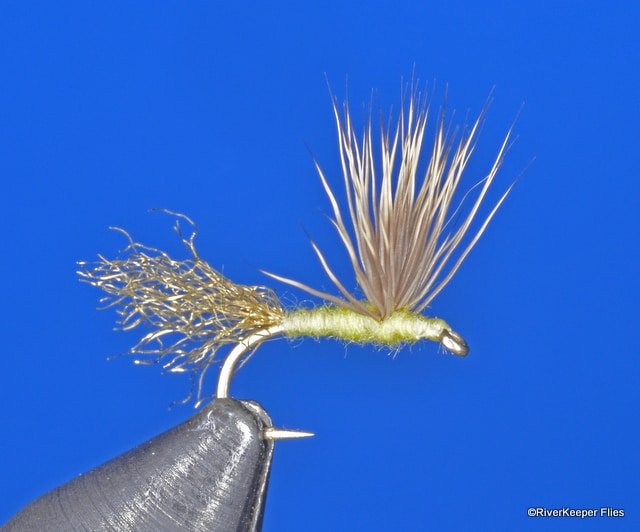
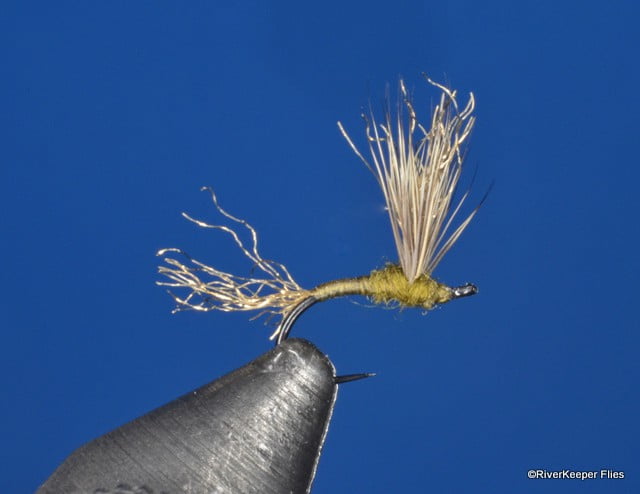
I also carry my RiverKeeper Soft Hackle Cripple, again in a variety of colors.

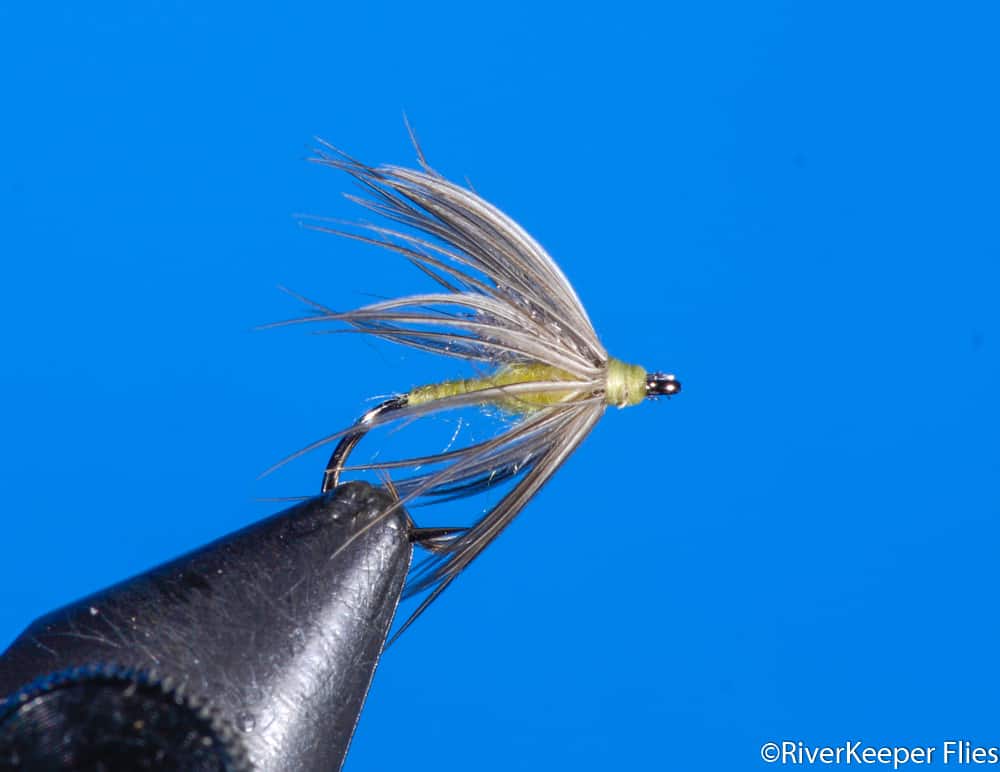
I’ll check my fly boxes to make sure I have the body colors I need.
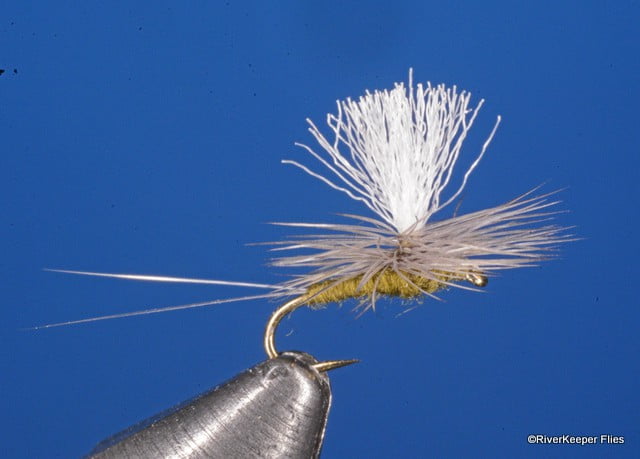
Those flies work for me. You might carry parachute flies to imitate these insects. Nothing wrong with that, I just prefer the two styles shown above.
 Caudatella Parachute

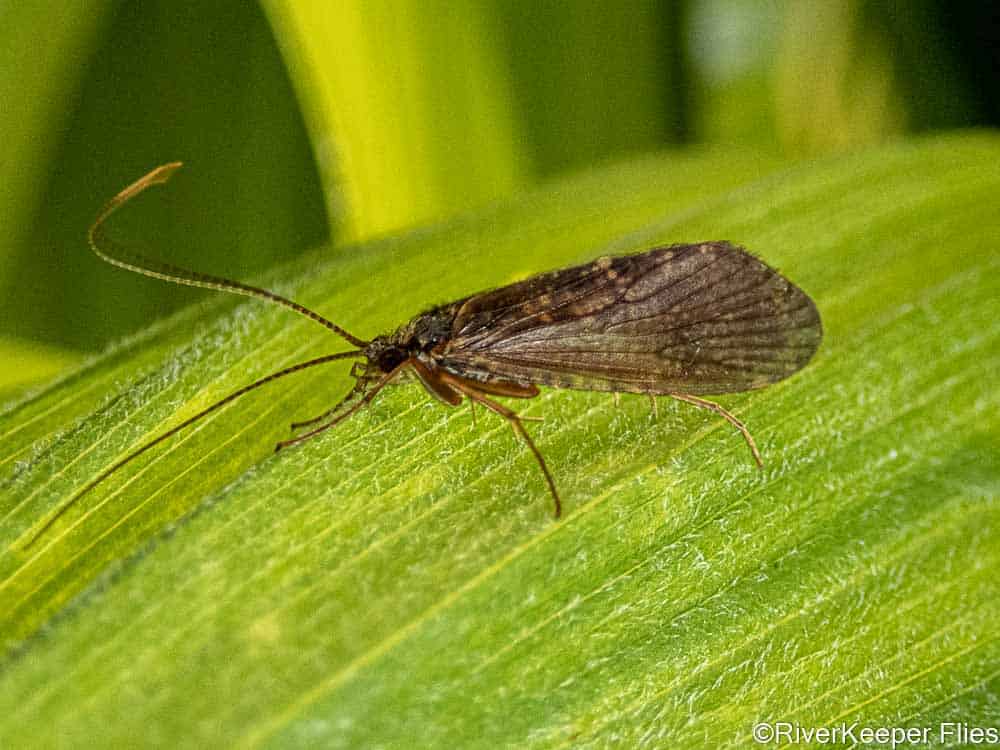
Here are three images of Caddis I’ve seen along the river at this time of year. From left to right…Silver Striped Sedge and a couple typical Caddis you’ll find in a variety of colors.

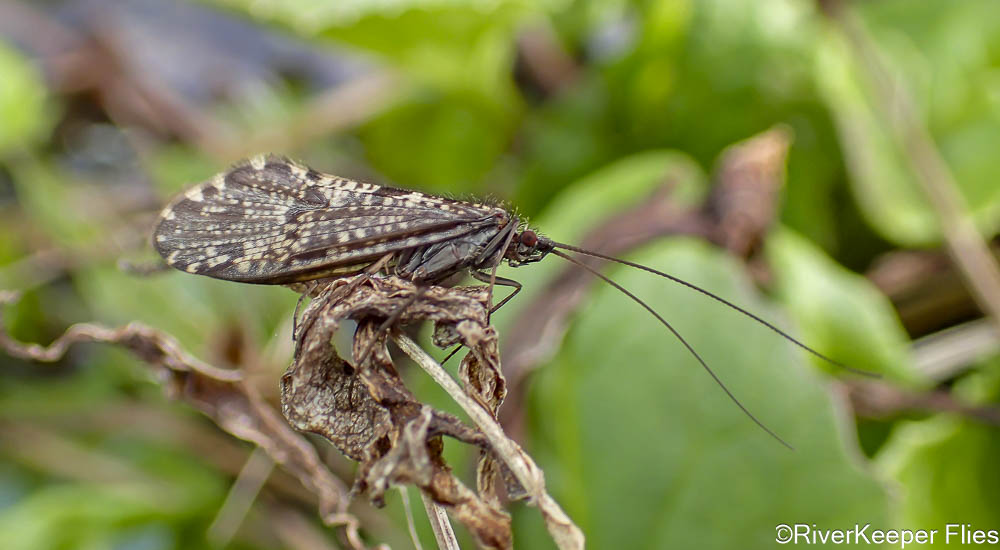
I need to tie a couple slim #10 Clark’s Stone to imitate the Silver Striped Sedge.
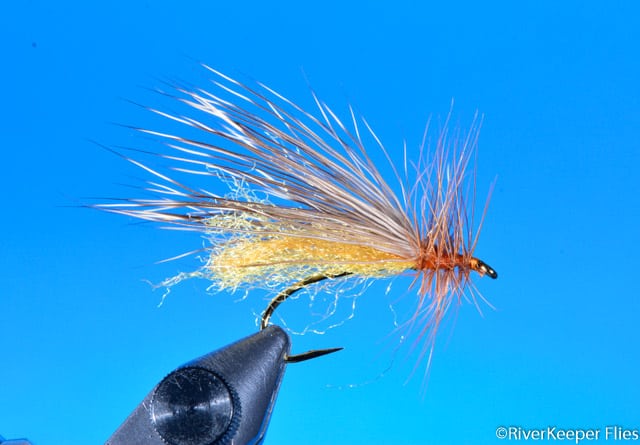
The other two Caddis could be imitated using either a standard Elk Hair Caddis, X Caddis, or an Improved F Fly. Just have a couple different body colors and you’ll be set.
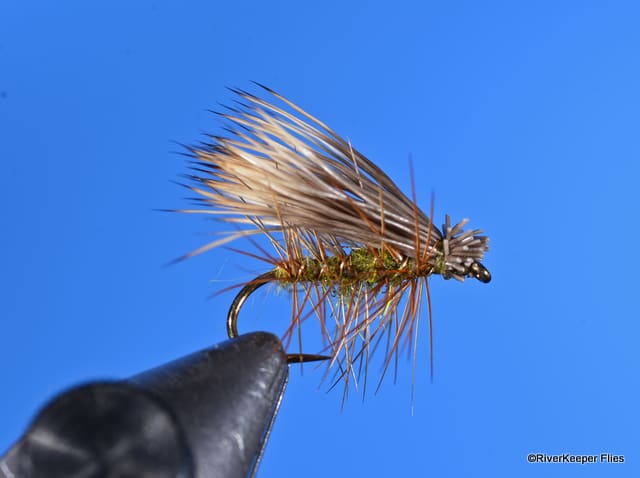
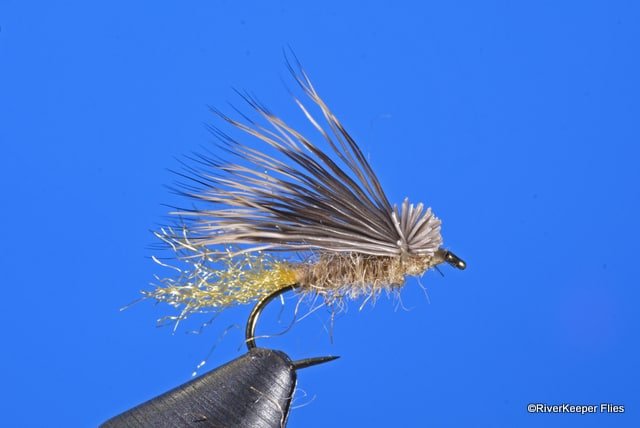
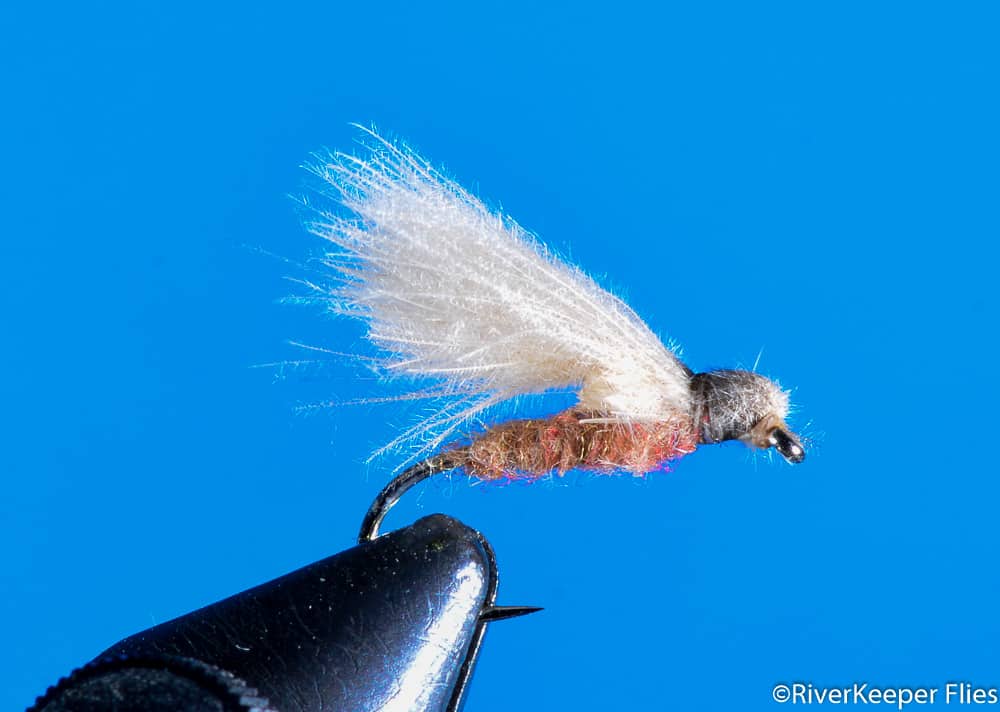
The next image is about a size 16 brown Stonefly. I’ll see these in different colors, namely olive, and fly fishers will think these are Caddis as they skitter across the surface of the water.
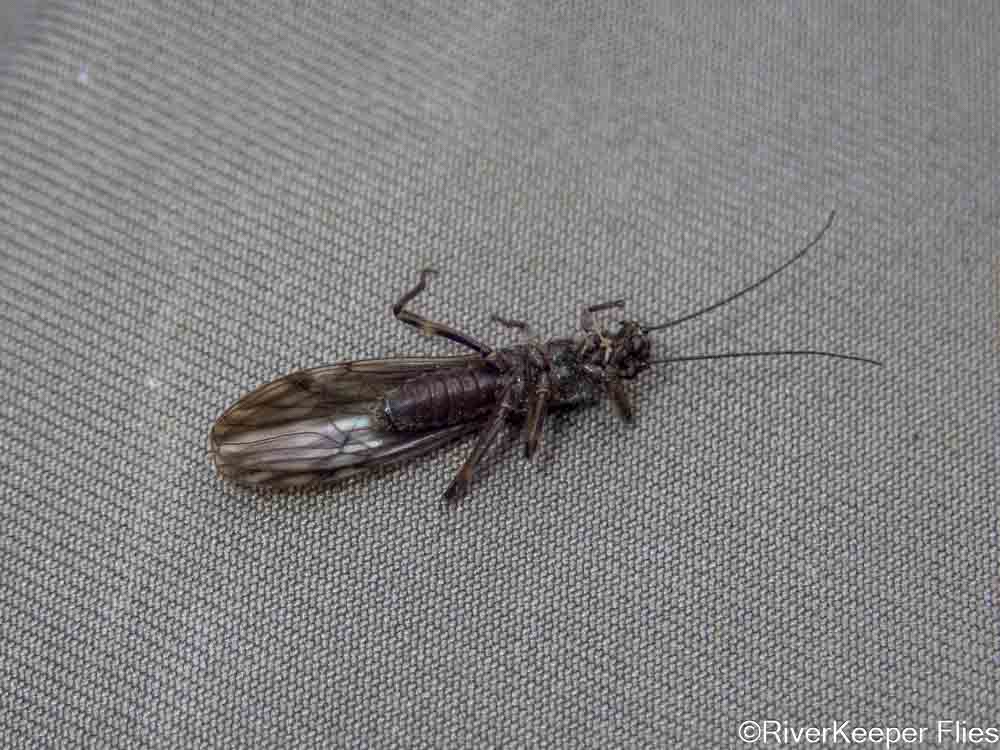
I found the best fly pattern for me if the Improved F Fly shown above. I’ll tie a couple with a darker body to imitate this brown natural.
And the first Green Drake of the season two years agon on April 22. I was quite surprised to find this Mayfly because it was a month earlier than we normally begin seeing them.
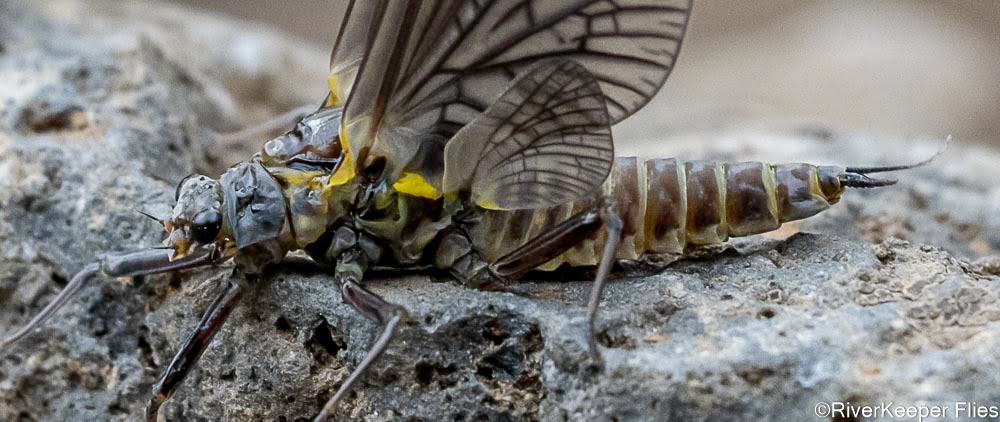
We didn’t see another for quite a while, but I’m always excited when I see the first one. I know it won’t be long until the others begin to hatch, but it’s way too early for a fish to rise for one of them. In my experience, they need to see quite a few before they begin rising for this natural.
Now I know what to expect when I arrive at the river.
Enjoy…go fish!



Thank you for sharing the knowledge. I’m in the Glendale AZ area and my Fly fishing club takes me all over the state. Your platform has been very helpful. Thanks again.
I meant a small brown stonefly (size 12ish).
We have a small brown hatch on the Yakima River that occurs in conjunction with the Skwala. The fish seem to prefer that to the Skwalas maybe because they see many different Skwala dry fly patterns and get educated to those flies. For some reason, the BWO hatch has been very sparse this spring.