It won’t be long before fishing season begins for many fly fishers. That’s because March Brown mayflies are coming soon.

This is the first of the larger mayflies trout will see in the coming months and an emerger or dry fly is a lot of fun to fish.
Western March Brown mayflies (Rhithrogena morrisoni) are in the #12 – 16 size range. If you look at them from above, they appear a medium to dark brown. But that’s not what the fish see. The fly’s abdomen where I live is a reddish-brown. They might be different in the waters you fish. And their wings are very distinct…brown and mottled or some fly fishers would call it cathedral window-like.
Here is a brief description of a March Brown’s mayfly life-cycle.
Like all aquatic insects, it begins with an egg. The egg hatches and becomes a nymph, living in fast, clean water. The March Brown nymph is known as a clinger because it attaches itself to the bottom of the river by it’s gills, which act like suction cups. Meals consist of algae scraped off the rocks where the nymph lives and grows.
After living in the river for about a year, it’s time to hatch. The nymph swims to the surface and escapes the nymphal shuck. And the adult, or dun as their known, flies away.
The dun lives along trees and brush waiting as it sexually matures, molting again into the spinner phase. After mating and laying eggs, spinners fall into the water where trout may feed upon them.
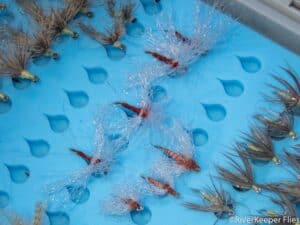
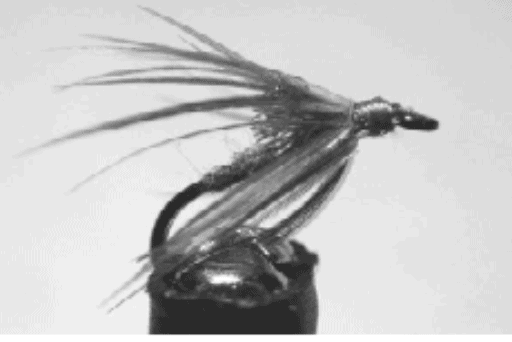
Nymph, emergers, and adults are all important to the fly fisher. All phases are easily imitated with the flies listed below.
I’ve seen a few good hatches. I was floating on the McKenzie River in a drift boat several years ago and observed nymphs swimming to the surface, pausing briefly while the dun broke free of the nymphal shuck and flew away. It happened so fast, I didn’t have time to reach down and grab one to get a closer look. I’m guessing that’s why trout rise with purpose. They don’t want the dun to get away.
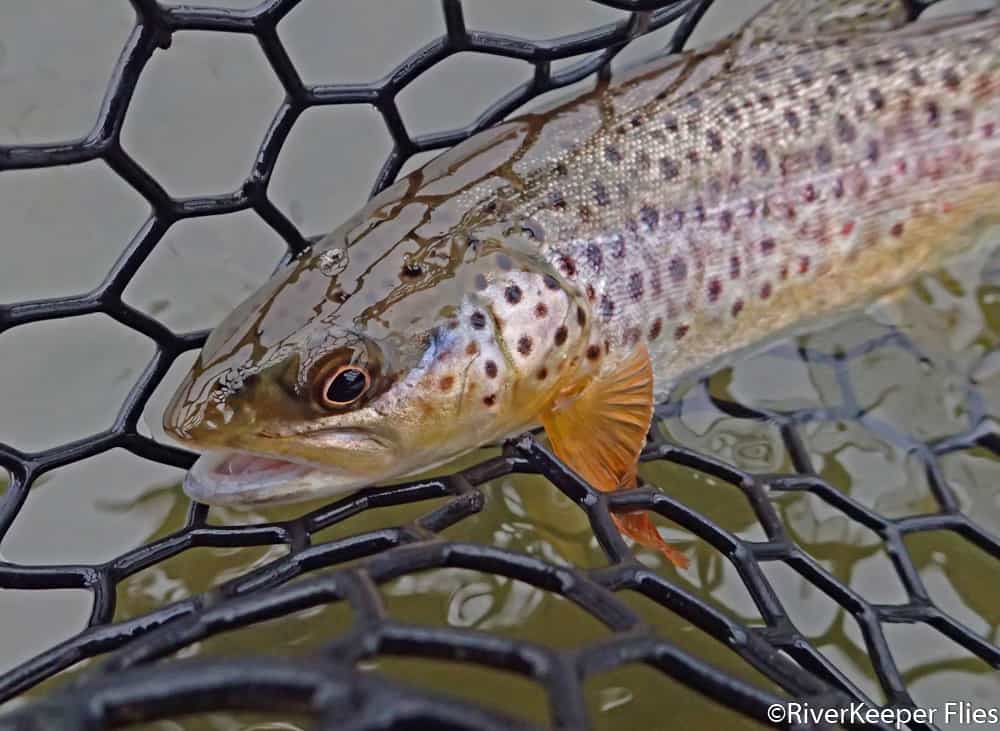
In some of the waters I fish, you could call March Brown mayflies April Browns. I find great fishing in the month of April. The Middle Deschutes River is an excellent example of April hatches. On more than one occasion, my timing was perfect and I arrived at the river to see many trout rising and eating March Browns off the surface. Here is one of the Brown Trout that came to hand.
If you would like to get more information about March Browns or any other aquatic insect, I highly recommend the book BugWater by Arlen Thomason. It’s a favorite of mine. Another great resource is Western Mayfly Hatches: From the Rockies to the Pacific by Rick Haefle and Dave Hughes. Go to your local fly shop and see if they carry it or click on the Amazon link.
Here are a list of flies you’ll see in my fly box.
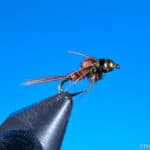


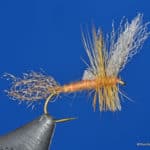
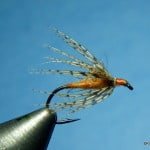
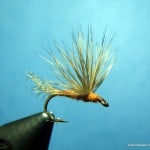

Do you need all these flies? No. Just pick the flies you have confidence in and head to the river.
Enjoy…go fish!
(John Kreft is a participant in the Amazon Services LLC Associates Program, an affiliate advertising program designed to provide a means for sites to earn advertising fees by advertising and linking to amazon.com.)