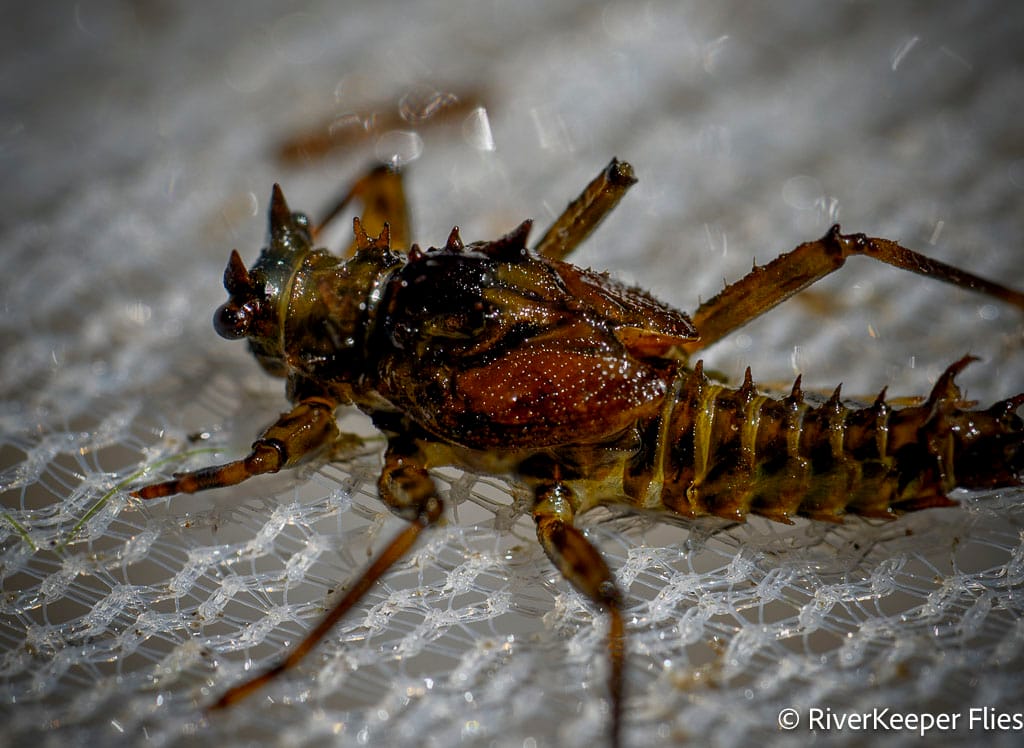
As a dry fly fisher, late September and October are some of my favorite times of year. Mayflies are hatching again, and I always look forward to seeing Caudatellas, Drunella flavilinea (Flavs), and Green Drakes. We’ve observed a wide variety of other insects on the water. But those darn fish have certainly been fickle this year. The image below is a Green Drake Nymph I photographed more than a week ago.
I’ve mentioned in past posts how the number of photographs I take seems to increase when the fish aren’t rising. That was certainly true this past week.
Watching insects drift downriver with hardly a fish rising is a bit of a head-scratcher for me. Every once in a while, a trout will rise, but the places we’ve been fishing and the time of day may have something to do with it. But when the insects are there and the fish aren’t showing, I find myself looking closer at the insects instead.
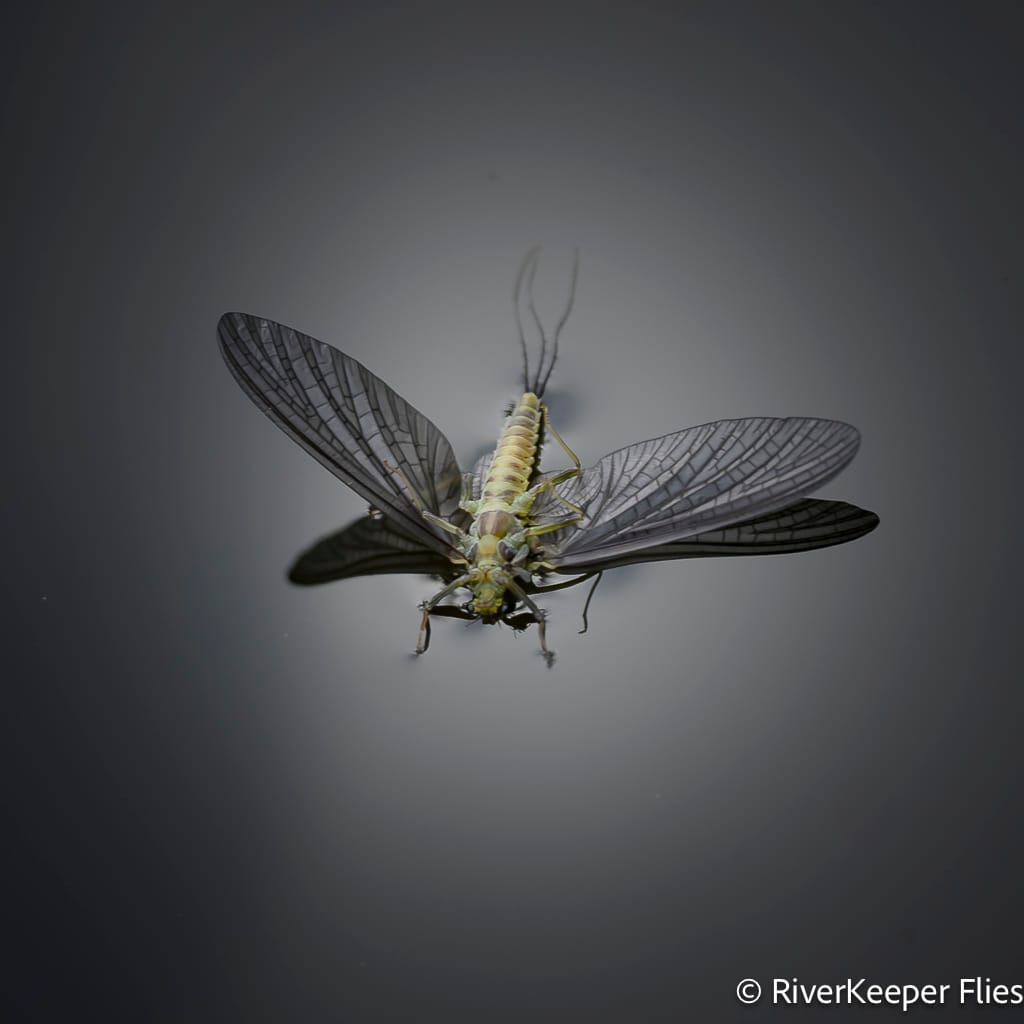
I took several pictures of this Drunella flavilinea, commonly known as a Flav. It was floating upside down in an eddy, and I hurried to capture a few images before it continued drifting downstream. I have to say, I’m amazed at how well this one turned out.
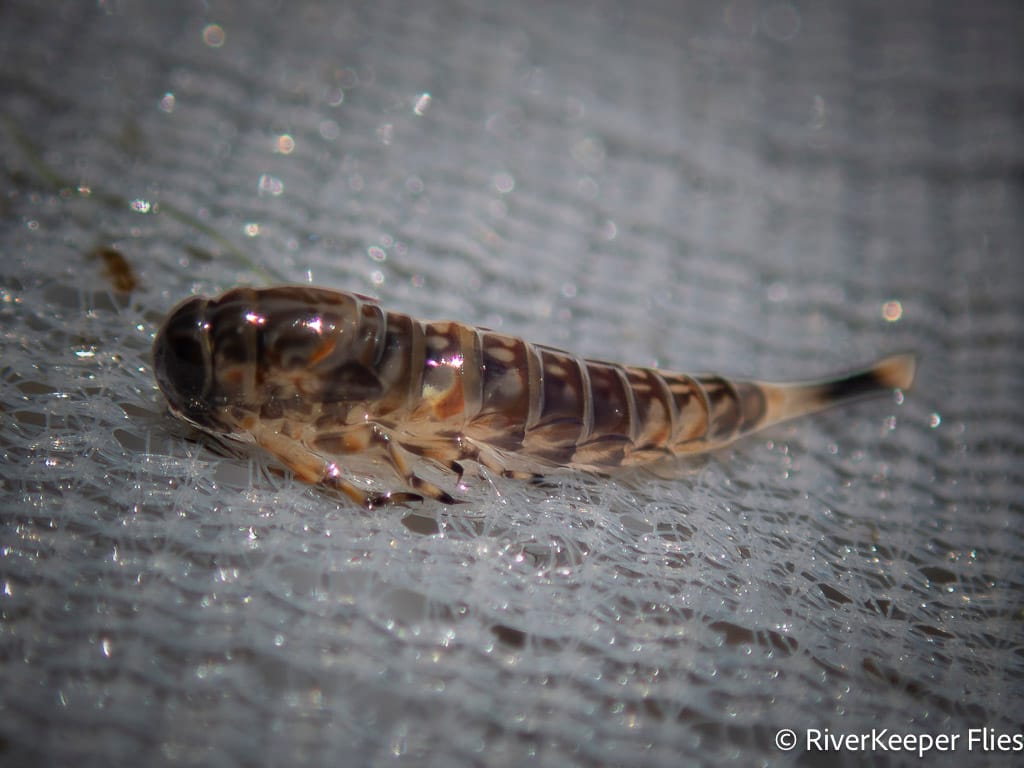
I’d guess the next two images are of an Ameletus or a brown dun…the nymph and dun stages.
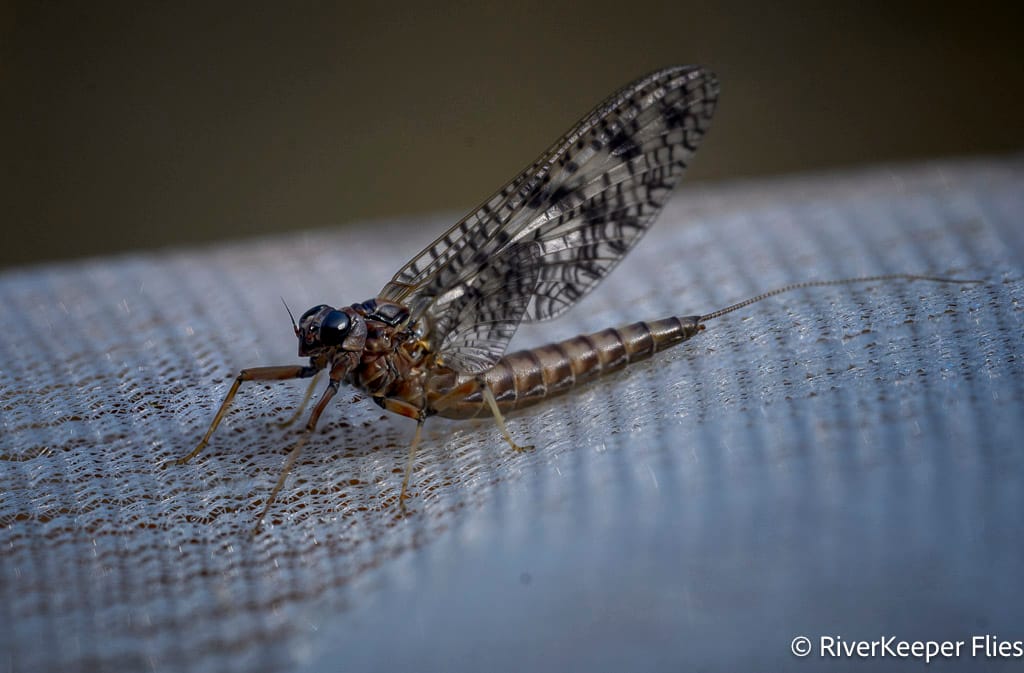
One of my favorite places to look for insects is in eddies. I won’t find them slowly drifting along the water’s surface on every fishing trip, but when I do, I stop and take several pictures.
Here is a Cinygmula mayfly floating past me that I was able to capture. I usually take three or four pictures and keep my fingers crossed that at least one will be in focus. I never know for sure until I get home and load the images onto my laptop.
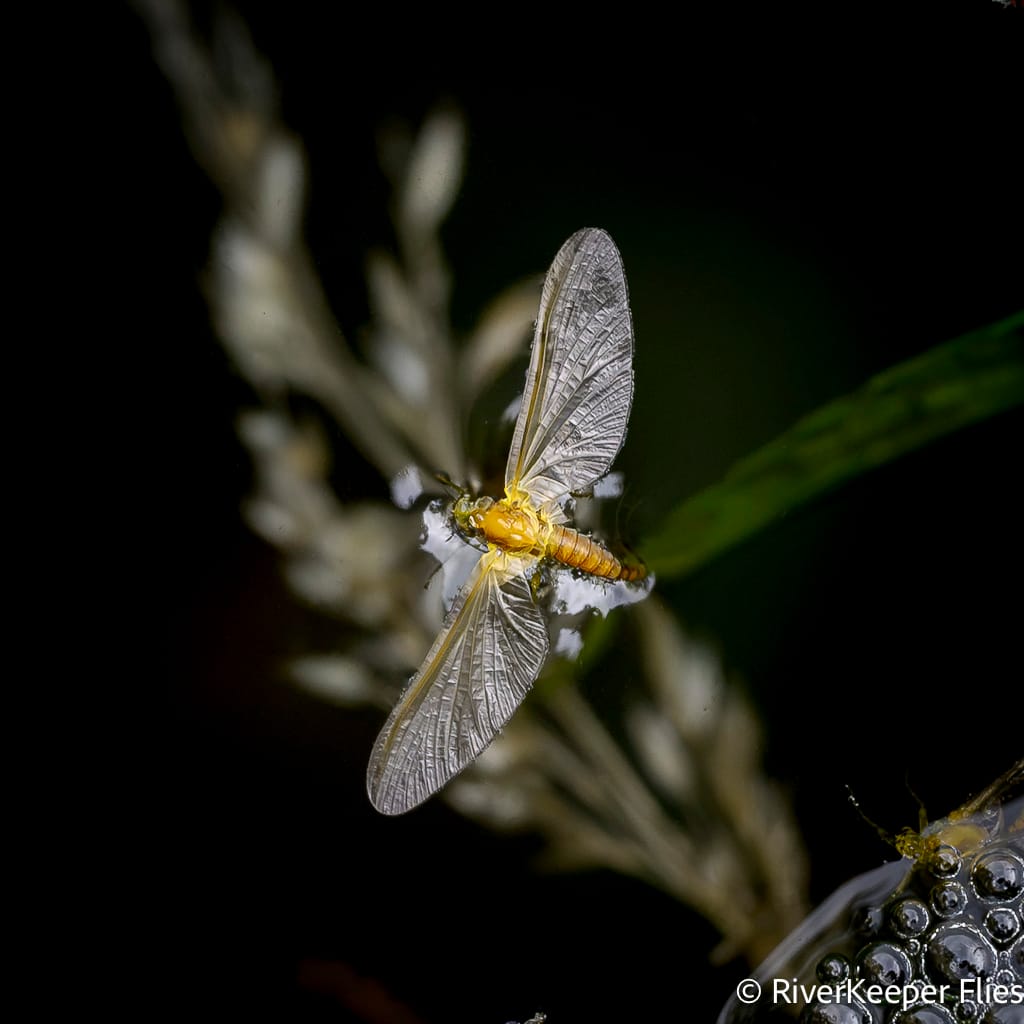
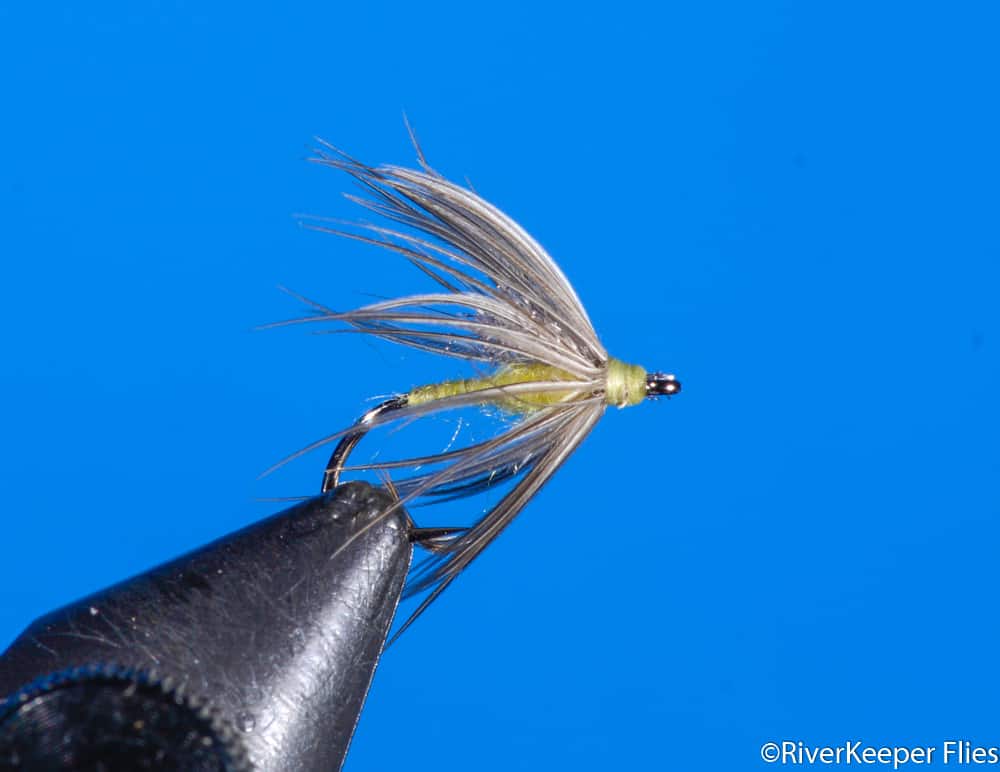
I really like this image. This is exactly the profile my RiverKeeper Soft Hackle Cripple is designed to imitate.
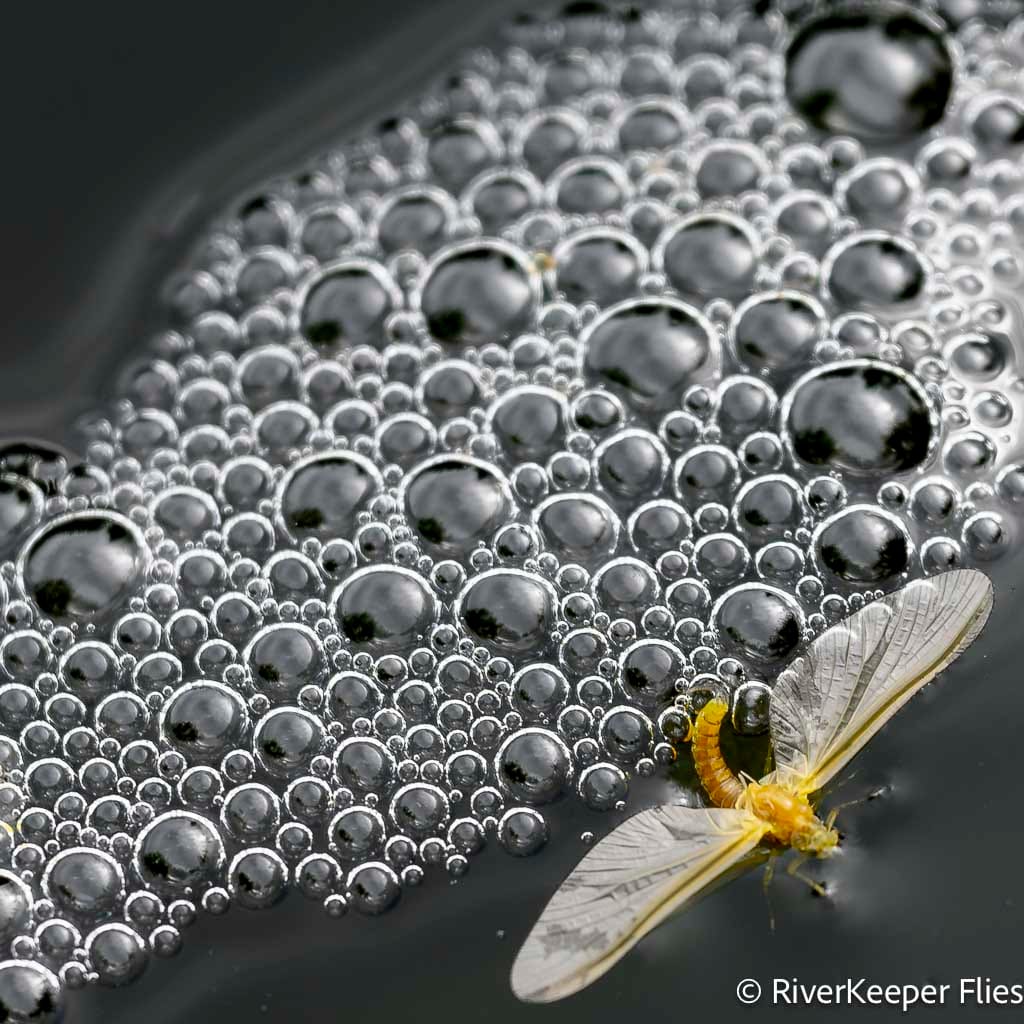
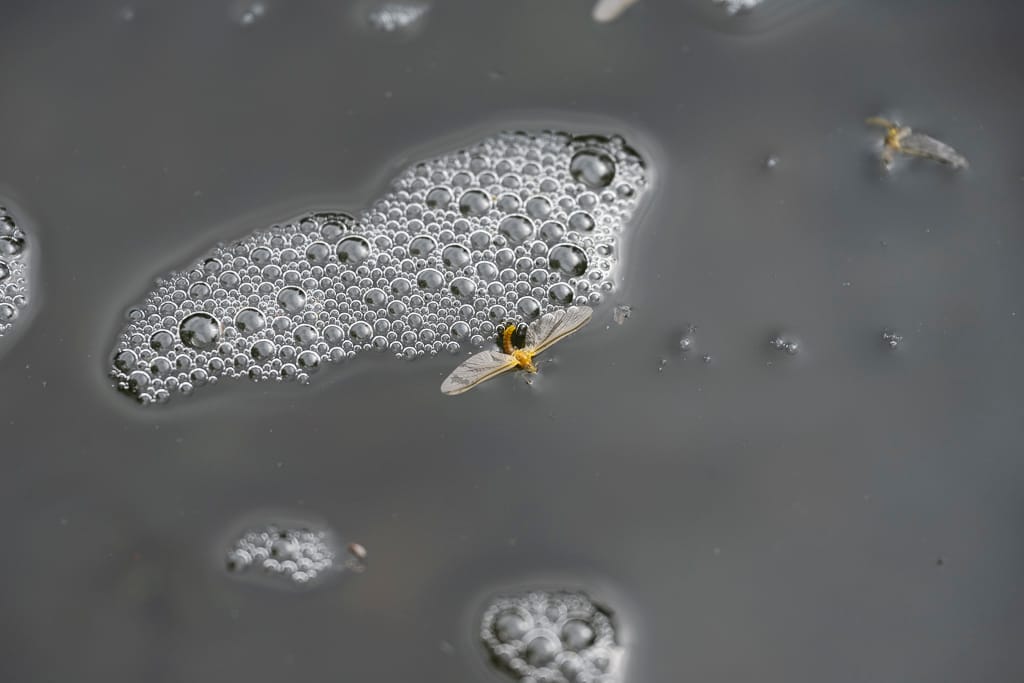
Here is one next to bubbles created by the eddy. I remember bubbles, but didn’t arrange any of this. I love this image!
The original photograph is shown below for comparison. I use Adobe Lightroom Classic to edit my images. Cropping can be risky, but today’s software makes it much easier to create a pleasing final composition.
I’m not certain, but perhaps this is a Mahogany Dun that just broke free of its nymphal shuck. It didn’t stick around very long for me to capture this image.
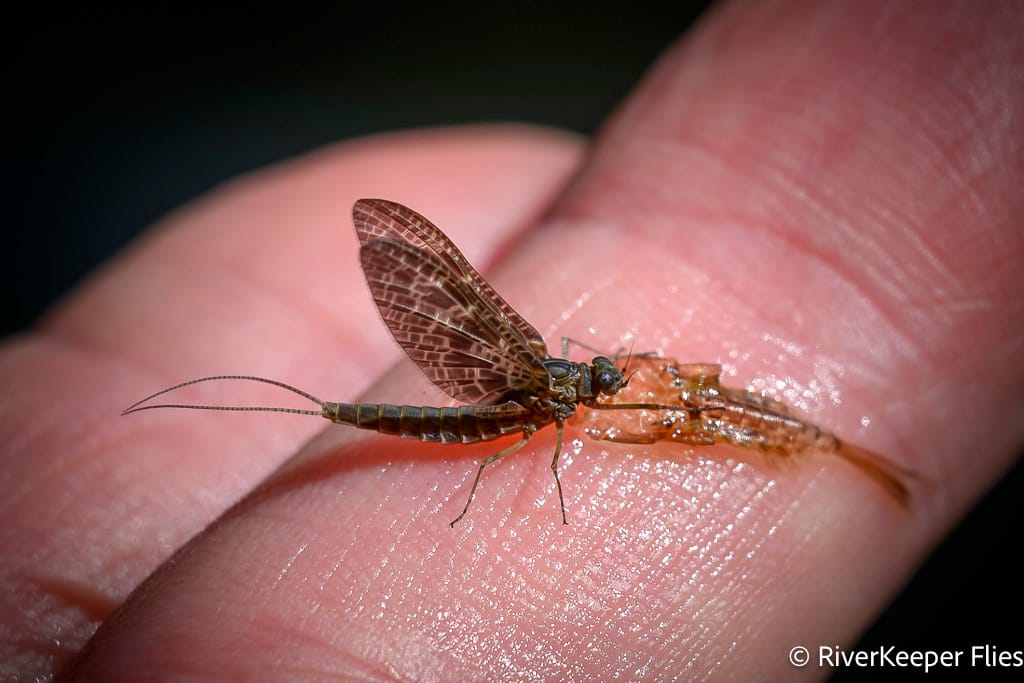
I won’t have this opportunity to take close-up images of insects much longer. Before long, November will be here and many of the insect hatches we look forward to will be complete and we’ll be longing for next year.
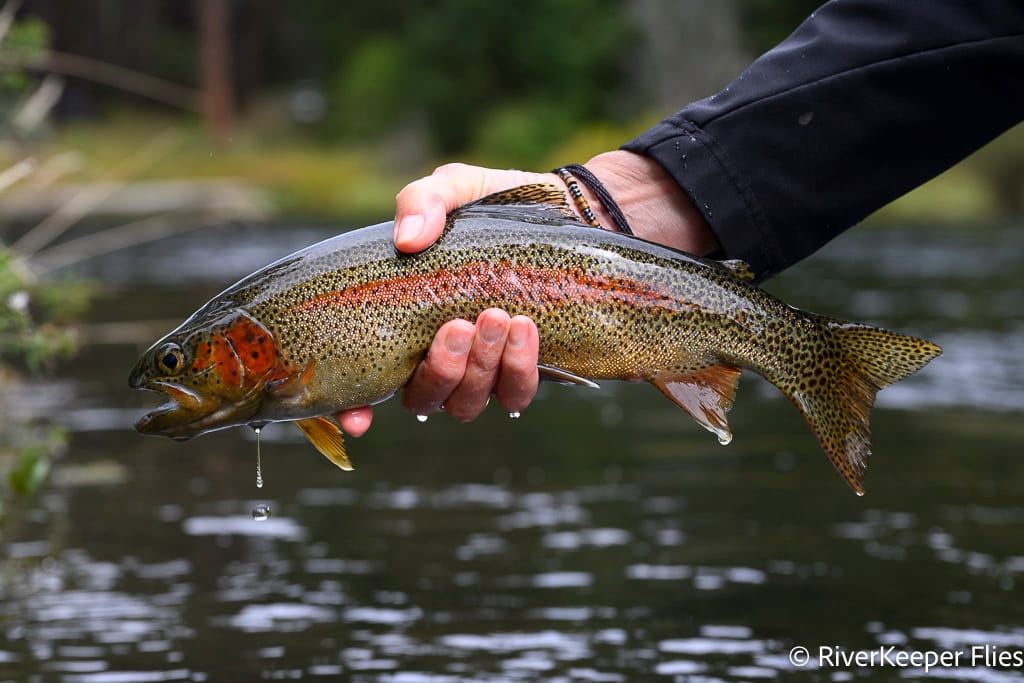
I almost forgot…this is what we are after!
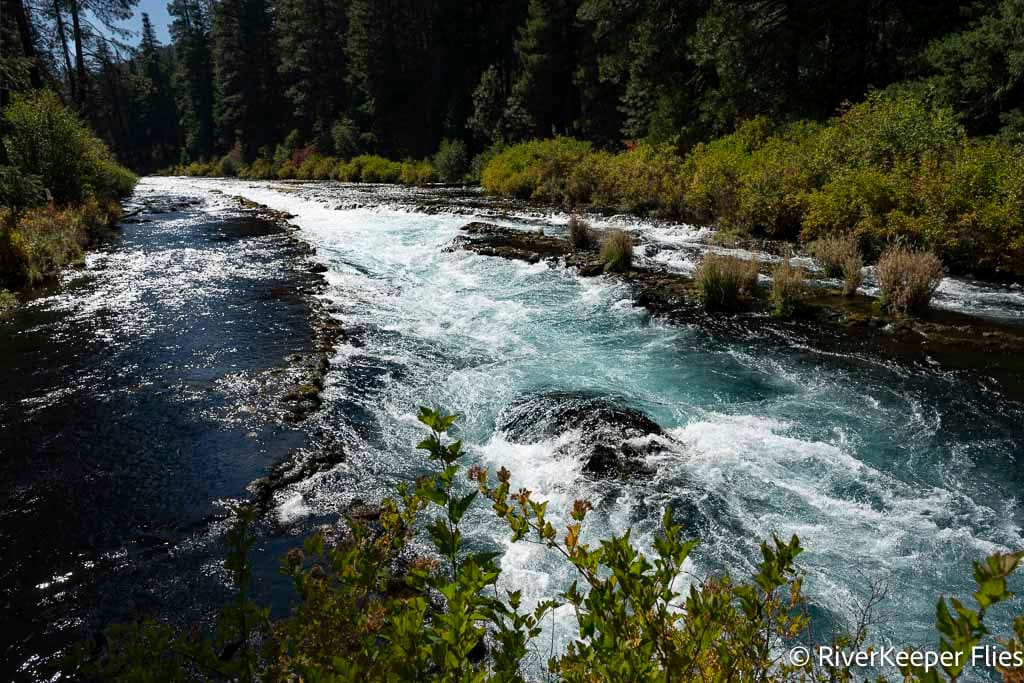
I’ll close with a couple of images of the river. Our fall colors are just beginning to show as the leaves change colors.
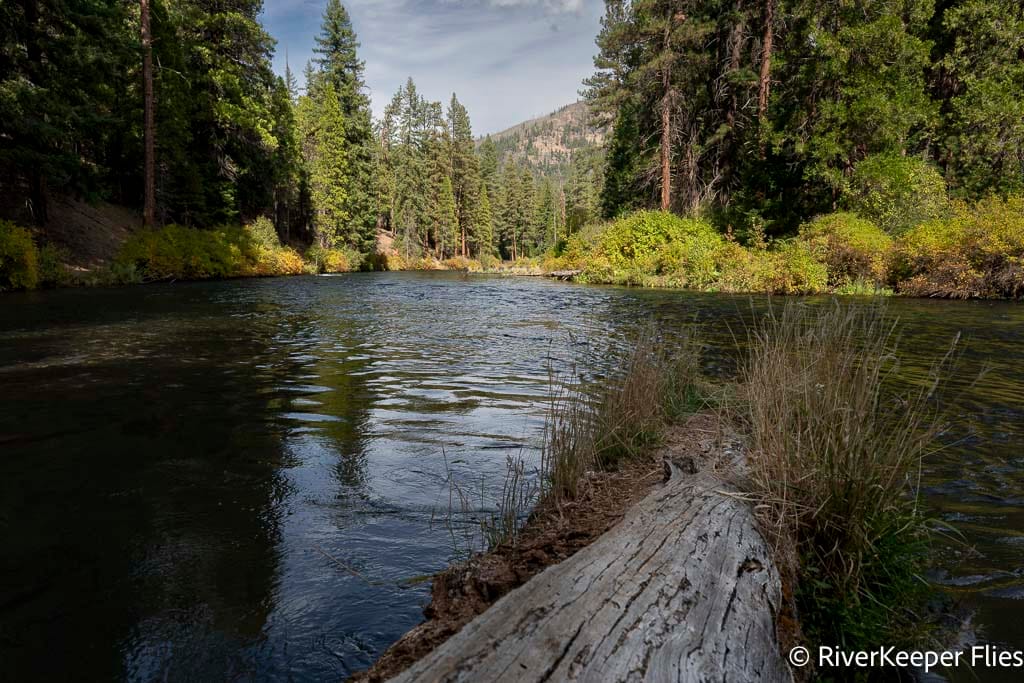
I look forward to this view as we arrive at the fish hatchery.
Enjoy…go fish!



Absolutely gorgeous photography.
Try that with a paint brush.
What a color pallet
Amen and AMEN
Wow John,
Beautiful photos, as others said..
The bubbles… natures tranquility.. at its finest form.
John, I absolutely love your photos! Keep it up! Thanks.
Ditto on the “bubbles” pic. Excellent composition.