I was thinking the other day about the dry flies I use most of the time and the fact they don’t include parachute flies. Sure, I’ll use parachute flies on some rivers and perhaps tie on a Purple Haze in the evening at the spring creek I fish. And sometimes it works.
I gave away a few Purple Haze flies to a friend on the river and I began thinking about how important flies tied with hackles can be.
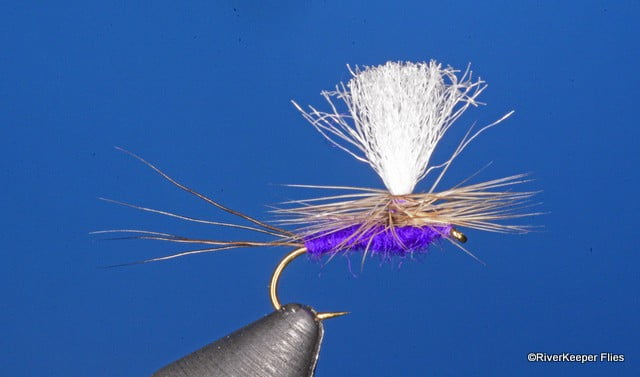
Hackles help the fly float and offer the fish an impression of legs of the real insect. In addition, hackles provide the hint of wings fluttering or movement. These flies emulate the natural very well.
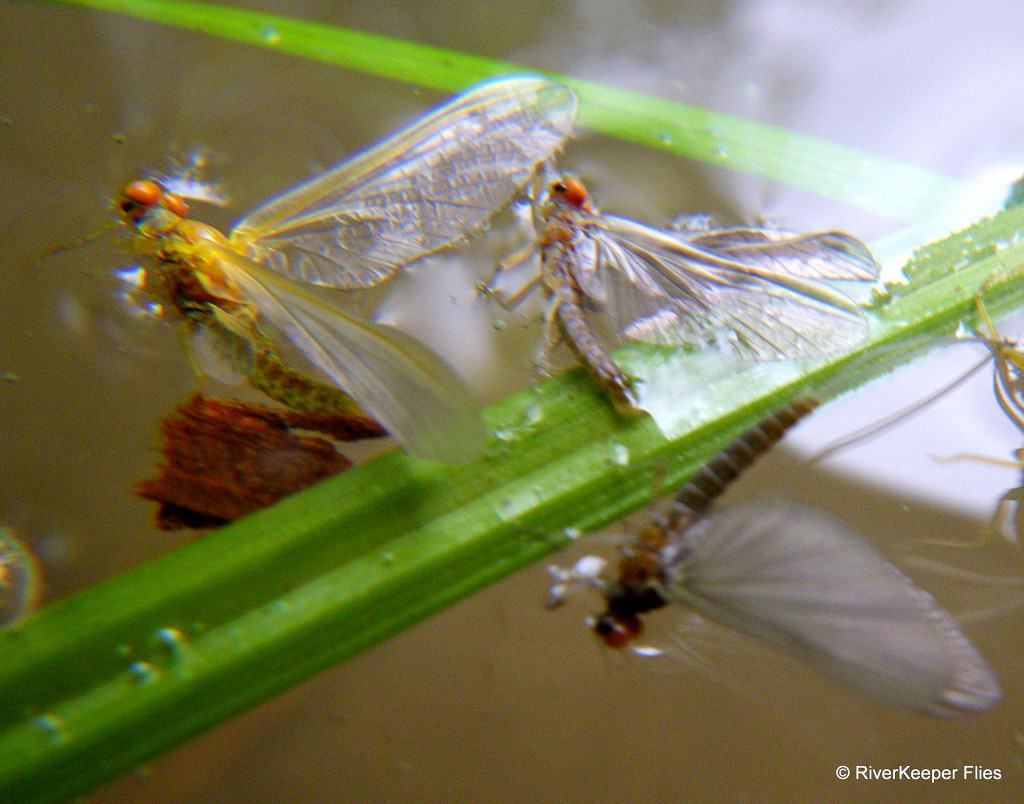
You can see how the abdomen of the fly sits on the water with wings extended. Parachute flies sit low in the water and the parachute-style wing imitates the wings.
But during a recent zen moment sitting along the river bank, I wondered how my fly choices might change if I fished bigger water like the Lower Deschutes. Would I use the same dry flies or different ones?
If I concentrated on fishing the eddies, I’d might use the same dry fly patterns as those on a spring creek. I like the idea of lower profile flies.
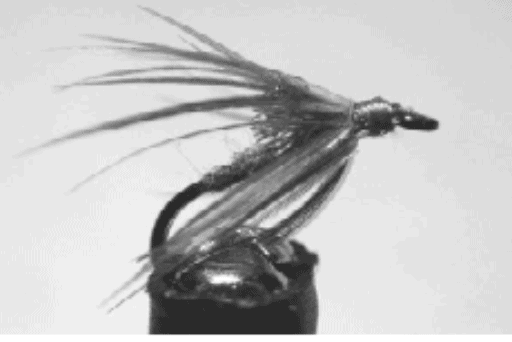
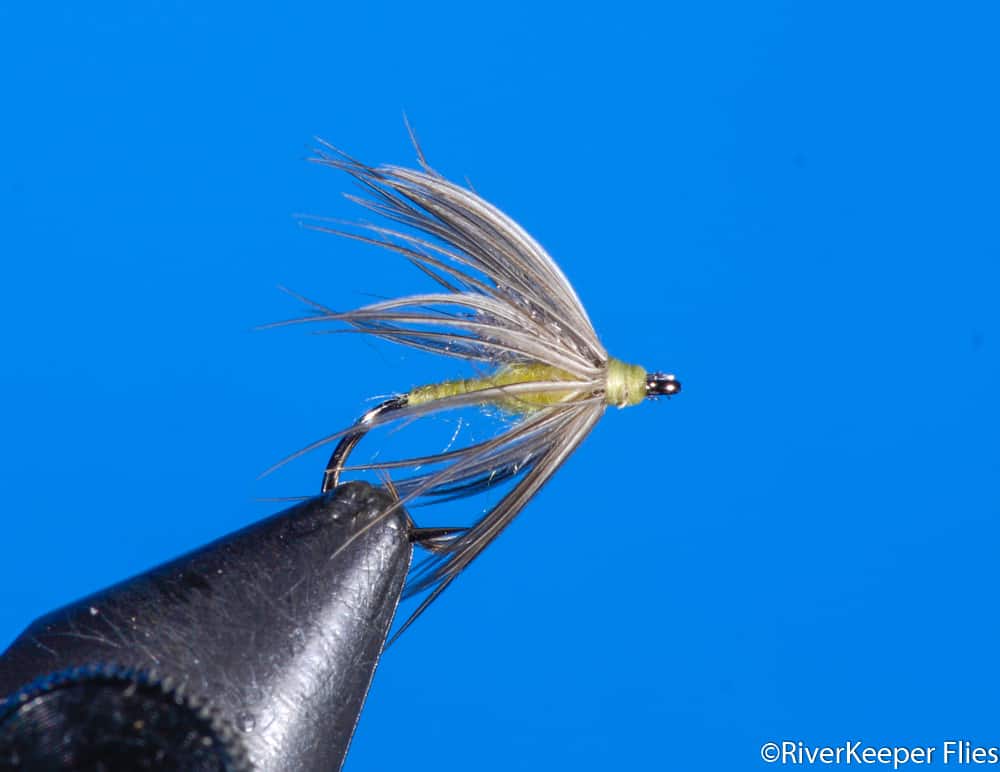
Many of you know I fish the RiverKeeper Soft Hackle Cripple and Sparkle Duns most of the time. These patterns fit my theory about using simple, but effective flies. I’ve always been a fan of low-profile flies to imitate a mayfly body on the surface film.
RiverKeeper Soft Hackle Cripple
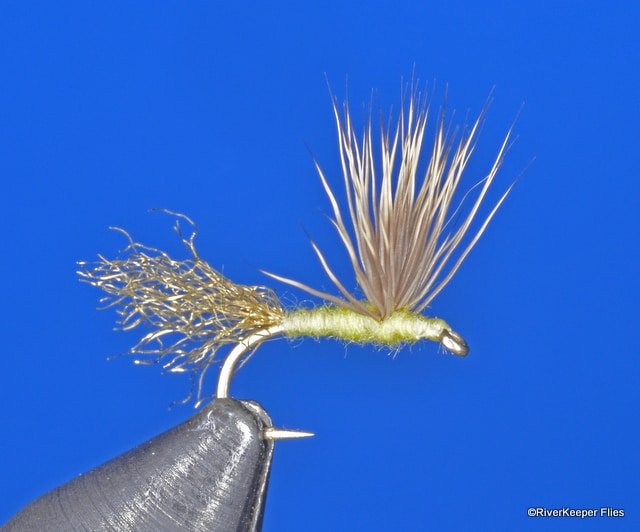
What about the straight-ahead flows of faster riffles? My go-to flies might stay on top of the water for awhile, but they may get “drowned” too. And a higher profile fly would be easier to see. So with those thoughts, I’d have a few more choices in my fly box.
I’d use a lot more flies with hackle on them to help them float.
Here are a few parachute fly patterns I use to imitate the mayflies hatching on the river in September and October.
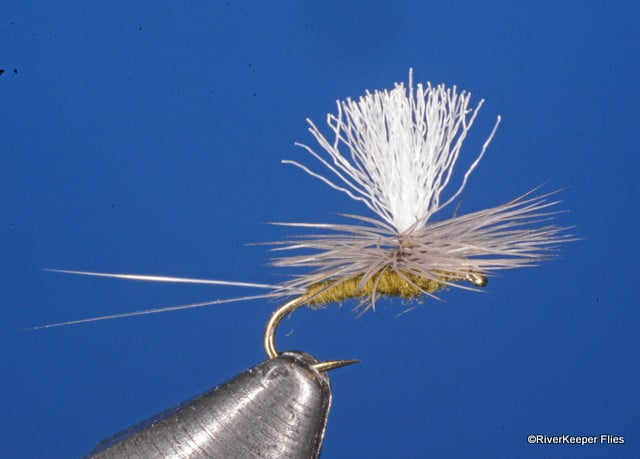
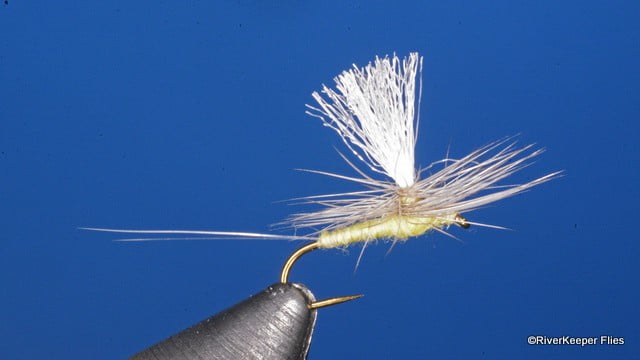
PED – Pale Evening Dun

In a future post, I’ll provide more information about dry fly styles to imitate mayflies, including traditional, parachute, hackle stacker, and comparadun flies.
I think I’ll sit down and crank out a few more parachute flies.

Enjoy…go fish!