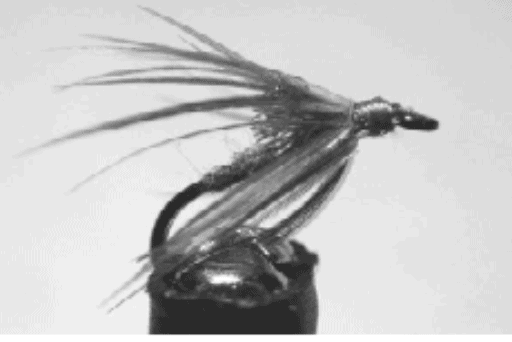
Have you ever heard of the stonefly Doroneuria baumanni? Neither had I.
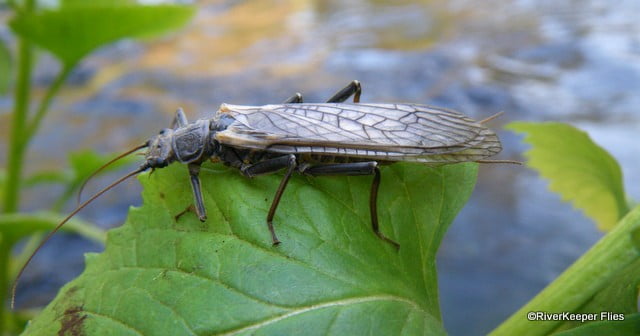
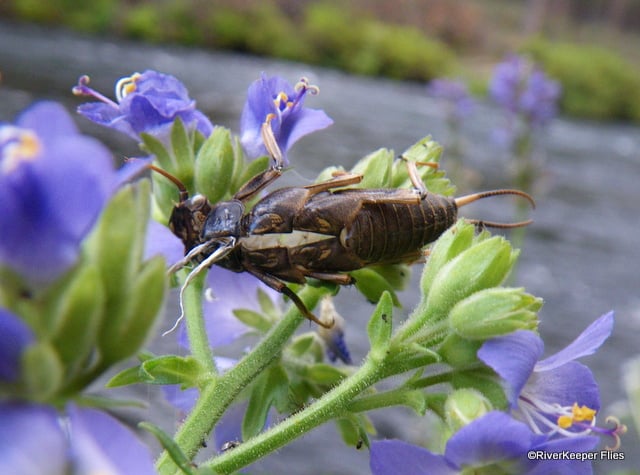
This is what they look like – about a size 6.
Doroneuria baumanni
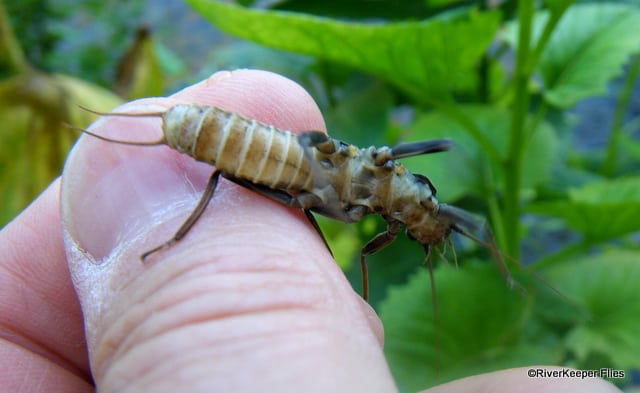
Doroneuria baumanni. – bottom
I first observed this stonefly a couple of years ago in August. From what I know now, it was a female, which is larger than the male (like all stoneflies). It was similar in size to the Salmonfly seen on the Deschutes River. Since it was so late in the year, I assumed it was an old Salmonfly that had been around for a while and faded out. To further confirm my thought process, there weren’t very many around…less than a handful.
Mating
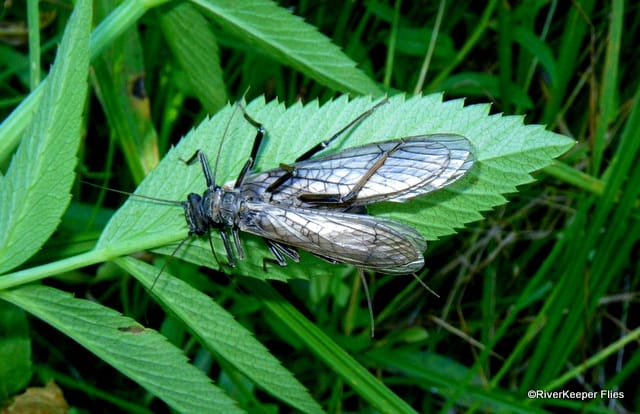
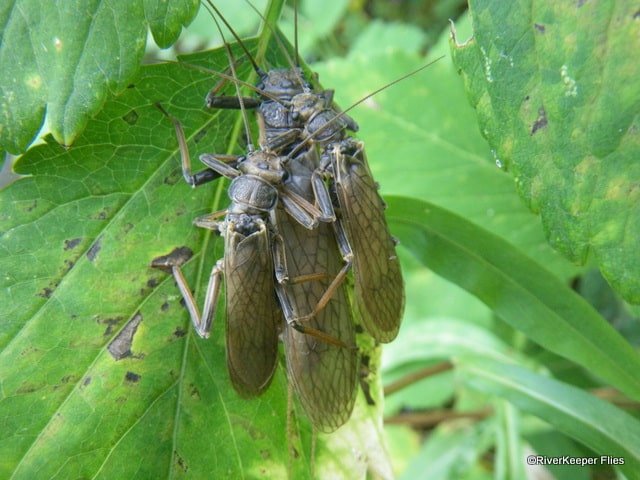
Last year when we saw them again as usual, someone told me they were Willowflies. That made more sense. A slightly different version of the Salmonfly. So we started calling them Willowflies.
This year rolls around and the bugs show up just like normal in August. In fact, we’ve seen more this year. So I thought I better find out additional details about these “Willowflies”.
I looked up Willowflies and Shortwing stoneflies. But they didn’t look like the bugs I saw. Willowflies were the closest, but much shorter and thinner. I found that Willowflies are really Brown Willowflies…or Skwalas. And the Shortwings…well, we found those in Montana on the Madison. (Learn more about Shortwing stoneflies in Arlen Thomason’s BugWater book.) Their name tells it all. The males have wings about half the size as the “Willowflies” found on the Metolius. This didn’t make any sense at all. What to do?
I sent Rick Hafele, a real bug expert (check out his website at www.rickhafele.com), an email with a picture and asked him what they were. Rick is one of the authors of several books on the subject, including Western Mayfly Hatches. He wanted a sample to key out the bug. The answer? My bug sample was a Doroneuria baumanni. It’s in the same family (Perlidae) as the Golden Stonefly. A close relative to the Golden. Not a Willowfly.
I asked Rick if there was a more common name. Nope. I guess since it isn’t a major hatch, fishermen haven’t given it one. Maybe I’ll call it the Golden Stonefly Cousin! Good as any.
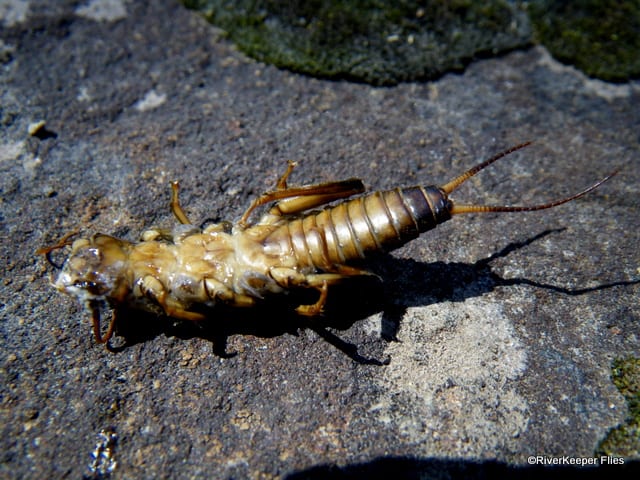
Nymphal Shuck
Updated 9/21/15: Another couple of pictures of the real nymph.

Do the fish key on them? In my experience, not that much. I haven’t seen them fly around very much. You have to look closely in the bushes to find them, so the “cousins” don’t seem to be high on a trout’s radar.
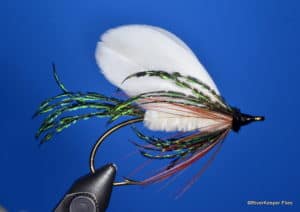
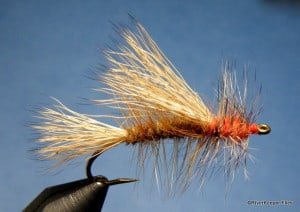
That doesn’t mean they won’t eat them. I’ve used Fat Albert and Chernobyl Ant flies to get their attention.
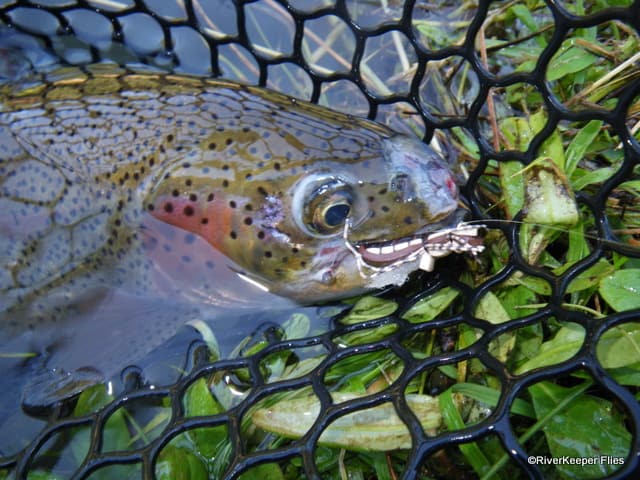
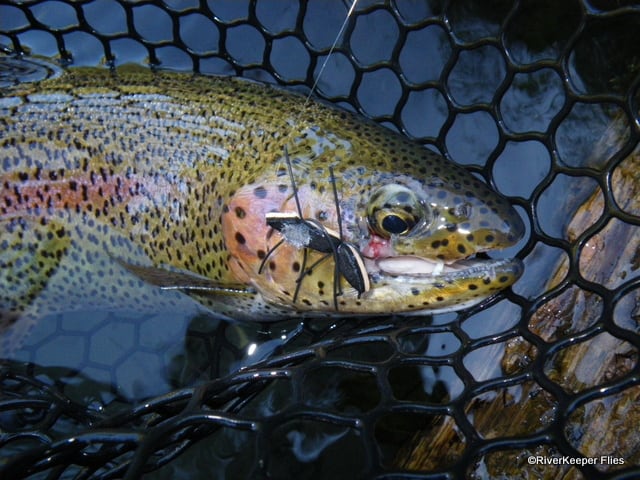
So keep your eyes open. Be observant. And catch a fish or two!


I received a comment on another page from Roger Rohrbeck. I thought it more appropriate here so…copy/paste!
Re: Doroneuria baumanni common name
Hi Bill,
Actually, Doroneuria baumanni does have a common name, which is Cascades Stone. However, rather than having been assigned by flyfishers, both it (and all the other N. American stonefly species known at the time) were assigned common names by a group led by Dr. Bill Stark.
Best regards,
Roger Rohrbeck
Mercer Island, WA
http://www.FlyflyfishingEntomology.com
Re: Doroneuria baumanni common name
Hi Bill,
Actually, Doroneuria baumanni does have a common name, which is Cascades Stone. However, rather than having been assigned by flyfishers, both it (and all the other N. American stonefly species known at the time) were assigned common names by a group led by Dr. Bill Stark.
Best regards,
Roger Rohrbeck
Mercer Island, WA
http://www.FlyflyfishingEntomology.com
Thanks John. I continue to enjoy each of your updates. Please keep them coming.
Thanks for the kind words Steve!
John
Thanks John. I had not heard of this fly before. I assume you’ve seen it on the Metolius.
Ron,
Yup, seen it on the river. Try it sometime, even when nothing is happening. You might be pleasantly surprised.
John