I’ve spent time at the vise lately and finished an order of 96 dry flies for a customer and thought I’d share a few images of the flies. The first two are Klinkhamer and Quigley style flies.

I enjoy tying these flies with turkey biot furled bodies. Both of these flies are size 20, a Klinkhamer style on the left and Quigley style on the right.
I tied eight different flies, including several sizes for a total of 96 flies.

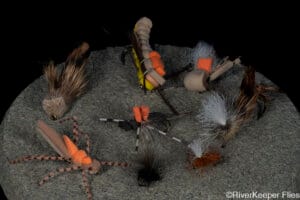
Top row – Iris Caddis amber and tan – #12, 14
Middle row – Purple Haze – #12, 14, 16
Bottom row – Harrop’s CDC Ant black and cinnamon – #14; RiverKeeper Soft Hackle Cripple BWO – #16, 18

Top row – BWO Klinkhamer Variant – #12, 14, 16, 18
Middle row – IOBO Humpy dun – #16, 18, 20; BWO Klinkhamer Variant – #20
Bottom row – Quigley Film Critic BWO – #14, 16, 18, 20
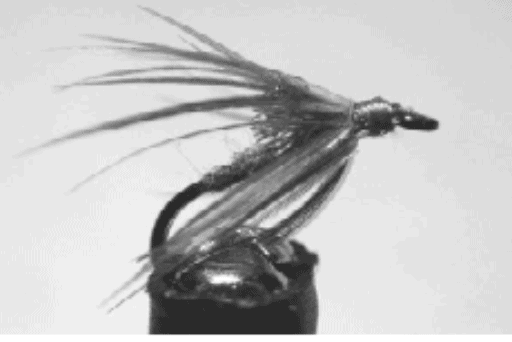
Here is a closeup of the BWO Klinkhamer Variant flies I tied in sizes 12 – 20. The fly is designed for the body to sink and imitate a mayfly hatching from the nymphal shuck. Originally named the LT Caddis (the initials LT standing for light tan), the fly was designed by Hans van Klinken in 1984 to imitate caddis larva on Norway’s Glomma River. Tying this style as a variant from the original fly, I hope trout think the fly imitates a BWO.

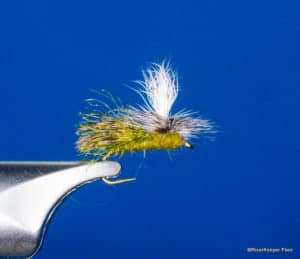
And a closeup of the Quigley Film Critic BWO flies I tied in sizes 14 – 20. I don’t know if Bob Quigley used the Klinkhamer fly as inspiration for his fly, but hackled it with the hackle-stacker technique instead of a parachute style fly.

Here is how Bob Quigley described his fly in the June 2012 issue of Fly Fisherman Magazine:
“This emerger’s entire body and thorax hangs below the surface film, while the stacked hackle and forward-tilted wing simulates the dun’s ready-for-flight profile. It is a two-in-one trigger of both an entrapped and escaping fly, and unlike most emergers, it’s easy to see.”
I would fish all these flies and wish my customer the best of luck!
Enjoy…go fish!



Hi John,
Gretchen & I are glad to see you keeping busy. GRN!
Tight Lines – Al Beatty
Beautiful work! Do you also provide the boxes with orders?