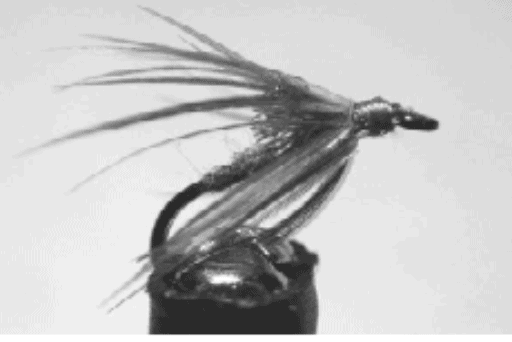
I’m getting ready for our first road trip of the year and think I should tie up a few Skwala stonefly fly patterns. You may not believe it, but I really haven’t concentrated on fishing this hatch before. I have a couple of fly patterns a friend of mine taught several years ago at our Central Oregon Flyfishers Winter Fly Tying. I’ll tie these fly patterns to be ready, but wanted to know from my readers what their favorite Skwala stonefly fly pattern might be.
Our trip will begin as we travel from Oregon to Idaho and hopefully includes a stop on the Owyhee River, OR which is very close to the Idaho border. In fact, I tease my friends in the Boise area that the river is an Idaho river because of all the Idaho license plates I’ve seen!
Besides the Owyhee River, my research shows good populations of Skwala stoneflies on the Yakama River, WA, along with the Bitterroot, Clark Fork, and Rock Creek in western Montana. I shouldn’t forget there are a few Skwala’s in my own backyard on the Middle and Lower Deschutes. It’s an important hatch because trout have only seen small Blue Wing Olives and midges during the winter months and are anxious for a bigger meal.
Other names I found for the Skwala stonefly include the spring stone or willow fly. They hatch in February, March and April (depending on the river) before the snow runoff hits many of the larger rivers. The nymphs migrate to shore and crawl out of the water to hatch. Be on the lookout for empty nymph shucks. That will tell you whether Skwalas have started hatching.
Adults are notorious for walking and running along the shore. In fact, females are more likely to crawl out on the water from shore to lay their eggs rather than fly. The best time for dry fly fishing is when the females lay their eggs in the afternoon and evening.
There appears to be regional differences in colors. The nymphs can be olive, brown and orange, and yellowish-tan.
The Jimmy Legs is a fly we tied for the nymph.
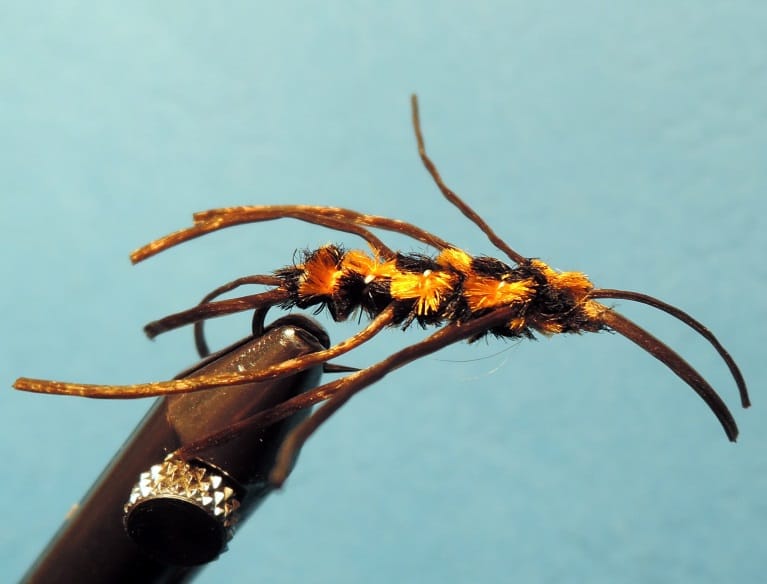
Here is a list of nymphs I’m compiling to imitate the Skwala:
- Pat’s Rubberlegs – olive/black and tan/black
- Jimmy Legs – olive/black and tan/black
- 20 Incher Stonefly – peacock body/tan thorax
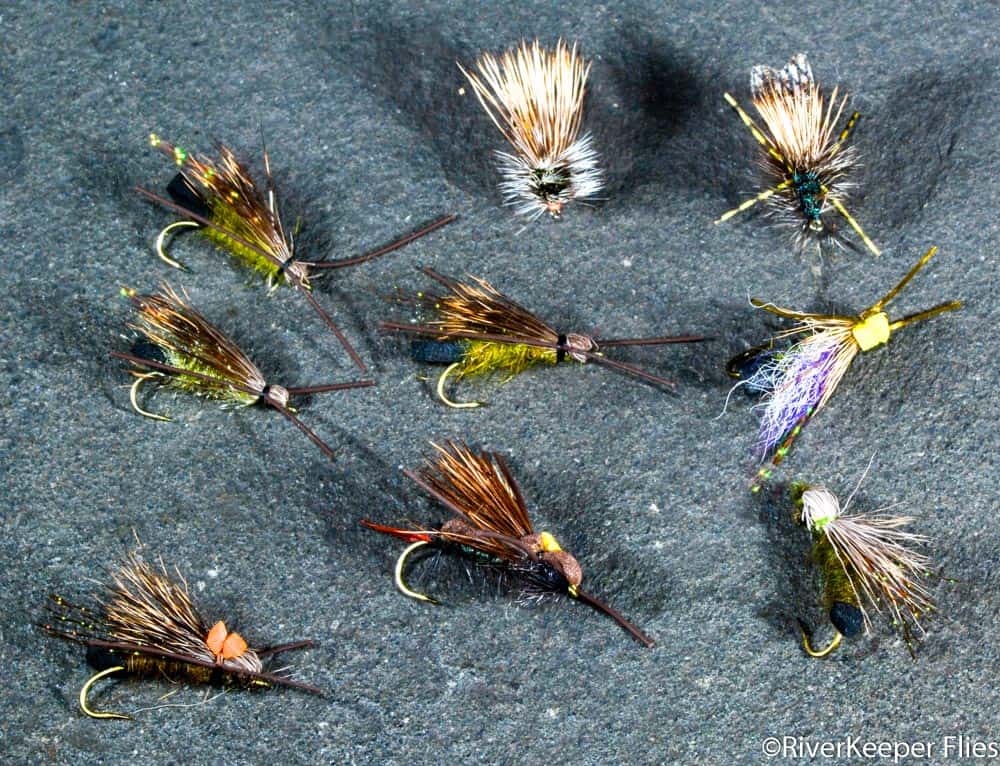
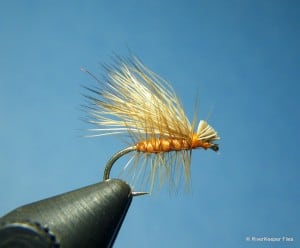
Adult dries can be yellow and black, olive, or dark brown. The following flies are two we tied in class. Please note the unique fly names!
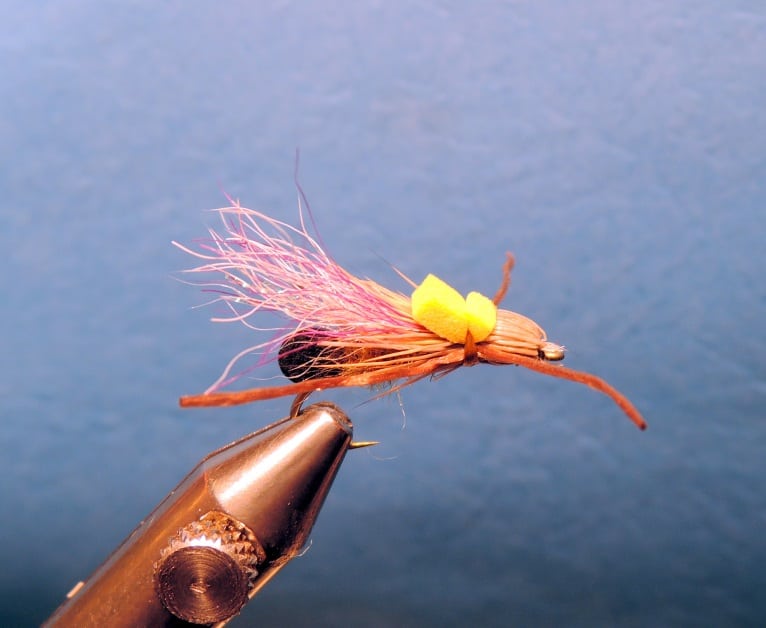

Besides the dry flies shown above, here are other Skwala dry fly ideas:
- Chubby Chernobyl – olive or tan
- Stimulator – brown or yellow
Please leave a Comment below if you have a fly you think I should add to my Stonefly Fly Patterns page.
Enjoy…go fish!



John, I would be no help on skwalas. A fly I like is a depth charge all colors and sizes. Great for free stone pocket water.
I Always have stimulators in different sizes and colors. They are a great searching pattern form caddis and stones. Trim the hackle for the latter.
Good luck
Greg