It’s late September and October will be here before we know it. Can you believe Summer is almost over? I just finished a fly order for some October Caddis and that got me thinking about checking my fly boxes to see if I have enough flies for myself! Are you ready for October Caddis?

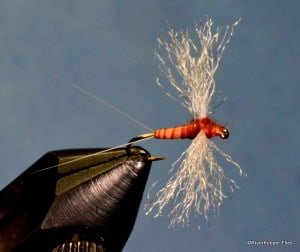
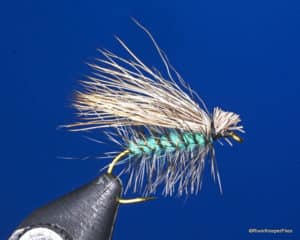
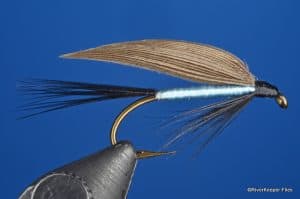
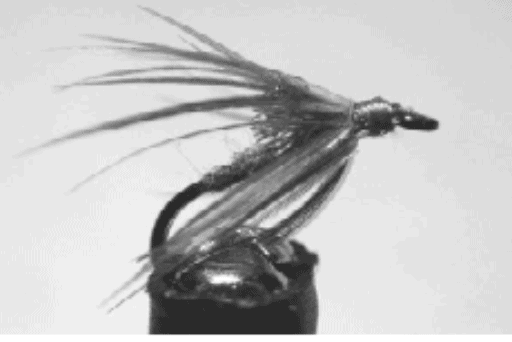
I was asked by a customer to tie a few of my favorite October Caddis fly patterns for him. I suggested the Morrish Deep October Caddis Pupa (variant), the Morrish October Caddis, and the RiverKeeper October Caddis.
Morrish Deep October Caddis Pupa

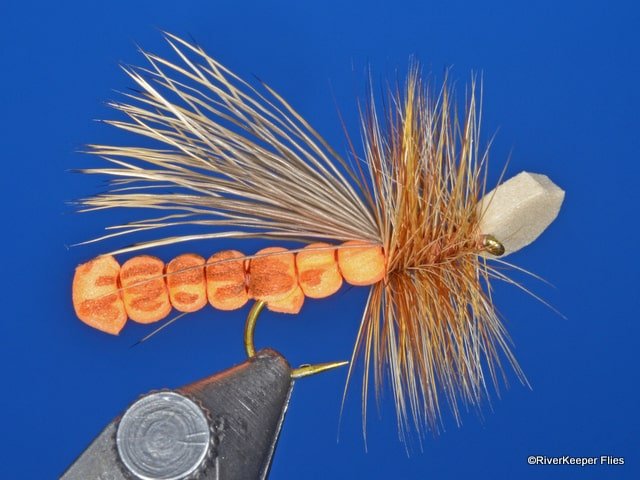

These are the flies I use to imitate October Caddis.
I thought I’d provide more information from previous RiverKeeper Flies posts about October Caddis.
“The October Caddis (Dicosmoecus), otherwise known as the Giant Orange Sedge, hatches in September and October. These bugs are too big for the fish to ignore.
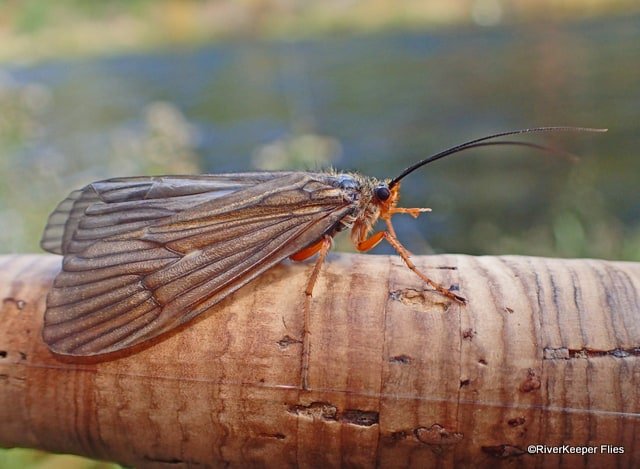
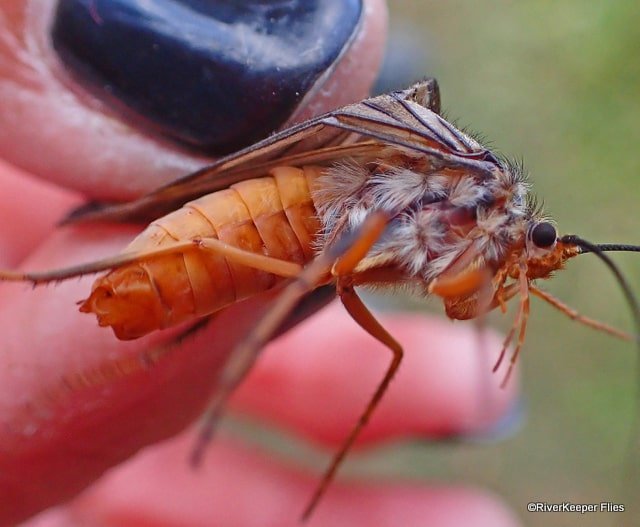
Most of a caddis’ life is spent in the larval stage inside a case, which they build from small rocks found on the stream bed. Prior to hatching, you’ll find these bugs crawling to the edge of riffles and runs, dragging their cases with them. They seal off the case opening and pupate to their next phase of life. When the time is right, the pupae climbs out of the case and swim to the surface or crawl out on a log or rock and transition the final time to an adult. The back of the pupae opens and out crawls a winged adult. (For some spectacular pictures of this transition, check out Arlen Thomason’s great book entitled Bug Waters). Generally, this transition from an aquatic insect to an adult can be a terrific time to fish a caddis hatch. But the October Caddis hatch isn’t one of them. They are known to hatch at night when it’s illegal for us to fish.”
While you won’t see October Caddis pupa swimming to the surface, the Morrish October Caddis Pupa still seems to catch fish. I’m guessing the fish are used to seeing this mouthful and anxiously take the fly. You can always use it with a smaller nymph to search for trout.
While on the river last year, I took several photos of October Caddis still in their cases. I used that to provide more information about their life-cycle in a different post.
“It might be a little early to begin talking about and preparing for October Caddis, but while fishing last week, we happened to see a large number of caddis cases … big caddis cases … attached to a rock partially submerged in the water. It looked as though someone had collected all of them and left the cases in a pile. Upon closer inspection, the caddis cases were attached to the rocks.
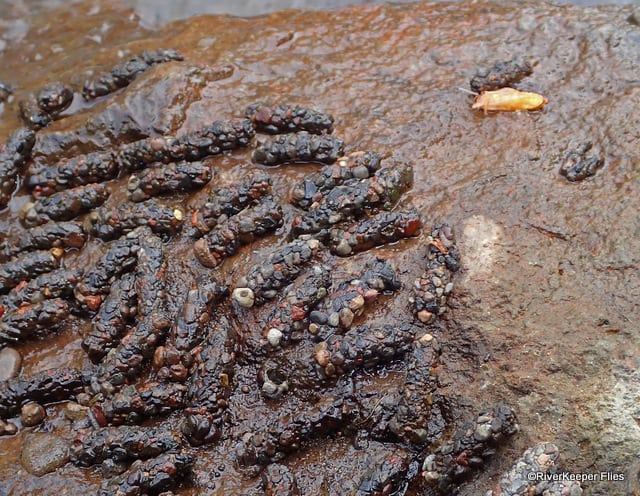
Here is a closeup of the cased caddis. They build their houses out of the surrounding rocks where they live.
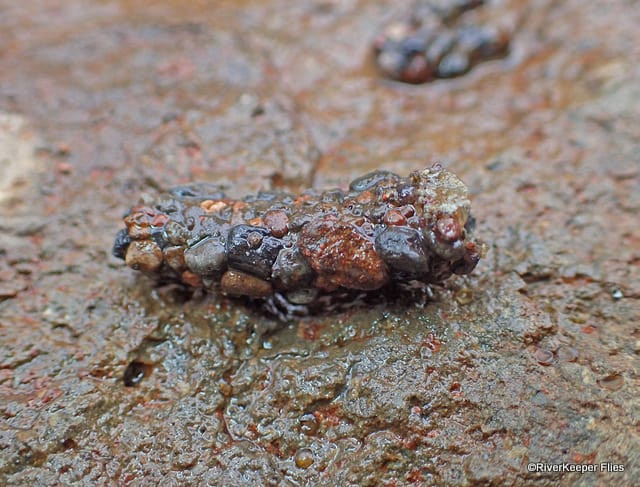
I pried one off and found the opening closed. What did that mean? I tore into one of the cases and found an October Caddis in its final stage of transforming from a larva into a pupa stage, preparing to swim to the surface and fly away as an adult.

Pulling away more rocks from the stone house, the pupa becomes more visible.

October Caddis are in the final transitional stage of life as it changes from the larva to a pupa. It’s a similar process of a caterpillar enclosed in a cocoon, developing into a butterfly. I’ve read where this process can take up to two months.

This is one of the bugs big trout key on during the year. Other big bugs are the Golden Stonefly, Salmonfly, and my favorite – the Green Drake. My experience is the bigger fish show themselves during these hatches and it can be some of the best fishing of the year for large trout.
As an extra bonus, steelhead have been known to rise for an October Caddis pattern. How exciting would that be?
These bugs are BIG. I’m talking about a size 8 caddis pattern, not the smaller size 16 and 18 caddis, pale morning duns (PMD) and blue wing olives (BWO) the fish have been eating lately. Every once in a while, you’ll see a big, splashy rise. Maybe it was a fish taking an October Caddis!
The October Caddis is available to trout as a dry fly at three key times – just after hatching, during windy days, and when females lay their eggs.
Be sure to try an October Caddis dry fly along the bank in 2 to 4 feet of water with overhanging grasses, trees, or other vegetation. This is a likely spot for trout to hang out and grab a bug or two.
I enjoy blind-casting a dry fly and I’ve had good luck with the Morrish October Caddis or my own RiverKeeper October Caddis.
- RiverKeeper October Caddis
You’ll find an occasional fish come up hard and take this size 8 fly.”

But you better be ready! Begin now preparing for October Caddis. Check your fly box and make sure you have a few flies to match the hatch.
Enjoy…go fish!