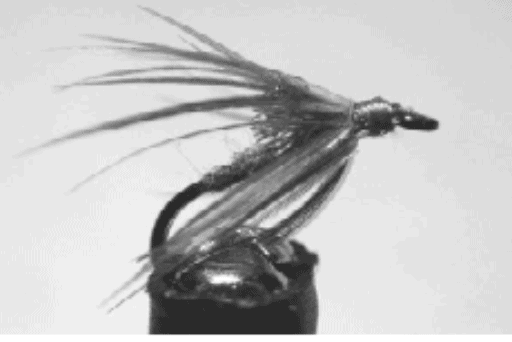
This week’s Throw Back Thursday Fly is the McKenzie Caddis dry fly.

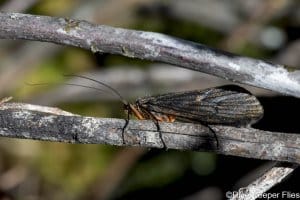
This odd looking body color matches the real insect found on the McKenzie River in Oregon. I found this fly pattern in the 1980’s when I tied a few of these flies for the first time.
These caddis flies begin hatching in mid-May and is a major hatch anticipated by many fly fishers. And they are big! Females can be in the #8 – 10 range, while males will be a little smaller in size 10 – 12.
So if you live in Oregon’s Willamette Valley, you better have a few of these bugs in your fly box.
Enjoy…go fish!



Hi John,
Congratulations on being the Walter’s Fly Tyer of the year. You have given a lot to craft and many have benefited.
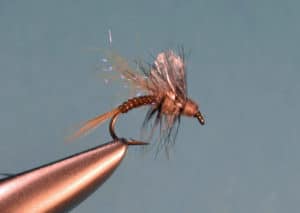
After seeing your McKenzie Caddis, I would like to add one thing. Look in Arlen Thomason’s book, Bugwater. In the chapter on this caddis he shows how to tie the bug so it resembles the natural on the water.
His photography is unbelievable to show the natural and the tied caddis.
I will just say the traditional elk hair caddis comes in third place behind the natural and method shown in the book.
Clint
Thanks for the nice comment. I’ll be sure to check out the fly in Arlen’s book. It’s a great resource and is one reason I have a link to it in my Fly Fishing & Fly Tying Books link. As I mentioned, the fly is an old one from the 1980’s. I’m pretty sure I got the fly pattern sheet from the old Caddis Fly Shop at the original location when Bob Guard owned it. The shop was next to the train station.
John
Hi John,
I sure didn’t know about the “McKenzie Caddis” body color. That looks like the turquoise color often used in homes in the 70s. I had no idea a caddis species that color existed. A person is never too old to learn something new. Thanks for the information. Take care & …
Tight Lines – Al Beatty