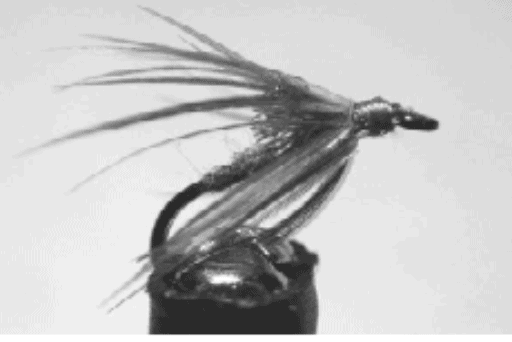
This is a post Steve Haigh from The Destination Angler published on 3/2/2026 to summarize the episode we recorded with him titled Dry Fly Nomads Across the American West | John & Karen Kreft. I shared links to his YouTube channel and podcast earlier, but if you didn’t have time to watch or listen, here is a great summary of find the links below.

If you’ve fly fished long enough, you’ve experienced that rare stretch of time when everything lines up. The wind settles. The light softens. Insects begin to appear. Trout slide into feeding lanes and rise with steady confidence. It feels less like forcing something to happen and more like stepping into something already in motion.
In my recent conversation with John and Karen Kreft of Riverkeeper Flies, one idea kept resurfacing: in the American West, timing is everything. Technique matters. Presentation matters. But when you intersect the right hatch at the right moment, dry fly fishing becomes something entirely different.
When Does this River Come Alive?
Most anglers plan Western fly fishing trips around availability. You book a week in July, secure lodging, and hope conditions cooperate. Sometimes they do. Other times, you arrive between hatches, after runoff, or during a stretch of heat that shortens feeding windows into the edges of the day.
John and Karen think differently. Before they consider miles driven or campsites reserved, they study hatch charts. They look at when green drakes typically emerge, when caddis activity builds, when PMDs peak, and how snowpack or runoff might shift those timelines. Instead of asking, “When can we go?” they ask, “When does this river come alive?”

A hatch chart isn’t a guarantee. Rivers fluctuate year to year. But it offers a biological roadmap. It increases the odds that you’ll intersect trout during periods of predictable surface feeding rather than hoping fish respond to persistence alone.
On the Madison River, knowing when evening caddis activity builds can completely reshape your day. On Oregon’s Metolius River, green drake timing determines whether late June or mid-July makes more sense. On the Upper Columbia, a narrow emergence window can mean the difference between prospecting blindly and watching heavy rainbows rise with purpose.
Fishing the hatch chart shifts your mindset to be flexible to change plans. And flexibility is where dry fly fishing becomes extraordinary.
When Timing Changes Trout Behavior
On Western rivers—and really on any trout river—behavior is tightly connected to environmental signals. Water temperature, light angle, insect emergence, and flow levels are constantly interacting. Fish may hold deep and conserve energy for hours, ignoring even well-presented subsurface flies. Then a hatch begins, conditions align, and everything shifts.
Feeding lanes form. Rises become visible. Trout that seemed inactive moments earlier are suddenly feeding with purpose.
Because hatch timing varies across the West depending on snowpack, runoff, elevation, and weather patterns, flexibility becomes part of the strategy. A green drake hatch might be peaking on one river while another drainage is still weeks away. Caddis could be building on the Madison while higher-elevation streams are just starting to wake up. Anglers who are willing to adjust plans—sometimes even change rivers entirely—put themselves in position to intersect those peak windows instead of hoping conditions materialize where they happen to be.
That doesn’t mean timing replaces skill. Fly choice matters. Drift matters. Casting matters. Presentation always matters. But when those elements work in concert with a meaningful hatch, everything is amplified. The fish are more committed. The feeding lanes are clearer. Your margin for error narrows, but your opportunity increases.
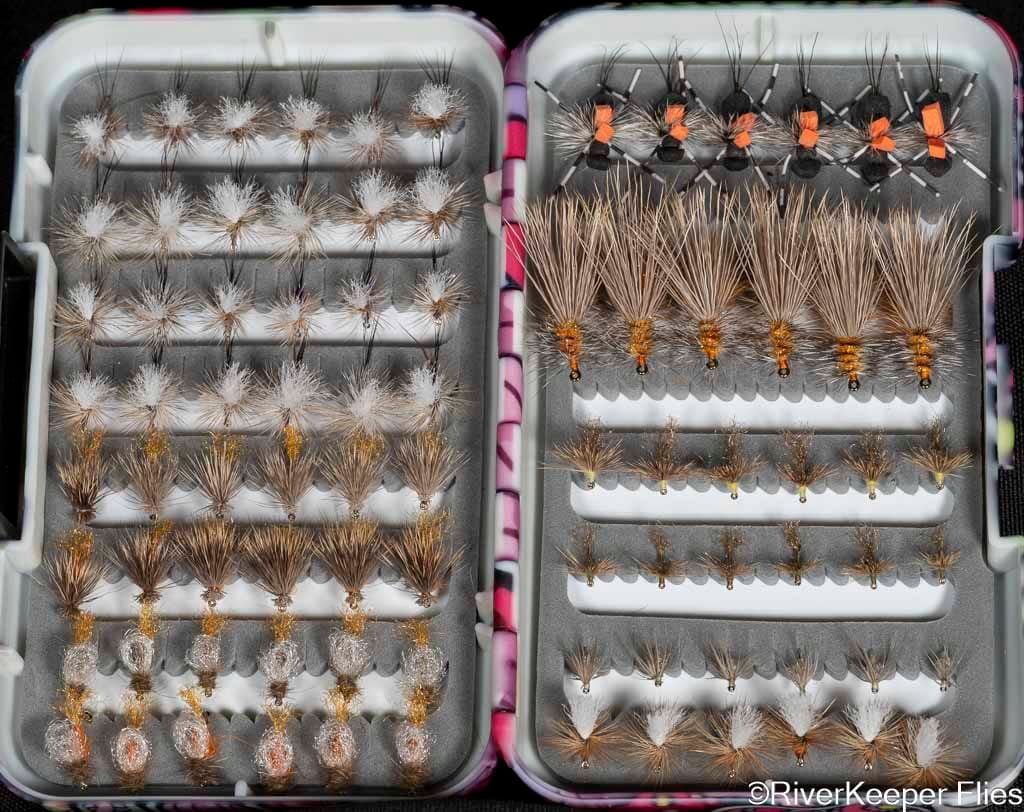
When timing, observation, and execution come together, the river feels different.
And that’s when dry fly fishing becomes something special.
The Green Drake Window
Green drakes are perhaps the clearest example of timing ruling the day. These large mayflies—often size 8 or 10—command attention. On the Metolius, anglers anticipate them like a seasonal ritual. On the Upper Columbia, their emergence can draw substantial trout up from deep water.
During our conversation, Karen described fishing over water more than 80 feet deep and watching large rainbows rise during a green drake hatch. That kind of feeding activity isn’t random. It’s biological timing at work.
If you’re on the river during that window, dry fly fishing can feel almost effortless. If you miss it by a week, the opportunity may never reveal itself. The river hasn’t changed. The fish haven’t changed. The timing has.
Observation Makes Timing Visible
Of course, timing isn’t luck alone. It requires awareness.
John and Karen spend time watching before they cast. They look for insects drifting low in the surface film, subtle bulges beneath the water, shifts in light, and post-thunderstorm changes in temperature. They pay attention to how trout position themselves as conditions evolve.

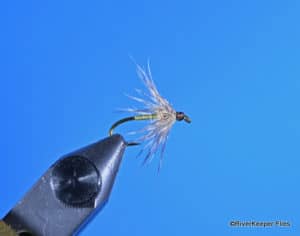
Karen once noticed fish feeding on mayflies stuck in the surface film rather than upright duns. That observation led John to refine a soft hackle pattern into what became the Riverkeeper Soft Hackle Cripple—a fly designed to sit low and vulnerable in the surface tension.
That refinement wasn’t about chasing novelty. It was about responding to what the river revealed. Timing favors anglers who are paying attention.
Mobility and the Edges of the Day
The Krefts’ camper van isn’t simply a lifestyle statement; it’s a practical advantage. Mobility allows them to fish early mornings and late evenings without long commutes. It allows them to step away during slow mid-day periods and reposition when conditions shift.
On pressured rivers like the Madison, fishing the edges of the day often matters more than fishing all day. Sunrise and dusk frequently produce the most reliable dry fly activity, especially during caddis or mayfly emergences. Being near the river when those windows open dramatically improves your odds.
Flexibility supports timing. Timing supports success.
Effort vs. Rhythm
Fly anglers often equate effort with results. Fish longer. Cover more water. Make more casts. While persistence has value, it doesn’t override insect rhythms or environmental cues.
You can grind through unproductive hours, or you can structure your day around the window when trout are actively feeding on the surface. When timing is right, fish rise predictably. Feeding lanes become clear. Your fly drifts naturally through one of those lanes and disappears in a confident take.
In those moments, it feels less like you’re forcing something to happen and more like you’re moving with the river instead of against it. The current, the light, the insects, and your presentation all feel connected.
That’s the essence of hatch-driven fishing.
Designing Around the Moment
Most of us can’t spend an entire summer roaming the American West in search of hatches. But we can adopt the mindset.
Study hatch timing before planning a trip. Ask fly shops about seasonal emergence windows, not just fly patterns. Build flexibility into your schedule if possible. Fish early. Stay late. Spend time observing before making your first cast.
Western trout rivers are dynamic ecosystems. Light, temperature, water flow, and insect life are constantly interacting. The anglers who experience the most memorable dry fly fishing are often the ones who show up when those variables converge.
When timing, insect activity, and light align, the river feels different. Rises settle into a rhythm. Trout feed confidently. And when your fly disappears in that cadence, it feels earned—not because of brute effort, but because you intersected the right moment.
That’s hatch-driven dry fly fishing.
And in the American West, timing truly is everything.
🎧 Listen to the full episode with John and Karen Kreft here:
👉 Episode
Watch the YouTube video here:
Thanks Steve! I think you captured our discussion about how hatches drive our fly fishing really well.
Enjoy…go fish!
s23

John I just listened to your entire interview, you and especially Karen did a great job. Look forward to seeing you at some point on the Met.