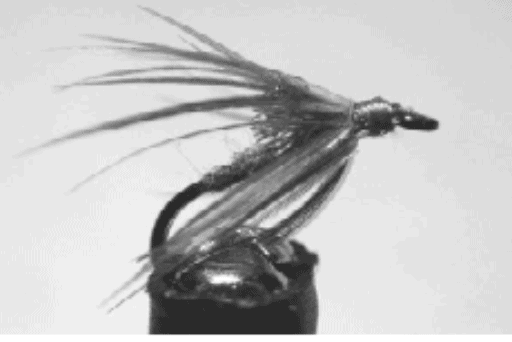
This week’s Throw Back Thursday Fly is a Pray Optic Fly.
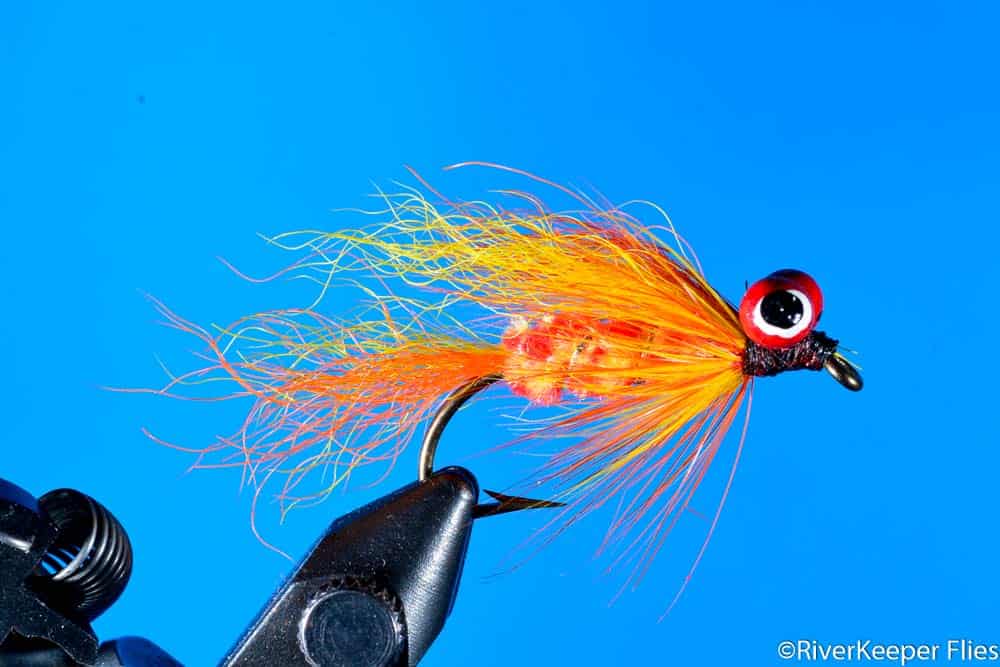
This is another fly in a friend’s collection with a note on the fly stating it was tied by C. Jim Pray (1885 – 1952) of Eureka, CA in 1947.

The Optic series of flies were some of the popular steelhead flies he tied. They were tied on short-shank hooks with a tinsel body, bucktail, and painted brass bead or large thread head. While he didn’t invent Optic flies, he is known for their success catching salmon and steelhead on the heavy winter waters of the Eel River and other Northern California rivers.
Update: I received the following Comment about the fly:
Very nice that your friend owns flies tyed by Jim Prey, their rather rare… However that is not one of Prey’s Optic patterns, The fly in the photo is a Popeye Fly variation.. The Popeye flies were originated in Eureka , CA by Hap McNew in 1940, when Hap began tying Bucktail patterns with bead chain eyes added. Hap was the son of Lon MeNew, who owned McNew’s Sporting Goods in Eureka. Prey started tying and selling Popeye Flies due to the demand by his customers.. It’s considered that the Popeye patterns, with their Bead Chain eyes, were the inspiration for the Gold Comet..
Other flies he created include the Silver Demon, Black Demon, Thor, and Carter.
Mike Valla provides a detailed history of Pray in his excellent book The Founding Flies – 43 American Masters – Their Patterns and Influences (2013). It’s a must have book for any avid steelhead fly fisher or fly tyer.
Enjoy…go fish, stay safe!
(John Kreft is a participant in the Amazon Services LLC Associates Program, an affiliate advertising program designed to provide a means for sites to earn advertising fees by advertising and linking to amazon.com.)


Very nice that your friend owns flies tyed by Jim Prey, their rather rare… However that is not one of Prey’s Optic patterns, The fly in the photo is a Popeye Fly variation.. The Popeye flies were originated in Eureka , CA by Hap McNew in 1940, when Hap began tying Bucktail patterns with bead chain eyes added. Hap was the son of Lon MeNew, who owned McNew’s Sporting Goods in Eureka. Prey started tying and selling Popeye Flies due to the demand by his customers.. It’s considered that the Popeye patterns, with their Bead Chain eyes, were the inspiration for the Gold Comet..
Thanks for the Comment. One of my concerns is I post something that isn’t accurate. I appreciate the information you provided. Looks like I’ll have a little more research to do.