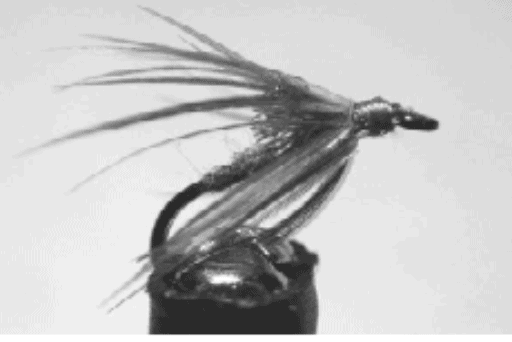
Bi-Visible

This week’s Throw Back Thursday Fly is the Bi-Visible. Ever use one? I have…many years ago. But I haven’t had one in my fly box for some time.

Bi-visible | www.johnkreft.com

The Bi-Visible was created in the early 1920’s by Edward Ringwood Hewitt. In his book Telling on the Trout (1926) Hewitt stated:

“Dark colors are more visible to the trout from below than light colors, and, therefore, take more fish under most conditions and are more generally used. They are often, however, more difficult to see on the water than the lighter flies. This is the reason for my favorite design of fly which I call the Bi-Visible which consists of a palmer-tied brown hackle on the head of which is wound a small wisp of white hackle. The white resting against the brown becomes very visible in most lights to the angler; on the other hand, the trout see the brown hackle from below better than any other color used. This fly is by far the best of any I have yet seen for all species of trout and it is based on a sound physical principle.”

Many fly fishers have problems locating their dry fly on the water and patterns have been developed using bright materials to help them find their fly. In fact, I use them periodically on flies used at dusk. For example, adding a small piece of chartreuse fibers in front of an Elk Hair Caddis helps tremendously.

Elk Hair Caddis - Hi vis

Perhaps I should take the Bi-Visible out to the river and see if it still works…
Similar Posts

  • Dennys Stillwater Nymph

    This week’s Throw Back Thursday Fly is Dennys Stillwater Nymph. As I thought about which fly to choose for a TBT Fly, this one came to mind. It seems appropriate as I’ve recently posted pictures on my RiverKeeper Flies Facebook page and the fly was front and center in this week’s Fly Fishing at Diamond Lake…

  • Fishing with Beetles

    I had a recent fly order for Beetle Bailey flies and decided to keep tying them and fill the provider box. I ended up tying over 11 dozen. Why? Because fishing with beetles can be effective at certain times of the year and I didn’t want to run out of them. In fact, terrestrials can…

  • Red Quill

    This week’s Throw Back Thursday Fly is the Red Quill, a classic Catskill fly pattern. Art Flick was instrumental in popularizing this fly. The Red Quill imitates the Ephemerella Subvaria and uses a large stripped hackle from the Rhode Island Red rooster. An earlier version from Rube Cross utilized slate wings instead of wood duck fibers….

  • Rosborough’s Silver Admiral

    This week’s Throw Back Thursday Fly is Polly Rosborough’s Silver Admiral. I’ve featured several flies from Polly, including the Casual Dress and Fledermouse. To find all his flies, simply use the search bar above and type in “Rosborough”. The original materials called for pink yarn. I don’t seem to have any in my fly tying…

  • Fly Fishing Ennis Lake

    On the next stop of our 2018 fly fishing road trip, we planned to fish a week on the Madison River, MT, but decided to try our luck for a day fly fishing Ennis Lake. I’ve always heard about the trout in Ennis Lake, but it’s like anything new…sometimes it’s easier not to try. Perhaps…

  • Wright’s Fluttering Caddis

    This week’s Throw Back Thursday Fly is Wright’s Fluttering Caddis. This is a fly that was recently brought to my attention by a customer asking me to tie some. I hadn’t heard of the fly before, but it’s similar to Buz Buszek’s Kings River Caddis below. The only real difference is the wing. Leonard Wright…

Leave a Reply

Your email address will not be published. Required fields are marked *