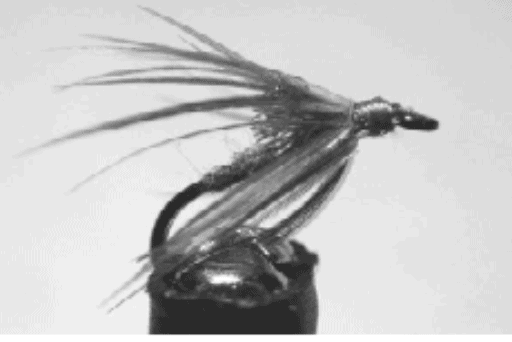
If you have followed me on RiverKeeper Flies for awhile, you know how much I look forward to the Green Drake hatch. The hatch is in full swing now and it’s been hit and miss for us just like most years. We head to the river in anticipation of fish eating our dry flies, but it seems like we sit around waiting for mayflies to hatch. Even more important, will the fish eat them? Green Drakes molt into spinners like any other mayfly, but most haven’t ever seen them. We see spinner falls in the mornings, if it happens at all. And when it does, the fishing can be exciting! I thought about sharing some images of the Green Drake spinners and flies to imitate them.
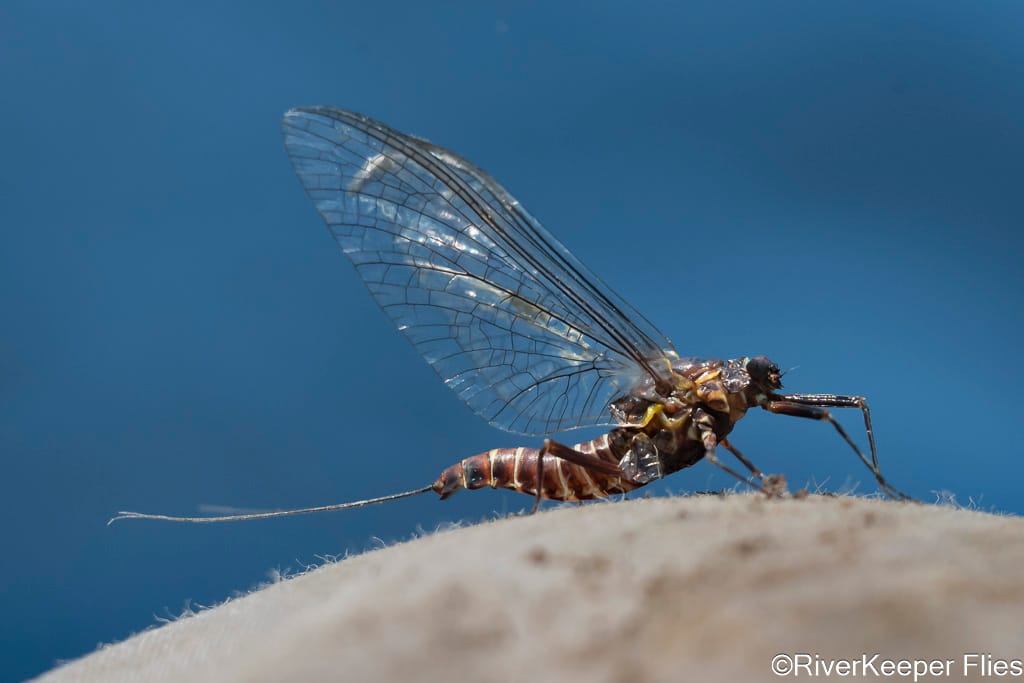
All the images in today’s post are from last week. When fish weren’t active, we spent time searching eddies to see if they were floating on the surface. Of course, I had my camera equipment handy to capture them!
They look like this…

Or this…

Here are five spinners Dancingtrout was able to capture with her net-seine in an eddy. Some are dead, but the one in the center with upright wings is of interest to me.

Why? Because I noticed trout keying on them.

I thought I’d tie a fly to imitate the live bug with upright wings.
But the other key factor I noticed was the segmentation. Notice the distinct banding? The naturals are various shades of root beer. The one below is quite a bit darker, but notice the tan and olive stripe? It’s another factor I wanted to incorportate into a new fly.

This spinner is upside down and shows what trout see. Again, distinct segmentation is visible.

I’ve shared my Beta Spinner before. It works for us, but some trout approach the fly and refuse to eat it. Occasionally, I’ve pulled all the coq de leon feathers flat to either side trying to imitate wings on the water’s surface.
But it lacks the segmentation. Sure, I could add it, but I wanted to experiment with other wings.
So I came up with these variations.

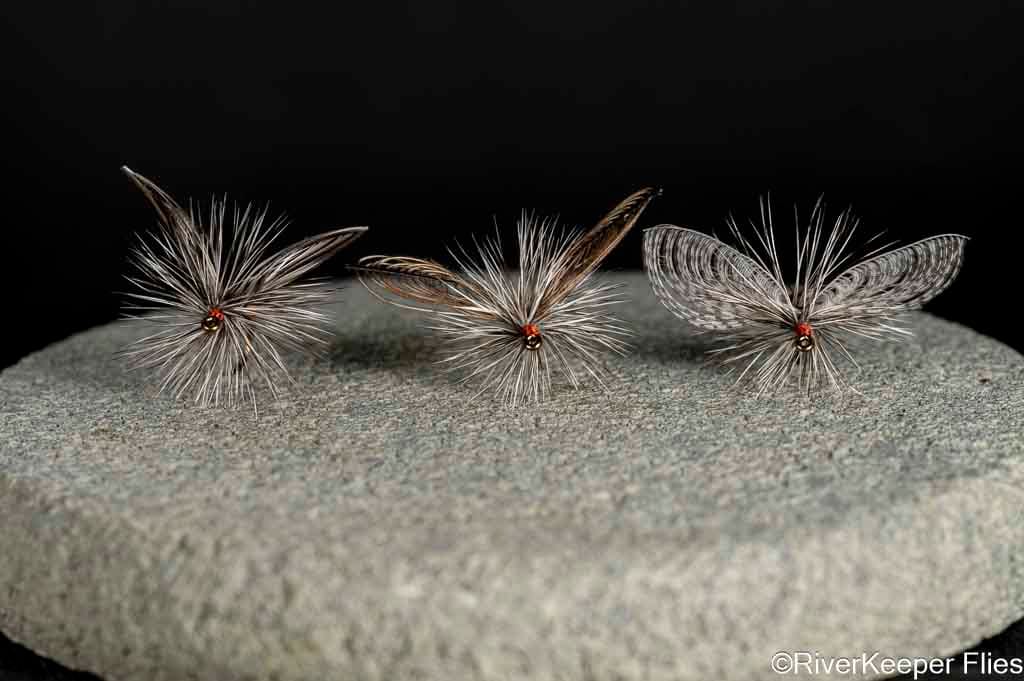
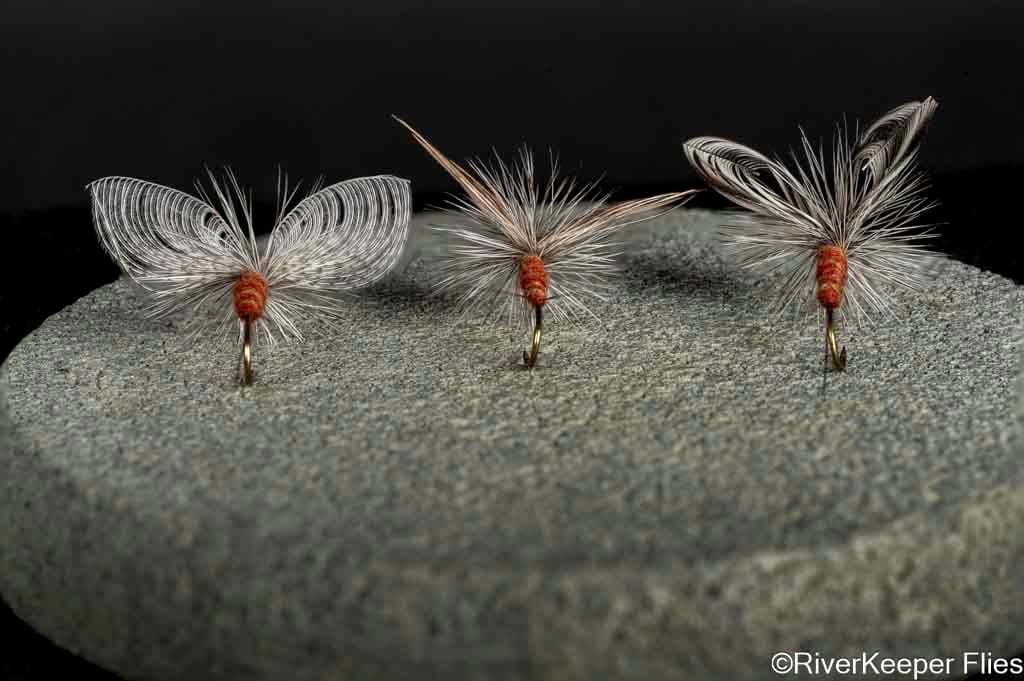
Here is my rendition of a Green Drake spinner using Wally Wings and rib of tightly twisted Uni-yarn. I’ve tied them with coq de leon (shown below) or grizzly hackle feathers. Notice I cut the underside of hackle to sit lower in the water.

This one shows a Wally Wing. Grizzly and coq de leon Wonder Wing flies are in the back row.

And the front/back view of the flies.
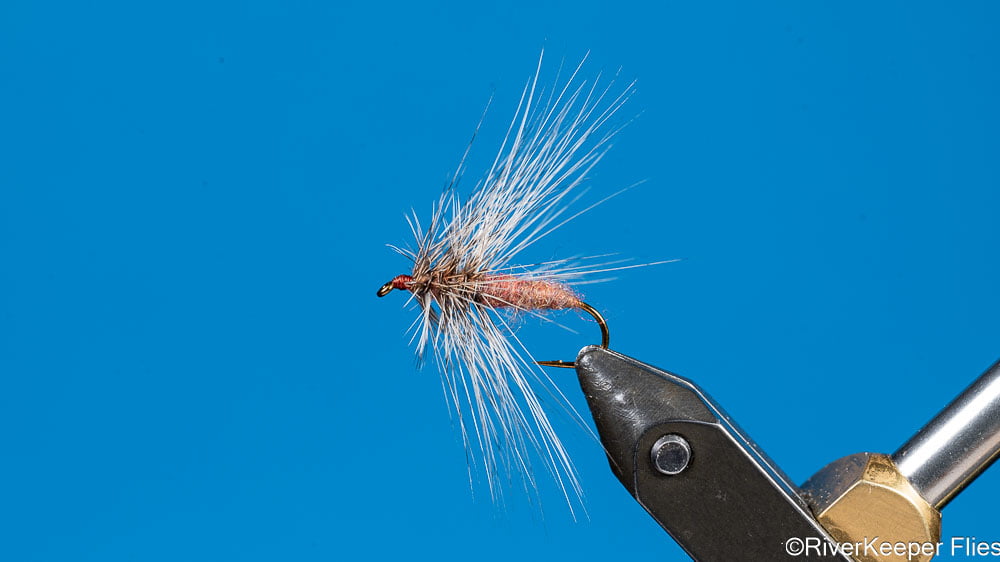
My variation of Galloup’s Compara Spinner has worked too. I’ll create a new fly pattern sheet for this version when I have time.

I haven’t tied too many flies with Wally Wings or Wonder Wings. In fact, the technique is new to me. If you look closely at some of the wings, you’ll notice spaces between fibers. I’m sure I can improve upon the fly with a little more practice.
But you know what? The fish don’t seem to care!

Enjoy…go fish!
(John Kreft is a participant in the Amazon Services LLC Associates Program, an affiliate advertising program designed to provide a means for sites to earn advertising fees by advertising and linking to amazon.com.)


Thanks for taking the time to share such great pics!
I love that one with the Wally Wings and ribbing. Looks like the fish did too. I have to tie up some of those, I think the small mouth bass and crappie would love it also along with the Bream.
Have a great and blessed day
Jeff