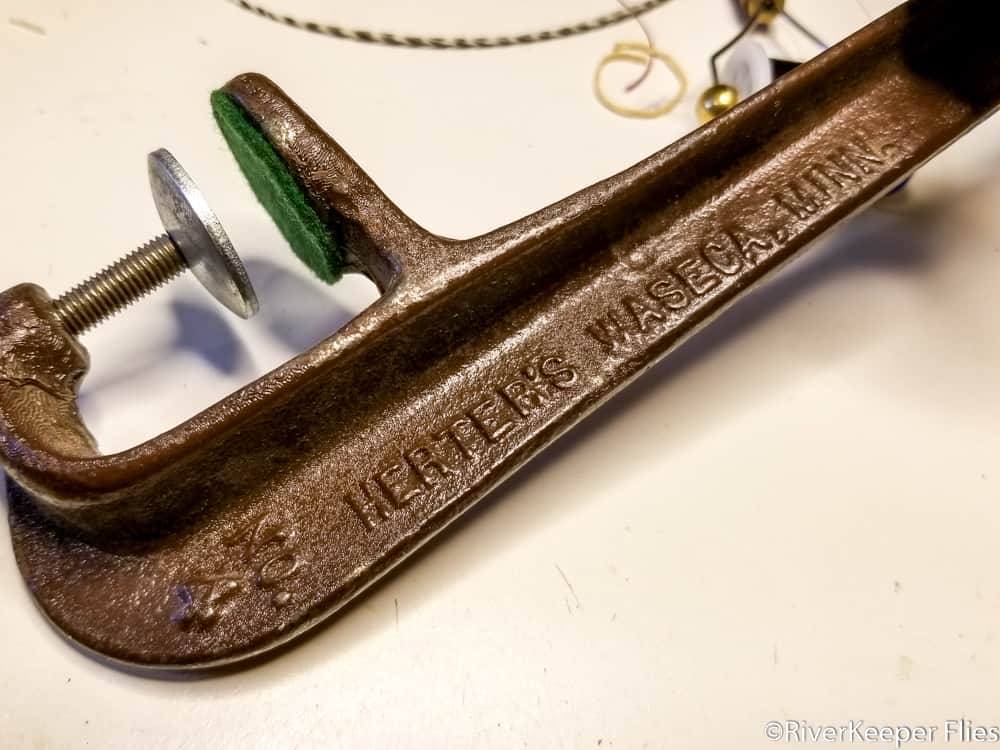
This week’s Throw Back Thursday post is about a Herter’s No. 4 Fly Tying Vise.
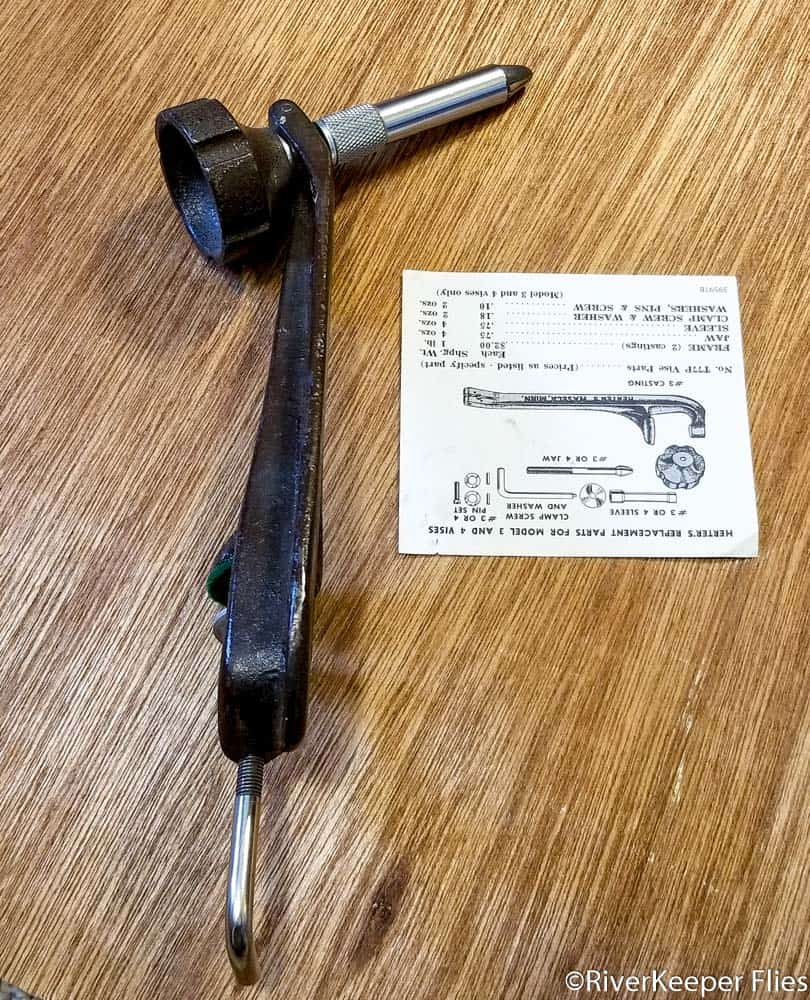
Did any of you begin tying flies with this vise?
It’s a vintage fly tying vise from the mid-1950’s that my friend Jim Fisher used growing up in Idaho. It’s one of the items he shared with me during a recent visit.
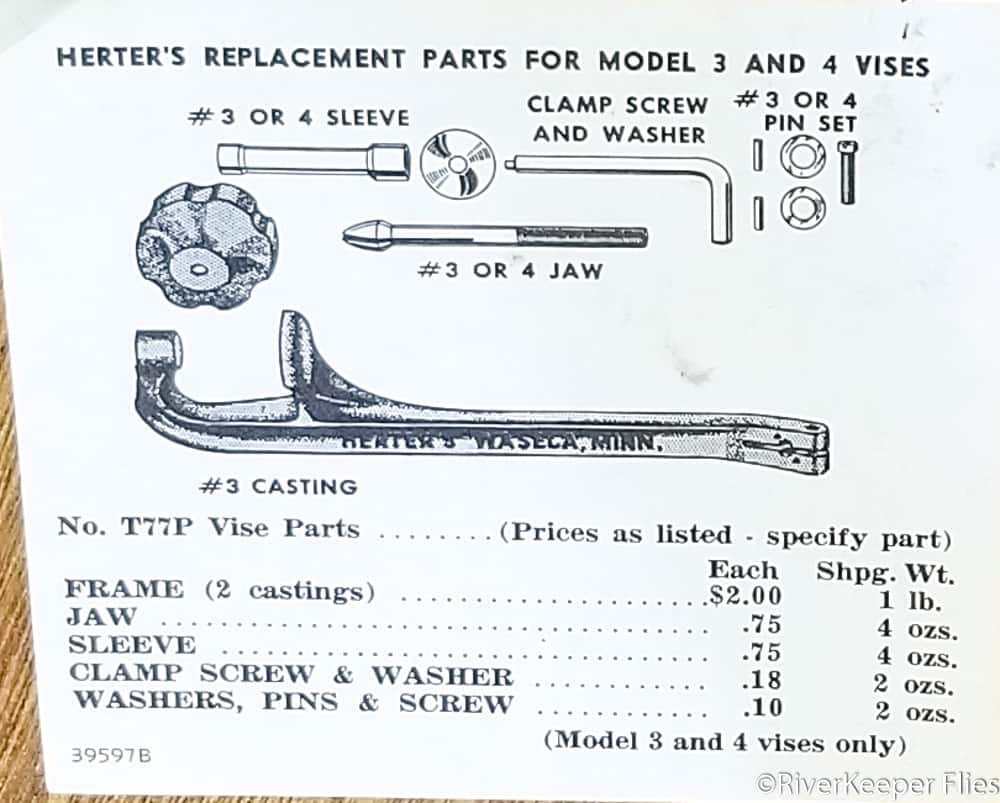
Jim still has the Herter’s replacement parts list for No. 3 & 4 vises.
When I first started tying flies around 1970, I remember the name Herter. I think I had one of their catalogs and searched for fly tying materials. Those were the years when I believe fly tying began changing. It’s been 50 years, so I don’t have perfect recall (or much recall at all). I remember purchasing materials from Wayne Doughton’s harware store in Salem, OR where I grew up. It wasn’t much longer and I started to frequent Kaufmann’s Fly Shop in Tigard, OR. Shortly there after, I found Dave McNeese’s Fly Shop in Salem.
Wayne sold me my first vise, a Thompson Model A which I highlighted in an earlier TBT post.
Herter’s was a well-known name located in Waseca, MN and produced a mail order sporting good catalog for “The Authentic World Source for Hunters, Fishermen, Guides, Gunsmiths, Tackle Makers, Forest Rangers, Commercial Fishermen, Trappers and Explorers.”
Surely you could find something you needed in this catalog!
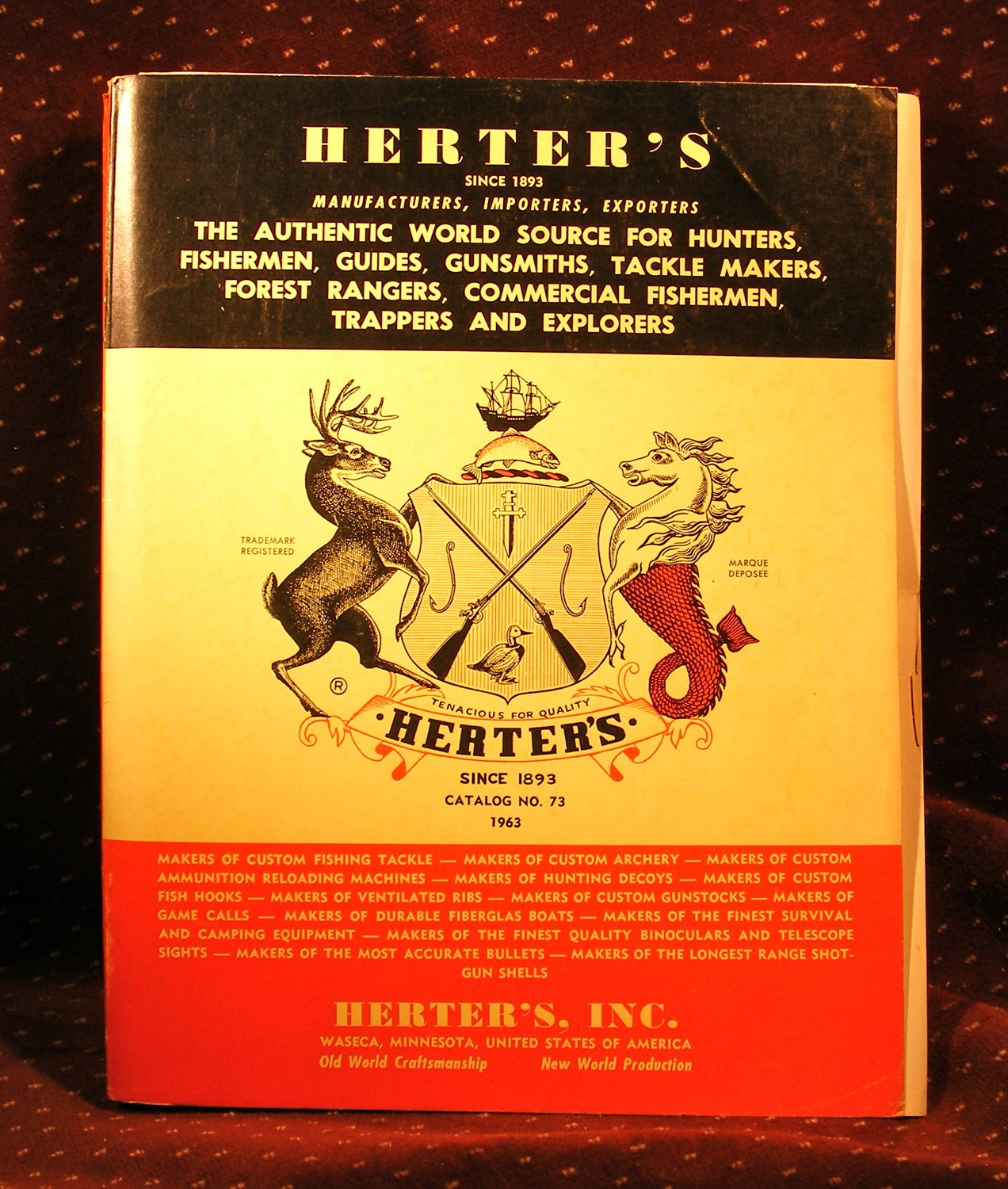
Wikipedia states George Leonard Herter (1911 – 1994) took his father’s dry goods store in 1937 and turned it into the mail order outdoor hunting and fishing business, eventually going bankrupt in 1981 and it was the end of his catalog.
Certainly, business models have changed a little since then…or perhaps not so much. Think of Amazon. It’s just a larger on-line “mail order catalog”.
Jim Fisher was recognized as the 2011 Stan Walters Memorial Tyer of the Year from the Oregon Council of Fly Fisher’s International. I recently spent a few hours with him for a tutorial on selecting materials and techniques used to tie wet fly wings. He tied the Ray Bergman Beauty I highlighted in a previous TBT post.
Enjoy…go fish!




I have and still use a hertz #3 I was wondering how old it was since I got it when I was 13 and I’m now 56. Still does the job !
my very frist vice was a herters number 4 I got it in 1961 I cut lawns for spending money to pay for it. can’t remember the price does anyone have any idea what it sold for then
Looking for help on acquiring authenticity on Herters fly fishing chest with fully stocked supplies including original Herter’s catalog #60 and I believe #58 and one more.. it includes one page that looks to be a Parts Order Sheet. It does not have a date but its hand written with numerous items with prices on it..the chest consists of a large drawer on the bottom and 2 sets of small drawers on the left and right if it. With a center square working station with all tools on it for fly fishing and rod making… all drawers are fully stocked… I would appreciate some info on this. Thank you for your time..
Juan
Thanks for leaving a Comment on my RiverKeeper Flies website…email sent.
John
Somewhere, in the dark recesses of the fly tying rubble that I refuse to part with, I have one – along with an old Thompson model C, with a red knob, right-angled collet, and stubby jaws.
None of these old vises, not even the workhorse Thompson A that I eventually acquired and which got me through hundreds of dozens flies back in the ’60’s when I started tying full-bore commercially, enabled me to produce the well-tied small stuff that my old Paul A. Young vise did.
It’s narrow and slender jaws and adjustable collet angle gave me easy access to small hooks – and paved the way for orders of hundreds of dozens of #18 and #20 Jassids and other tiny patterns from Orvis.
When I catch up with a few chores, I’ll set it up and take a photo.
Hi John,
I started tying flies on a vise my dad made for me out of a small Vise Grip pliers on which he welded a 3/8″ rod. My first commercially available vise was the one in this article from Herter’s. I learned to tie from a Herter’s manual on fly tying and lure making. Your post brings back memories. Take care & …
Tight Lines – Al Beatty