Winter Fishing with Euro Nymphs

I finally had the opportunity to get to the river and see if I could remember how to fish. It’s been a while. I blame it on all the snow we had and a couple of “bugs” I came down with. We stopped at the river on the way home from the 2019 NW Fly Tying & Fly Fishing Expo and low and behold, saw a few fish rising. I’ve been looking forward to winter fishing with Euro nymphs. We didn’t have our rods, but we vowed to return very soon.

Metolius in March 2019 | www.johnkreft.com

Yes, I fish with dry flies a lot. But I fish with nymphs periodically in the winter when hatches are known to be short in duration.

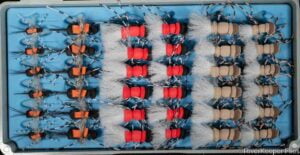
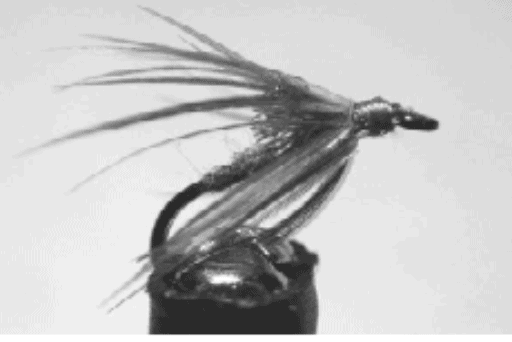
I was anxious to try a few Euro nymphs my friend Jeff Perin taught at a recent Central Oregon Flyfisher’s Winter Fly Tying class. He taught three of his favorite Euro nymphs – a Pheasant Tail Perdigon, Olive Perdigon, and Rainbow Warrior Perdigon.

Pheasant Tail Perdigon Nymphs | www.johnkreft.com
Pheasant Tail Perdigon Nymphs
Rainbow Warrior Perdigon Nymphs | www.johnkreft.com
Rainbow Warrior Perdigon Nymphs

I rigged up with my variant of the Pheasant Tail Perdigon (body of Veevus Body Quill) on the bottom, or point, and a Rainbow Warrior Perdigon about 15 inches above it.

All I can say is…they work!

Metolius River Rainbow | www.johnkreft.com

I hope to find myself on the banks of the river again in the not to distant future.

If you’d like more information about Euro nymphs, be sure to read my previous posts – More Euro Nymphs.

Enjoy…go fish!
Similar Posts

  • Next Cast Flyfishers Camp

    A couple of weeks ago, I helped my wife Karen teach 12 kids from ages 10 to 14 about fly fishing during the Next Cast Flyfishers Camp. It’s part of our fly club’s Next Cast Flyfishers (our youth program) goal to get kids into fly fishing in Central Oregon. This is a picture of the kids…

  • Renegade

    Today’s Throw Back Thursday fly is the Renegade, an attractor fly developed in 1928 by Taylor “Beartracks” Williams. It’s said the original fly had all white hackle and was changed to brown/white when “Beartracks” moved to Sun Valley. Another story states George Herter claimed it was an English fly pattern named the Marryat, tied by Mrs…

  • Ray Bergman’s Red Ash

    This week’s Throw Back Thursday Fly is Ray Bergman’s Red Ash. I enjoy featuring and tying Ray Bergman flies. While they appear simple to tie, I struggle to set many of the wings. One reason I feature his flies is to force myself to practice tying them. Watson’s Fancy is simple wet fly listed on…

  • Recent Changes

    I’ve been working hard adding fly patterns, so I thought I’d highlight a few recent changes you may not have seen. Even if you’re not a tyer, read on because some of these fly patterns are well known flies that can be purchased at your local fly shop. You might recognize the names…now you have…

  • Serendipity and $3 Dip

    The Serendipity and $3 Dip, originally known as the $3 Bridge Serendipity are effective patterns to have in your fly box. I posted the following picture on my RiverKeeper Flies Facebook recently to share its effectiveness… …and received a comment asking two questions: I thought about it for a few seconds and said “there’s the topic for my next…

  • Tying Very Small Flies

    I finished a fly order recently, tying very small flies which challenged my fly tying skills. The order was for flies in sizes 18 to 22. Tying small flies is difficult if you don’t tie a lot. You feel like you’re tying with two thumbs! Trust me, I’ve been there! I remember a statement I…

4 Comments

    1. #14 – 16 Pheasant Tail Perdigon depending on the depth and water speed as well as I use heavier bead for the #14. #16 for the others. Sizes are listed in the fly pattern sheets.

Leave a Reply

Your email address will not be published. Required fields are marked *