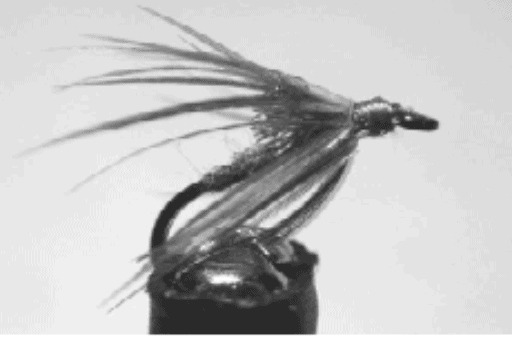
The Parson

This week’s Throw Back Thursday Fly is the Parson.

The Parson | www.johnkreft.com

It’s a fly I found in a fly box someone gave me several years ago. It’s an interesting fly and perhaps I’ll get around to tying my own version someday. 

Here is an excerpt from A Book on Angling by Francis Francis, the first edition published in 1867 about The Parson.

“The Parson. This is a very showy fly, and is used chiefly on the Erne, but it is a capital fly anywhere where a showy fly is required. It is on the Erne rather a generic name for a series of flies than for any special one, as we have there, green parsons, and blue parsons, and golden parsons, and so on. The parson being merely significant of plenty of toppings in the wing.”

Enjoy…go fish!

Similar Posts

  • Jacklin Woolly Worm

    This week’s Throw Back Thursday Fly is the Jacklin Woolly Worm. The Jacklin Woolly Worm pictured above is another fly tied by Bob Jacklin and loaned to me by a good friend. He told me Bob has used this fly with success on the Madison River between Hebgen and Quake Lakes in Montana. Jacklin is…

  • Langtry Special TBT

    This week’s Throw Back Thursday Fly is the Langtry Special TBT. I found this old article from the Bend Bulletin in a box of donated fly tying materials describing the Langtry Special. A friend of mine took his first fly tying lesson many years ago from Judge Virgil Langtry in a Maupin, Oregon church basement. Langtry…

  • Black Gordon

    This week’s Throw Back Thursday Fly is the Black Gordon. I found this fly in one of my steelhead fly boxes and thought it would be a good candidate for a TBT Fly. The Black Gordon is a well-known steelhead fly pattern developed on the North Umpqua River in the 1930’s by Clarence Gordon, a…

  • Goddard Caddis

    This week’s Throw Back Thursday Fly is the Goddard Caddis. Originally known as the G & H Sedge, it was created by John Goddard and Clive Henry in England as a stillwater pattern. Goddard gave the pattern to Andre Puyans (a great fly tyer as well from California) in the 1960’s. Puyans in turn shared…

Leave a Reply

Your email address will not be published. Required fields are marked *