Rusty Spinners

OK, I know it might be a little early to think about fishing Rusty Spinners, but I taught a fly tying session that included a couple of great patterns for you to use later this year.

Spinners are the final mayfly stage, after a nymph molts into a dun. It’s amazing to me that another insect molts from a dun. How does a tiny wing come out of the dun’s wing?

You can see this in a series of photos in Arlen Thomason’s book entitled Bug Water. Spectacular photos.

If you pay attention to specific mayfly hatches, you’ll understand the importance of spinners and why trout LOVE them.

When I think of spinners, I generally think of PMD spinners. The last couple of years, I’ve expanded my thinking by looking for Green Drake spinners. Perhaps that will be a future blog post. 🙂

Here are a couple of great patterns to try. The Rusty Spinner – Biot Body is a great pattern to have in your box.
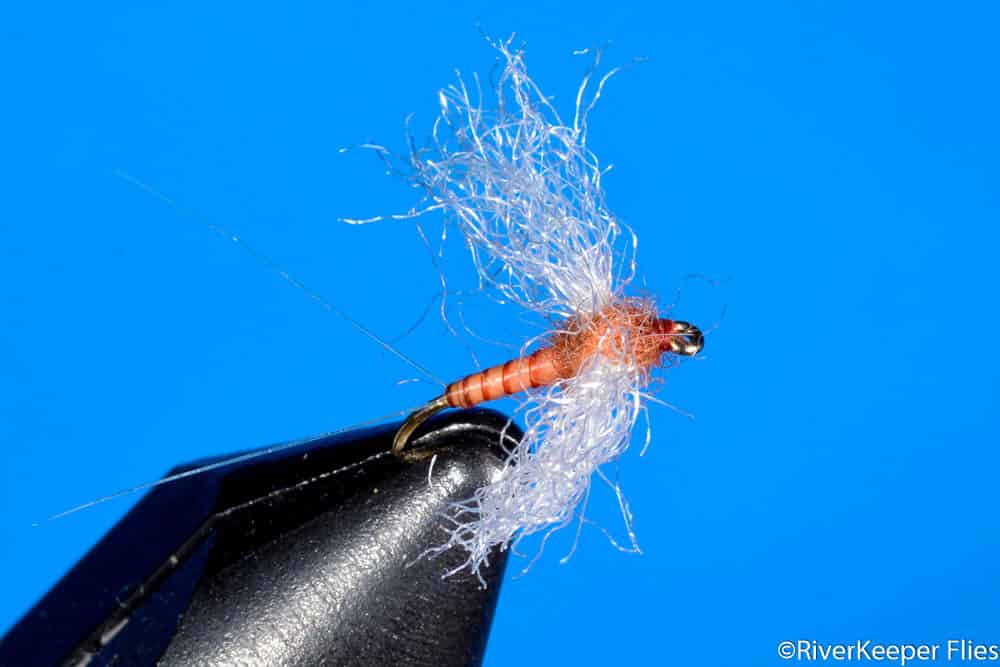
Rusty Spinner Biot Body | www.johnkreft.com

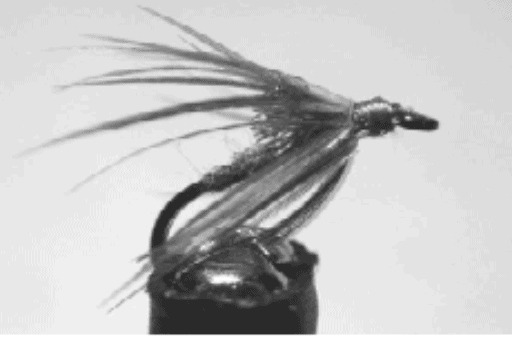
You can change the tail by using Coq de LeĂłn , dubbing for the body and a CDC wing to look something like this:

Finally, here is a pattern for faster water – the Rusty Paraspinner from Rene Harrop:
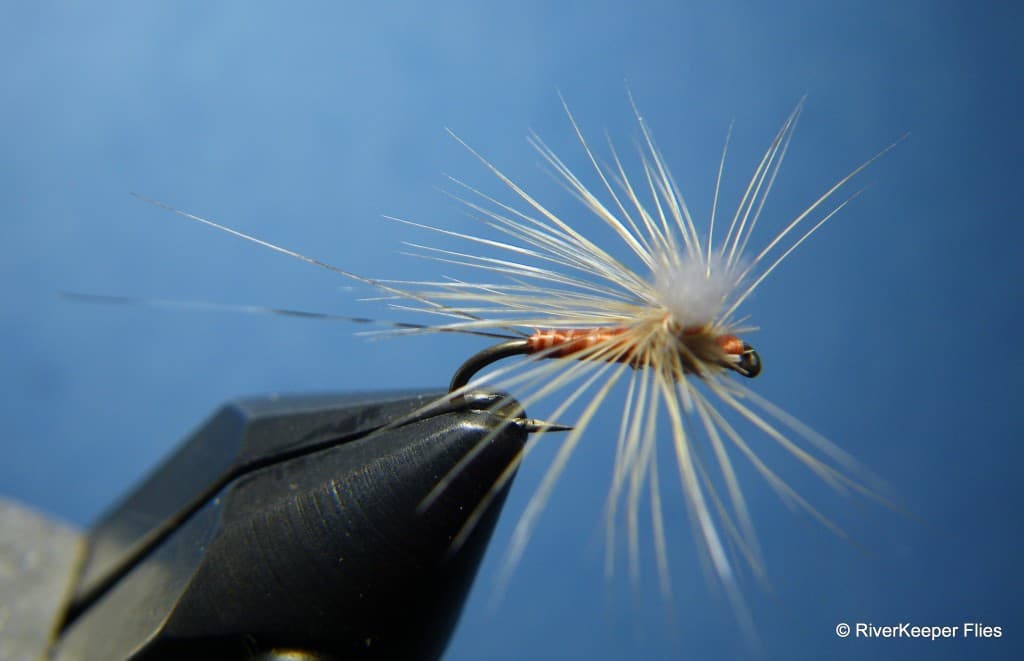
Rusty Paraspinner | www.johnkreft.com

Be sure to have a couple of Rusty Spinner patterns in you fly box. If you don’t tie flies, visit your local fly shop or my local shop – The Fly Fisher’s Place in Sisters, Oregon.

So the next time you are fishing a PMD hatch, be on the lookout for birds flying over the water. They’re probably eating spinners. It’s a good sign a spinner fall is about to happen.

I hope you’ll be ready.

Similar Posts

  • LaFontaine’s EZ2C Caddis

    This week’s Throw Back Thursday Fly is LaFontaine’s EZ2C Caddis. LaFontaine’s EZ2C Caddis can be found in LaFontaine’s Legacy, a book authored by Al jand Gretchen Beatty about 26 fly patterns Gary LaFontaine never finished publishing. The fly can be tied in sizes 8 – 20. This is the third fly from LaFontaine’s Legacy. Other flies I’ve published…

  • Atherton No. 5 Dry Fly

    This week’s Throw Back Thursday Fly is the John Atherton No. 5 Dry Fly. John Atherton (1900 – 1952) was an artist by trade and incorporated his impressionistic art into the flies he tied. Interestingly, he didn’t name the flies, choosing instead to number his dry flies from 1 to 7, representing lighter to darker…

  • McMurray Ant

    This week’s Throw Back Thursday Fly is the McMurray Ant. Ed Sutryn invented the McMurray Ant in the early 1960’s while fishing on a stream in McMurray, Pennsylvania. He watched trout crazily feeding on ants. Sometime later, he found out they were timber ants and set about designing a fly using monofilament, cork, and black…

  • Crooked River Flies – Done

    If you’ve been following my posts lately, you know I’ve been working on a project to complete a box of flies for the Crooked River. Well, it’s finished. Here are the Crooked River Flies – done! These flies are variations of established fly patterns created by Bill Seitz, who I call “Crooked River Bill.” He…

  • Bailey’s Ginger Quill

    This week’s Throw Back Thursday Fly is Bailey’s Ginger Quill. This fly pictured above was from a collection of flies tied by Dan Bailey. I was fortunate to be able to photograph a total of nine Bailey flies, a Light Cahill, Grey Hackle, Dark Cahill, Black Gnat, Black Bivisible, Blonde Wulff, Fan Wing Royal Coachman, Mosquito, and this Ginger…

  • Light Caddis Variant

    This week’s Throw Back Thursday Fly is the Light Caddis Variant. This is a fly I found while I was in Hamilton, MT to participate in the Cast One for Hope fundraiser. We stopped at Chuck Stranahan’s Flies & Guides to see what we could find. While waiting to talk with him, I checked out…

3 Comments

  1. Hi John,i have a vacation home in Sisters and have put in a lot of time on the Metolious and have noticed the same thing the last few months,no bugs.Last week ,tue and wed ,2 stones flying a few PMDs and 3 caddis.Will be over most of next week so hopefully its better.Still love that river.

    1. Steve,

      Thanks for your comment. I’m guessing the trout will continue to feed as they get hungry…keep trying to feed them! Good luck!

      John

Leave a Reply

Your email address will not be published. Required fields are marked *