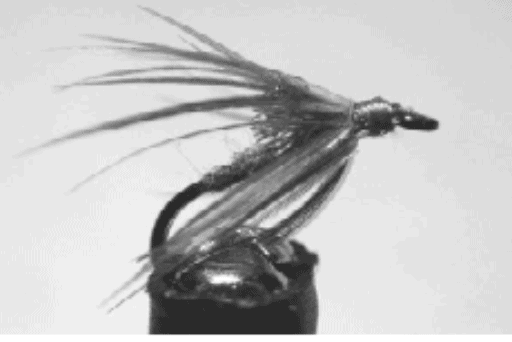
It’s the middle of summer and that means it’s caddis time.

Yes, all those spots are caddis…thousands and thousands of them.
You might recognize this image a little better.

These prolific bugs with their tent-shaped wings hatch throughout summer after the larger mayflies and stoneflies are finished. It can produce some very good fly fishing when caddisflies hatch.
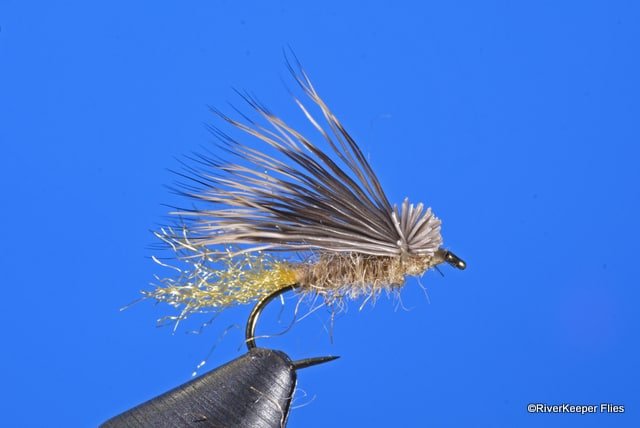
I was on the Madison river in Montana a week ago and a tan X Caddis was VERY effective. I wrote about the trip here – Fly Fishing the Madison River in Early July.
So let’s talk about caddisflies for a moment. Their life cycle is different than mayflies and salmonflies. Caddis hatch from eggs into larva and the larva stage is how they live most of their life on the bottom of a river. Their third stage of life is a pupae, where the caddis grow the required body parts to rise to the surface, become an adult, and fly away to mate and continue the species.
There are three basic types of caddisflies – free-living, net spinners, and case makers.
Free-living caddis larva can be found on the bottom of rivers where they spin silk into threads and attach it to the rocks. This allows them to crawl along the rocks looking for food and they’re able to use the silk safety line to prevent themselves from being washed downstream.
Net spinning caddis build nets of silk to catch food, including plant and animals the current provides as water flows through these nets. The nets are built in cracks and crevices of rocks and woody debris.
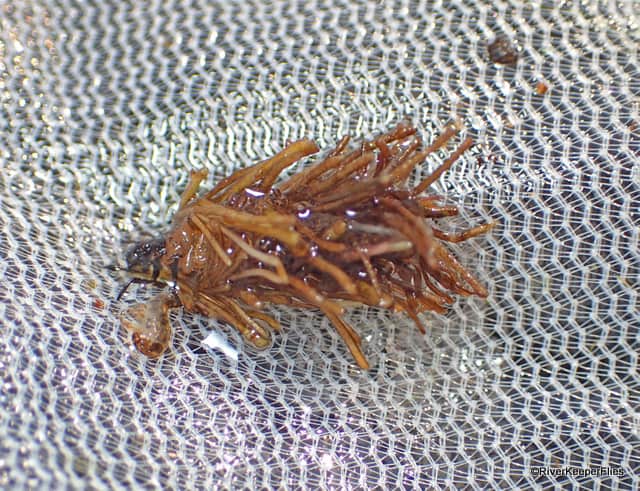
Case makers live not only in rivers and streams, but also lakes and ponds. Their cases are built from the products of their environment – sand, twigs, pebbles, leaves. As with the other types of caddis, the silk they create holds the building-blocks of their homes together.
Here are three caddis cases from the river.
Caddis case with rocks
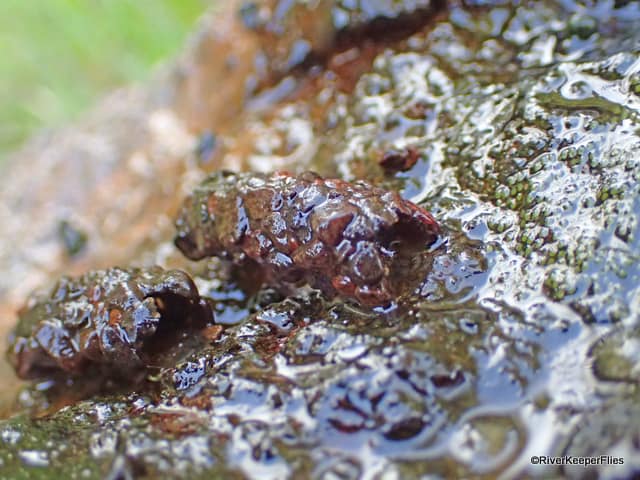
Caddis case with reeds and sticks
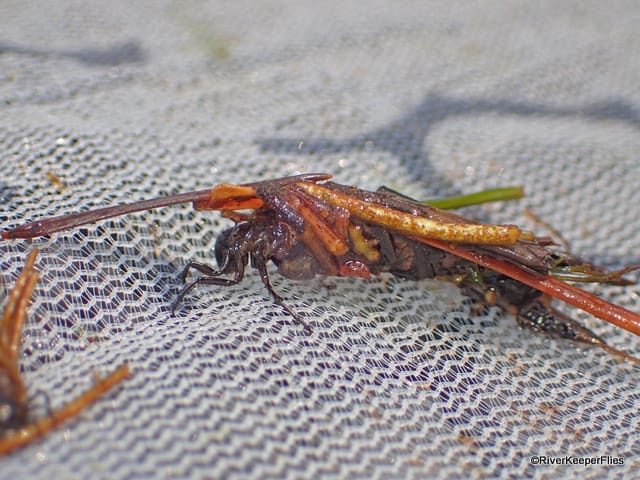
Caddis case with reeds
And a video from my Youtube Channel:
Caddisflies breath through the gills located along their bodies. For the case makers, the openings at both ends of the case allow water to flow through and past their gills.
Caddisflies breath through the gills located along their bodies. For the case makers, the openings at both ends of the case allow water to flow through and past their gills.
There are hundreds of fly patterns to imitate the various stages of caddisflies. Here are a few of the flies I carry.
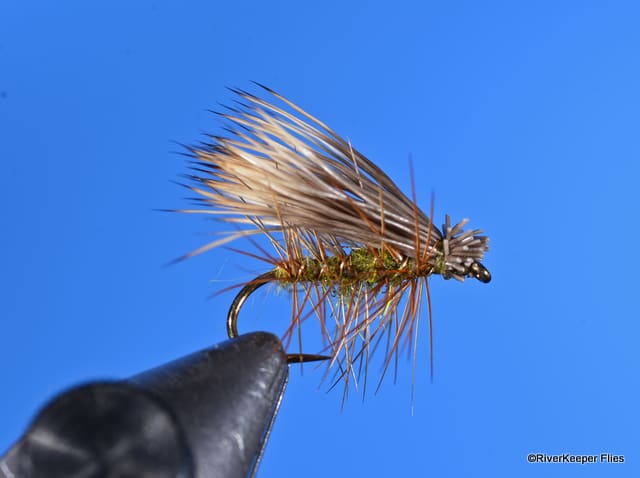
To imitate the adult phase, use flies with hackle for moderate to fast water because it helps float the flies much better. An example of this type of fly pattern is the Elk Hair Caddis.
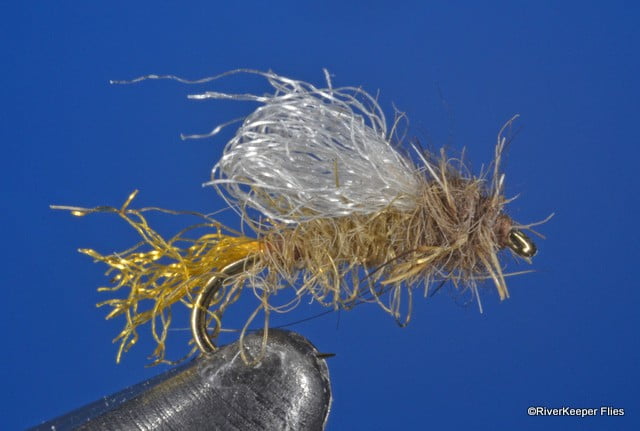
I use non-hackled fly patterns for slower and moderate water because I like the low-profile. An example of this type of fly pattern is the X Caddis.
Be sure to carry caddisfly imitations in olive, green, tan, amber, black.
Here are a few other dry fly patterns I use.

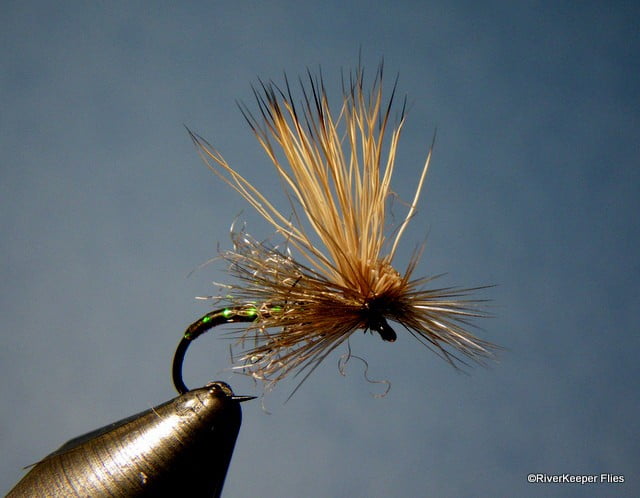
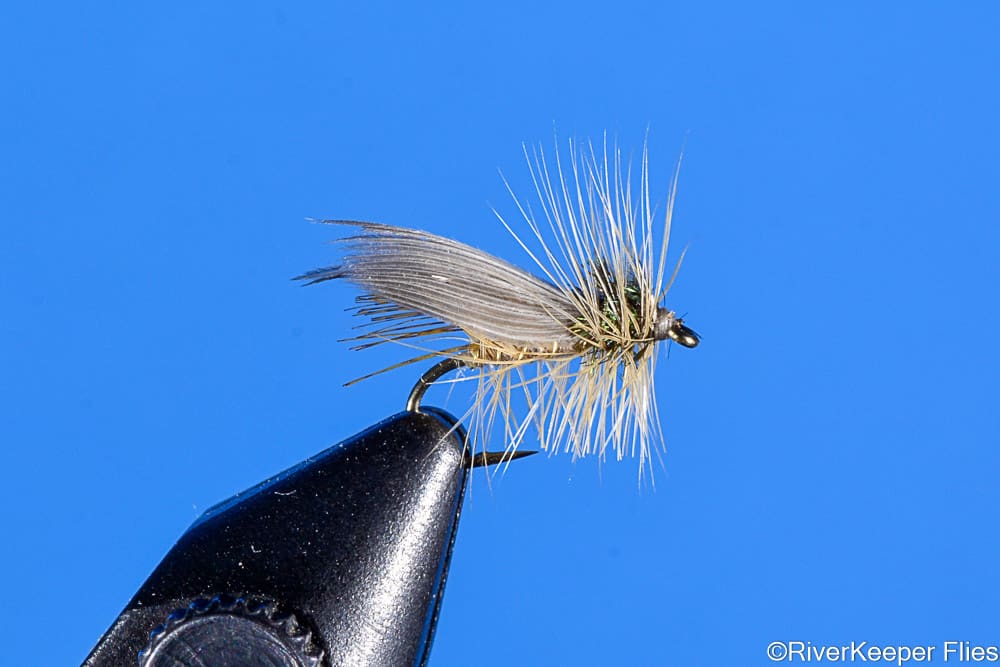
Improved F Fly (especially for smaller sizes)

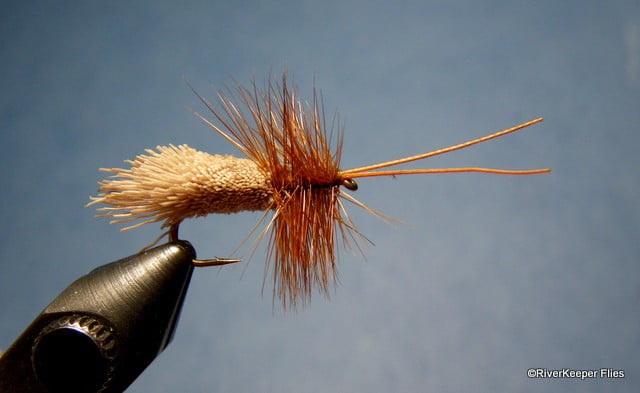
Trout also key on other phases of caddisflies as well. Here are a few fly patterns to consider.

LaFontaine Emergent Caddis Pupa
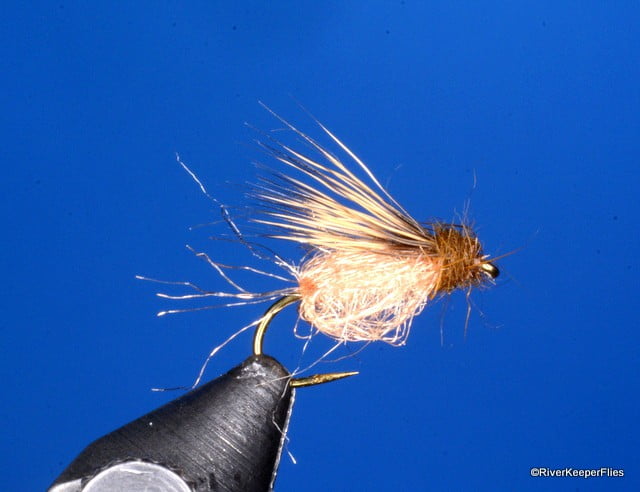
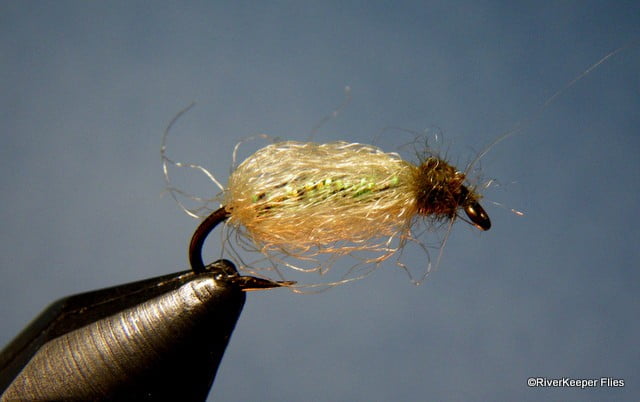

Do you need all of these fly patterns in your fly box? NO!
Select the flies you like and carry them in a few different sizes and colors to imitate the caddisflies on your favorite river.
Here are a few more links to other RiverKeeper Flies caddis posts
Enjoy…go fish!


John.. Caddis were the ticket last week on The Henry’s Fork, The Big Wood, and the South Fork of the Payette. Best producer was a tan body x caddis.
They were also eating other flies, but glad I had stocked up on your versions of the x….