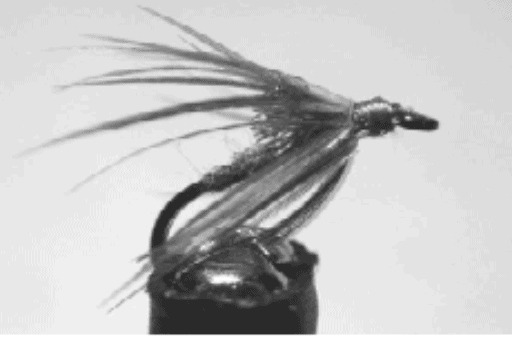
This week’s Throw Back Thursday Fly is the Rosy Dawn.

I am a neophyte when it comes to Atlantic Salmon flies. I’ve tied the Golden Butterfly for a fly plate and was very satisfied with my first fly.

I found several Atlantic Salmon flies in an old fly box given to me and had no idea the names of them. I showed them to Jim, my fly tyer friend and he spent some time trying to ID the flies. He gave me his best guess and attached a small piece of paper to each hook. This fly is one of those flies.
The Rosy Dawn was created by Dr. Pryce-Tannatt (1881 – 1965) around 1910.
Here is the fly pattern from Price-Tannatt’s book How to Dress Salmon Flies, published in 1914:
Rosy Dawn (hook, 1 1/4 to 2 inches)
| Tag: | Gold tinsel. |
| Tail: | A topping and tippet in strands. |
| Butt: | Black herl. |
| Body: | In two equal halves – first half, embossed silver tinsel; second half, oval gold tinsel, butted at the joint with a magenta hackle. |
| Throat: | A magenta hackle, followed by a pale blue hackle. |
| Wings: | A pair of tippets (back to back) veiled with “married” strands of yellow, blue and scarlet Swan and Golden Pheasant tail. |
| Sides: | Jungle cock; two or three toppings over. |
| Horns: | Blue and Scarlet Macaw. |
Note: This book is no longer subject to copyright law and can be downloaded for your reading pleasure. Click here and check it out for yourself: How to Dress Salmon Flies
Enjoy…go fish!