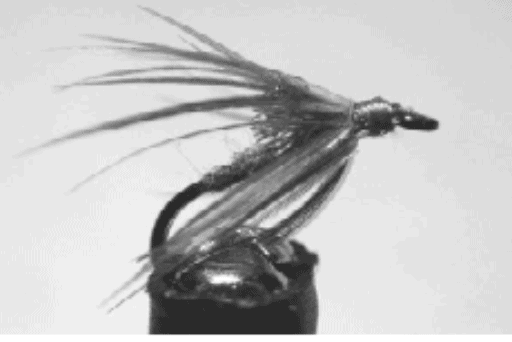
This week’s Throw Back Thursday Fly is the Bunse Natural Dun – Green Drake.

The Bunse Natural Dun was created by Richard Bunse, Falls City, OR. I’m not certain when Richard created the fly, but I probably bought my first one in the 1980’s. If you know more about this fly, be sure to leave a Comment below.
This is a fly I tried to tie many years ago without much success. It wouldn’t turn out like the ones I bought at my local fly shop. I recall fish rising to my imitation, but I was never satisfied with the results of tying my fly.
The Bunse Natural Dun – Green Drake is a creative fly using foam and thread to create the characteristic segments of the large mayfly. Just add deer hair for the wing and the fly is done.
I experimented with this fly, coating it with Solarez Flex UV Resin. I need to fish it and check the durability. I might have to go back and tie them with thinned Flexament as per the original directions.
If you can find one of these flies at your fly shop, buy one and give it a try.
Enjoy…go fish!
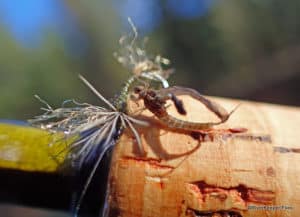
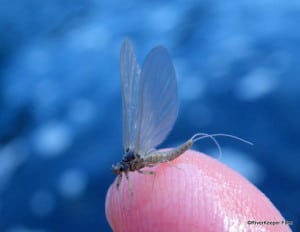

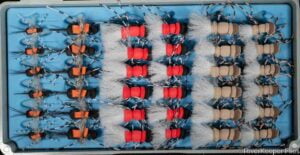


Hello John,
I just stumbled across your web site and have enjoyed your knowledge and passion for the sport. We share some similar experience in our early flyfishing development.
A teacher in Judson Jr High in Salem taught a class in flytying and introduced me to Wayne Doughton in 1959 where I bought my first fly rod, a Wright Mcgill “Sweetheart” with a Pflueger 1495. By the time I was in high school I was tying a few patterns for Wayne. I tied English Stones, bucktail Caddis and some tied down caddis.
I’m glad that a few anglers are using the Bunse Natural Dun. Here is a little history about the name. I never liked attaching my name to a fly so Dave Hughes began calling it the Wonder Dun in jest. I have always been dogmatic about only using natural materials and averse to using synthetic materials for tying flies. Another fishing friend John Rodriguez started giving me a bad time for tying with plastic foam. John began facetiously calling it Bunse’s “Natural Dun” unfortunately that’s the name that stuck.
I have tried to teach a lot of flytyers to tie the pattern and found the ones that have the most difficulty are the really good experienced tiers. Experienced tiers “keep it tight and secure” ingrained. This pattern needs to be loosely compressed so the end product is soft, flexible and full of air bubbles. After coloring the fly I liked to use thinned flex cement to protect the color while maintaining the flexibility. its also important to put a vertical cut on each side of the wing so the wing can be spread 180 degrees like a Comparadun.
I have included a couple links that may be of some help for those that would like to try tying this pattern.
I love the Metolius. I developed this green drake pattern for the Metolius.
Richard Bunse
http://www.flyanglersonline.com/flytying/fotw/011000fotw.php
https://www.flickr.com/photos/rpiscus/10687728713/in/dateposted-public/