Have you ever heard the term “foam is home”?
Here is a perfect example of what I’m talking about. The main current is flowing towards us in the top of the picture and this eddy is capturing bubbles created by the river. And with insects in the drift, this is a natural conveyor belt of food for the fish.

And a wider view of the same eddy. It’s small, but perfect for big fish to hold in. Deeper water and safety is only a couple of tail wags away.
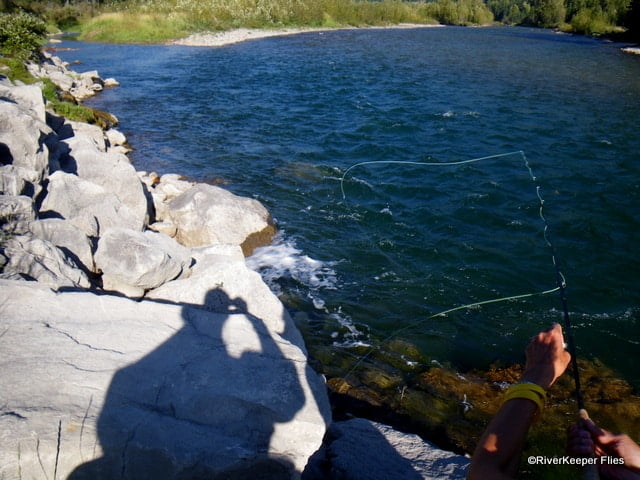
Fish can be found under the foam. They seem to feel comfortable because predators can’t see them…except when their noses come out of the water. If you watch closely, you can see that activity.
These pictures are from the Elk River in BC. We were walking upstream looking for “noses” and found one here. But we had to exercise a little patience. These fish are wary. My wife and I took turns trying to hook a very nice fish…and finally did.
And here is the fish living in the foam.

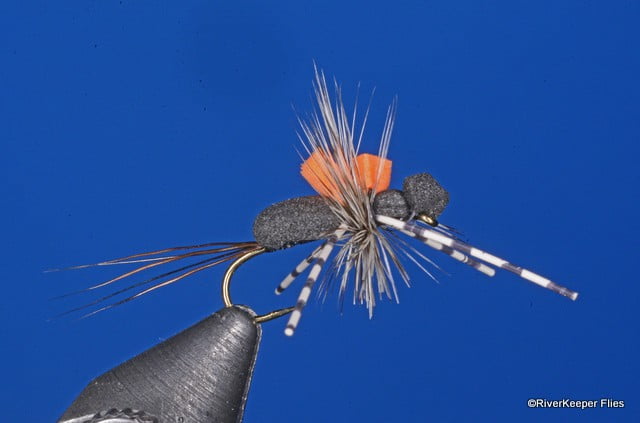
This cutthroat took a beetle pattern – Beetle Bailey.
Eddies like the one above can be found in almost every river. What is an eddy? It’s a “circular movement of water, counter to a main current, causing a small whirlpool.”
Here is a picture of an eddy from the Deschutes River. Sure, it’s much smaller, but I followed the circular movement of foam which is moving upstream in the eddy, looking for fish. If you look carefully, you’ll see a nice rainbow. It’s in perfect position for the eddy to bring food to the fish. It doesn’t expend much energy and can get all the food it wants. Which is why big fish live there.
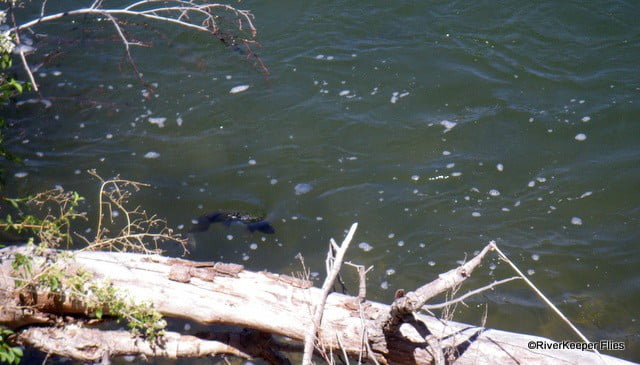
Here is an eddy from the Lamar River in Yellowstone National Park.
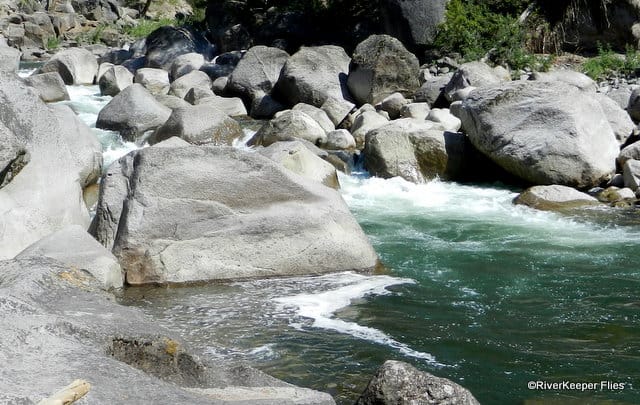
I saw a fish poking it’s nose out of the foam very close to the rock.
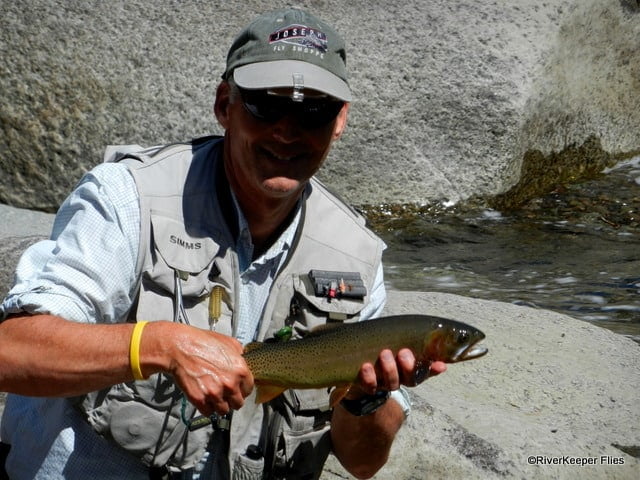
Here is the fish living there. A nice Yellowstone Cutthroat.
Always spend a few minutes watching the foam in eddies. If you’re lucky, a nose will pop up or you might see a dark shadow swim through.
Eddies are a great place to look for insects hatching. You’ll find cripples, adults, terrestrials…whatever is in the drift. They naturally congregate in these spots.
So spend a little time here and the river will give up a secret or two.