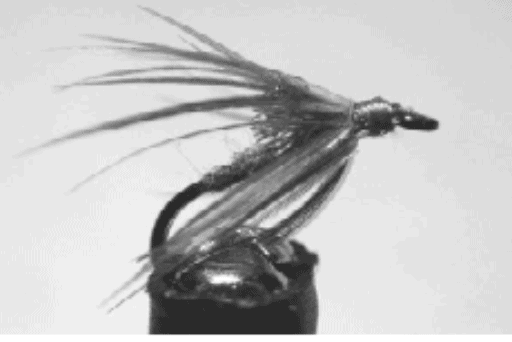
This week’s Throw Back Thursday Fly is the Buzz Hackle.
I haven’t been anywhere near water with my Nikon camera for over 3 weeks because of Covid, so I thought I’d present a TBT fly.
In yesterday’s post, I shared a couple of flies I tied for customers. This is my last order, a fly I had never heard of.
The Buzz Hackle is an older fly pattern developed in the 1920s by Myrtle Powell, wife of E.C. Powell. The Powell’s operated a fly shop in Marysville, CA. You also might recognize the name “Powell”, because E.C. crafted bamboo fly rods too.
In my search for a little history of the fly, I found that a friend of theirs named Al Lent asked them to tie a fly with materials of brown and grizzly hackle and peacock herl. This is the fly Myrtle created. Several years later, Lent’s son Buzz passed away and naming the fly for him was a way to honor his memory.
Note how the aft hackle is one size larger than the fore hackle. It was designed that way to help offset the extra weight of the hook bend, allowing it to float flat on the water’s surface.
I tried to recall all of the fore and aft flies I’ve tied over the years.
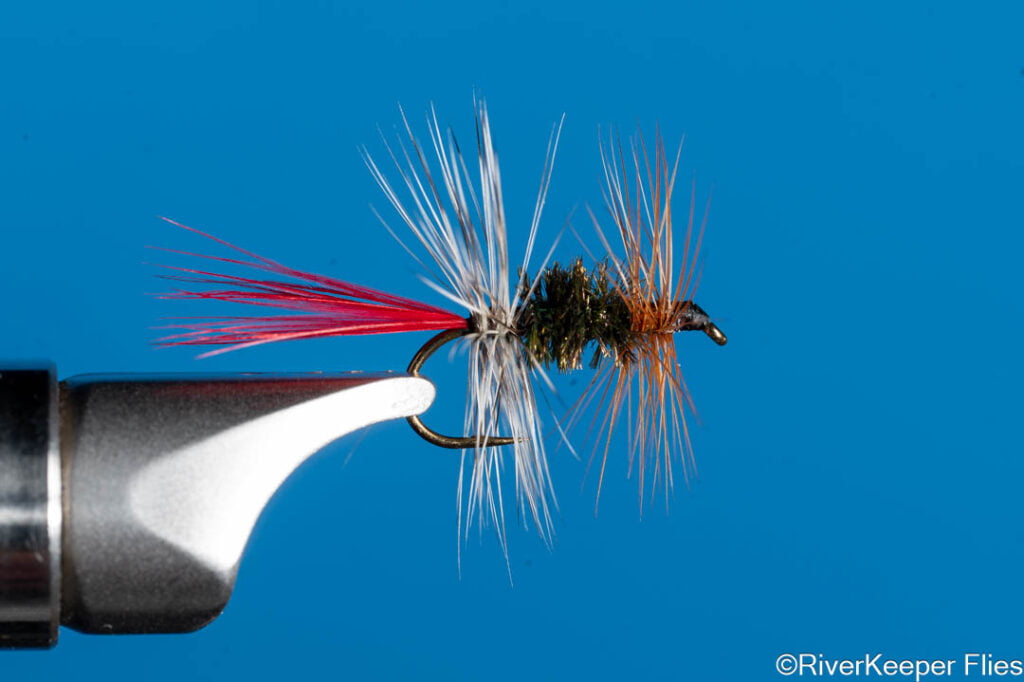
One of the first TBT flies I wrote about back in December 2014 is the Renegade.

Here are three other fore and aft flies I’ve featured over the years as Throw Back Thursday Flies.

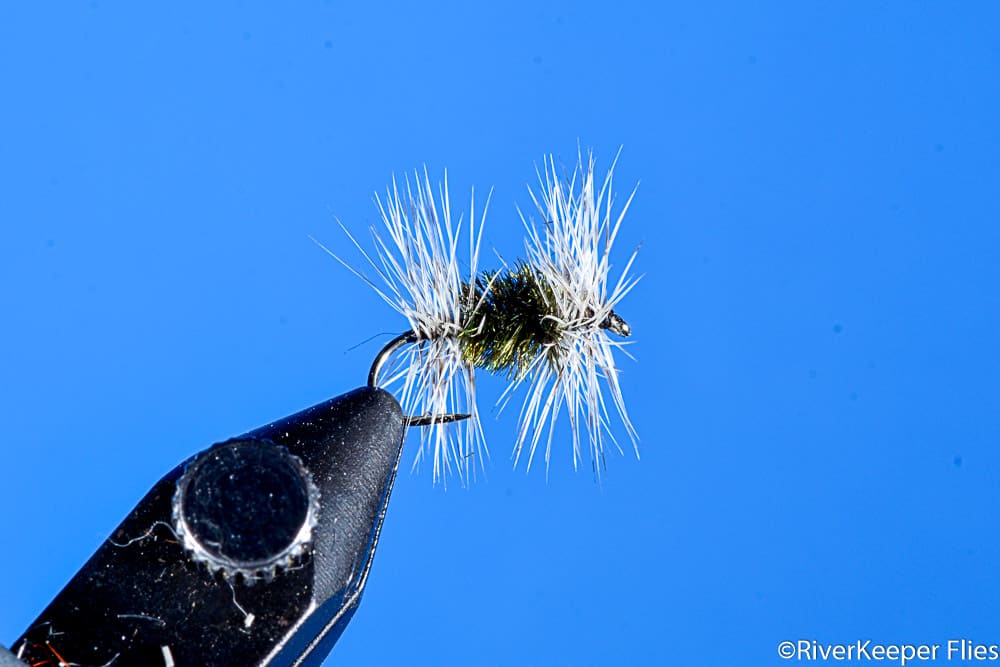
Polly’s Little Yellow Stonefly

Enjoy…go fish!


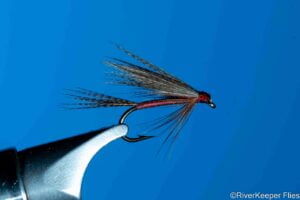


Interestingly, whiling away with fishing on my mind, I landed on this website to see if there’s anyone who remembers the Mertyl Powell’s Buzz Hackle, Clyde and many others, as well as the EC Powell bamboo rods.
My Great Uncle, out of the Yuba City ranching community, was a close friend with EC and Mertyl (and Walton) during his Northern California small stream fishing days. I learned many of his artful casting, stream reading and general fly fishing techniques. I am fortunate to have inherited an EC and then Walton Powell bamboo rods.
The Buzz Hackle I remember was tied a little differently with the brown, grey and white hackle mixed in the body with a shorter red tail. I sure wish I had the presence of mind to keep a couple of those flies in a 3-D case near my tying bench.
Thanks for you Comment. I would love to see one of those flies! I found the fly pattern somewhere and tied it as they stated.
John