I’ve had time to think along the river lately while waiting for insects to hatch and fish to rise. I thought I’d share 5 tips to improve your fly fishing success and I’ll offer a few products I use frequently while fishing.

Today’s post isn’t only for my readers. I need to heed my own advice. How do you think some of these tips made the list?
I’ve included some products I use as Amazon links, but I recommend visiting your local fly shop first to see if they have them or something similar.
Let me begin with knots.
1. Tying good knots
I’ve written about this before, but I must say I’ve lost a couple of fish in the last week because of a poor knot. One was securing the fly to the tippet; the other was a triple surgeon knot attaching my 6X to the leader.
I need to remind myself to slow down and pay attention when tying on flies or adding new 6X tippet to my leader. I can tie knots quickly, especially when fish are rising. But ALWAYS take the time to check and seat the knot properly. By this I mean the knot should snug up tightly against the hook eye or in the case of a surgeon knot, the other piece of monofilament.
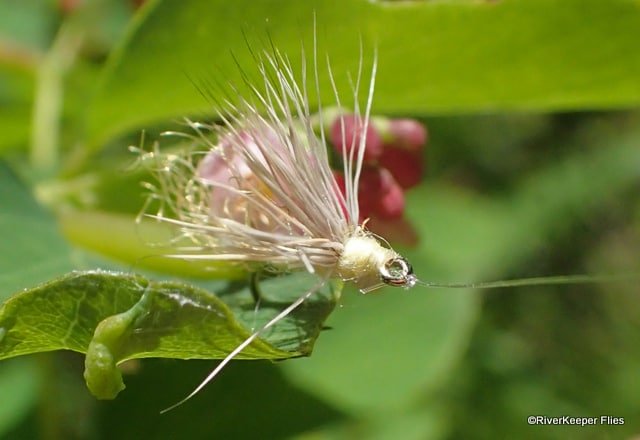
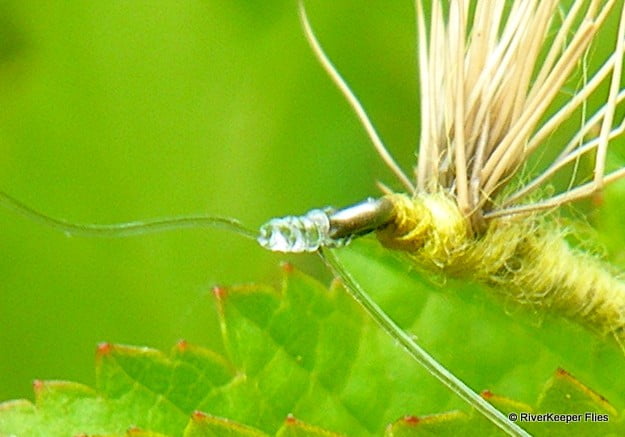
I use a Davy knot for securing small flies and an improved clinch knot for larger ones. Here are examples of properly seated knots.
 Da
Da
Have you ever had a fish rise to your fly, set the hook, only to feel the tug briefly and then, pop? It’s happened to me recently…a couple of times. I retrieved my line and found the tell-tale curly cue, which indicates a knot improperly tied.
Another tip is to take the time and re-tie your knot after landing a nice fish. You’d be surprised how the fish’s mouth will nick tippet. You’ll wonder why the next fish broke off!
One more tip? Check your tippet for nicks when that fish goes under a log and you’re lucky enough to land it. That happened a couple days ago. Luckily, I checked and re-tied the fly.
How about another example?
I fish with a 9′ 5X leader and cut off about 12″ or so and attach about 3′ section of tippet. Here is a post I wrote explaining why and how you might use the technique for your own fly fishing – Fly Fishing Leaders.
I needed to replace the tippet, so I spent the time to clip off the short section and tie on a new 3′ piece. After adding a fly, I began casting again. A short time later, a fish rises to my fly and I hook up and pop! I reeled in to see what happened. Turns out the problem was my surgeon knot.
What I think happened was in the final stages of clipping the tag ends. I know the knot was seated well. I got a little too close with my nippers when trimming the tags.
That leads me to the next point.
2. Magnification
As I age, a little help with magnification to see what I’m doing close-up helps tremendously. Have you ever been on the water struggling to put the tippet through the hook eye? I’ve watched you do it! Trust me when I say you need to figure out what will help you tie the knots.
Here are two options which work well for me:
- Clip on Flip Magnification
- CLIC Reading Glasses
The fall-back some fly fishers use is to select a larger fly because the hook eye is bigger. But that strategy is flawed because the fly is larger than those hatching and being eaten by Mr. Trout.
A year ago, I ended up wearing glasses fulltime. It helped tremendously finding my fly on the water. I know a lot of fly fishers who cast and have a tough time locating and seeing their fly. If a fish subtly eats their fly, they won’t know it if they can’t see it.
In addtion, I notice I can find so many more insects in the streamside brush and grass. Finding out what is available to the fish narrows the fly choice.
3. Floating the fly
Fish a fly long enough and it will sink. It’s our nemesis, isn’t it?
Here are two products I use consistently to help float my flies.
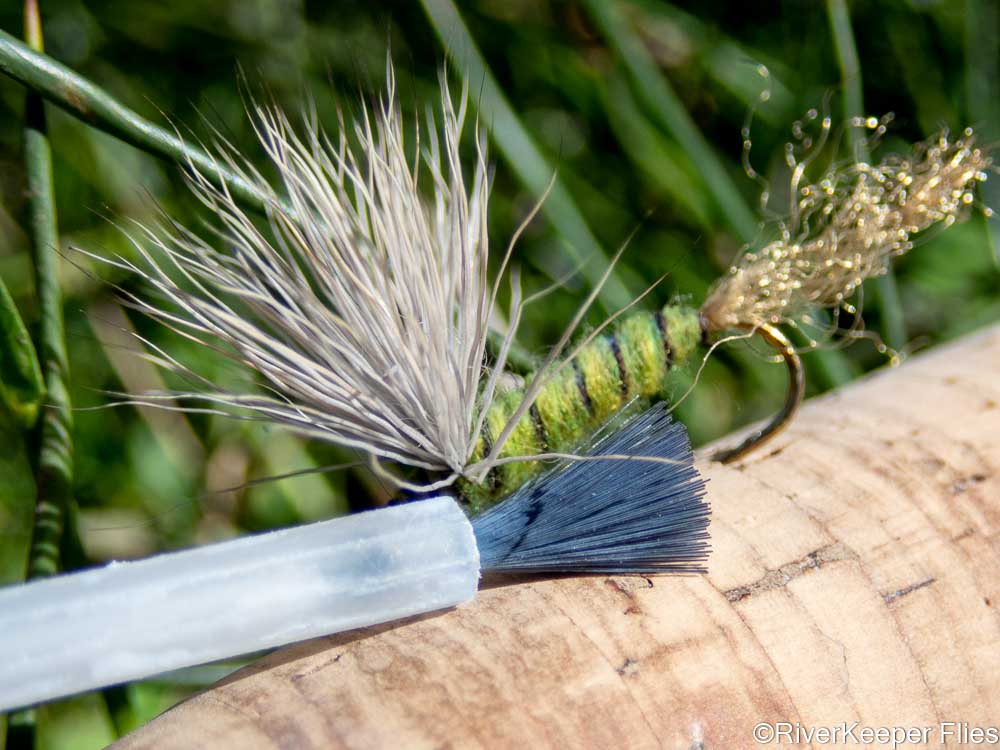
The first is Frogs Fanny. I really like this product to dry my flies when they finally sink or a fish slimes it. The reason I like it so much is the brush. I’m able to push silica into various parts of the fly. It works especially well on CDC wings. Other silica products work, but this is the one I carry because of the included brush. Did you see it in the image above? The brush opens up fibers much better than shake desiccant products, in my opinion. If the other works for you, great!
Secondly, an amadou drying patch is another tool in my arsenal. Amadou is a natural tree fungus I use to quickly dry my flies. It works especially well on flies with CDC. Squeeze your fly between the leather covered patches and the moisture is pulled from the fly. After drying the fly, I apply Frogs Fanny. Your local fly shop can order the patch for you from Hareline.
In the meantime, if you wear a long sleeve shirt, place the fly at your elbow and flex your bicep. The compression will squeeze a little water out of the fly. A handkerchief might work too.
4. Setting the hook
I’ve been missing some fish lately and think I’m pulling the fly out of their mouth. I don’t really understand how my reflexes can be so quick. I’ve never understood that!
Here’s the process:
- Fly floats into the feeding lane.
- Fish rises and eats the fly.
- My eyes, which are connected to my brain reacts by sending a signal to my hand and arm to set the hook.
- I pull the fly out of the fish’s mouth.
How is this even possible???
I don’t know, but it’s reality.
Fish rise differently depending on water speed and how quickly they perceive the fly will leave the water. Some rises are head and tail takes, while others fish move downstream or sideways to take the fly. Their mouth needs to close and turn to effectively set the hook.
Seriously, my reflexes can’t be that quick! But miss fish I do.
Have you heard the phrase “God save the Queen”? It is a 2 to 3 second delay for the mouth to close and fish turn.
I know I should do it, but it’s a work in progress. Hopefully, you don’t have this problem.
5. Finding what fish eat
At times, it’s difficult to determine what the fish are eating. I’ll place the paint strainer bag over my net and walk into the river and hold the net at an angle where the bag is about half submerged. The water easily passes through the mesh and insects are captured in the mesh. It’s an easy method to see what insects are available to the fish.
This certainly isn’t an exhaustive list, but I’ve used these tips recently to improve my catching.
(John Kreft is a participant in the Amazon Services LLC Associates Program, an affiliate advertising program designed to provide a means for sites to earn advertising fees by advertising and linking to amazon.com.)




Excellent suggestions John.
I’d add the following: a) make sure the drag on your reel is set properly. When you get that really big fish on (especially on the Deschutes), you need it to provide high enough resistance to help tire it out. b) put Payette Paste (or something similar on your dry fly line to ensure full buoyancy. You’ll get much better drifts. c) don’t be afraid to try new flies (or types of flies…e.g., Perdigons)…but at the same time, don’t abandon the classics (e.g., Hare’s Ear Nymph, Adams). d) in low visibility settings (or if your vision is weakening), don’t be afraid to tie that #18 or 20 dry fly on as a “dropper” (but still dry) attached to a high visibility/buoyant dry fly. This has been rewarding at dusk — with big trout caught on both the larger sighting fly as well as the dropper. Good luck!
Great post as always John.
I ditched the triple surgeons
Knot last yesr for the Orvis tippet knot. I find it easier to tie and cinch down.