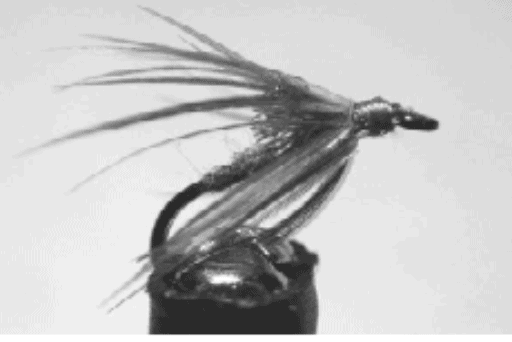
This week’s Throw Back Thursday Fly is a Green Drake Hatchmaster.
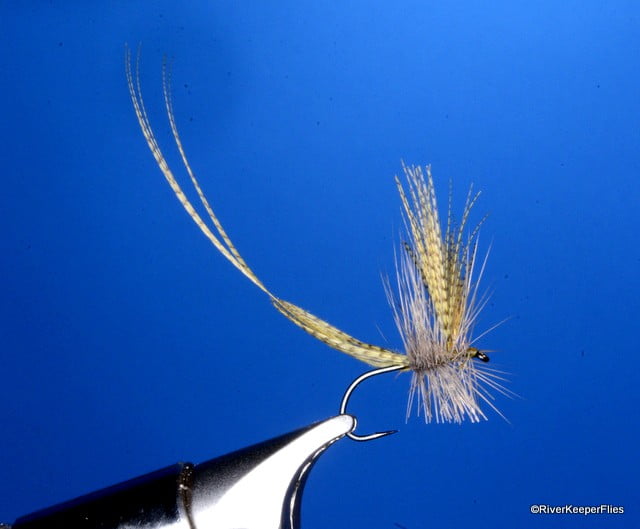
This fly pattern was developed in the 1930s. I’m fairly sure the first one didn’t imitate a Green Drake like the fly I tied above. I’ve been working on another RiverKeeper Flies instructional video for my YouTube channel and thought I’d highlight the Hatchmaster again.
Originally known as the Two-Feather Fly, the Hatchmaster was created by Harry Darbee for a fisherman named Terrell Moore to solve a problem of getting large mayflies to land on the water softly and eliminate the bulk and weight. Some people called it the “Darbee”.
The fly I tied above is a size 12 and needed 2 rusty dun Collins hackles. Therefore, I’ll call it a “three-feather fly”.
Doug Andres, the Riverkeeper from the Purdy Ranch on Silver Creek in Idaho, taught a Callibaetis version to the Central Oregon Flyfishers Winter Fly Tying class in 2016. He stated Dick Alf brought the fly to Silver Creek in the 1960s.
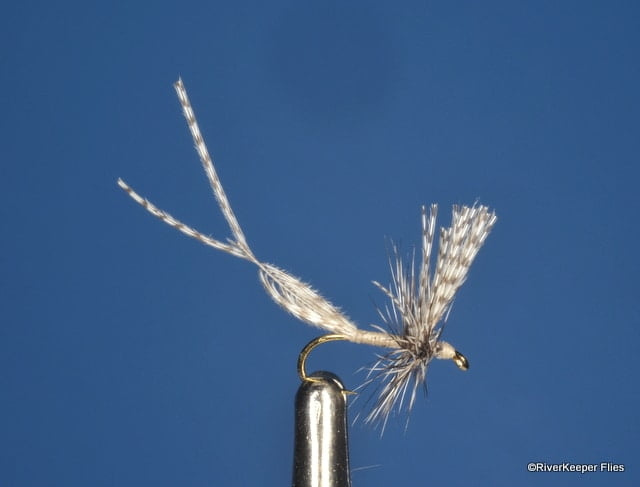
As with many fly patterns, there is something elegant in the simplicity of the fly. A single feather is used to create the tail and body from the fibers pulled backwards and tied down.
Enjoy…go fish!


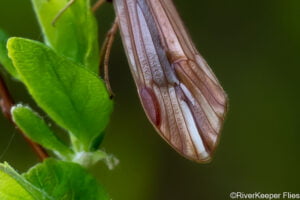


Really like the hatchmaster especially when the water gets roughed up.
Thanks john . I am trying to tie some right now. Your video would surely he
Max
Thanks Max
Be sure to check out the fly pattern sheet as I have a few images of the step-by-step process I use. Better than nothing until I can make the video.
John
Beautiful fly!