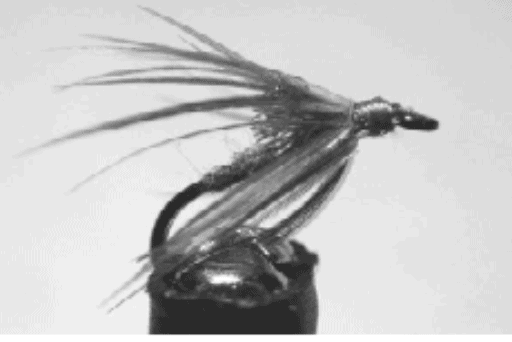
Do you use fly patterns with CDC feathers in them? Hopefully, your fly box has a few of ’em. CDC is a marvelous material. It’s like magic.
What is CDC? It stands for cul de canard. It’s French for “ducks arse” or loosely “butt of the duck”. While I don’t speak the language, I found that “canard” is French for duck, so while we may discuss other types of CDC feathers, like geese, it would be called something else and add to the confusion. So for simplicity’s sake, we’ll lump them all together and call it CDC.
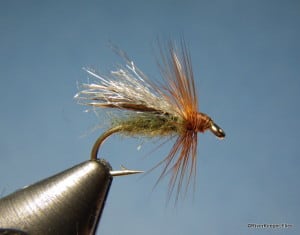
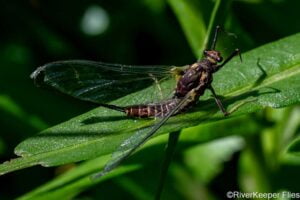
RiverKeeper Callibaetis Emerger
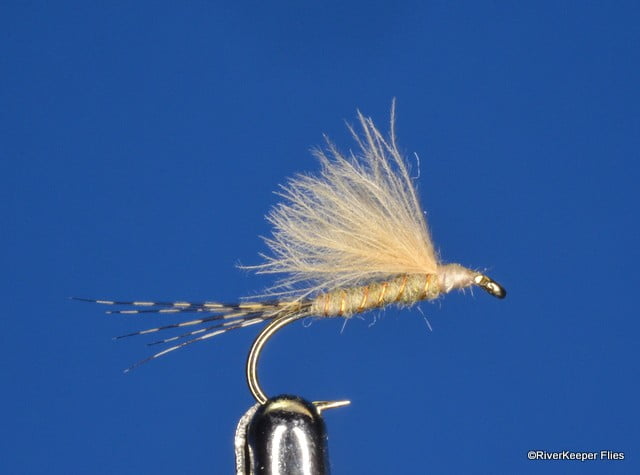
Why should you use fly patterns with CDC feathers? CDC has properties to provide what I call floatability. CDC is soft, buoyant, traps air bubbles and create a life-like appearance with the movement of soft feathers.
There are two specific properties which differentiate CDC feathers:
- preen oil
- feather structure
Why do ducks float? Ever seen ducks preening their feathers? Preen oil is one reason! They clean and waterproof their feathers with the preen oil glands located on their back just in front of the tail.
Believe it or not, the feather structure of CDC plays a more important part in its floating properties than preen oil. Tiny micro barbules extend from the long shaft fibers, creating many smaller fibers lying on the water to create buoyancy, thereby increasing the surface area. A normal chicken feather has barbules extending from two opposite sides. CDC barbules rotate around the stem. In addition, each barbule has additional micro barbules extending off each barb.
The down side of using CDC is it has a tendency to get “slimmed” after you land a fish. Be sure to clean the fly in water after landing a fish and dry it off. Amadou is a popular item to dry off artificial flies. Believe it or not, it’s a fungus! Why would that work??? No clue, but I know it does. Or dry off your fly using your shirt. Place it in the crease of your elbow and flex the bicep. That should take most of the water out of the fly. Then use Frogs Fanny to float the fly again. You may have to tie on another fly after a few fish…but what a problem to have!
Don’t use any waterproofing products like gink type floatants on CDC as it will ruin the CDC properties. It mats the barbules and prevents air being trapped.
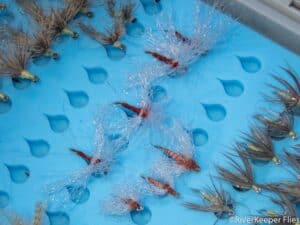
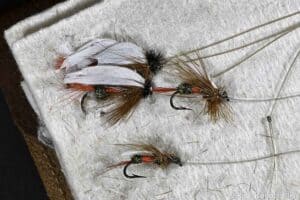
Here are a few flies I tie using CDC:

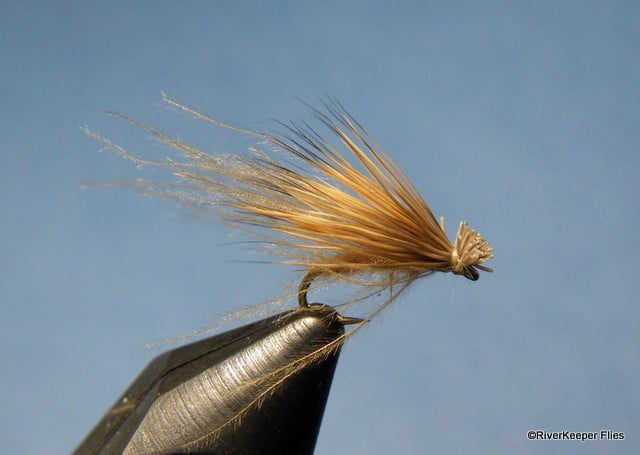

How about modifying an Elk Hair Caddis? Substitute a couple of CDC feathers for the Elk Hair and create a “low-rider” caddis? Give it a try!
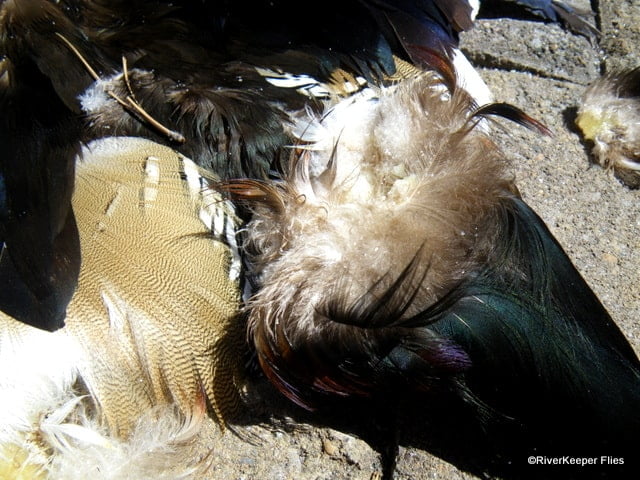
I’ve got a friend who hunts birds and he provides me with an occasional skin. I usually end up with Hungarian Partridge. A few years ago, I was lucky enough to get a Wood Duck skin. I recently pulled it out to see how many CDC feathers I could find. Here are a few pics to help identify the preen gland and CDC feathers.
I pulled the skin out of the zip lock bag and the tail was separate. I think I’ve got it positioned correctly. (BTW – Wood Duck feathers are gorgeous!)
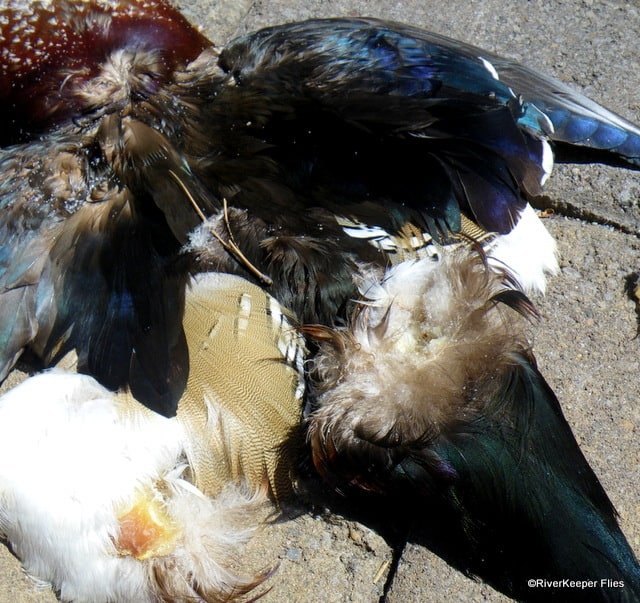
Here is a little closer view of the area just above the tail.
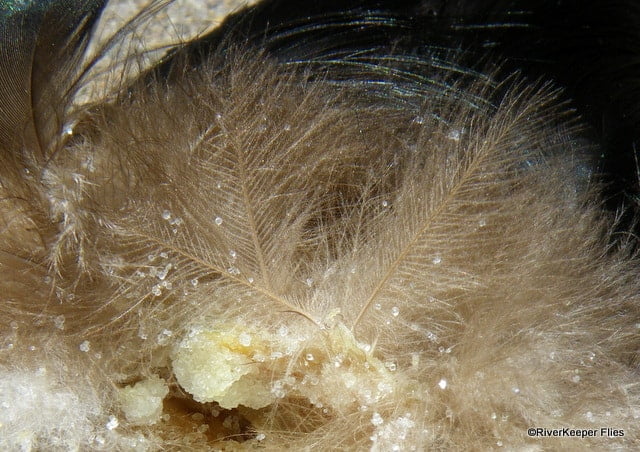
And lastly, here is a close up of some CDC feathers.
I mentioned geese have these feathers as well. I did look up the translation for goose…it’s OIE in French. Perhaps we should call those feathers CDO…but then no one would know what I’m talking about!
Goose CDC can be much larger, up to three times bigger than duck. As a fly tyer, that provides an opportunity to use CDC on larger fly patterns, like a Green Drake Emerger.
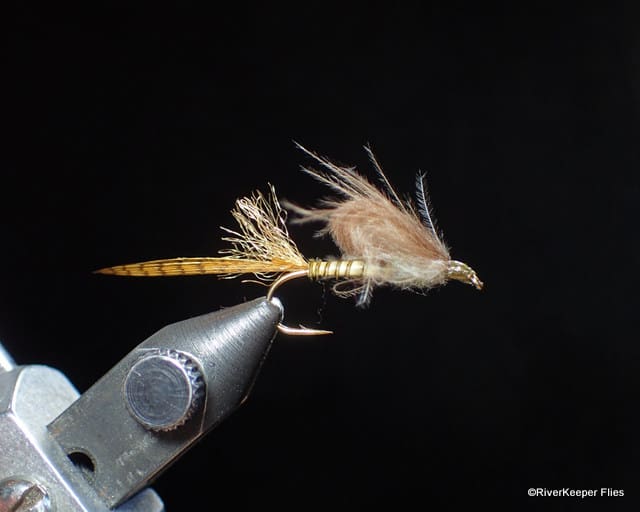
As you can tell, I’ve used CDC for various types of wings. Are there other uses for CDC? Absolutely! Use it as a tail or in the body. Remember a key property is it captures air. Nymphs tied with CDC will appear to be emerging. Blue Ribbon Flies in West Yellowstone, MT sells some dubbing that includes CDC fibers and markets it for their caddis patterns.
If you are a fly tyer, you may be interested in the types of CDC as described by Hans Weilenmann. He categorizes CDC feathers into 4 types:
- Type 1 – Similar to partridge feather in appearance, with rounded tip. This feather is fairly short with a tapered stem. Barbs extend about 60 degrees away from stem. (Best use – CDC & Elk fly)
- Type 2 – Ends in square, “brush-like” tip with a thin stem. The barbs run parallel to the stem. (Best use – wing posts and loop wings)
- Type 3 – The puff is a very short feather without much of a stem. The tip ends are square or “brush-like”. (Best use – small flies for emerging wings, tails, or trailing shucks)
- Type 4 – Hans states most CDC purchased from fly shops are this type. It has a much longer stem than Type 1, but has short barbs. (Best uses – downwing flies, larger CDC & Elk flies, and wings for transitional flies)
They say a picture is worth a thousand words. Here are the four types of CDC feathers. From left to right, they are Type 1, Type 2, Type 3, and Type 4 for reference.

So what type of CDC feathers do you use? I’ve purchased mine from several sources, but I think the best is from Trouthunter Fly Shop on the Henry’s Fork of the Snake River in Last Chance, Idaho (look for Trouthunter CDC in your fly shop). This is Rene Harrop’s shop. If you don’t know about him, you should. He is credited with bringing and using CDC feathers to America. I won’t go into the history, but he uses CDC in many of his flies. His book entitled Learning from the Waters is a great read. The flies he ties are beautiful and tested against some of the pickiest trout on the planet! If you don’t have a copy, consider adding it to your library.
Well, that’s it for CDC. Hopefully, you learned something. If you don’t tie flies, just go to your local fly shop and pick up a few patterns that use them. If you tie, be sure to click on the links for the patterns above and try them out.
RS2’s with lite dun CDC puffs are fab!
Thanks Scott!
Just got off the missouri. A day and a half of fishing tricos. CDC was the hot fly. Lots of heads up and eating if presented right. Fun stuff. Learned the pattern from dad seven years ago on rapid creek in sd. I think he got it from you. Good stuff.
Thanks Wade,
Always good to hear feedback. And thanks for the fishing report!
John
Sweet! but tying with CDC is a pain in the Cunard.
Cute Wade!
John
Great information. Thanks John
Very good John !
Thanks Max!