On one of my fly fishing trips to the river last week, I was waiting for the fish to begin rising and I was curious about what flies were in the drift and available to the fish. A good place to find out is on the edges of an eddy. So I walked downstream to an eddy I’ve checked before and guess what I found? Mayfly spinners!
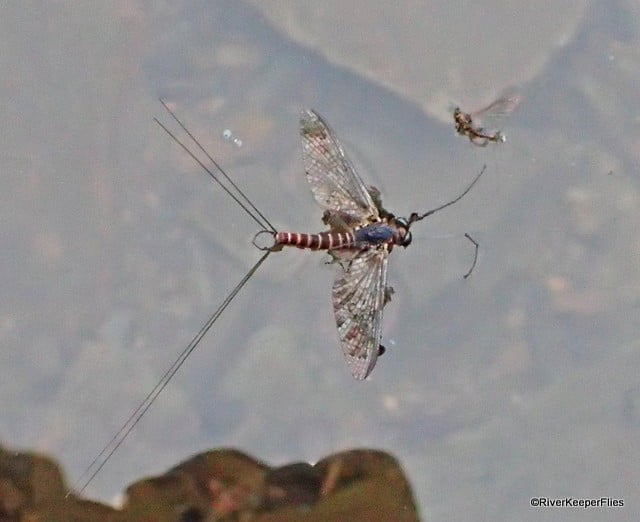
I couldn’t believe the number and variety I found…Green Drakes, Brown Drakes, Pale Evening Duns (PEDs), Pale Morning Duns (PMDs), and a few others I don’t know the name of.
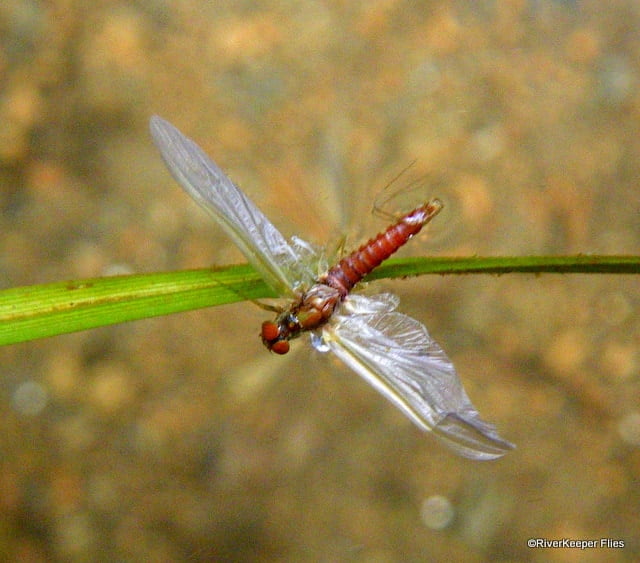
The main characteristic to identify the spinner phase of a mayfly is the opaque or transparent wings.
The trout see the wings splayed out, laying flat on the water like the picture above. Other times, the spinner looks like this Green Drake Spinner, with their wings stuck together.
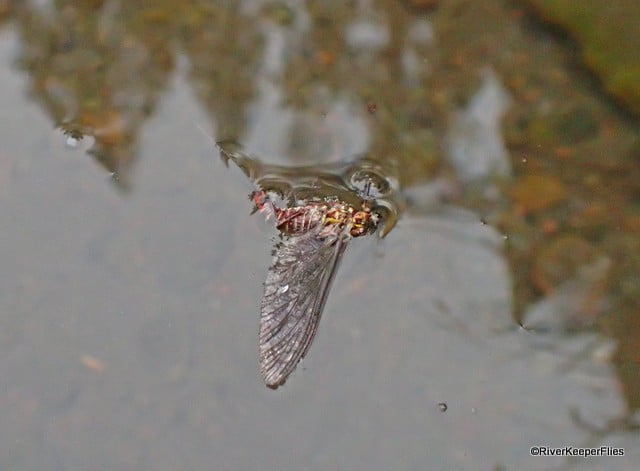
Here are a couple of pictures of how we might expect these mayflies to look like. I placed them in these positions to get a good photo, but I seldom see them like this.


When fly fishers tell me about a hatch they experienced early in the morning where trout were rising, I always pay attention. More than likely, they are describing a spinner fall and not flies hatching.
Mayfly spinners are the final phase of a mayfly’s lifecycle and I believe it is a tremendously under-realized stage for the fly fisher to imitate. Every mayfly has a spinner phase.
The picture below shows a PMD mayfly recently hatched from the nymph phase into a dun.
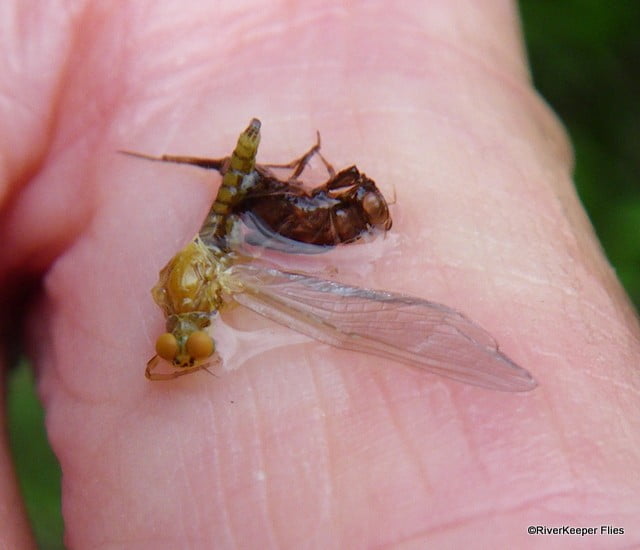
After flying around as a dun, nature tells them it’s finally time to mate. The back of the dun splits open and another insect, a spinner, crawls out. You’ll see spinners flying over the water in mating swarms. Sometimes the spinners will suddenly drop several inches or a foot before they begin flying again. When a female is nearby, she will be quickly sought out by numerous males wanting to mate with her.
After the eggs are fertilized, she drops them on the surface film, usually touching the water with her abdomen. She’ll fall to the water when finished and is an easy meal for a waiting trout.
PMDs are a prolific hatch and have started recently on my home waters. They will continue through September.
PMD spinners can be found on the water and available to trout in the evenings or early mornings. If you see dimples on the water from a trout, it has probably sipped a PMD spinner.
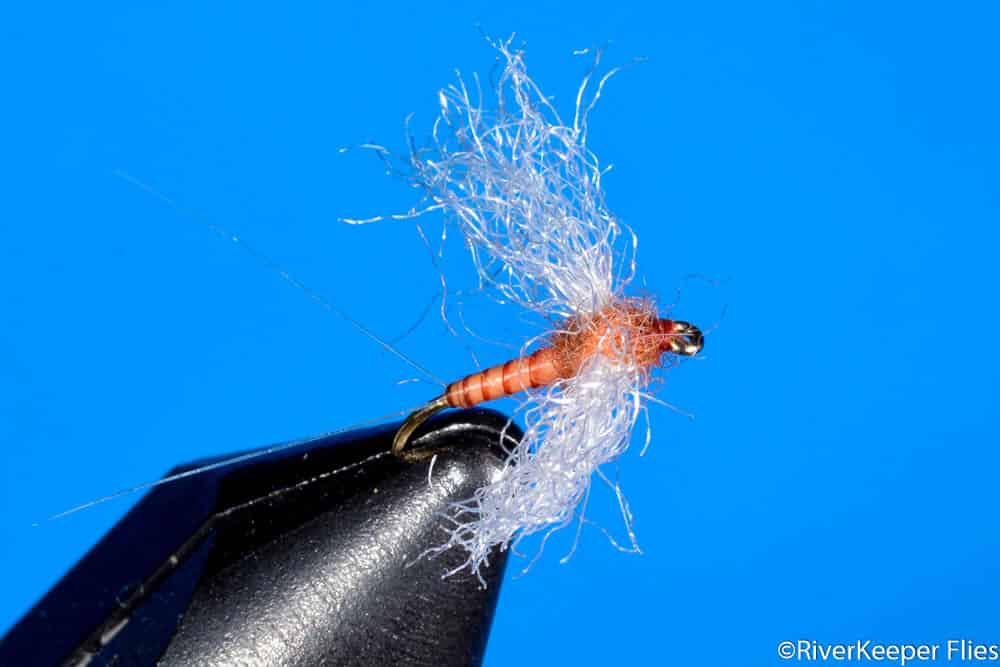
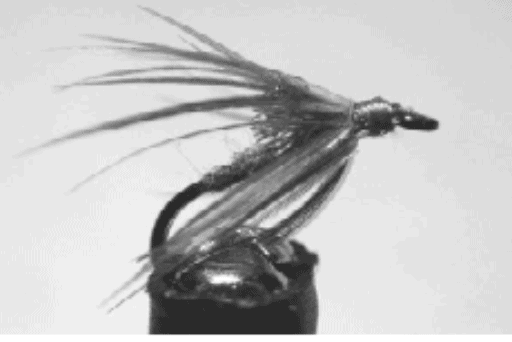
I’d tie on a Rusty Spinner Biot Body fly in size 14 or more likely 16.
Some fly fishers call a fly like this “Trusty Rusty” because it works so well.
You can see the Rusty Spinner Biot Body has the same profile of an insect with wings splayed out laying flat on the water. And the biot body adds segmentation of the real bug as well. You can tie the body with dubbing, but at times the trout can be very picky and the biot body works better.
If you are a fly tyer, wings can be made out of a variety of materials. I like EP Fibers – Spinner Wing color. Another option is straight Zelon or a turn or two of Coq de Leon feathers.
For you lake fly fishers out there, a Callibaetis spinner fly pattern is a necessity for your fly box.

Here is the Callibaetis Spinner I use to imitate the real thing.

Be sure to check your fly box for your supply of mayfly spinner fly patterns. You will be amazed how effective these simple flies will be.
Lastly, I wanted to mention the passing of Tom Morgan who was a terrific fly rod designer and past owner of R.L. Winston Rod Company, which he sold in 1991. Tom opened Tom Morgan Rodsmiths in 1995 to continue his quest of creating the best fly rod possible, regardless of cost.
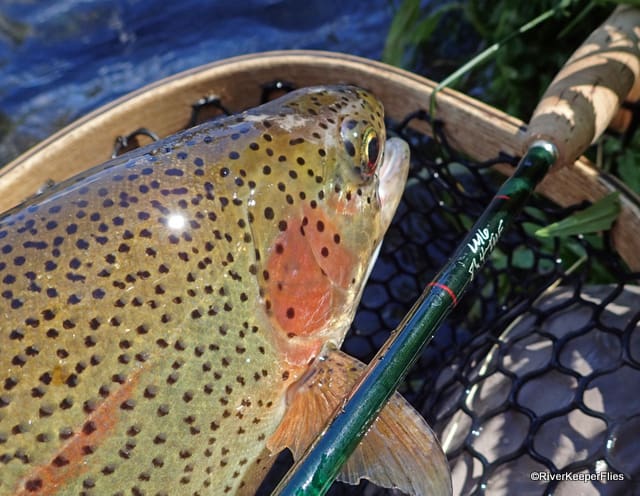
I never met Tom, but have several Winston fly rods, including an 8′ 4 weight Tom Morgan Favorite model. I took it to the river recently to celebrate Tom’s memory and the river gods were smiling on me with this 15″ beauty…I hope Tom was as well.
Enjoy…go fish!