This week’s Throw Back Thursday Fly is the Sockeye John Aztec Fly.
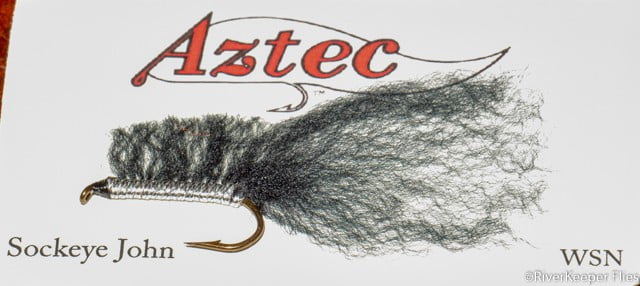
The Aztec fly was created by Dick Nelson in 1976. It was an innovative fly for it’s time and published in both Outdoor Life and Fly Fisherman.
His son Bill Nelson tied this fly for me at the 2010 FFF Fly Fishing Fair and Conclave in West Yellowstone, MT. He told me to fish the fly on my home waters, the Metolius for bull trout. Somehow, I couldn’t bring myself to do that. It’s a good thing I didn’t, as it sparked a memory recently and became a TBT fly.
Nelson created a fly that was durable and created action when fished. You might notice silimarities with the Matuka fly. Durability of the fly is attained by using acrylic knitting yarn rather than the normal hackle for a wing.
The following quotes are from the Fly Fisher’s International website:
“After creating the Aztec in 1976, I have, with Doug Swisher’s help (testing, suggestions and lots of encouragement), developed a large number of flies based on the Aztec tying technique of using acrylic knitting yarn in a new way. Among the flies are the Aztec, the Manata and the Dorado; also the Aztec Sculpin, Crayfish, Shrimp, Puffball, Squid, Leech, F-W, Salamander, Dragonfly Nymph, Damselfly nymph, Frog, Ant, Cress Bug, Lady Bug, Stonefly Nymph, Rainbow Trout, Threadfin Shad, Black Nose Dace, Golden Shiner, Mickey Finn and many steelhead patterns. I also created the Nelson Deer Hair Caddis, the Nelson Green Rockworm and the Nelson Point Guard.”
“Dick was an innovative and skilled fly tier and teacher. In 1987 he received the Buz Buszek Memorial Award which is the highest fly tying award the FFF gives. Then in 1997 he received the Charles Brooks Award. In 2000 the Dick Nelson Fly Tying Teaching Award was instituted in his honor. The award is presented to an individual who excels in teaching the art of fly tying to tiers at all skill levels. Further evidence of his creditability was the crowds around his tying table at Conclaves and other shows. Dick began tying this pattern in about 1989 to imitate annelids, or segmented worms. “Annelids, or Segmented Worms, are distributed worldwide and form an important part in the diet of fish.”
Enjoy…go fish!