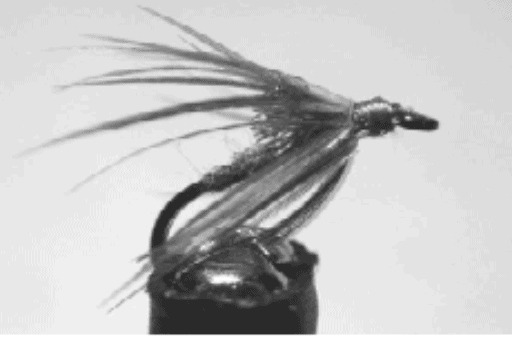
Woolly Bugger

This week’s Throw Back Thursday Fly is the Woolly Bugger.

Woolly Bugger | www.johnkreft.com

Like many flies, fly tyers are always tweaking tried and true flies to make them fish better. The Woolly Bugger is very similar to the Woolly Worm, but with a different tail of marabou. The picture above includes a bead head as well.

The fly was created by Russell Blessing of Pennsylvania around 1967. The Woolly Bugger is one of the first flies used to teach beginners the art of fly tying. It is constructed of a marabou tail, chenille body wrapped with hackle. Pick any color combination and see if it works for you.

It can be used as a wet fly or streamer. I use it mostly for lakes.

Here is another version I use in lakes. It uses dubbing rather than chenille for the body.

Claret Bugger|www.johnkreft.com

Have you used a Woolly Bugger lately?

Similar Posts

  • Purple Flies

    I don’t know why they work so well, but purple flies seem to catch the fish’s attention. What really made me a believer is the biggest rainbow trout I’ve ever seen on the Metolius River was caught on a size 16 Purple Haze. That was a few years ago. I taped it at 26 1/2″….

  • Baigent’s Brown

    This week’s Throw Back Thursday Fly is Dr. William Baigent’s Brown. I found Baigent’s Brown recently and pulled out the materials to tie one. Robert Smith, author of The North Country Fly: Yorkshire’s Soft Hackle Tradition (2015), writes his own blog entitled The Sliding Stream. I encourage you to check it out. Here is a…

  • Ray Bergman Dark Spinner

    This week’s Throw Back Thursday Fly is the Ray Bergman Dark Spinner. The Ray Bergman Dark Spinner is a wet fly listed in his book entitled Trout (1940 – fourth printing) on page 38, Plate No. 2. I usually tie just one fly for my TBT posts. I’m not trying to make them perfect, just…

  • Recent Changes

    If you haven’t checked lately, I’ve added a few fly patterns. Not a tyer? That’s OK. Check out a pattern sheet or two. Not only will you find pictures of the fly pattern, I’m trying to include pictures of the real bugs the flies imitate. Use the fly pattern pictures when shopping at your local…

2 Comments

Leave a Reply

Your email address will not be published. Required fields are marked *