I made a presentation earlier this year to a fly club about how to plan a Patagonia fly fishing trip and thought my readers on RiverKeeper Flies might be interested in the topic. I’m not an expert by any means, but have traveled to several lodges in northern, middle, and southern Patagonia over the last few years and thought I’d share our experience with you.
 Torres del Paine National Park – Chile
There are several considerations when choosing where to go in Patagonia. I’ll break down the fishing seasons, selecting a lodge, flying to Patagonia, fly fishing and other gear, flies, and other considerations. At the end you’ll find a rough cost estimate when planning a trip.
Where is Patagonia?
Patagonia is a large region shared by Argentina and Chile at the southern end of South America and can be defined roughly from latitudes 40 degrees south (in the North) and extends to 55 degrees south. It’s like traveling from San Francisco, California to Ketchikan, Alaska roughly 1,500 miles.
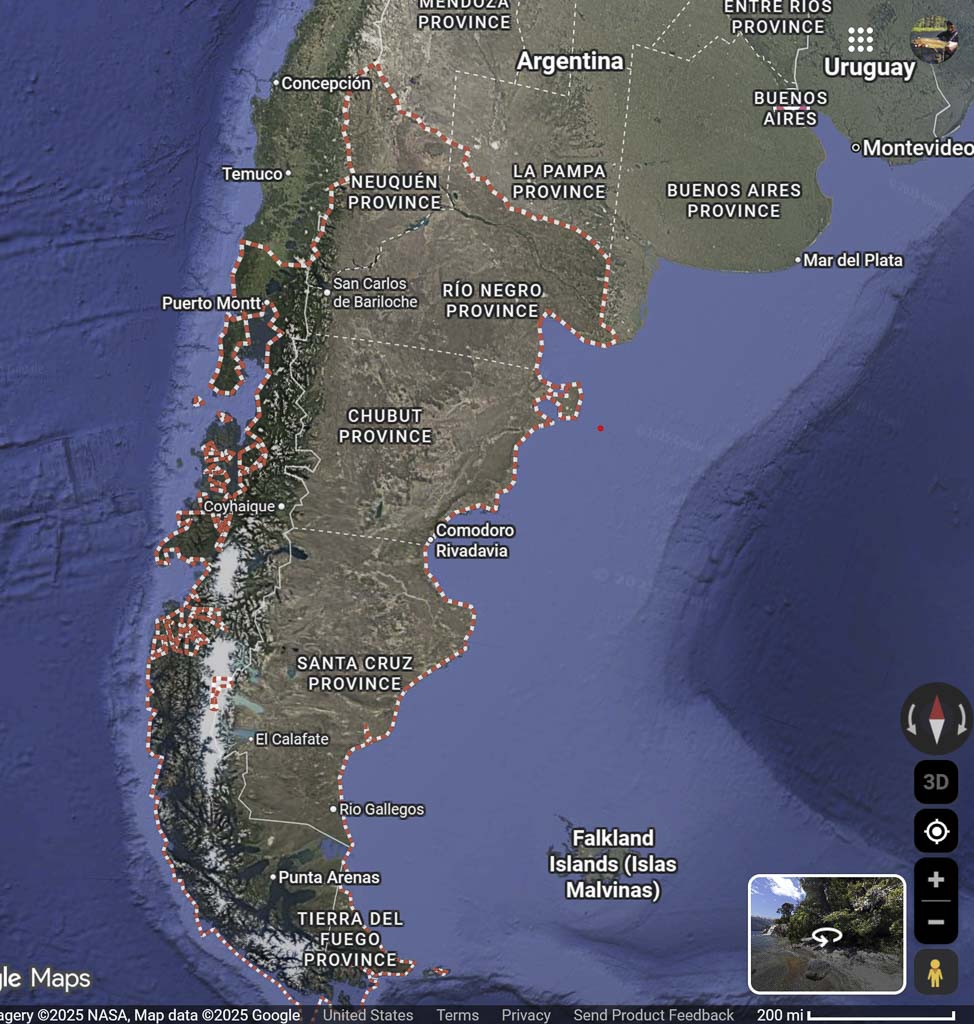
The Andes mountains serves as much of the border between the two countries and runs for roughly 5,500 miles through Venezuela, Colombia, Ecuador, Peru, Bolivia, Chile, and Argentina. Compare that the Rocky Mountains here in the US which only approximately 3,000 miles in length.
We have been fortunate to fish throughout Patagonia from northern Neuquén Province in Argentina to Ultima Esperanza Province, one of the four provinces that make up the Magallanes and Antarctica Chilena Region in the southernmost part of Chile. The lodges are marked in blue below and you can find detailed information about our trips in the Fly Fishing Road Trips page for all the lodges we’ve experienced.
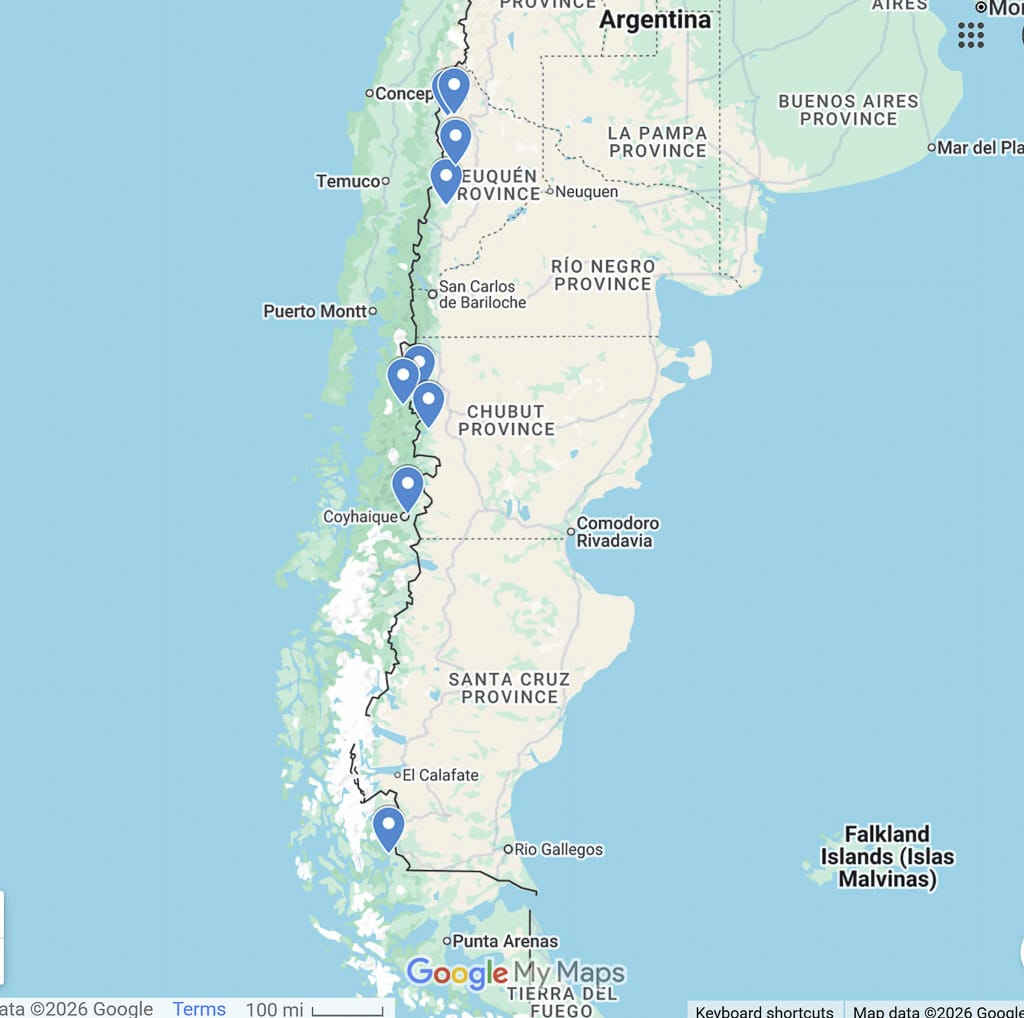
To put the size of Patagonia in perspective, the distance from the northern most location we fished in Argentina (Chochoy Mallin) to the southern tip of Chile (Rumbo Patagon) is 1,395 miles by car.
Pick Your Side — Argentina or Chile?
Both countries offer world-class fishing. Your choice depends on what kind of trip you want.
A quick AI search will explain the differences like this:
Chilean Patagonia is wet, mountainous, and fjord‑cut with temperate rainforests and many islands, while Argentine Patagonia is much drier, dominated by steppe/plateau, broad plains, and accessible continental glaciers.
- Chilean side: steep, rugged Andes dropping to the Pacific with fjords, islands, and deep glacial valleys; extensive temperate rainforest on the coastal/Andean slopes.
- Argentine side: an eastward rain‑shadow creates wide semiarid plateaus and steppe, rolling plains, and low hills; the Andes on the border are higher and form the western rim.
If this is your first trip, consider starting near the town of San Martín de los Andes in Argentina’s Lake District or the Coyhaique region in Chile. There are many lodges to choose from and all offer excellent opportunities to catch trout.
Why Fish Patagonia?
A big draw for us is it’s summer in Patagonia during our winter. Traveling and fishing in January or February will be like our July and August. I give up shoveling snow for dry fly fishing!
The people are wonderful, friendly and helpful, ensuring you have a wonderful experience at the lodge and waters you fish.



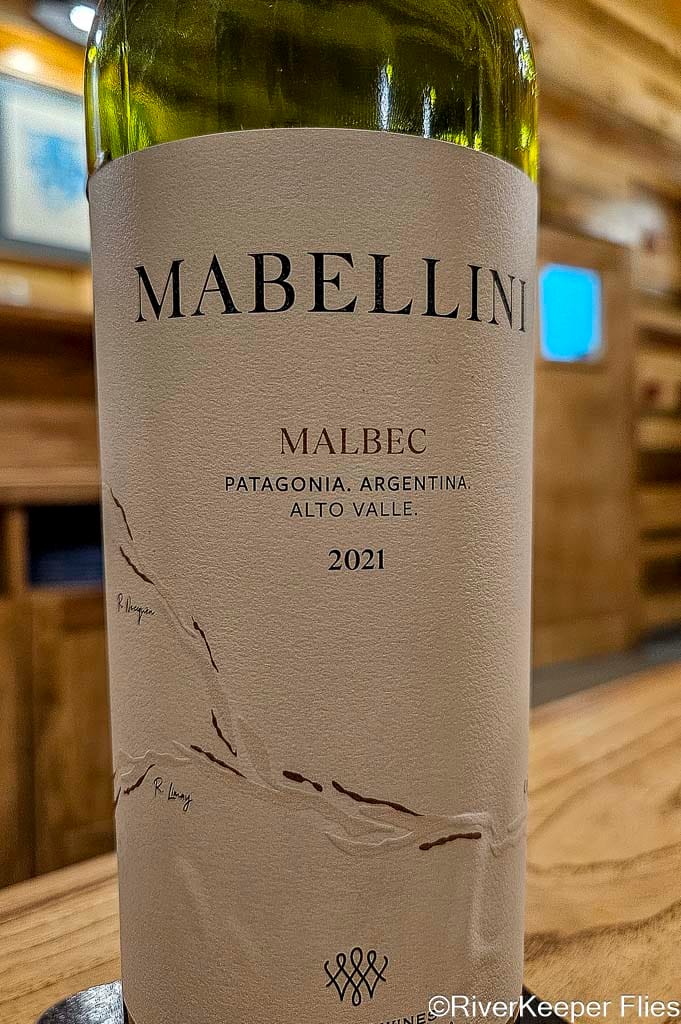
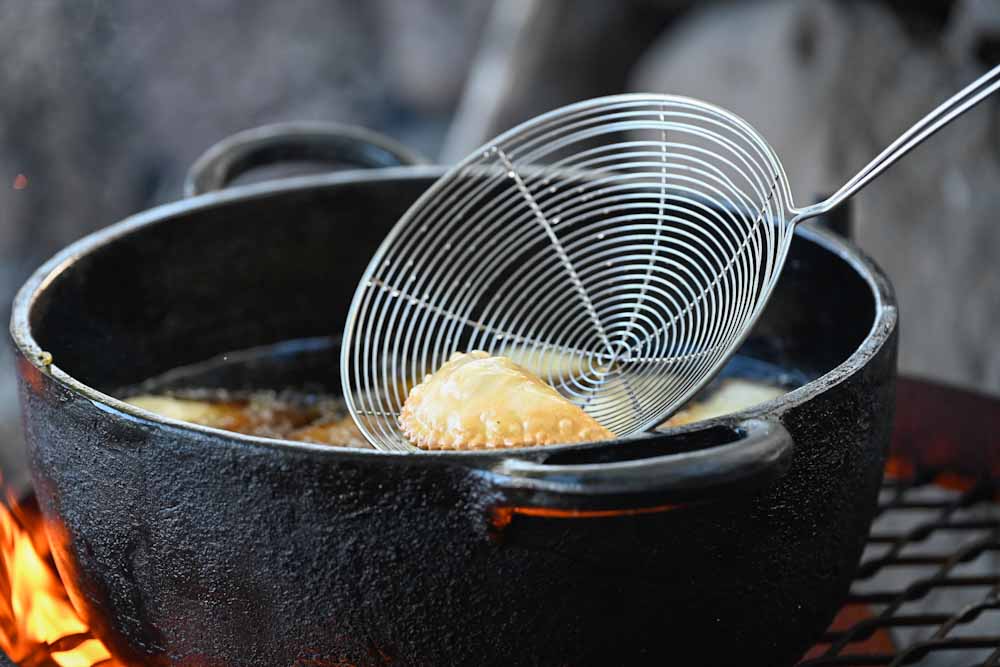
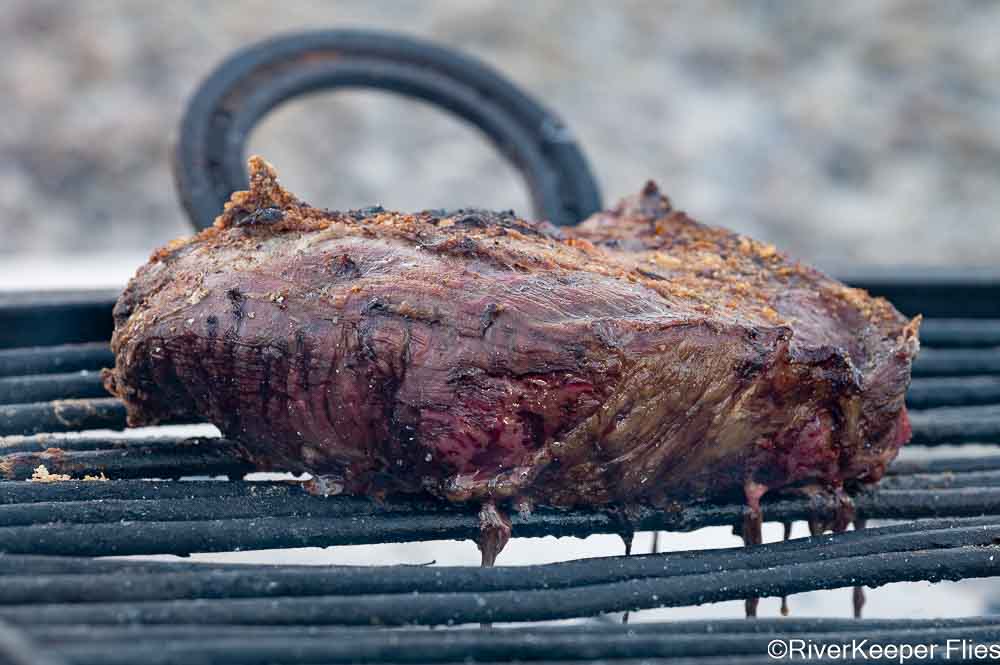
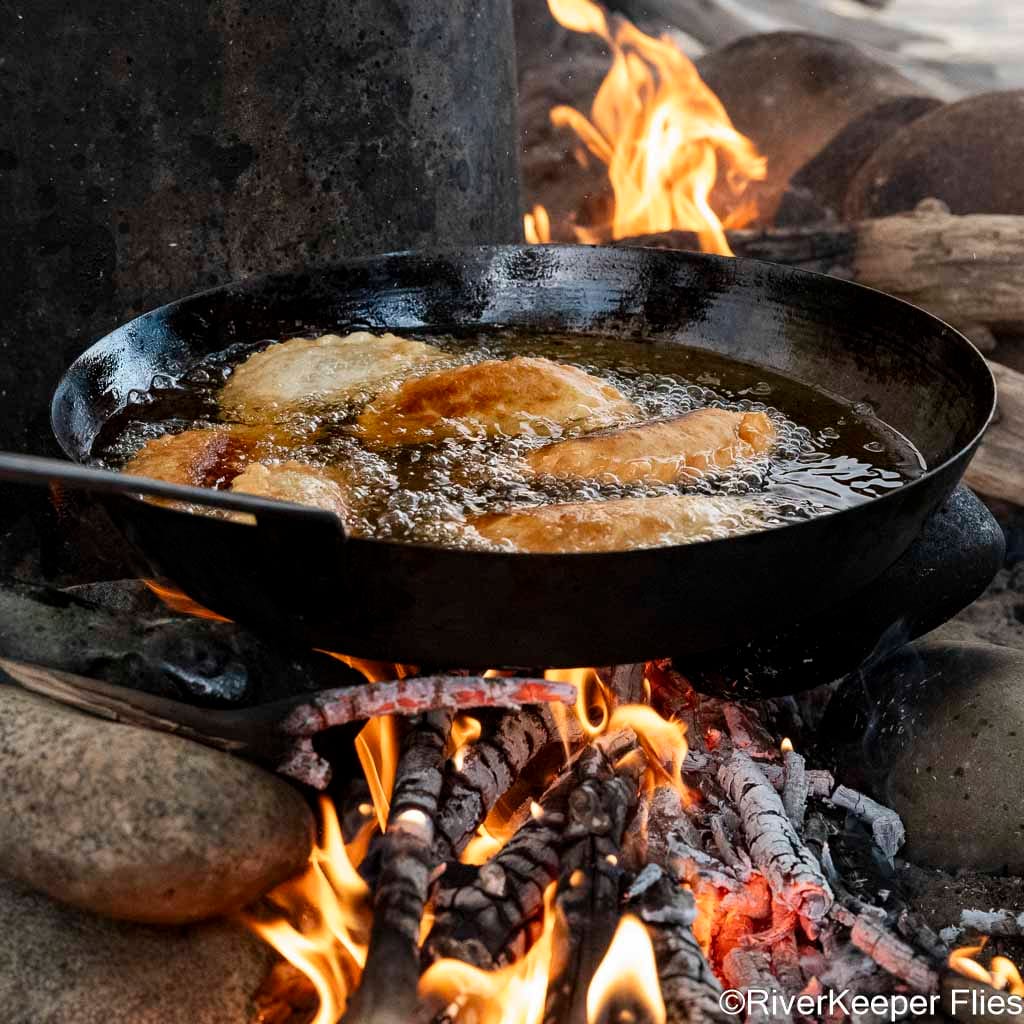
And the food is wonderful. We especially enjoy the local food prepared from simple to fine dining depending on the lodge and type of experience you’re looking for. We found out about Malbec wine on our first trip to Chile back in 2007. The empanadas are something we look forward to eating and Argentina and Chile have some of the best steak you’ll put in your mouth.


 Steak over Charcoal
Seasons
Patagonia is in the southern hemisphere, so adjust your thinking by six months. It’s springtime in their November or December and you’ll enjoy fewer anglers. Late December thru February is summer and the busiest time. Wait until March or April and fewer anglers travel in those fall months.
If you are like me and enjoy watching trout rise and eat your dry flies, December through early February is a good time to plan your trip.
But I understand early season and fall fly fishing can be excellent, so just choose a time similar to the type of fishing you enjoy here in the United States.
Prepare for Wind
I’m sure you’ve heard the wind blows in Patagonia. And depending which area you go, it can be relentless. I’ve watched YouTube videos of Jurassic Lake with huge white caps and fly fishers struggling to stand! Weather plays a big part during your weeklong trip and sometimes the weather gods just aren’t on your side.
If you haven’t cast in 20+ mph wind, start practicing now. Here are a few tips for casing in the wind.
- Tight loops
- Double haul proficiency
- Low sidearm casts
- Accuracy under pressure
Patagonia will test your fly casting mechanics and expose any weaknesses you may have quickly.
Selecting a Lodge
Both Argentina and Chile offer a wide variety of lodges for the fly fisher. Some limit the number of anglers to 4 while others accommodate 16. A lodge might be exclusively for fly fishing or offer other activities for a spouse or family member that doesn’t fish. These could include hiking, mountain biking, bird watching, tour a national park, glacier tour, visit a penguin colony, wine tasting, or whitewater rafting.
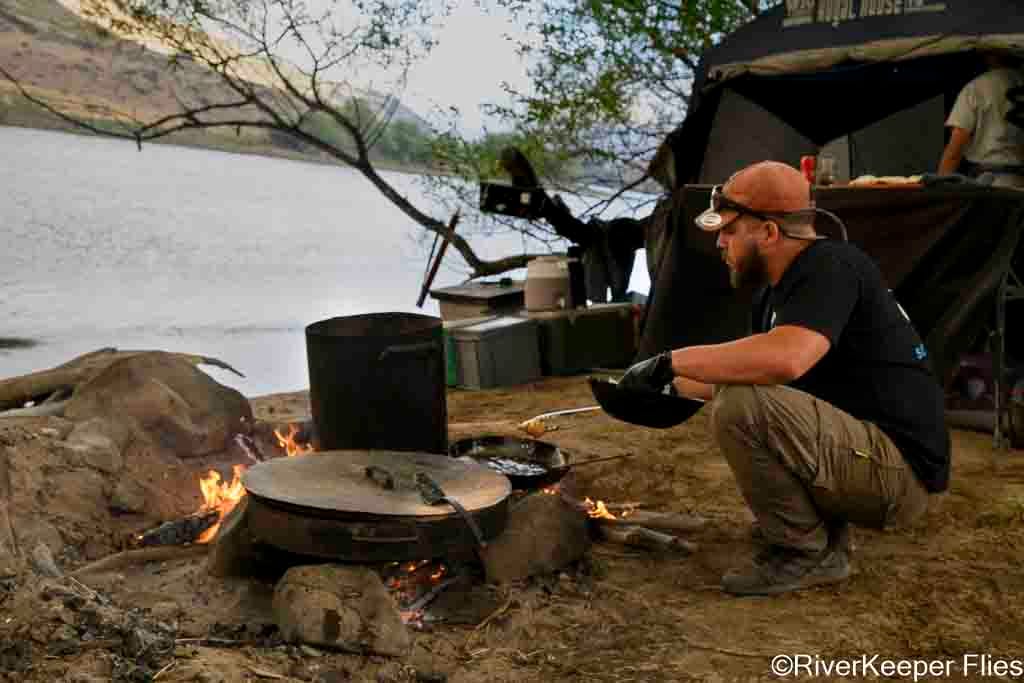
Some lodges require you to book a hotel room in town and they’ll pick you up for a guided day of fishing and return to the hotel in time for you to find a restaurant to eat. Most offer the whole experience which includes all food, lodging, and equipment. A lodge might include a drifting option of two or more days which include glamping (tents, cots, sleeping bags).
Expect to pay between $5,000 – $10,000 or more per week for each angler based on double occupancy. Prices vary depending upon the number of people at the lodge, number of staff, type of accommodations
How do you like to fish? Lodges might have a variety of water to choose from or limit to just floating a river. We don’t mind floating a day or two, but prefer to walk and wade. You might be different.
The type of fishing you prefer is another consideration. Dry fly, dry/dropper, nymphing, or streamers are the various methods of fly fishing so read the fine details about a lodge or reviews to ensure your expectations align.
Most lodges provide one guide for 2 anglers, but others offer one on one guiding. It’s something to be aware of. Argentina lodges generally use more local guides. In Chile, there are not as many local fly fishers, so you’ll see more US guides.
Access to water is something that differentiates a lodge and is a major consideration I pay attention to. The lodge might be on it’s own estancia where no other angler will be seen. Many have made arrangements with estancia owners to obtain access to specific water or beats. If you are floating the river, you might be by yourself or with other rafts floating the same section. Lake fishing might be the same with limited access or a larger lake with public boat ramps and campers.
Now that you have an idea about the type of experience you are looking for, what’s the next step? There are several options.
Our first trip to Chile was in 2007 and we used our local fly shop. Many fly shops offer hosted trips where the shop fills the lodge with their customers and someone who owns or works at the shop has free lodging.
Another option is to book direct with the lodge. We’ve done this a few times in Argentina.
A fly fishing travel agency might be your best option especially for a first-timer. They book the lodge and offer assistance with flights, transfers, and hotels. The service provided makes for a very seamless and stress-free trip.
We have used Fly Water Travel and their service has been excellent. They’ve help to align different lodges with the type of experience we’re looking for. In addition, they offer assistance with flights, transfers, and hotels as I mentioned above. In fact, we are using them for part of our upcoming trip in 2027.
A couple other options for travel agencies I’ve heard good reviews are Yellowdog Fly Fishing and Orvis.
Lastly, plan on booking a good nine months in advance to ensure a spot at the lodge of your choice.
Flying to Patagonia
It does take awhile for us to travel from Oregon to Patagonia. Here is one example of our travel route. While you can arrive and depart major airports in both countries the same day, we recommend spending the night in Buenos Aires, Argentina or Santiago, Chile before taking a regional flight to your final destination.
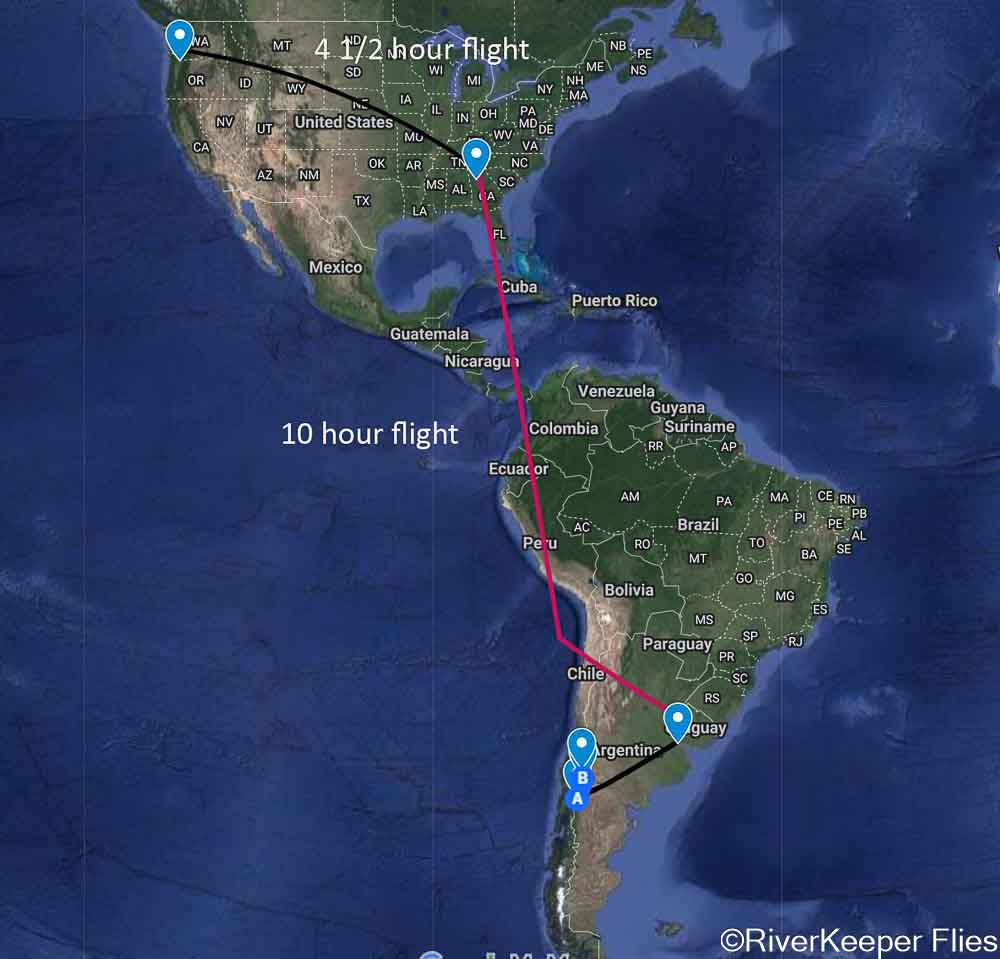
Regional flights within Argentina are through Aerolineas Argentina. Latam is the airline for regional flights in Chile.
Major US hubs are Los Angles, Houston, Atlanta, JFK, and Miami. Pick your preferred carrier and find a flight. Prices can range from $1,450 (economy) to over $8,000 (first class). Add don’t forget the cost of other flights from your home to Atlanta (or whichever hub you choose).
Fly fishing and other gear
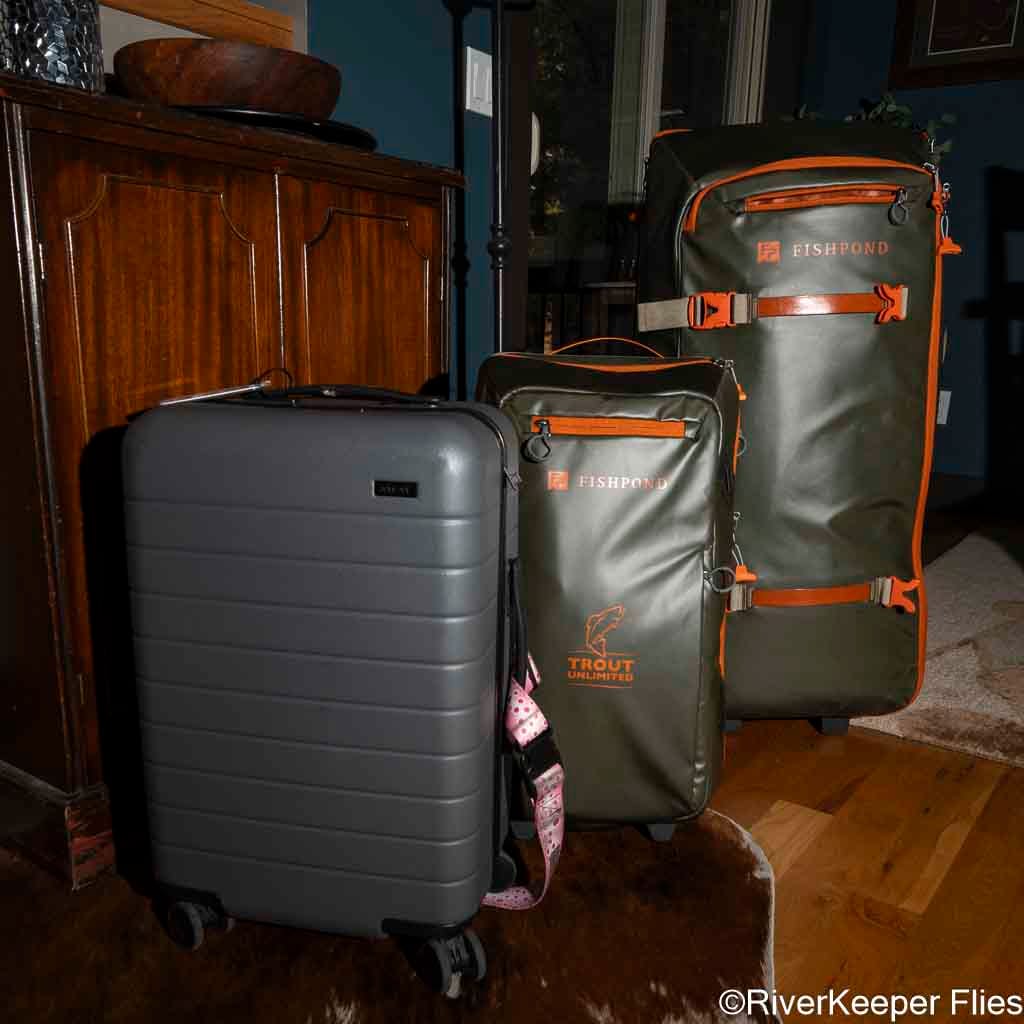
With extended travel plans, it’s always a challenge to make sure you have everything needed for a fly fishing adventure while managing the weight restrictions on airlines. We’ve limited our combined luggage to the large Fishpond roller bag, a smaller Fishpond bag we plan to check, and a carry-on besides our small personal backpacks. I wrote a post earlier this year about Packing for a 2026 Patagonia Fly Fishing.
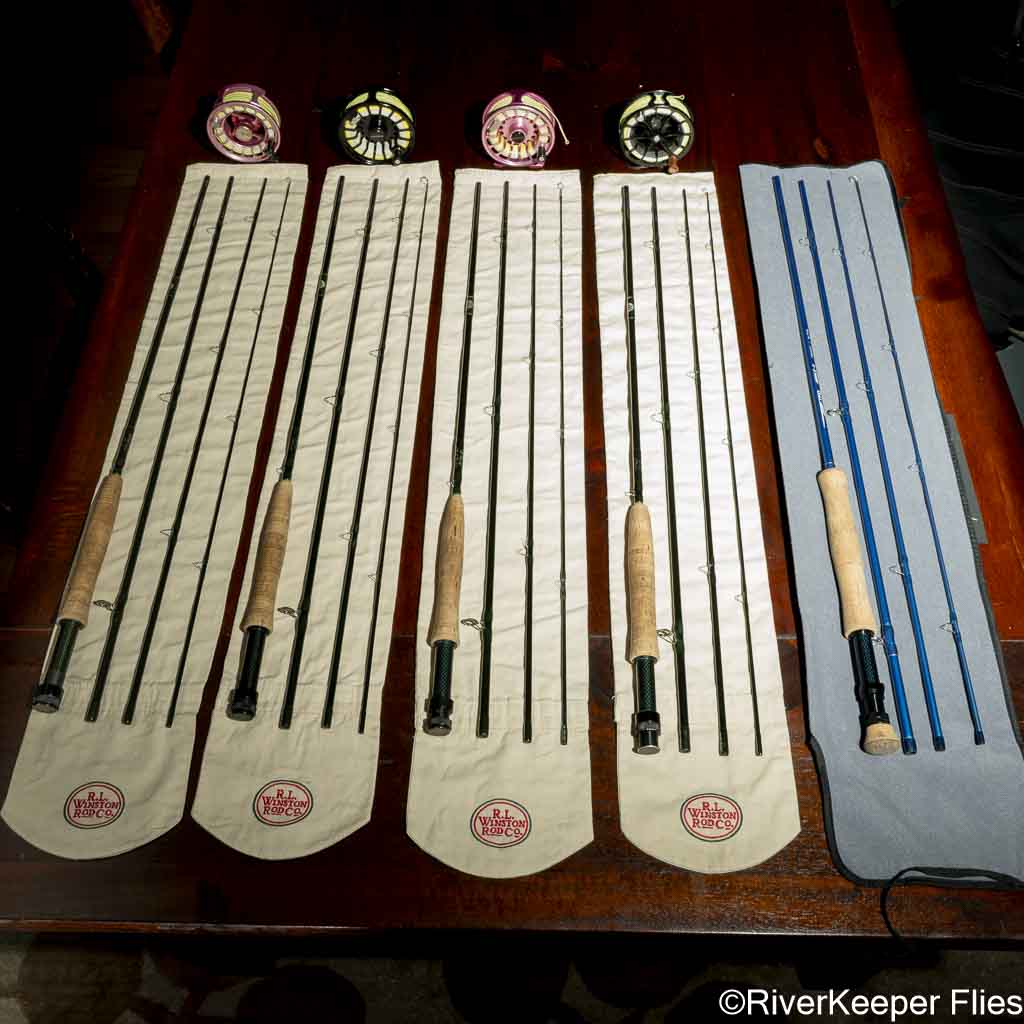
We choose to take 5 and 6 weight fly rods to fish dry flies or dry/dropper rigs. An occasional streamer might end up on my 6 weight rod, but if you intend to fly more streamers, consider a 7 weight rod as well. Decide on which weight rod you plan to fish the most and then bring a second rod of the same weight as backup. Some lodges or guides may have loaners, but not all of them and they may not be the type of rod you enjoy fishing. A couple of years ago, I broke one of our rods and we were able to replace it from a fly shop we found during some layover days in Puerto Varas, Chile.
The large Fishpond roller bag shown above works great for holding gear for two people. It’s what we took for our 2026 trip and served us well.
- Winston BiiX 9′ 6 wt with Galvan Torque T-6 reel
- Winston BiiX 9′ 6wt Nautilus X fly reel
- Winston BiiX 9′ 5 wt with Galvan Torque T-5 reel
- Winston BiiX 9′ 5 wt with Ross Evolution LTX reel
- TFO Axiom II-X 9′ 6 wt
- Korker boots and extra soles
- Simms G3 waders
- Wading belts
- Wading socks and wet wading socks
- Fishing hats
- Buff or sun gaiter
- Sun gloves and cold weather gloves
- Trout leaders 9′ – 2x, 3x, 4X (6 of each size)
- Standard tippet material 0X (1), 1X (2), 2x (3), 3x (3), 4x (1)
- Frog’s Fanny desiccant, Loon Dust, Loon Fly Dip
- Forceps or hemostats
- Nippers
- Pack (1)
- 3 Fly boxes
- Puffer coats and vests
- Rain coats
- Warm base layer long sleeve shirt
- Extra pair of shoes for each of us
The other essential gear to take include:
- Plane ticket, itinerary, lodge address, phone numbers
- Valid passport and photo identification
- Wallets
- Photocopies of passports, itinerary & medical information inside luggage
- Cash
- Headphones
- Personal toiletries kit
- Personal or prescription medications
- Power adaptor/converter & USB cords
- Polarized sunglasses & lens cloth/glasses wipes
- Mini flashlight / headlamp
- Reusable water bottle
Flies
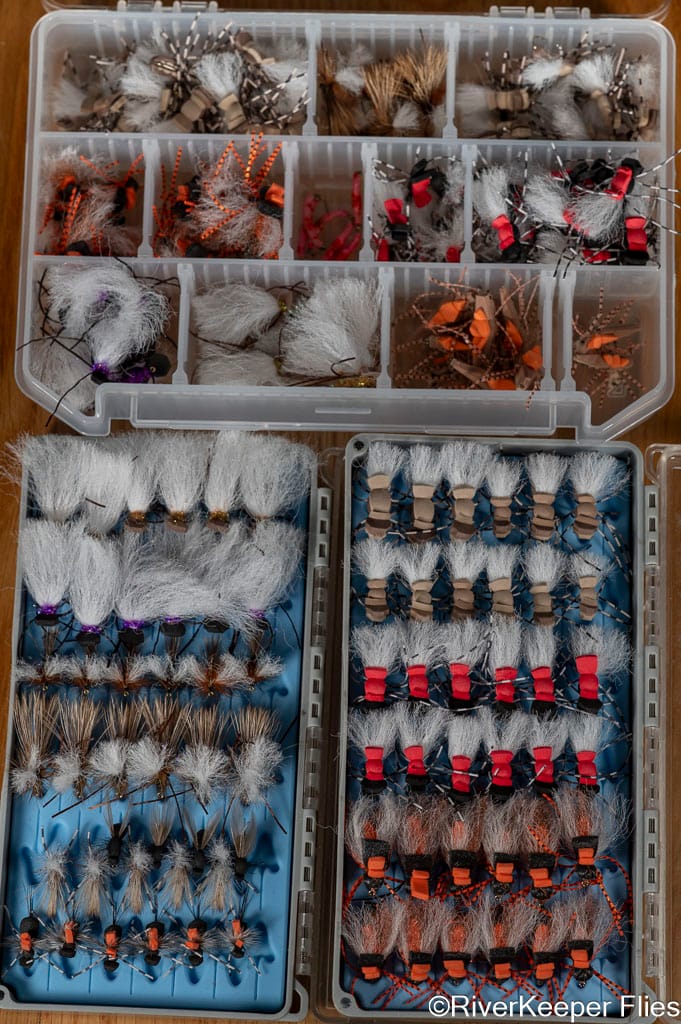
This is a tricky subject for me. Some lodges and guides supply all your flies while others offer a list of flies to bring. The problem is the list is all inclusive for their seasons and you’ll end up taking a lot of flies you’ll never use. Some guides only use their flies, ones they have confidence in.
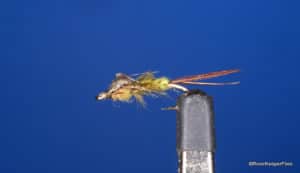
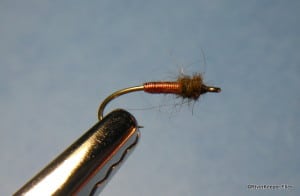
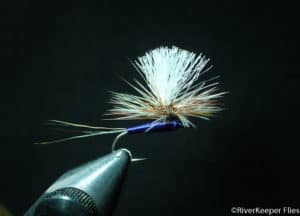
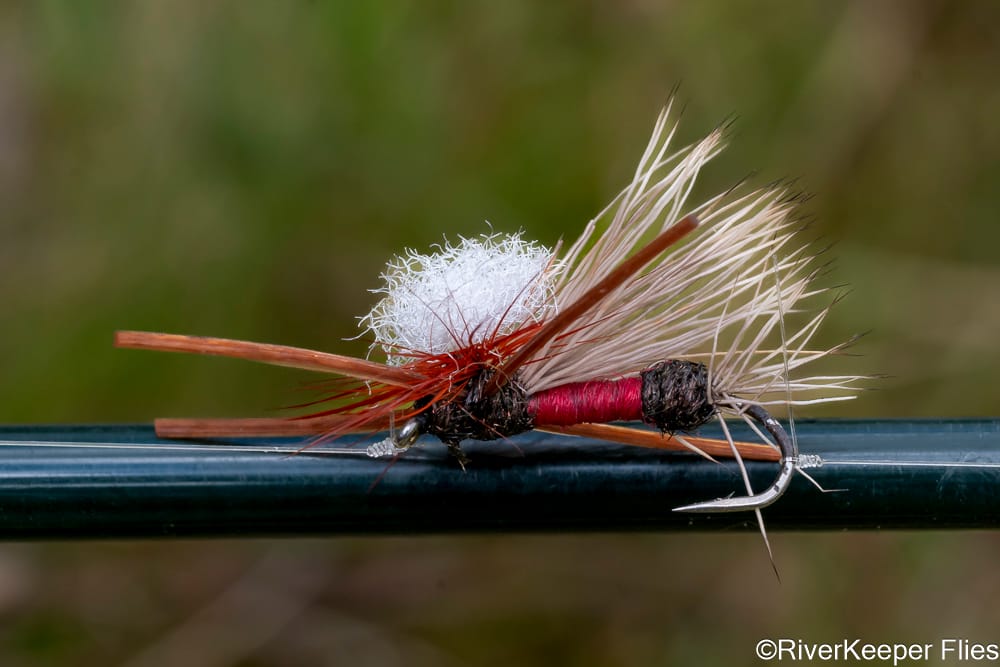
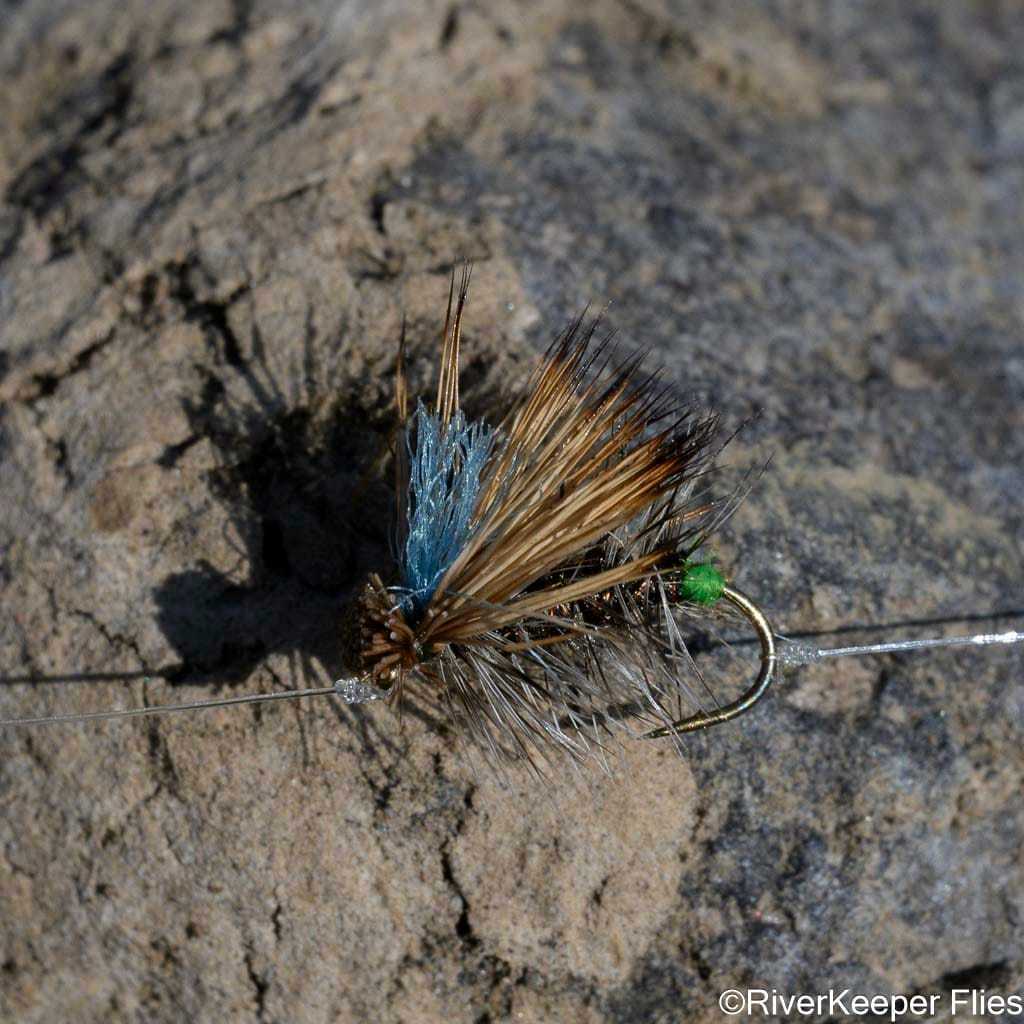
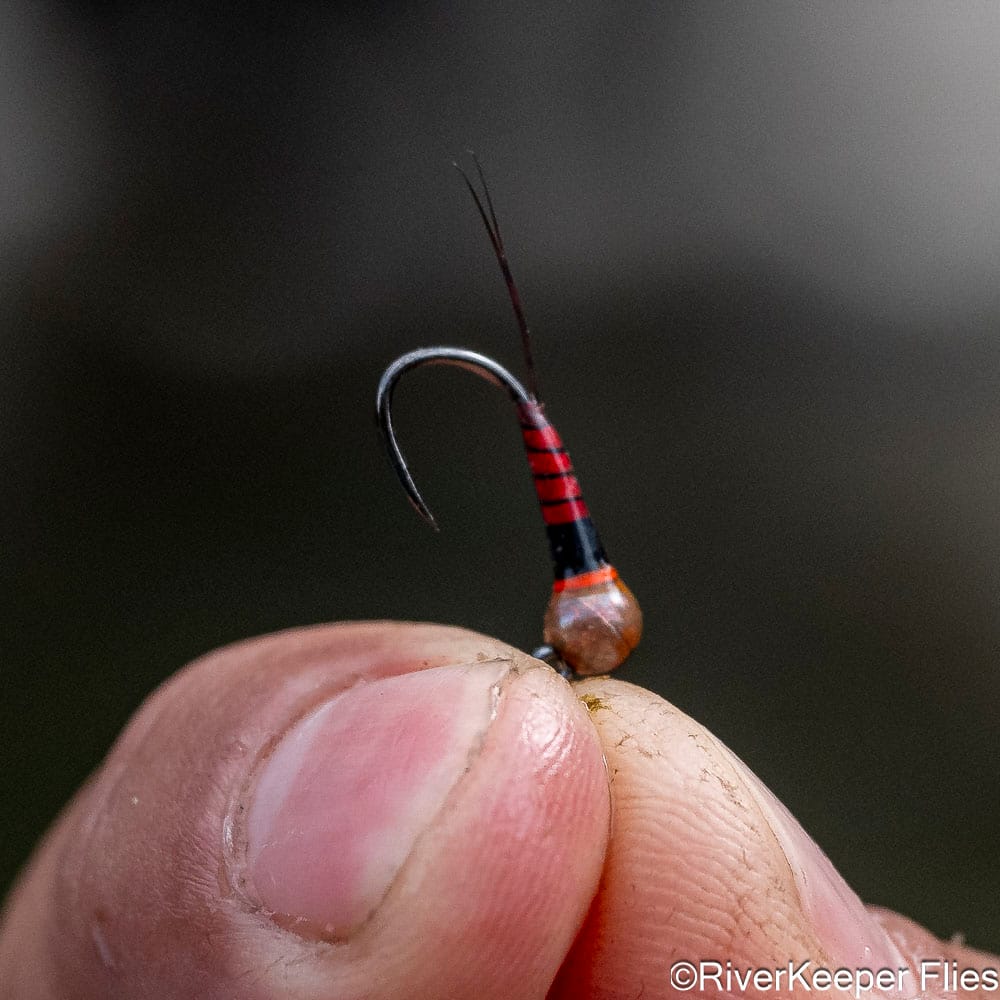
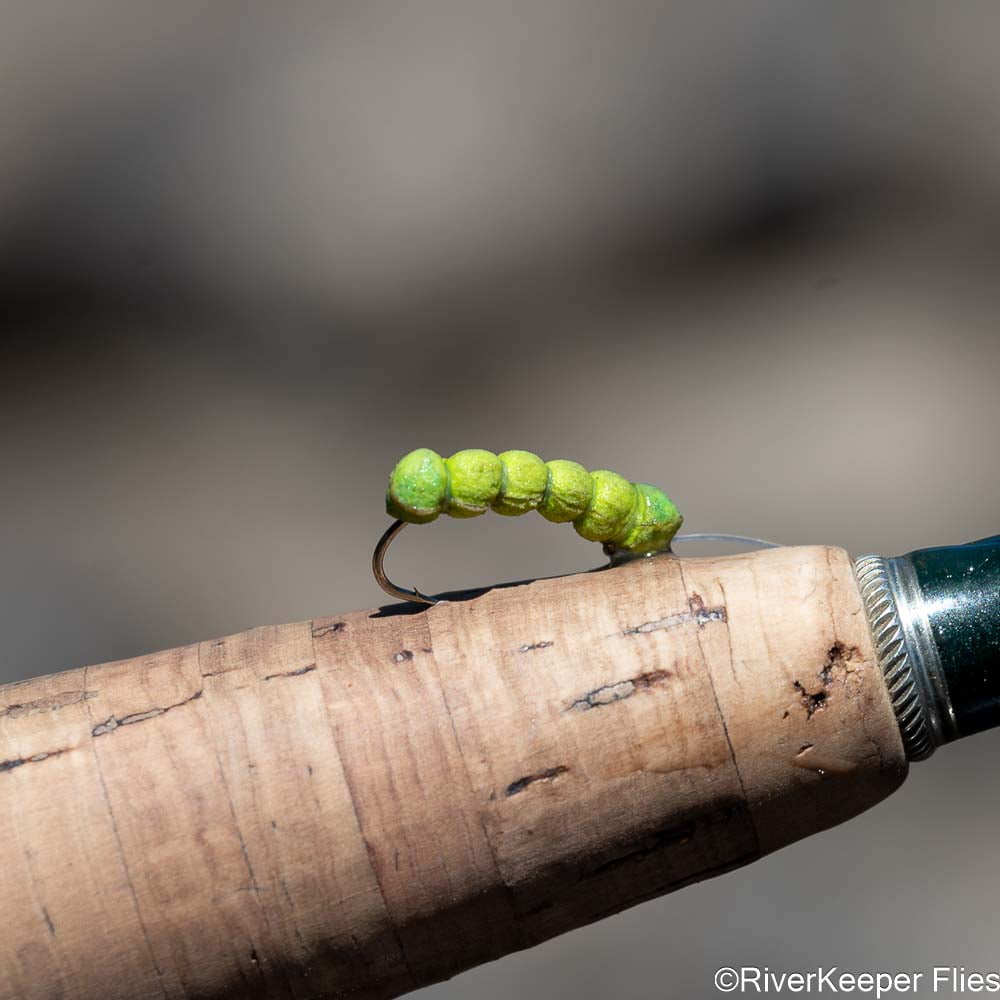
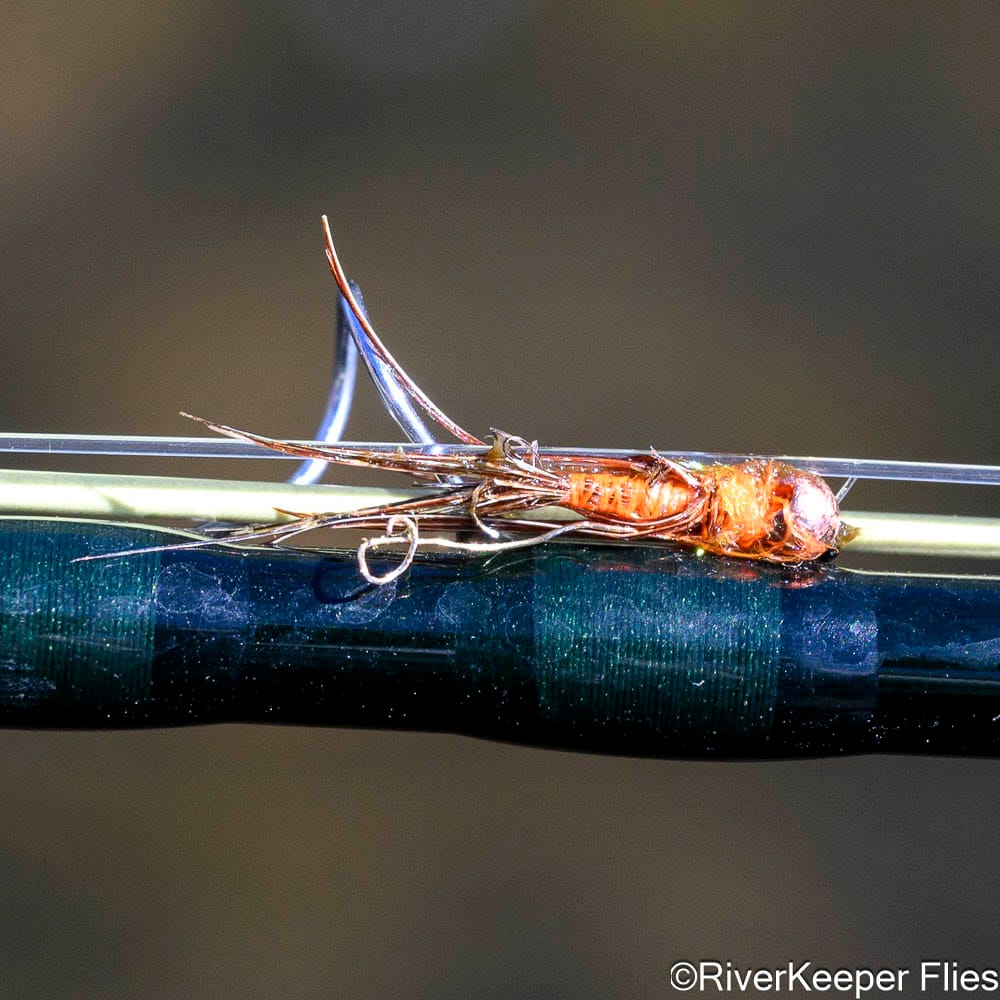
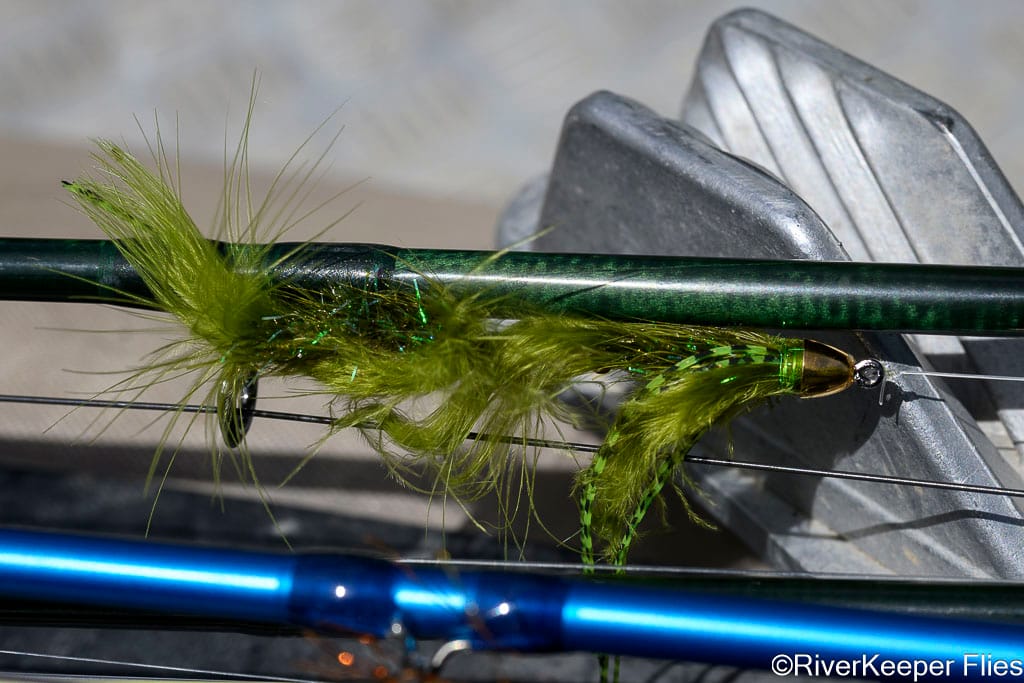
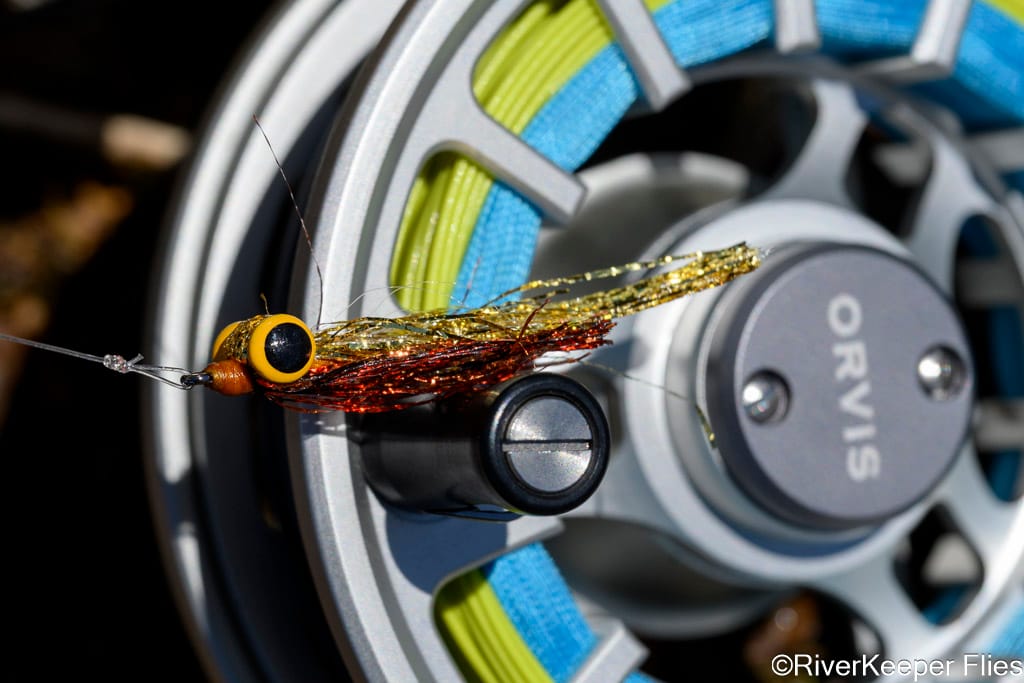
These are the flies we’ve used with success on our trips.

 Red and Black Perdigon – Rio Codihue
- Frenchie Emerger – Rio Codihue

Other considerations
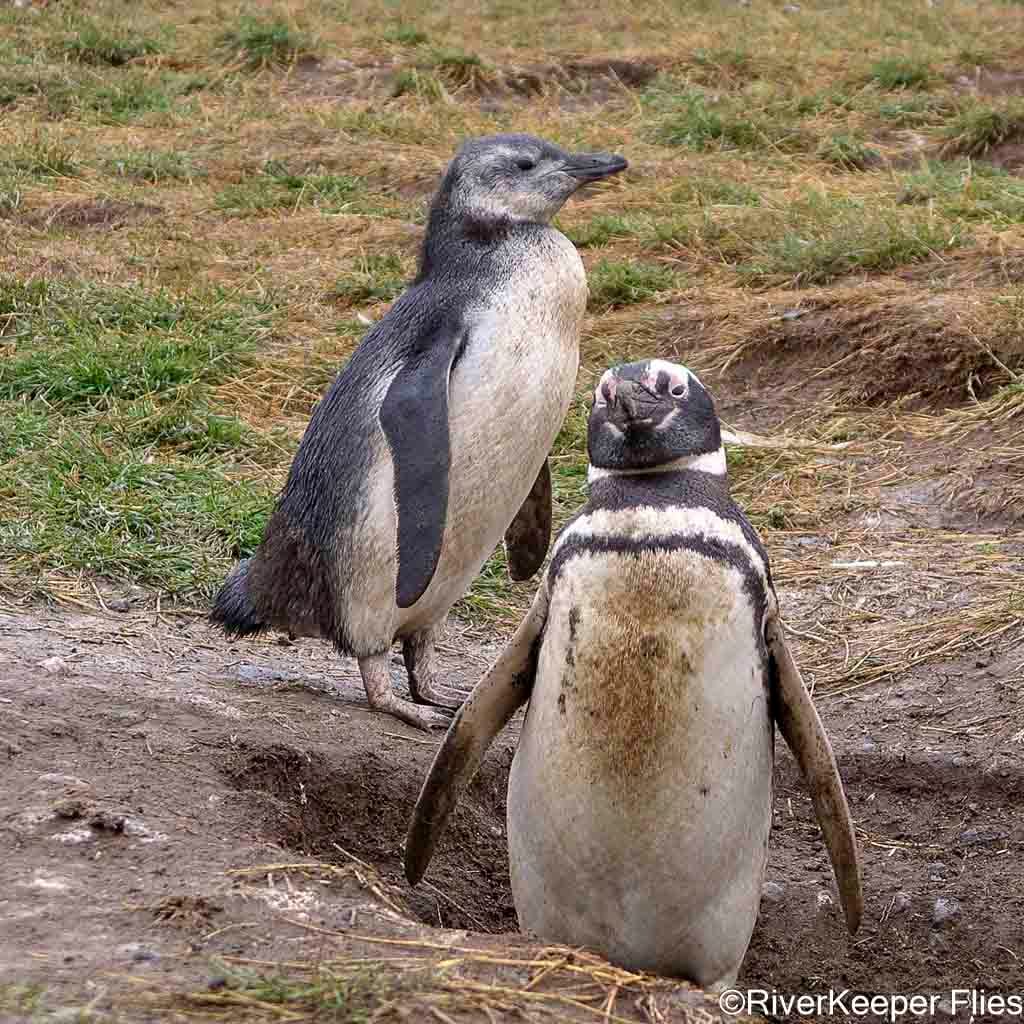
For some, a trip to Patagonia may be a trip of a lifetime, so consider spending a little more time to enjoy the sights, wildlife, food, and wine. On our first trip in 2007, we spent a couple of extra days in Santiago, Chile and took a sightseeing trip to the coast town of Valparaiso and stopped for wine tasting along the way. We took a boat to visit a glacier and then flew to Puenta Arenas and found penguins. Memories are important, so while you’re in South America, spend your time wisely.

Other considerations
Border crossings – if you choose to travel between countries by vehicle or boat, you will have passport control in each one. Just plan on extra time for a smooth trip.
Gratuities – recommended tips range from 15 to 20% and I encourage you to use the higher range. Staff at the lodges we’ve visited work long hard hours to ensure you have a wonderful experience.
Transfers – this applies to Argentina because you’ll arrive at the international airport EZE and most regional flights in-country depart from AEP. Plan on an hour to travel the 20 miles. Your lodge can arrange transfers and can cost between $150 and $200. We plan to stay one night in Buenos Aires at a hotel and the transfer is roughly the same price. You’ll need another transfer from the hotel to AEP at a cost of a little over $100. Taxis are another option, but remember they are small cars and your luggage may not fit in them.
Laundry – add a day or two on either end of your weeklong trip and you’ll need to plan on laundry services. I’ve heard some who wash in the shower or sink, but most lodges offer laundry. Plan on $20 to $50.
Fishing license – most lodges purchase this for you, but be sure to check. They may add it to your total cost.
Windshield time – depending which lodge you choose, be prepared to drive 1 to 2 hours each direction to the water. In addition, lodges will pick you up at the nearest airport, but you could spend 3 – 4 hours traveling to the lodge.
Currency – Argentina and Chile have their own pesos and aren’t interchangeable. Argentina generally accepts US dollars. Both countries accept credit cards in most areas and we now use that option the most. US cash is preferred for guide and staff tips.
Trip insurance – trip insurance is a must. We use Seven Corners, but I’ve heard good things about Global Rescue as well. I hope you don’t need it, but you’ll be happy to have it in case of emergency.
Total cost…example
Here is a rough budget for a trip to Patagonia.
Airfare
Lodge
Tips
Hotel (extra night)
Transfers
Total
$2,500
$6,000
$1,200
$250
$200 + $200
$10,350
Here is a brief look at the lodges we’ve been fortunate to experience. You’ll find a complete list of the waters we’ve fished by country on my Fly Fishing Road Trips page.
SET Fly Fishing – Chochoy Mallin (January 2023 and 2024)
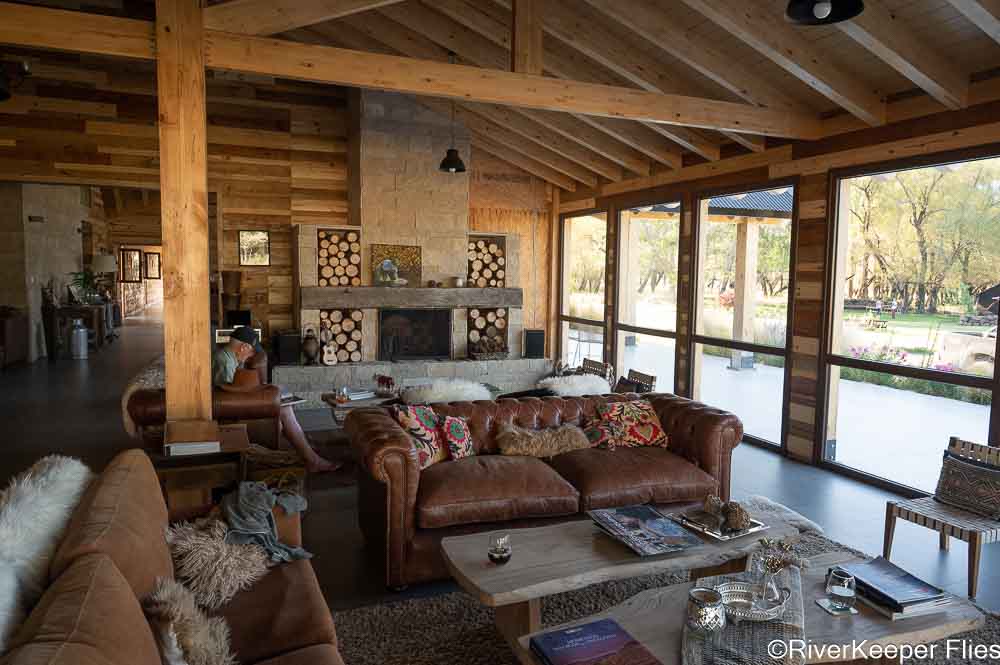
Estancia Chochoy Mallin was the first lodge in Argentina we stayed at and also our first experience flying to and from the river each day via helicopter. SET Fly Fishing has since discontinued that program, but you can still fish the area around the estancia by truck.

Here are examples of the water we fished…


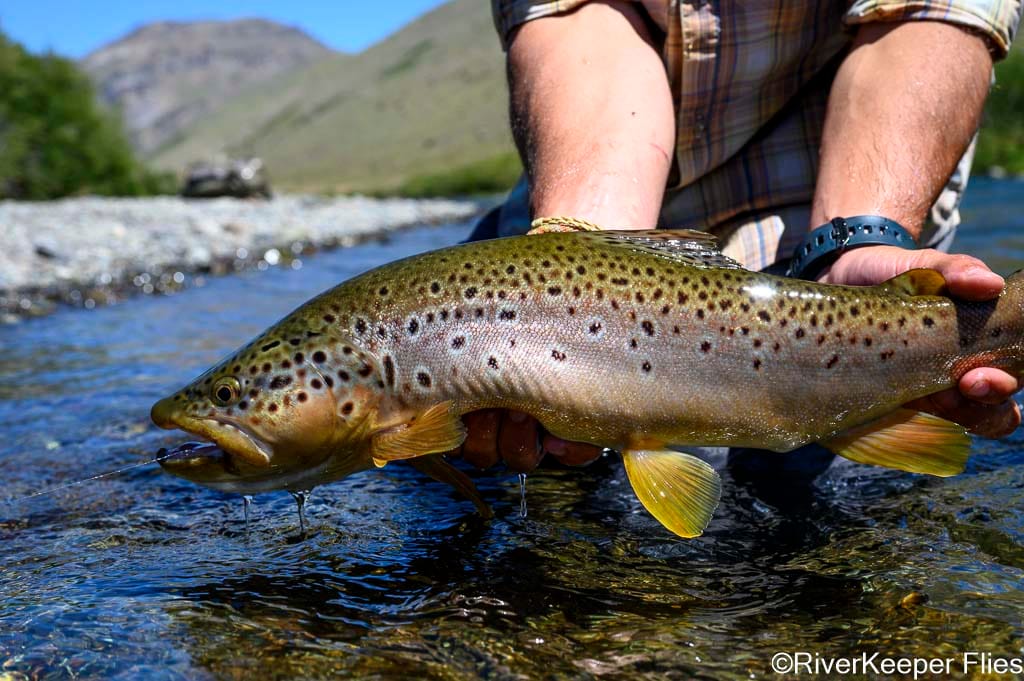
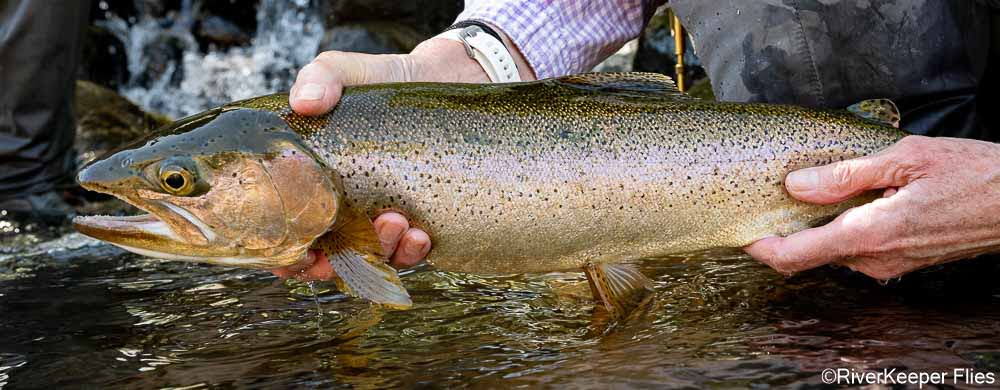
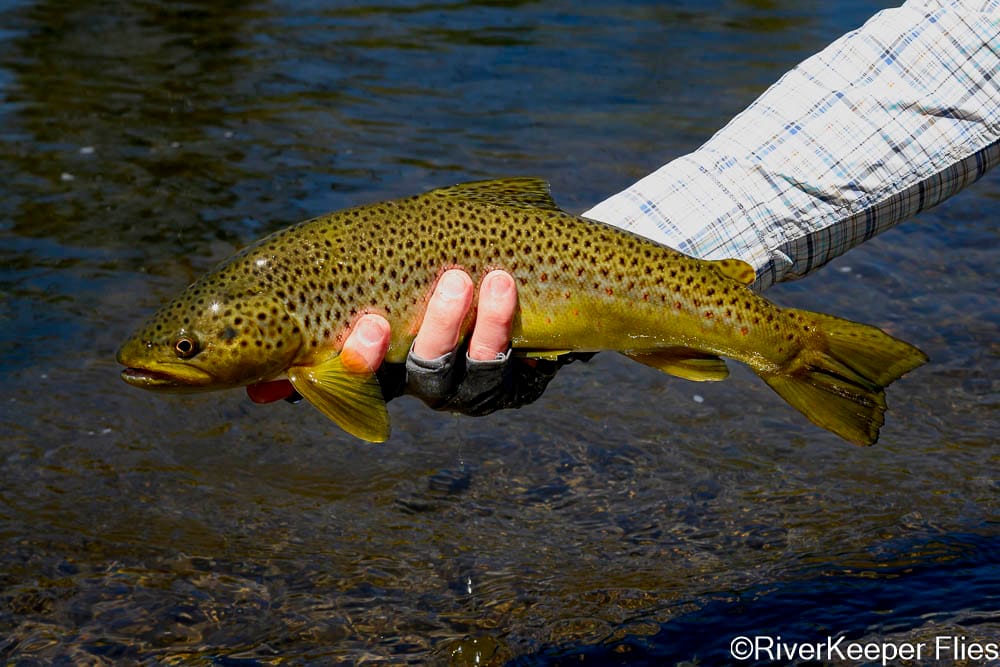
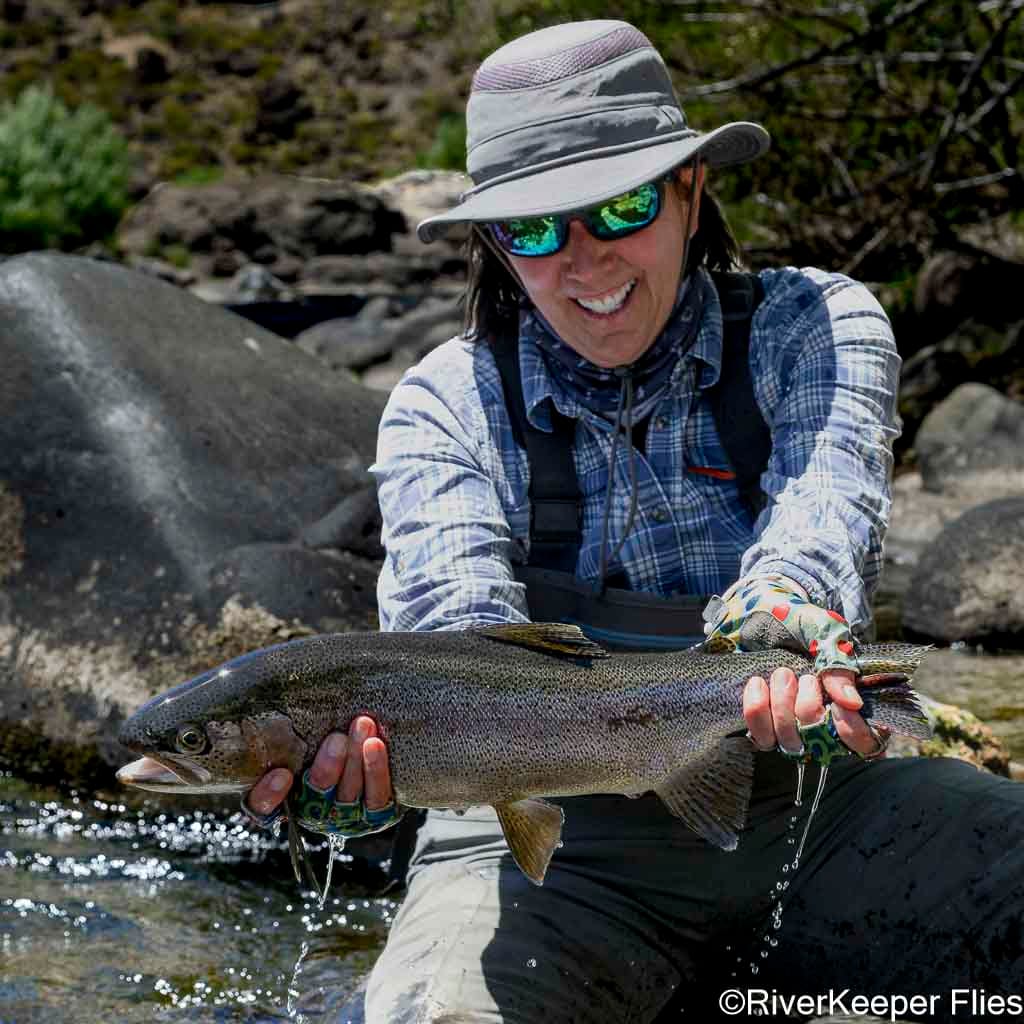
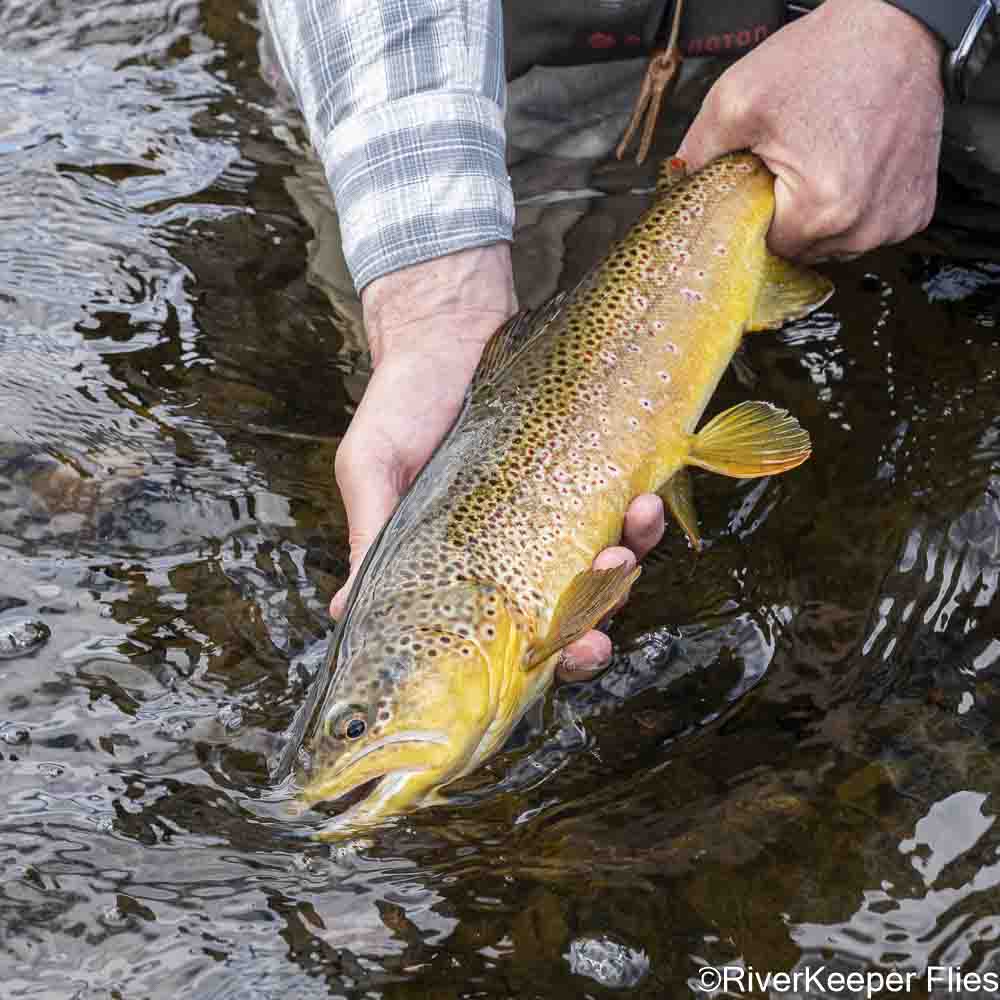
And the type of fish available.


SET Fly Fishing – Casa de Campo (January 2025)
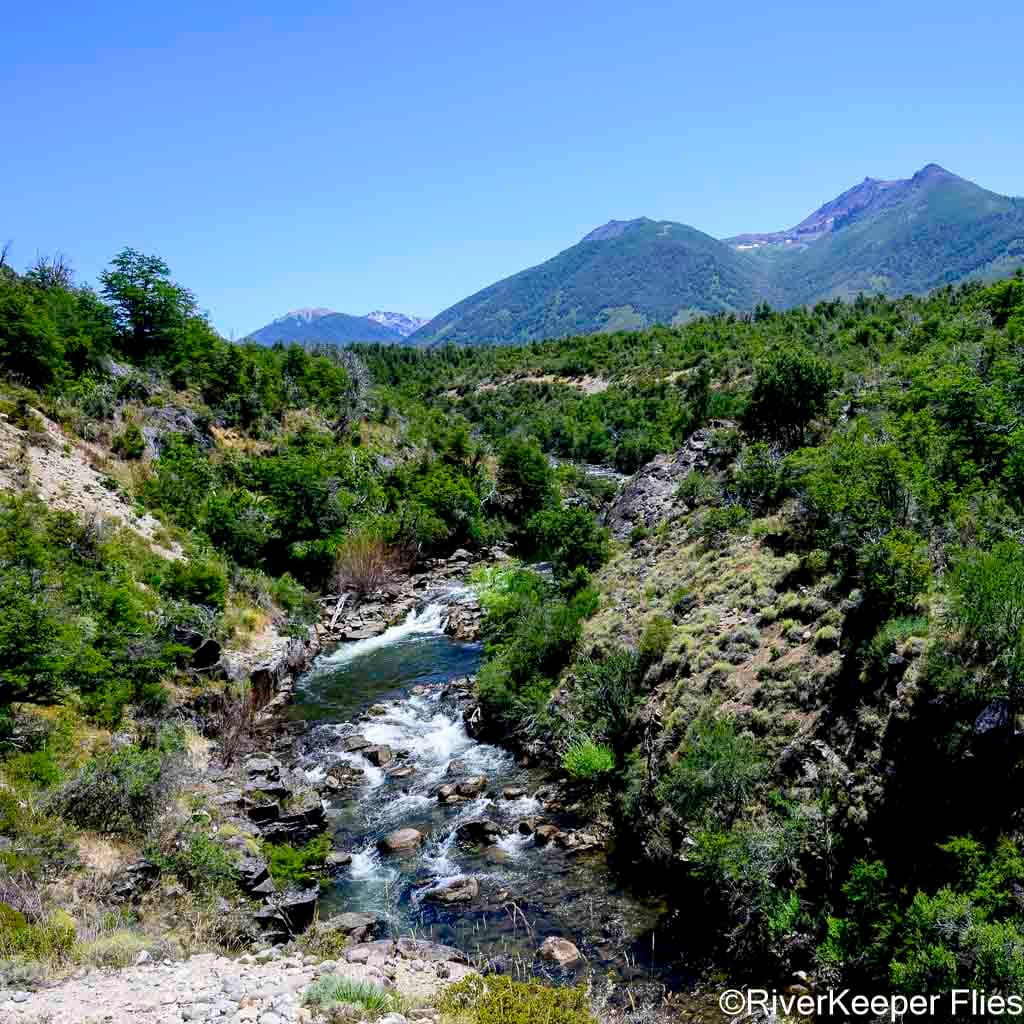
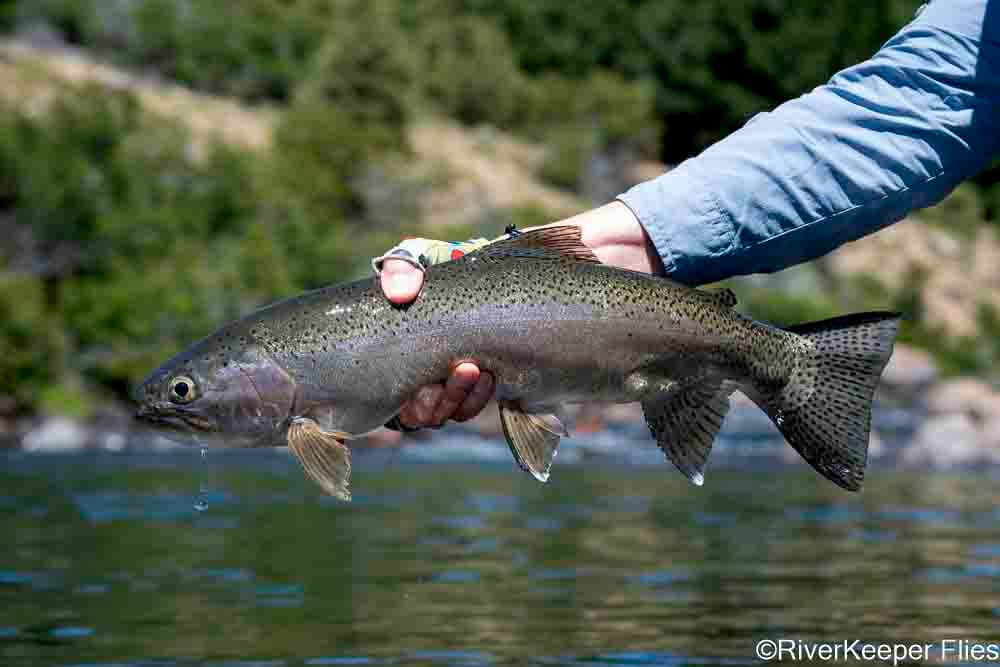
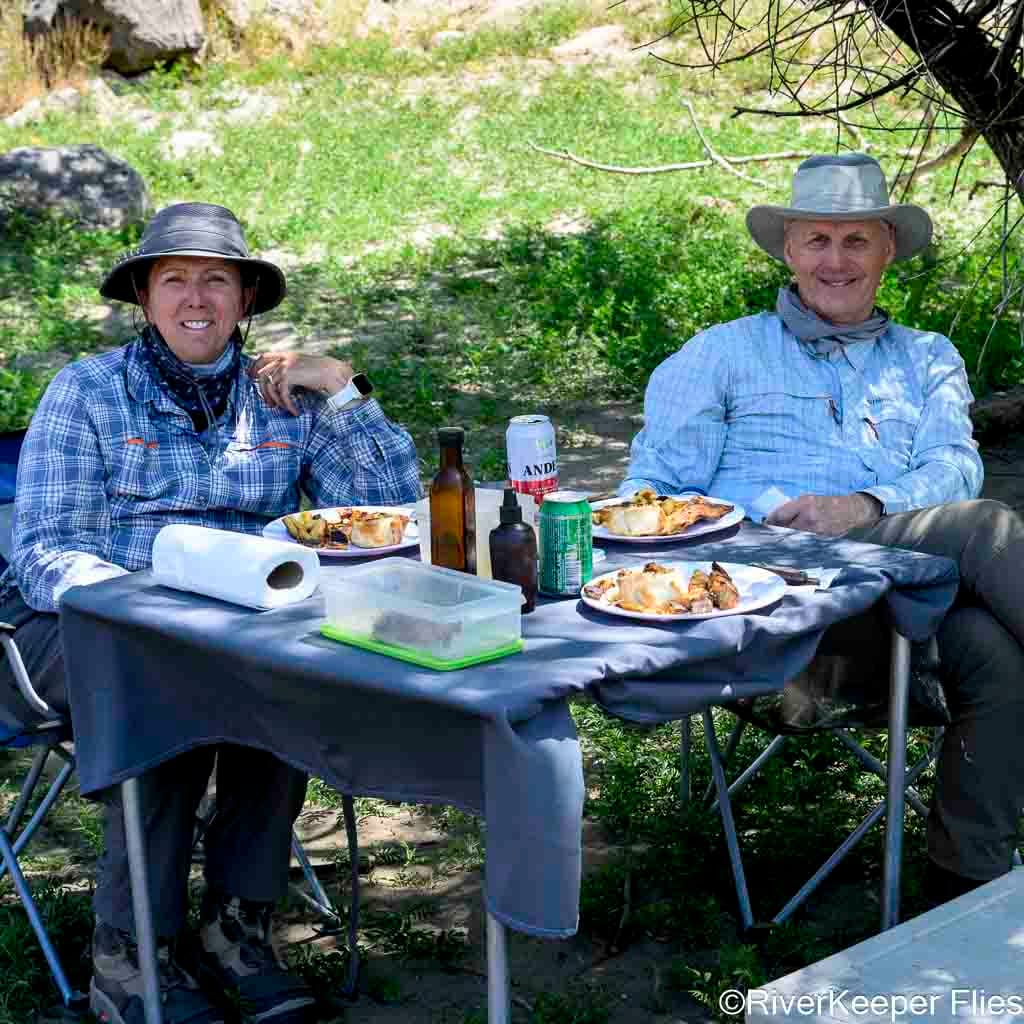
Sight fishing at its best. They offer several waters for walk/wade and an overnight floating option on the Rio Alumine.
 Casa de Campo Lodge
- Casa de Campo Cabaña




Floating the Rio Alumine from Casa de Campo



SET Fly Fishing – Rakin Lodge (February 2025 and January 2026)
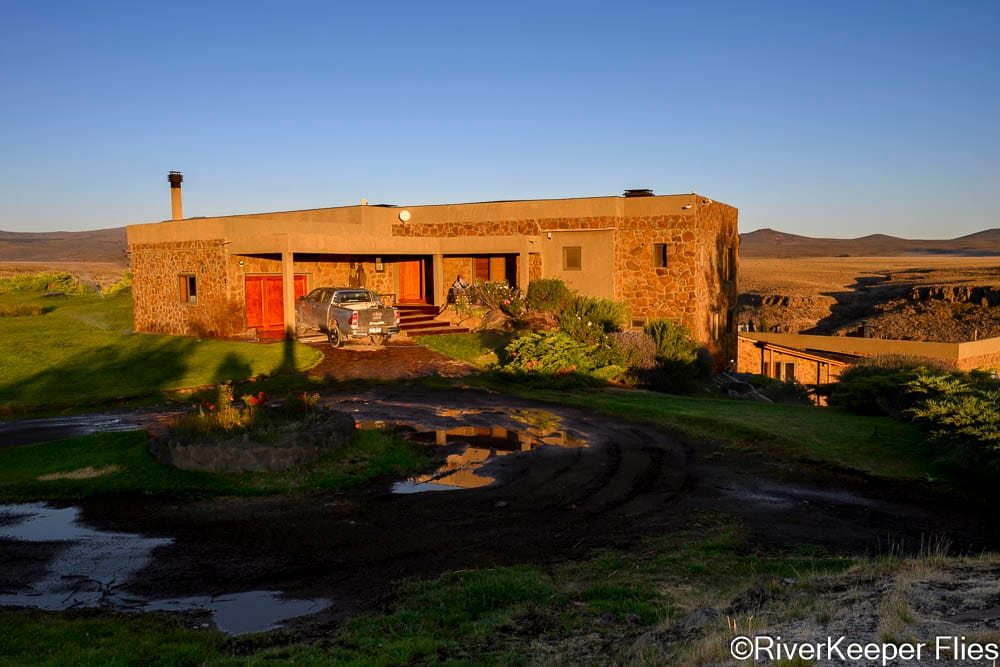
One of SET Fly Fishing‘s newer lodge. The setting and fishing are wonderful.
- Rio Codihue – Arg

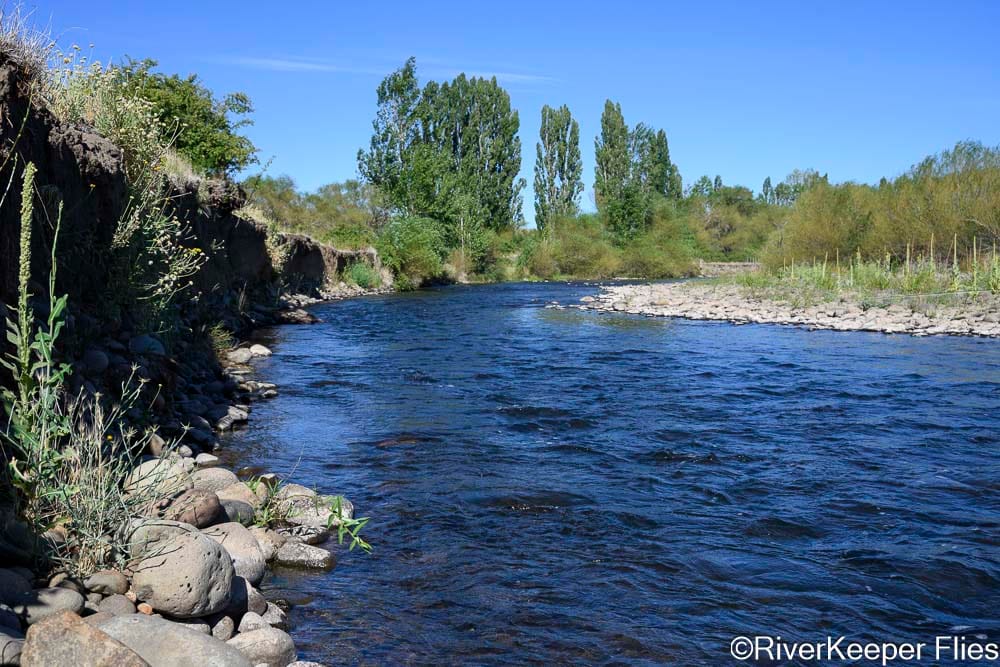
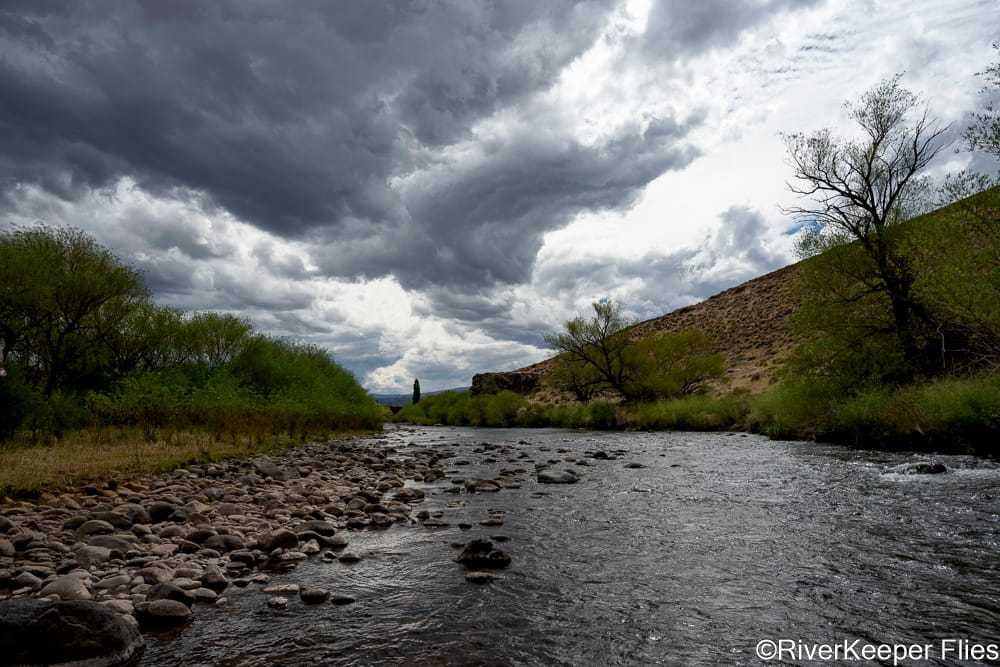
- Rio C
- Rio Co




SET Fly Fishing – Camping / Trocoman House (Jan/Feb 2023, Jan 2024, Jan 2025, Jan 2026)
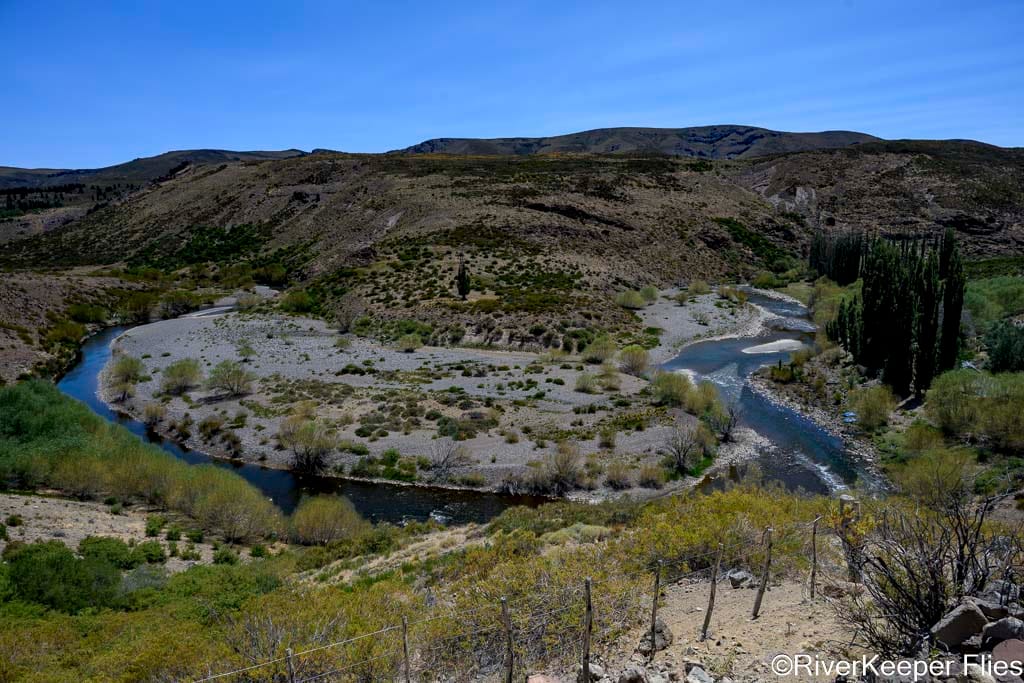
One of SET Fly Fishing lodges, it’s a remote option when fishing at Rakin Lodge, the fishing can be spectacular during the Willow Worm hatch.
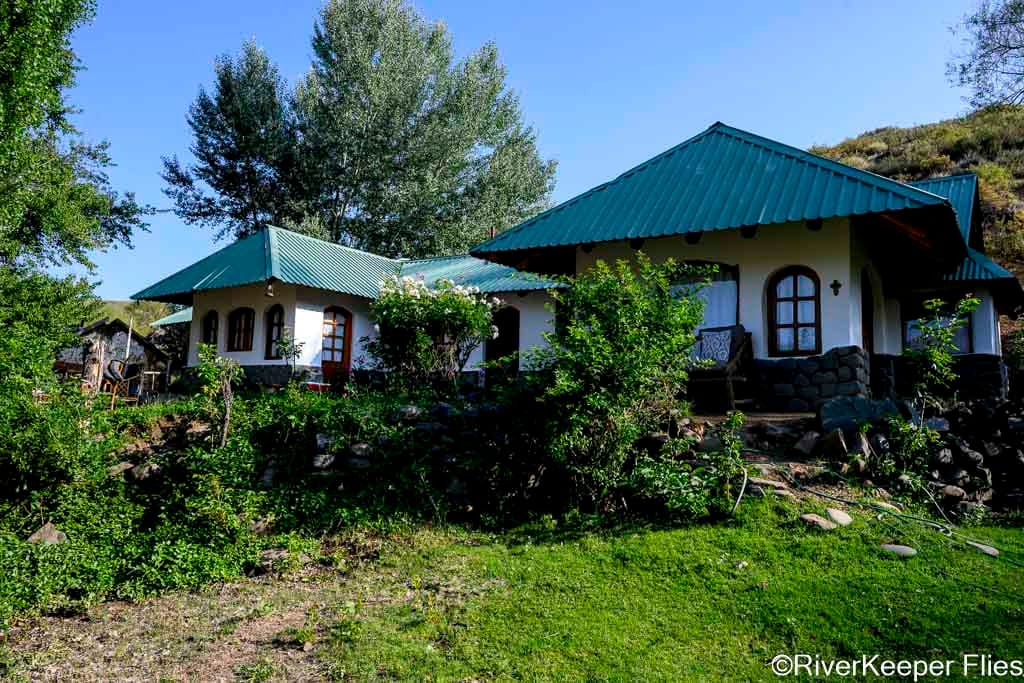


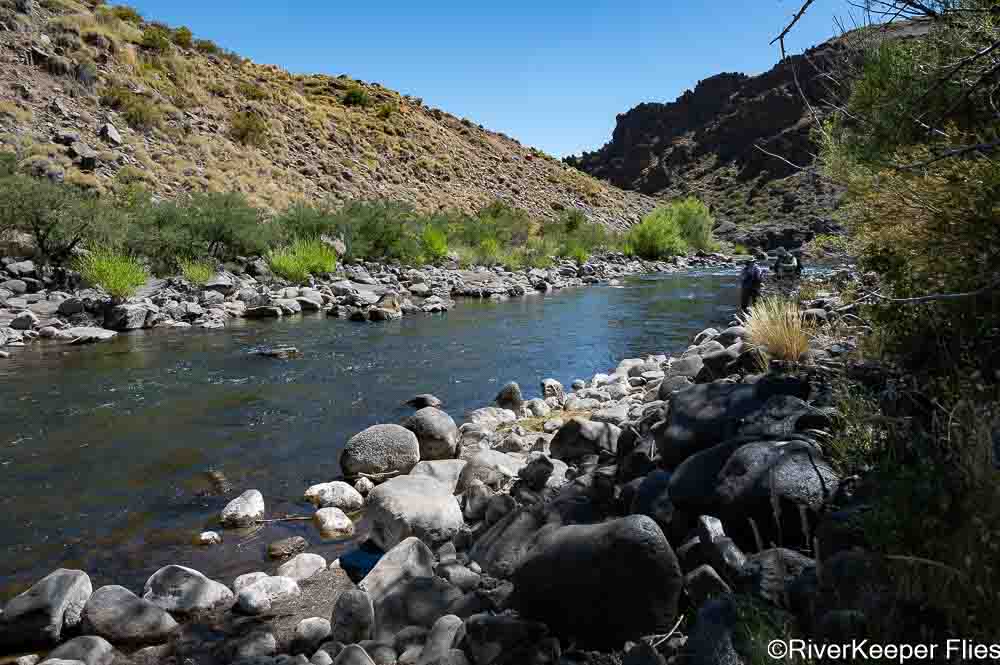
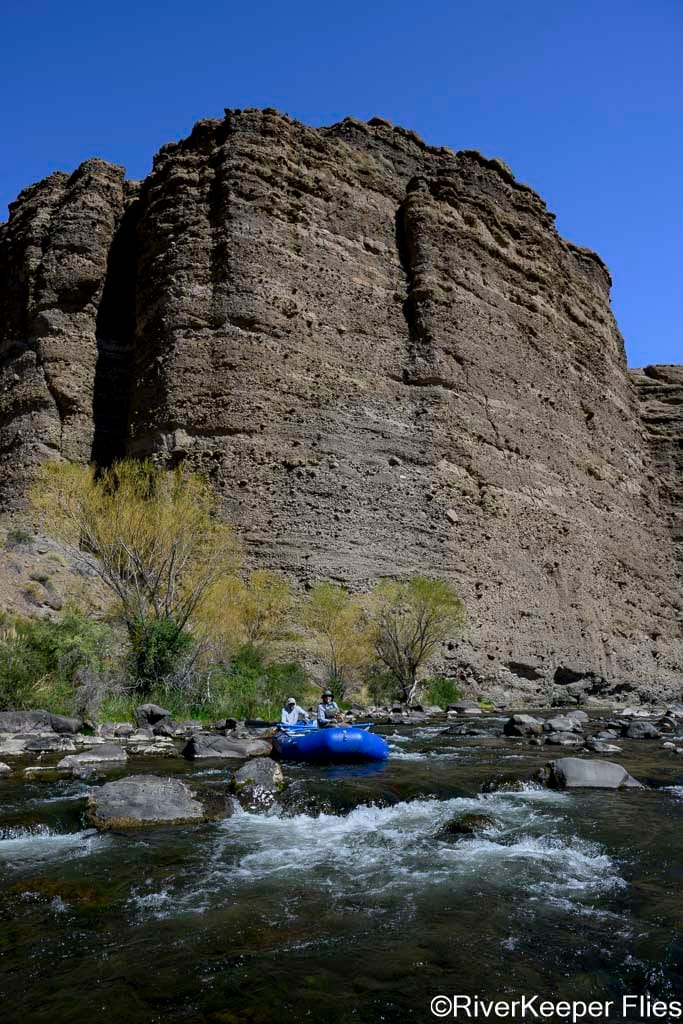
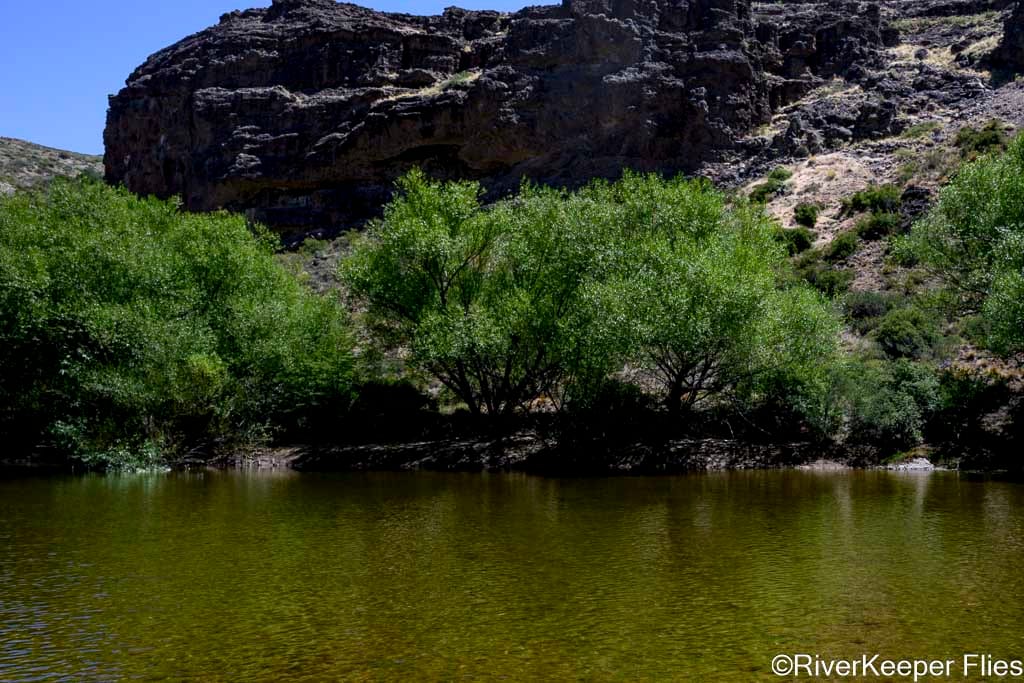

- 117 kb – 1000

El Encuentro Fly Fishing – Valle del Carrileufu Lodge (January 2026)
We planned a 10 day trip with El Encuentro Fly Fishing and were to spend 3 nights fishing in the national park close to the lodge. A forest fire caused our evacuation only 4 hours after our arrival. It is one of their three lodges.

El Encuentro Fly Fishing – Brook Trout Base Camp (January 2026)
One of three lodges with El Encuentro Fly Fishing, we spent several nights here and loved the area.


El Encuentro Fly Fishing – Main Lodge (January 2026)
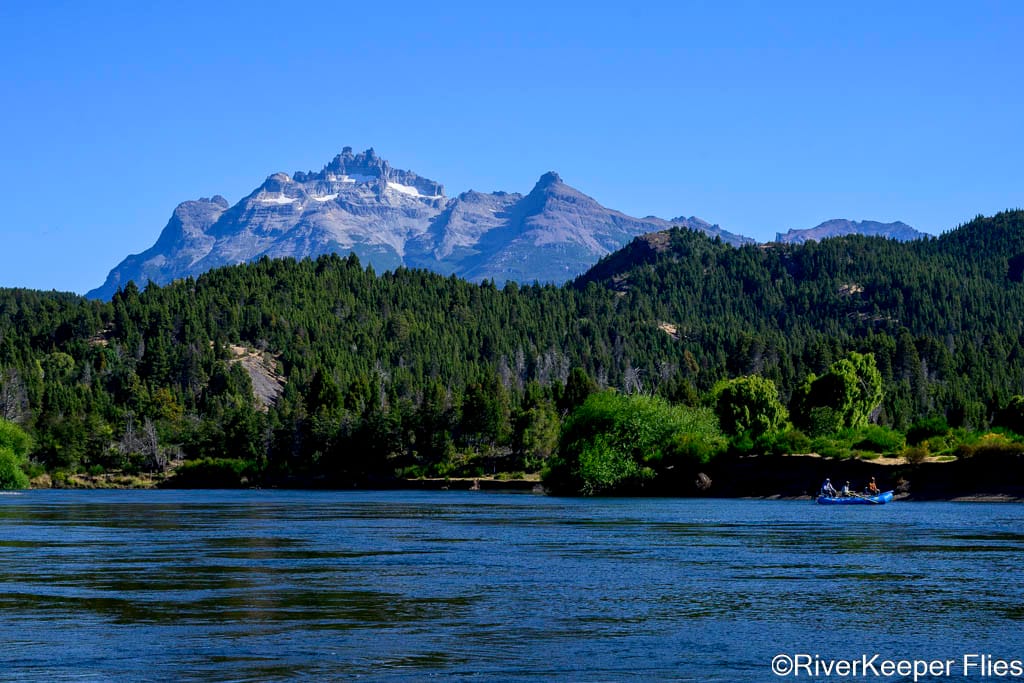
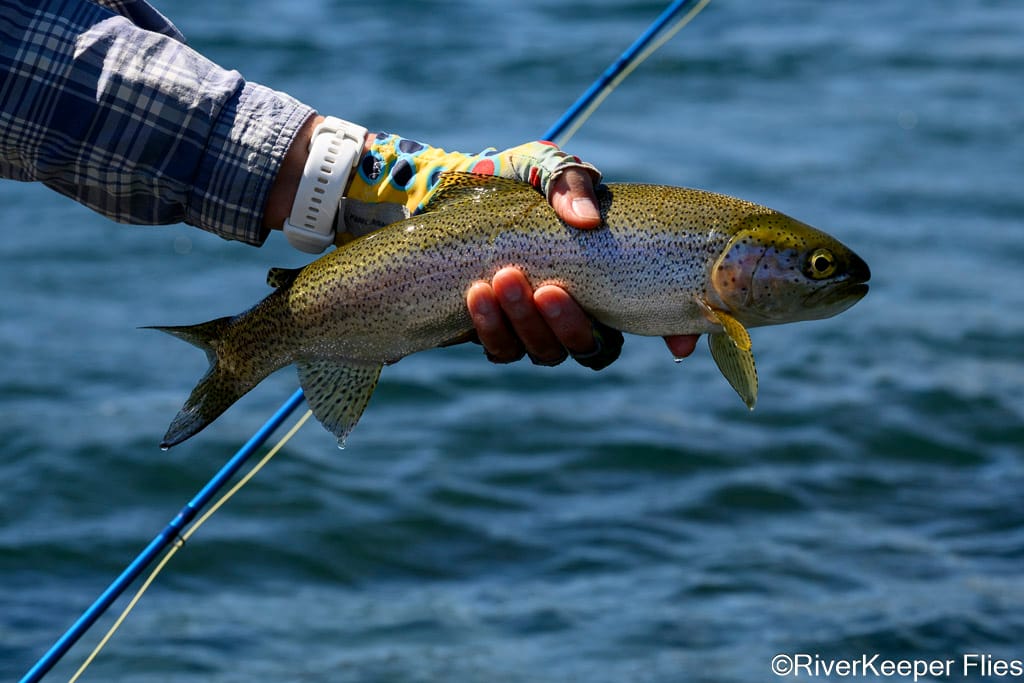
One of three lodges, and their main lodge, of El Encuentro Fly Fishing. It’s a beautiful location and very close to the border with Chile.





Lodges in Chile
Matapiojo Lodge (January 2026)
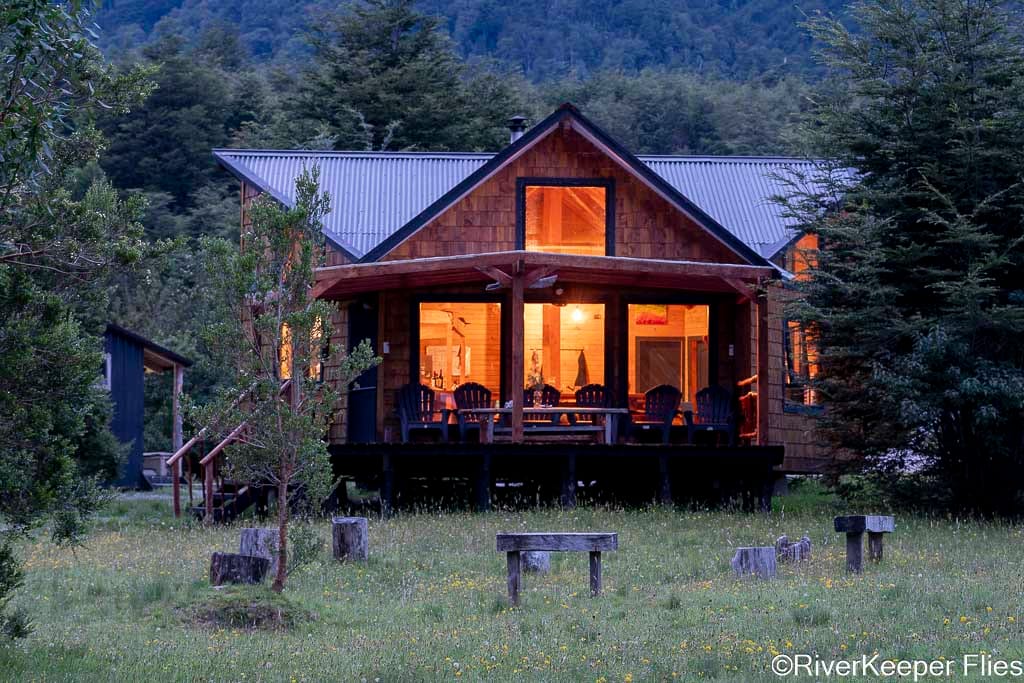
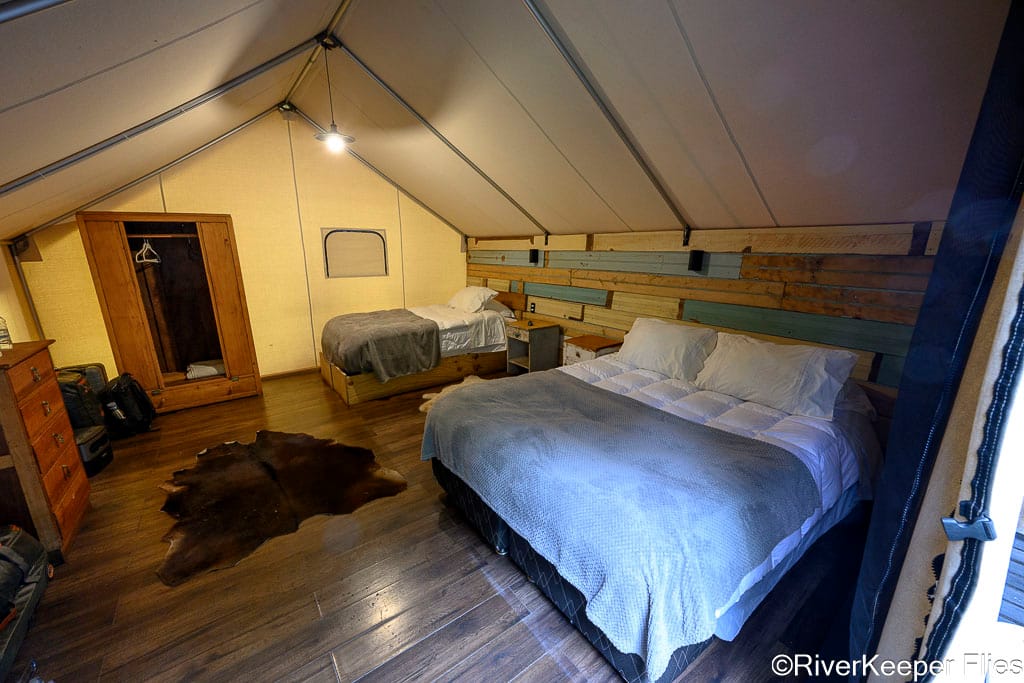
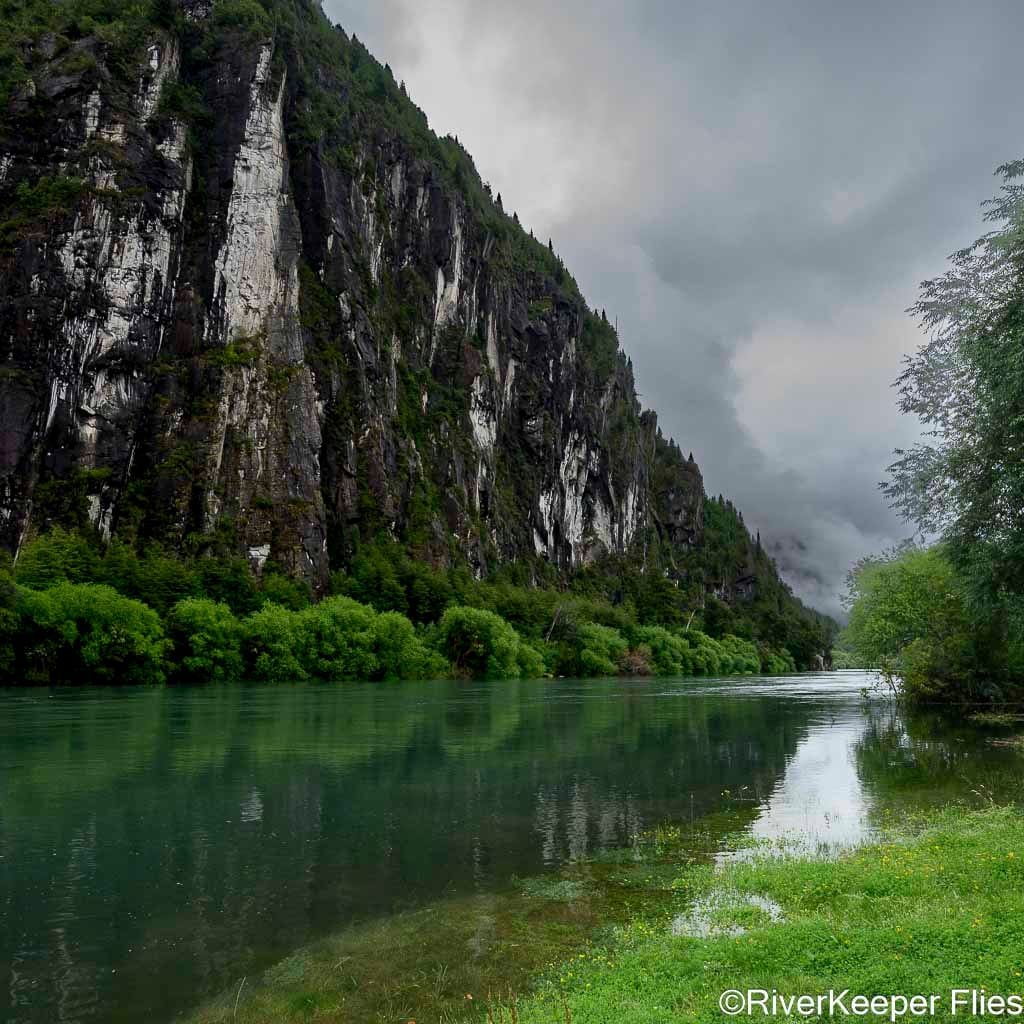
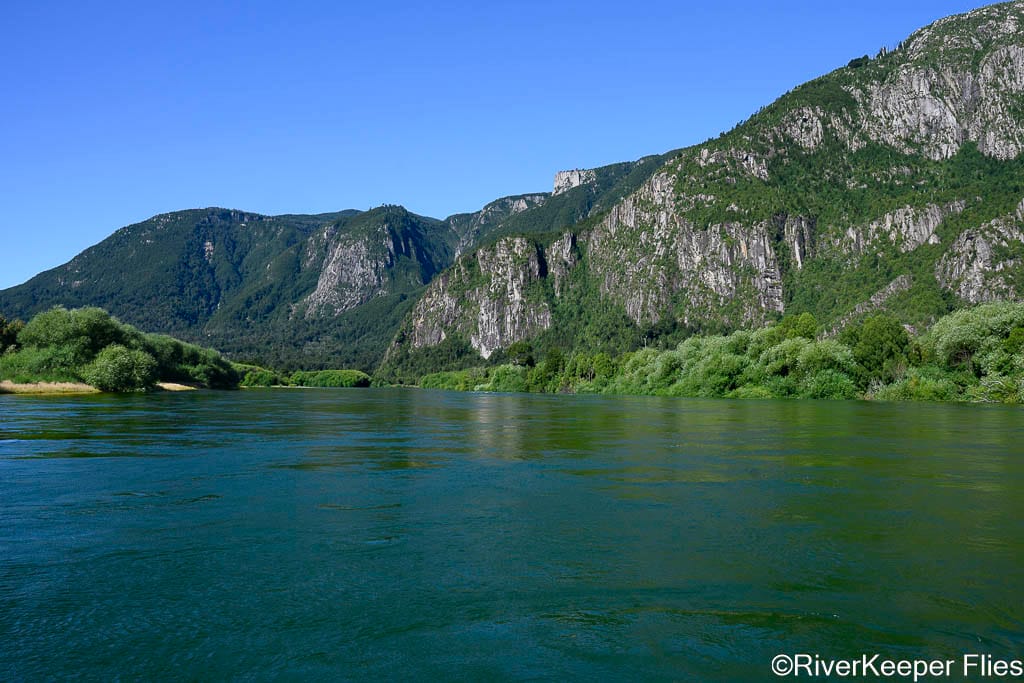
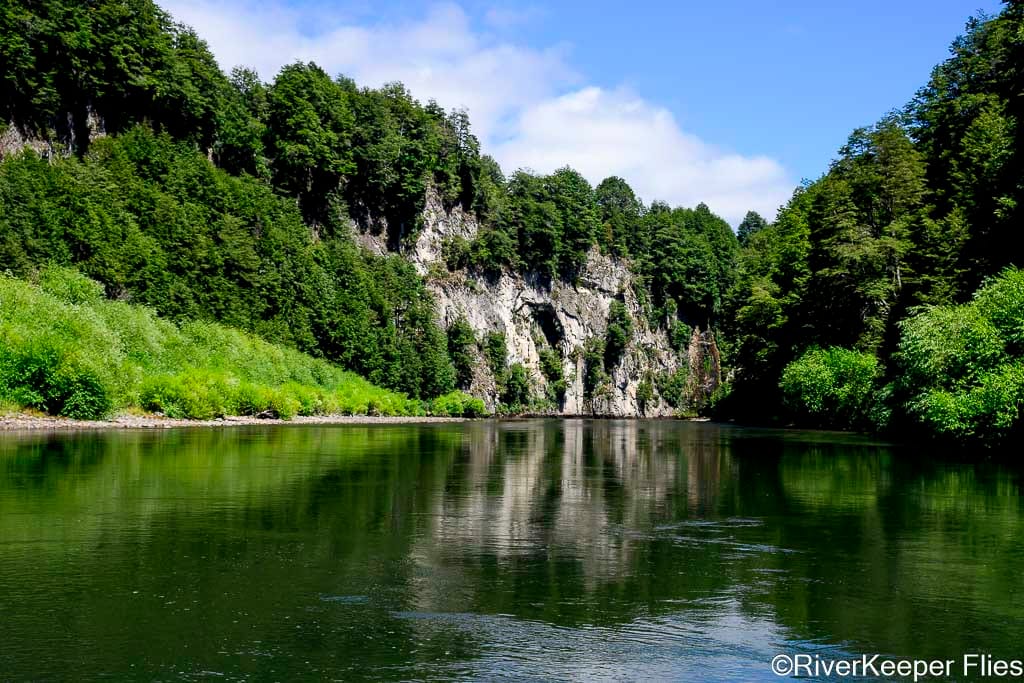
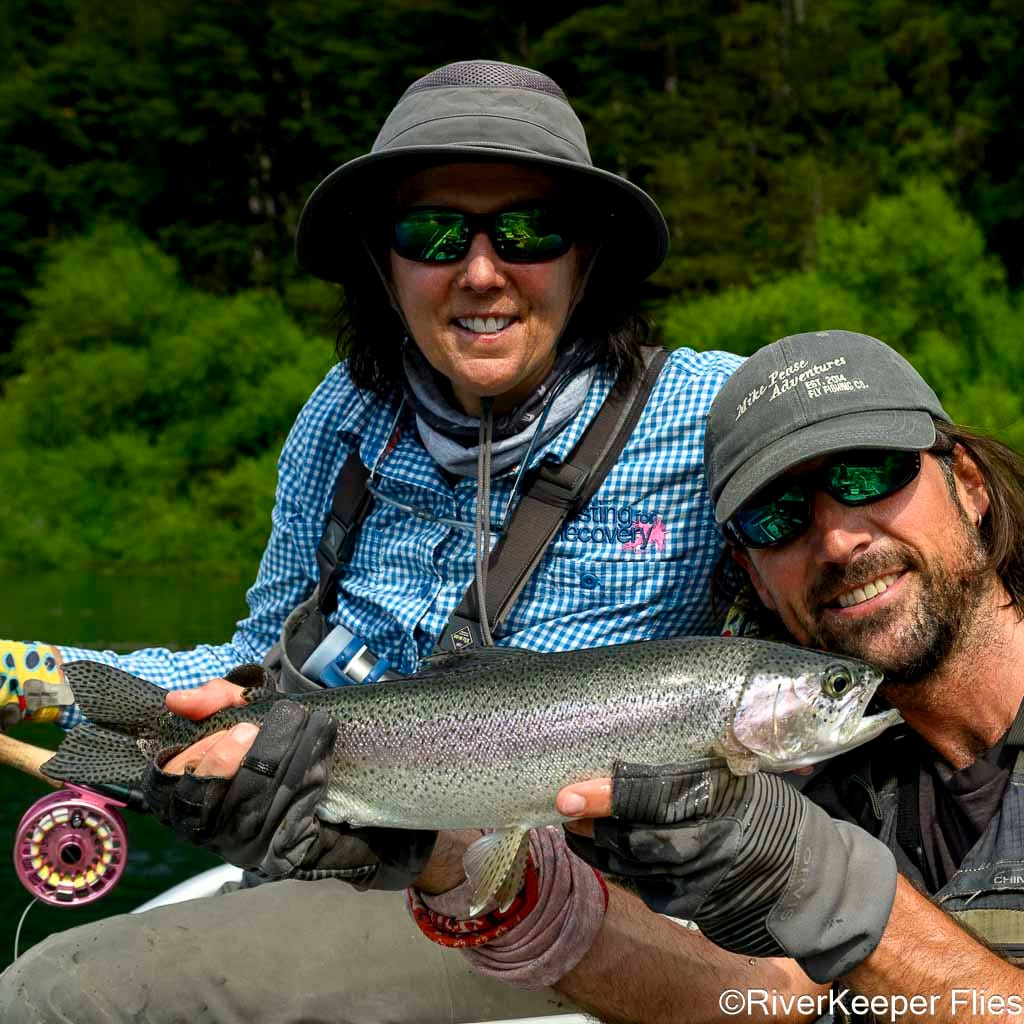
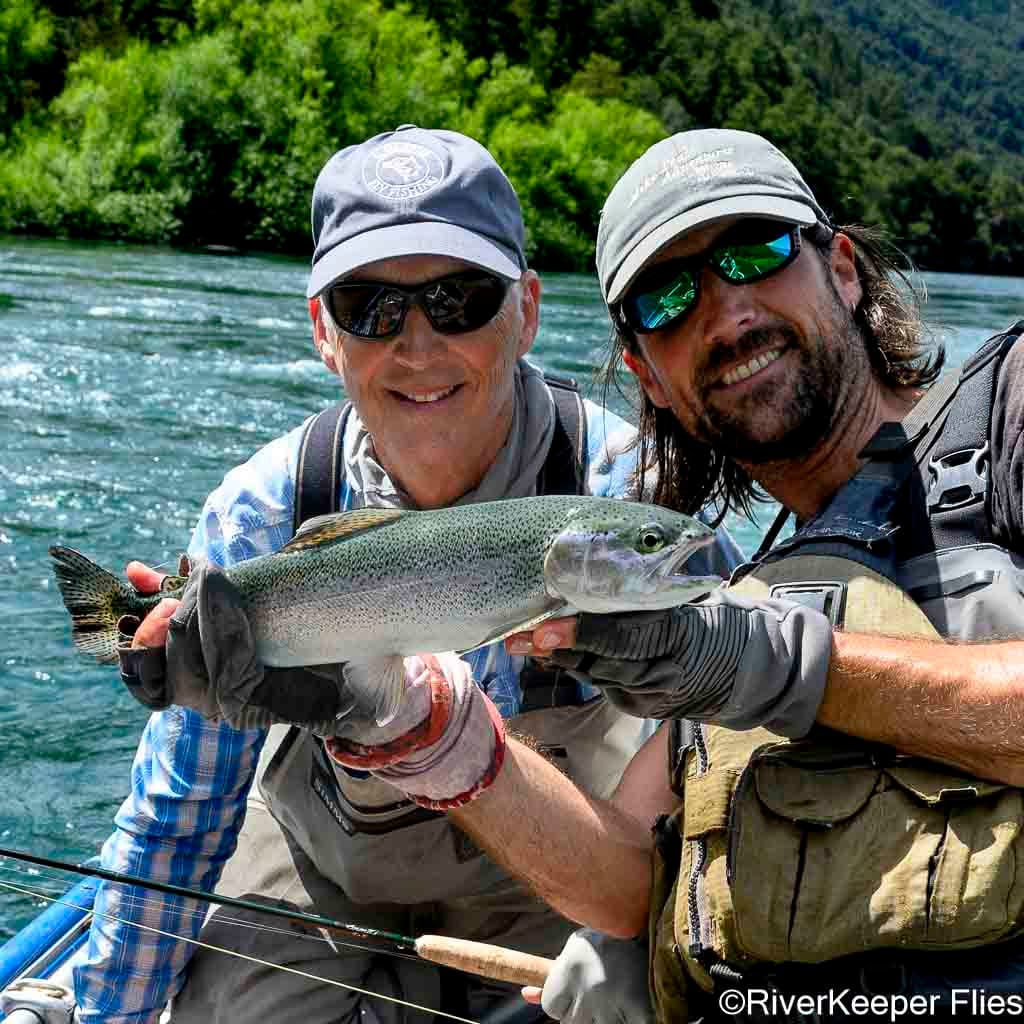
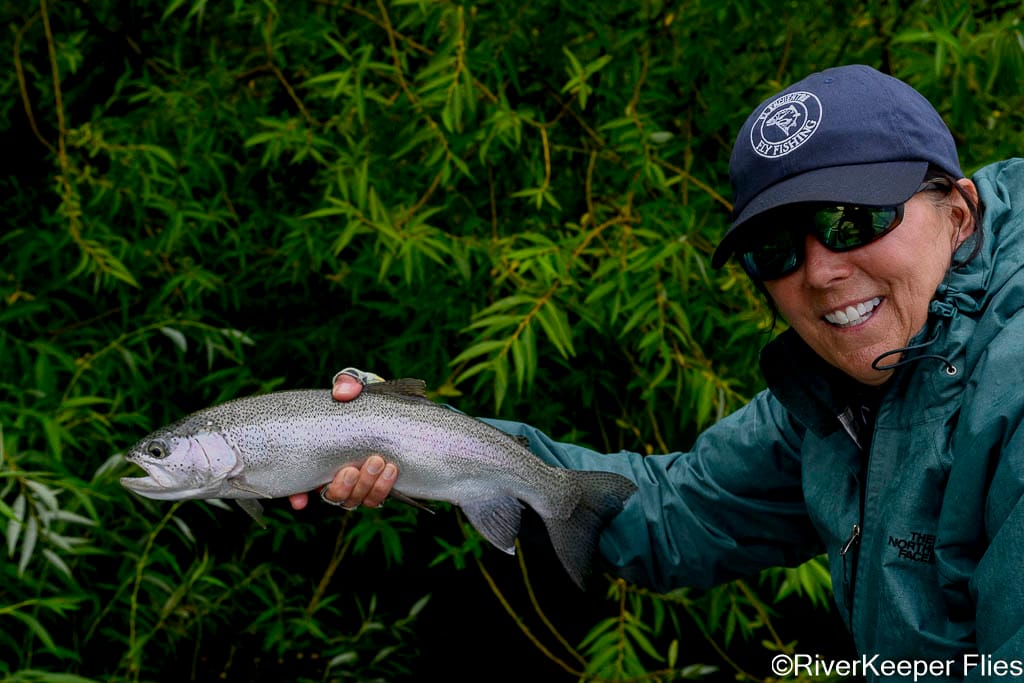
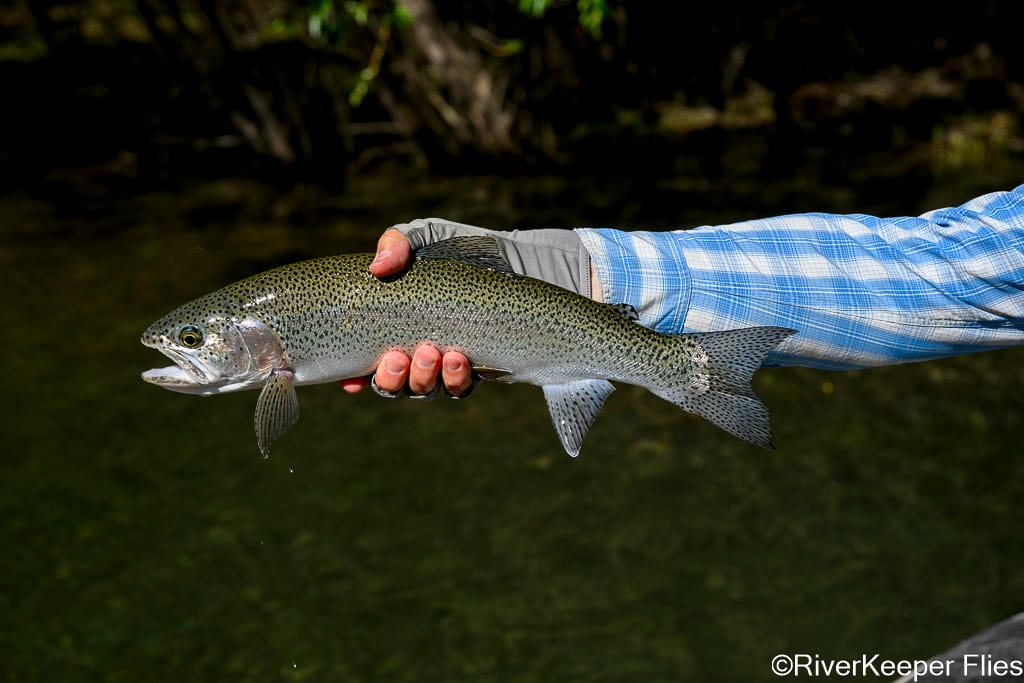
We experienced Matapiojo Lodge (dragonfly in English) last year because of forest fires around Esquel, Argentina and the difficulty of managing rooms and incoming guests. El Encuentro Fly Fishing contacted the lodge at the last minute to see if there was room for us and asked if we would be interested. We took a chance, said “yes” and were so happy with our stay. We plan to return!
Coyhaique River Lodge (January 2026)
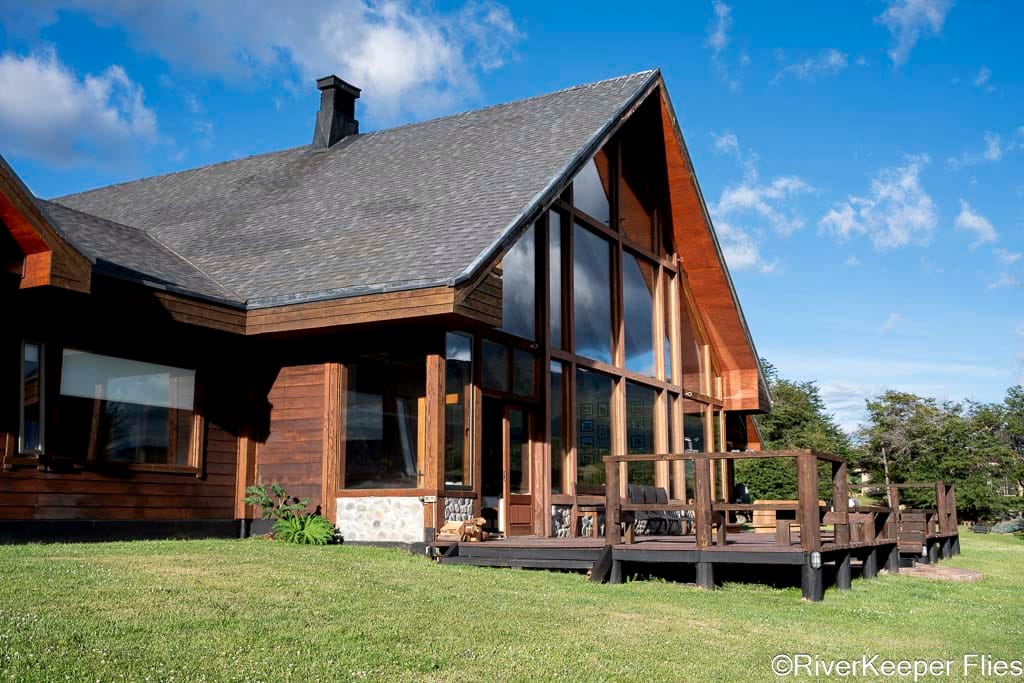
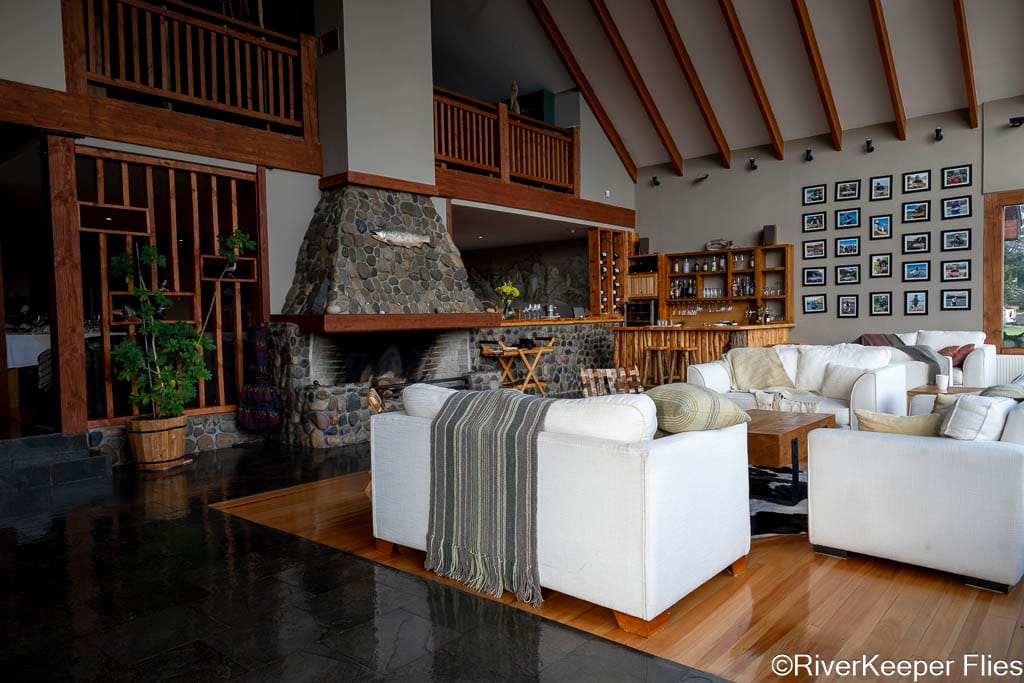
This is a beautiful lodge Coyhaique River Lodge built and operated by Claudio and Gaston Urrejola, brothers with a passion for fly fishing and ensuring you have a wonderful time exploring their region.


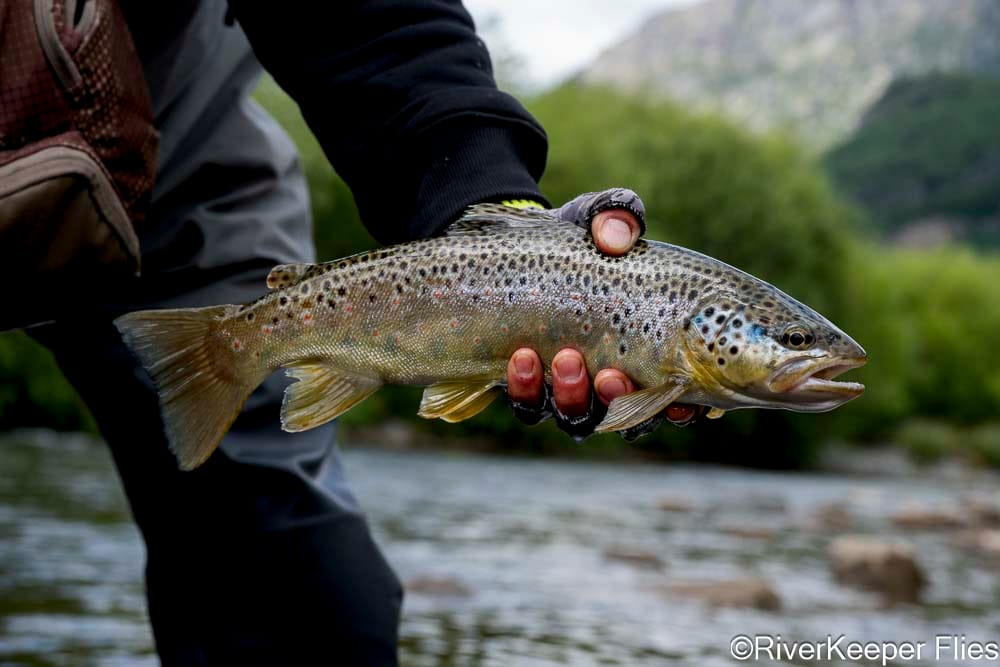
- Rio Nirehuao – Chile
- Rio Nirehuao – Chile



Rumbo Patagon (January 2024)
This was a sister lodge to Coyhaique River Lodge and 2026 was their last season. I included it because other lodges in the area of southern Chilean Patagonia fish the same or similar waters.

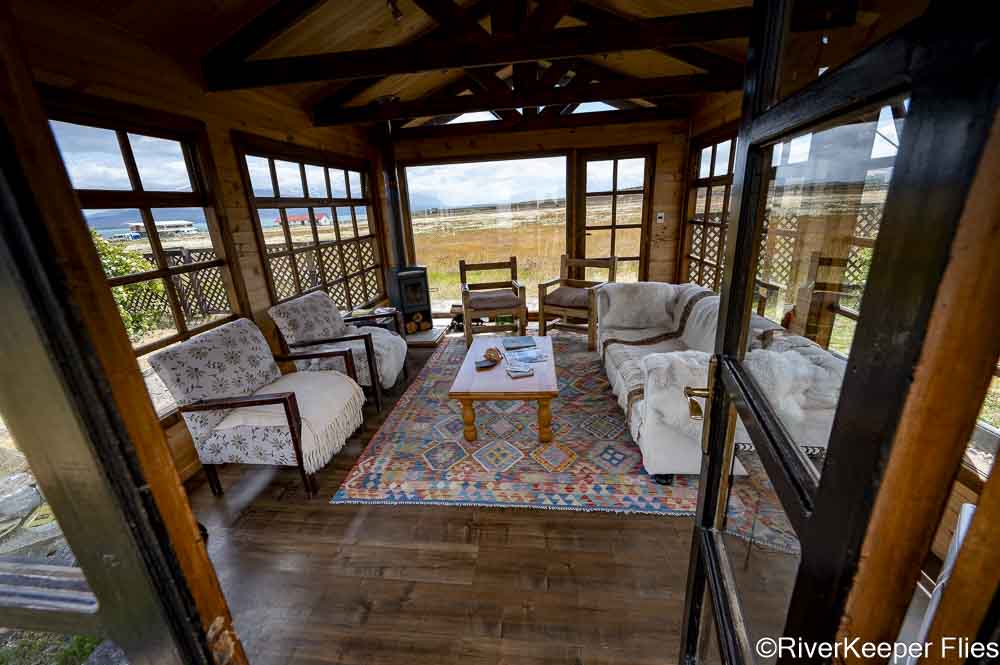

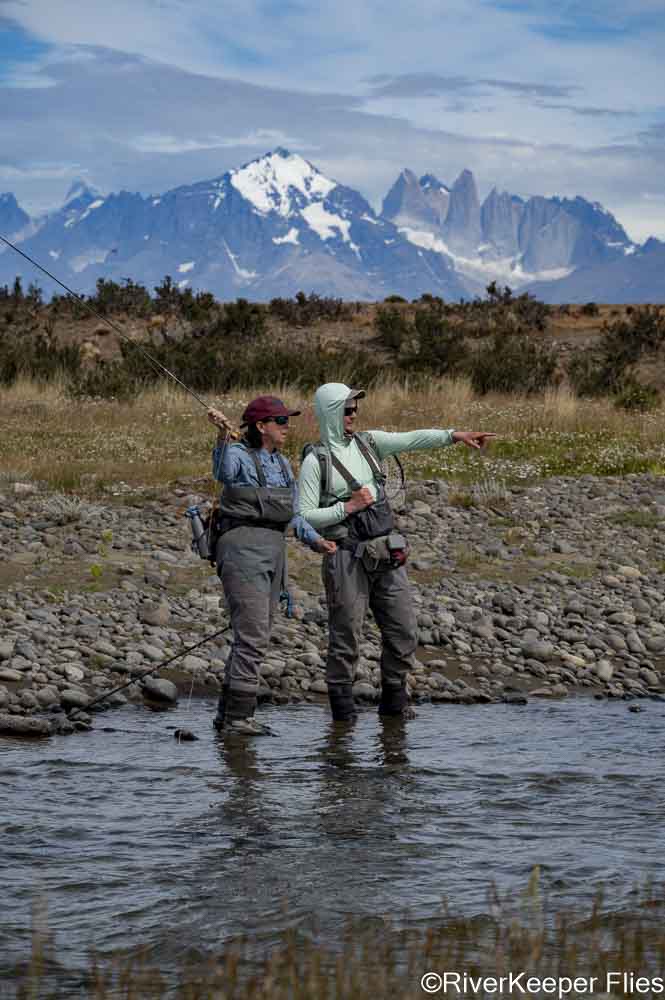



I hope the information I provided helps you plan and enjoy a great trip to Patagonia, one of many fish and wonderful memories.
Enjoy…go fish!