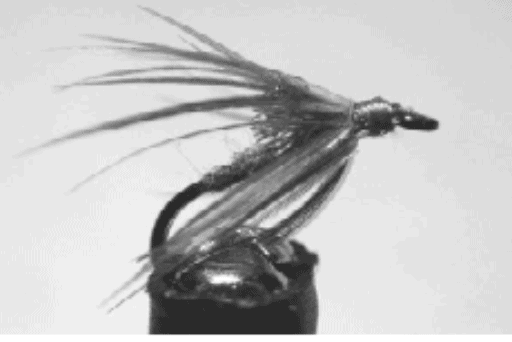
Well, I just finished 13 consecutive weeks of managing and coordinating our local fly club’s Winter Fly Tying Classes.

While the club was doing this for several years before I joined, I’ve taken over the reigns for the last four years.
The rules are pretty simple…be a club member, know the basics of fly tying and bring your own vise, tools, and thread along with $5 each night.
Meet us at the Bend Senior Center every Tuesday in January, February, and March at 6 pm. Everyone is out the door by 8:30. You’ll learn to tie 2 flies (sometimes 3). I supply all the materials and most nights, you can tie as many flies as you like. Pretty simple, right?
And this is important. We only have one instructor for the number of students who decide to walk through the door that night, which is why it is not a beginners class. The instructor walks around the room to help, but there isn’t time for one-on-one instruction to tie a complete fly. By walking the room, the instructor can get a handle on what tyers are doing right and where they may need further assistance. The instructor can return to the vise and tie another fly, highlighting the technique students were having difficulties with.
I send out fly pattern sheets with tying directions a few days in advance of each Tuesday night class to 96 members who said they were interested…that’s right, 96. And I never know how many tyers will walk through the door. So I always need a Plan B in mind in case a few more than normal show up (not everyone wants or can tie a size 18 – 20 so having a larger hook with different material colors to imitate a larger insect seems to work). Granted, several on the list have never set foot in the class…thank goodness! The room wouldn’t physically manage that large number. But it’s open to everyone and I think that’s one of the reasons it has received accolades. It isn’t a 12 or 13 week fly tying class. No, it’s a weekly class that if the mood strikes, you show up and tie. If you decided to attend every class this year, you would have tied 20 different fly patterns.
Here are a few interesting stats:
- The year I took over, I averaged 20 tyers in the room every night for 13 weeks with a season high of 27 on one night.
- Year 2 – averaged 23 tyers for 12 weeks with a season high of 32.
- Year 3 – averaged 28 tyers for 12 weeks with a season high of 38.
- This year – averaged 26 tyers for 13 weeks with a season high of 37.
Our club has a large membership, somewhere in the 275 – 300 range. But not everyone ties flies (although a few more wish they did!).
We have the normal attrition each year, but the list continues to grow. The first year I sent emails to 54 people, now it’s up to 96. I know they don’t all tie flies. It may be to get a list of the “fishy flies” or “guide flies” we focus on. Some may be standard, known patterns, but we teach the technique required to tie it correctly.
And the last couple of years, I’m pleased to say we’ve seen a few of our Next Cast Flyfishers (our club’s youth program for those 25 and younger) participate as well.
This year was the first time we conducted a “technique” night. The goal was to not tie a completed fly. Only teach the technique for a particular fly part…tying deer hair comparadun-style wings, dubbing and dubbing loop techniques, tails, parachute posting and folding hackle.
It was popular enough, I decided to try it again with a second “technique” night class covering the same topics and adding UV resin. These classes were well received.
My first year, I tried to line up the same instructors that were used previously. Being new to it, I didn’t want to upset the apple cart. One of my goals was to include the local fly shops in our area, if they have an interest. I still do that. They are a great resource for our club and it’s another way for them to get customers into their shop. And we have several very talented fly tyers in our fly club. I’ve even encouraged a few to teach for the first time…and I think it went well. And I teach a class or two each year.
I sent out a survey to see what tyers are interested in learning:
- river vs. lake
- dry or wet
- streamers
- steelhead
This helps me understand what will be successful for the coming year and line up the right instructors to teach. I think the real world calls that listening to your customers. I continue to survey the tyers each year.
When I took over the program, I started using a camera and projector. Before that, everyone would crowd around the instructor to see how the fly was tied. Not the best way to teach. The camera is a definite improvement! The screen can be filled with the fly so even those in the back of the room can easily see what the instructor is doing.
And I’ve made money every year! Well, technically not because with the proceeds after paying the nightly room rental, I’ve increased the materials supply the club has on hand for the following year. Usually that means I purchase hooks (we can use 100 – 150 for each fly taught every night) or feathers. In the last couple of years, I added capes and saddles in the most usable colors and sizes. I’ve found you can go through capes pretty quick if you are only looking for one size of feather!
Lastly, here are a couple of lessons learned:
- Send out email reminders every week 3 to 4 days before each class with pattern sheets attached, highlighting thread color and size (if important), a special tool that may be helpful, or another product like super glue. This gives them enough time to purchase the proper thread color and size for the fly taught.
- Send pattern sheets as PDF files. You won’t have as many problems with this file format.
- Find a local fly shop to provide discounts on materials used for the classes. We have some generous proprietors. Without these discounts, I’d need to restrict the number of flies each student can tie each night. They have been a real help with managing my materials budget.

Pretty amazing, I’d say…until next year…



was able to attend 2 years of these sessions and they were easily the high point of cof activities for me
als has claimed my fly tying ability but i do still enjoy see those patterns each week
great program john
als also has claimed my shift key use – sorry
Steve
I remember the first night you attended. I was always happy to see you!
I hope the patterns you see on the website bring back fond memories.
John
Good stuff, John. I wish I lived closer. Dennis
Nice wrap up report…looking forward to next year.